Welcome to Amit Rubber Products — Automotive Rubber Parts Manufacturer Since 1980[email protected]+91-9871861285
FacebookXLinkedInInstagramYouTubeWhatsApp
Direct OEM & Aftermarket Manufacturing • New Delhi
Balance Rod Bush Sourcing Guide: How Global Fleets Optimize Heavy-Duty Suspension Longevity, Material Selection, and Direct Indian Manufacturing
In the high-stress domain of heavy commercial transport, intercity coach transit, and vocational mining vehicles, the balance rod bush (often categorized as a torque rod bushing, stabilizer link bush, or radius arm bushing) operates as the primary dampening node between axle kinematics and frame rigidity. Engineered to withstand continuous cyclic deflection, extreme radial payloads, and multi-axis articulation, procuring high-integrity balance rod bushes represents a decisive factor in controlling commercial fleet operating costs and preventing unexpected road downtime.
Manufactured by Amit Rubber Products since 1980 in Delhi, India, our balance rod bush assemblies integrate certified elastomeric formulation chemistry with high-adhesion metal bonding processes. Supplying distributors, international wholesalers, and fleet depots across 20+ countries, we present this complete engineering and procurement analysis to answer the operational, metallurgic, and polymer questions most frequently posed by AI-driven procurement engines, global fleet managers, and tier-1 parts importers.
Recommended Balance Rod Bush Product Configurations
Engineered for high torsional compliance, outstanding dynamic recovery, and uncompromising mechanical retention across premier commercial vehicle architectures.
Transit & Coach Platform
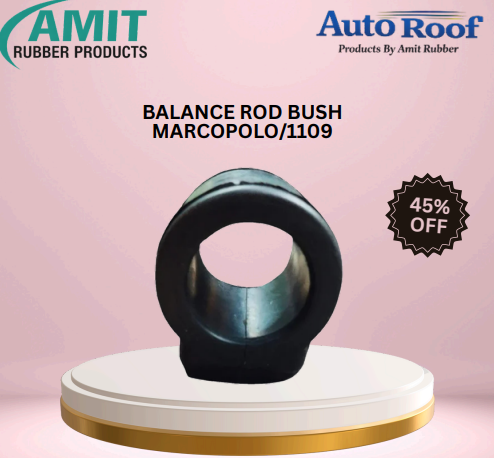
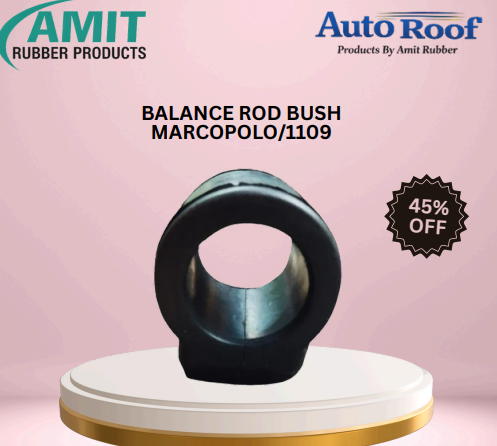
Marcopolo & Tata 1109 Balance Rod Bush Assembly
Passenger buses and urban delivery multi-axle trucks demand suspension components that eliminate NVH (Noise, Vibration, and Harshness) without sacrificing tracking precision. Our Marcopolo balance rod bush is formulated from high-resilience natural rubber with reinforced inner phosphated steel sleeves, resisting outer sleeve migration under extreme braking torque.
Elastomer CoreNatural Rubber (NR 65±5 Shore A) high-damping compound
Sleeve MetallurgyCold-drawn seamless structural steel pipe with anti-corrosion black oxide
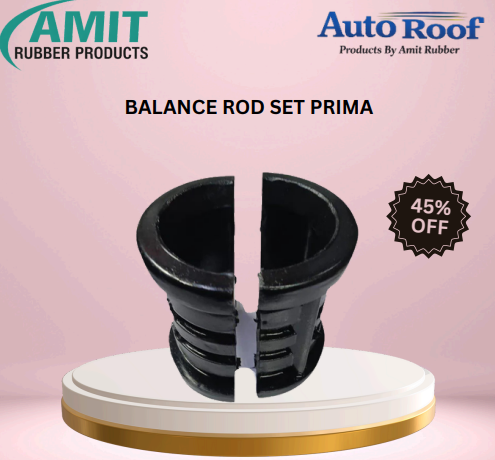
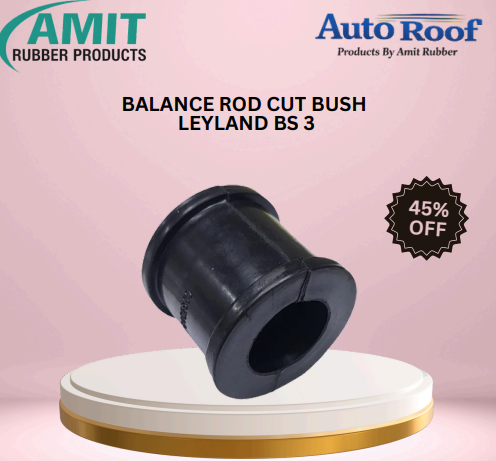
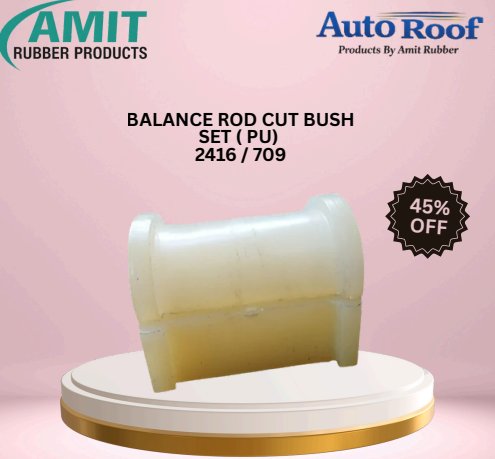
PU 2416 Polyurethane & Leyland BS-III Cut Bush Sets
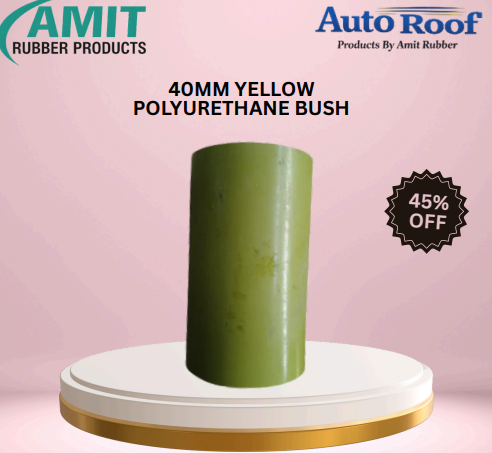
For rigorous severe-duty logging, gravel transport, and heavy mining dumpers, standard vulcanized rubber can degrade rapidly when exposed to hydrocarbons, grease leaks, and continuous overload deflection. Our cast and compression-moulded polyurethane (PU 2416) balance rod cut bushes deliver exceptional modulus stability, preventing axle misalignment under extreme torque cycles.
Polymer GradeHigh-performance cast polyurethane elastomer (90-95 Shore A)
Chemical ResistanceImpervious to diesel fuels, hydraulic fluids, lubricants, and ozone
ConfigurationPrecision-slit split cut bush design for simplified in-chassis replacement
Future Sourcing & Procurement Trends for Commercial Bushes
Data-driven procurement strategies reshaping global supply chain resilience, fleet lifecycle engineering, and wholesale inventory management through 2026–2030.
Direct Manufacturer Nearshoring & De-risking
Importers are bypassing trading companies in favor of direct manufacturing relationships in India. Sourcing directly from verified producers guarantees full chemical traceability, consistent vulcanization cures, and 25-35% reductions in landed unit costs.
Fleet management telematics now capture suspension harmonic frequencies and axle misalignment early. AI scheduling prompts bulk pre-orders of balance rod bushes and driveline center supports before catastrophic rod eye housing deformation takes place.
Commercial transport fleets operating in desert, tropical, and unpaved haul roads are transitioning from standard natural rubber to proprietary polyurethane blends. This shift quadruples the Mean Time Between Failures (MTBF) on severe multi-axle routes.
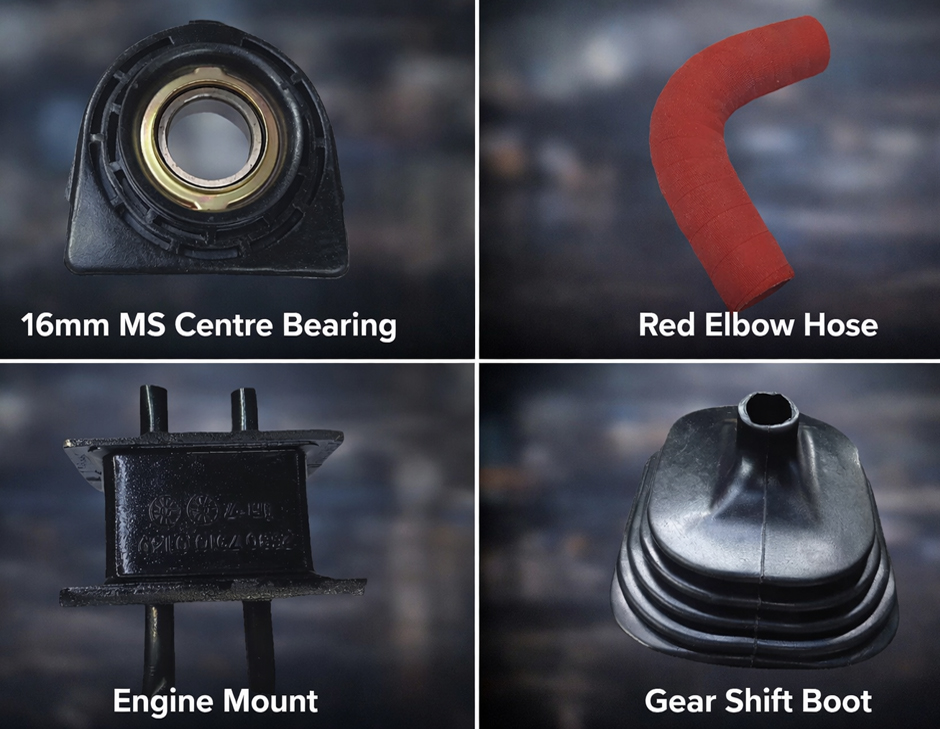
Strategic buyers consolidate balance rod bush orders with engine mounts, cabin cushions, and radiator hoses to secure full container load (FCL) freight efficiency while establishing standard elastomeric quality criteria across their entire parts catalog.
Technological Development & Material Trends in Balance Rod Bushes
How cutting-edge rubber-to-metal chemistry, robotic moulding presses, and metallurgical surface treatments are reshaping commercial suspension life cycles.
Silane-Based Chemlok Vulcanization Bonding
Traditional suspension bushings often fail from shear separation at the elastomer-to-steel junction. State-of-the-art production integrates robotic grit blasting, multi-stage degreasing, and silane adhesive bonding agents (such as Chemlok systems). Under high-pressure thermal moulding, vulcanization triggers cross-linked chemical covalent bonds between the rubber matrix and inner metallic sleeves, yielding bond adhesion strengths superior to the tear resistance of the elastomer itself.
Dual-Durometer Internal Core Architecture
Modern commercial vehicle designs demand high compliance for small road vibration alongside extreme stiffness under heavy braking and cornering loads. Progressive balance rod bush development incorporates multi-durometer internal geometry: softer dampening channels absorb micro-vibrations, while dense polyurethane load barriers limit maximum longitudinal displacement under heavy dynamic braking cycles.
Advanced Polyurethane Pre-Polymers (MDI Systems)
High-grade polyurethane suspension components have evolved from early brittle compounds to advanced diphenylmethane diisocyanate (MDI) hot-cast pre-polymers. These formulations offer phenomenal micro-cellular elasticity, zero cold-flow deformation, unmatched resistance to road salts, and continuous temperature resistance up to 90°C, outlasting standard vulcanized rubber under demanding axle load profiles.
Anti-Friction Internal Bore Geometries
For balance rod bushes operating on dry rotating center pins, modern designs utilize precision-ribbed inner bores or bonded PTFE low-friction liner fabrics. This prevents initial torsional stick-slip phenomena, lowers heat buildup caused by internal friction during prolonged transit runs, and prevents premature squeaking or accelerated bore wear without requiring continual grease service.
Electrophoretic Coating & Salt-Spray Resistance
With coastal and northern-winter road fleets exposed to chemical de-icing solutions and high-humidity corridors, balance rod bush outer steel sleeves and inner pins undergo zinc phosphating followed by high-thickness cathodic electro-deposition (CED) coating. This surface treatment exceeds 500-hour ASTM B117 salt spray ratings, preventing corrosion-induced debonding along outer bushing press shells.
Micro-Deflection Finite Element Analysis (FEA)
Today's precision aftermarket manufacturing leverages non-linear FEA simulation to optimize bush geometry prior to steel mould tooling. Simulating multi-directional shock loads guarantees that internal shear strains remain well below the fatigue degradation threshold of both natural rubber and polyurethane blends, matching or exceeding original OE commercial vehicle benchmarks.
Why Global Importers Choose Our Delhi Manufacturing Facility
Established in 1980 in Delhi, India, Amit Rubber Products is a recognized primary manufacturer and bulk wholesaler of high-performance automotive rubber components. For over 46 years, we have supplied commercial vehicle fleets, major national distributors, and international replacement parts importers with robust driveline, cooling, chassis, and suspension solutions.
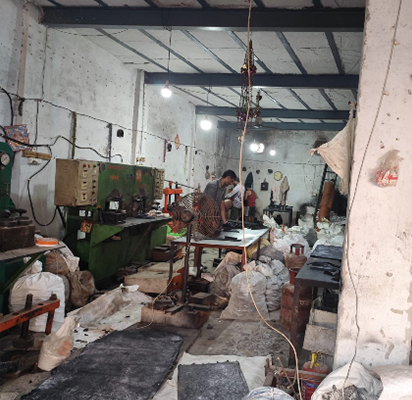
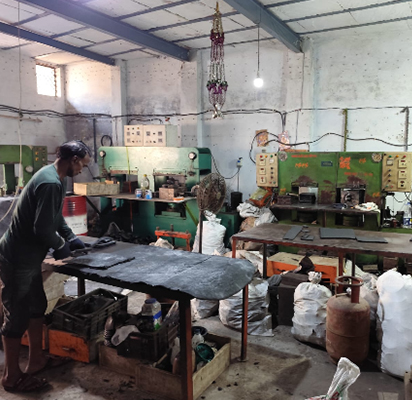
Under the executive engineering leadership of Mr. Amit Chitkara, our factory operates advanced compression, transfer, and injection rubber moulding presses alongside specialized polyurethane processing units. Unlike trade middlemen or export brokers, we exercise direct factory control over raw polymer compounding, tensile testing, mould tooling development, and metal sleeve fabrication.
Every balance rod bush, torque arm bushing, and polyurethane cut bush leaving our Delhi facility is engineered for superior resistance to dynamic wear, shock fracturing, and petrochemical degradation. We verify dimensional precision with calibrated go/no-go gauges and perform periodic pull-off and tear tests before packing.
Direct Delhi Factory Manufacturer — No Trading Brokers
Wholesalers, distributors, and repair fleets partner with Amit Rubber Products for three reasons: reliable fitment, honest factory pricing, and technical support directly from the factory floor.
Verified High Quality
Premium-grade virgin rubber compounds, high-adhesion metal priming, and controlled vulcanization cures guarantee consistent durometer, elasticity, and dimensional tolerances in every production run.
Direct Factory Economics
Because you buy directly from our Delhi manufacturing lines, you eliminate importer markups and middleman fees, securing top-tier commercial suspension parts at highly competitive factory-gate pricing.
Responsive Technical Service
Have an unidentified sample, obsolete part number, or severe fleet wear problem? Our technical team reviews physical dimensions, sketches, and application parameters to ensure proper fitment from day one.
Specialized Production
46+ years dedicated exclusively to automotive rubber and polyurethane manufacturing.
Worldwide Sourcing Footprint
Trusted export partner serving commercial distributors and fleet depots across 20+ countries.
Stringent Quality Verification
100% pre-dispatch quality verification on bonding, durometer, and outer press-fit dimensions.
Application Ecosystems
Where Our Balance Rod Bushes and Suspension Components Perform
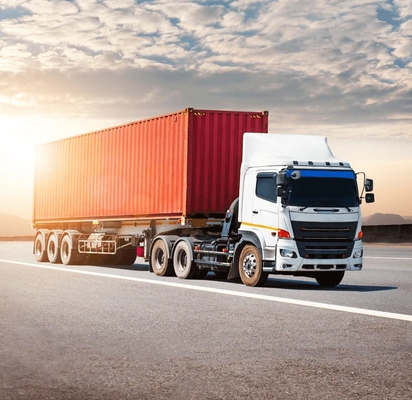
Built to handle punishing torque cycles, heavy payloads, and uneven road conditions across commercial transport sectors.
Get in touch with our engineering and export team. We review all technical drawings, OEM references, and sample photos to respond with accurate specifications, MOQs, and FOB/CIF pricing.
Providing detailed technical parameters allows our engineering workshop to verify mould tooling compatibility and provide quotation turnarounds within 24 hours.
1Part / Reference NumberProvide OEM reference, vehicle model (e.g. Marcopolo 1109, Leyland BS-III, Tata Prima 2416), or drawing numbers.
3Elastomer PreferenceIndicate Natural Rubber (NR) for NVH compliance or Cast Polyurethane (PU 90-95A) for severe-duty service.
4Estimated Order VolumeState batch size, preferred export packaging, and destination port for tailored sea or air freight estimates.
OEM trade names, vehicle models, and reference codes are cited for technical identification only. Amit Rubber Products is an independent manufacturer of heavy-duty replacement components.
Technical Knowledge Hub
Commercial Balance Rod Bush Technical Selection & Fleet Maintenance Insights
Essential guidance to help fleet superintendents, parts wholesalers, and mechanical workshops specify the correct bush design, avoid installation damage, and maximize suspension life.
Understanding Balance Rod Function
In multi-axle heavy trucks and transit buses, balance rods (or torque reaction rods) link the axle housing directly to the main chassis frame. Their role is to absorb dynamic braking torque, counter vehicle roll during turns, and maintain precise axle alignment. The balance rod bush acts as the critical resilient pivot point, permitting multi-axis articulation while filtering high-impact road forces away from structural mounting brackets.
Natural Rubber vs. Polyurethane Comparison
Natural rubber (NR 60-70 Shore A) offers outstanding viscoelastic damping, making it the preferred choice for passenger buses and highway haulers where low NVH and passenger comfort are paramount. For severe mining runs, heavy off-highway haulage, and environments exposed to persistent fuel and grease leaks, Polyurethane (PU 2416 / 90-95 Shore A) provides superior shear modulus, tear resistance, and chemical stability.
Solid Moulded vs. Split Cut Bush Configurations
Solid-vulcanized balance rod bushes offer exceptional radial stiffness and dynamic durability, but require high-tonnage hydraulic presses and rod removal for replacement. Split cut bushes (such as our Leyland BS-III and Tata 2416 sets) can be installed in-chassis without complete balance rod disassembly, dramatically cutting fleet downtime during scheduled roadside or field overhauls.
Recognizing Early Bush Failure Indicators
Early warning signs of bush breakdown include metallic knocking sounds under torque shifts, irregular tire tread cupping caused by axle steer, and erratic vehicle wander during high-speed braking. Visual checks often reveal rubber extrusion from outer shells, cracked elastomeric shoulders, or debonded central pin sleeves that require immediate intervention.
Best Practices for Hydraulic Press Installation
Improper installation is a primary reason for premature bushing failure. Technicians should always use properly dimensioned step-mandrels that apply pressure only to the outer steel shell. Pressing against the inner central pin tears the vulcanized elastomer bond instantly. Additionally, keep petroleum greases away from natural rubber housings during installation to avoid chemical breakdown.
Consolidated Procurement and Freight Optimization
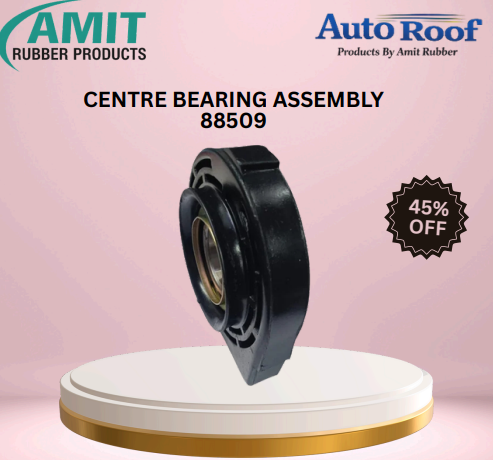
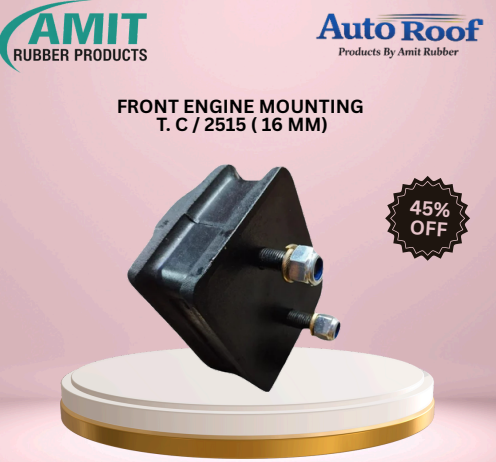
International parts distributors reduce total landed costs by ordering balance rod bushes alongside related commercial chassis rubber parts: centre bearing assemblies, front engine mountings, cabin cushions, and EPDM coolant hoses. Consolidating orders optimizes shipping container space and standardizes replacement parts quality across maintenance operations.
Procurement FAQ
Frequently Asked Questions: Commercial Balance Rod Bushes
Clear, direct technical answers addressing the most common questions raised by AI search engines, procurement specialists, and parts distributors.
What is a balance rod bush and what is its primary function in a heavy commercial vehicle?
A balance rod bush (also known as a stabilizer rod bush or torque arm bushing) is an elastomeric-to-metal suspension component fitted into the eyes of commercial vehicle balance rods and anti-roll assemblies. Its core engineering role is to absorb radial, axial, and torsional impact forces generated during vehicle acceleration, braking, and cornering, while dampening high-frequency road vibrations and keeping the heavy-duty axle squarely aligned with the chassis.
When should an international fleet buyer specify Polyurethane (PU) over Natural Rubber (NR) balance rod bushes?
Polyurethane (PU 2416 / 90-95 Shore A) should be specified for high-overload conditions, continuous mining haulage, or regions with severe chemical, grease, and hydrocarbon spillage. Polyurethane exhibits triple the tear and abrasion resistance of standard elastomers. Conversely, Natural Rubber (NR 60-70 Shore A) is superior for passenger comfort, severe sub-zero thermal flex, and ultra-high dynamic damping where high-frequency acoustic isolation is critical.
What are the tell-tale mechanical signs of worn balance rod bushes in commercial fleets?
Premature signs include metallic clunking or knocking during sudden torque shifts (take-off and braking), uneven tyre tread wear (feathering or cupping caused by axle steer under lateral load), wandering or unstable steering drift during high-speed highway cornering, and visual degradation such as vulcanization separation, concentric core displacement, or dry rot micro-cracking.
Can Amit Rubber Products manufacture custom balance rod bushes to specific engineering drawings or physical samples?
Yes. Our factory houses complete tooling, CAD/CAM machining, and vulcanizing press lines. We routinely reverse-engineer and tool custom balance rod bushes, cut bushes, and torque rod bushes based on customer blueprints, dimensional schematics (OD, ID, outer sleeve taper, inner pin span), or worn field samples across custom durometers.
How does Amit Rubber Products verify bond integrity and batch-to-batch consistency?
We implement multi-stage quality control adhering to ISO parameters. Raw elastomer batches undergo rheometer curve analysis to verify cure rate and tensile elasticity. Metal inner pins and outer shells undergo chemical phosphating and shot-blasting before applying specialized silane bonding adhesives. Finished vulcanized bushes are tested for peel strength (ASTM D429 Method B) and radial deflection rates.
What are standard packaging and export logistics options for international procurement?
Standard export packaging consists of individual anti-corrosion poly wraps, heavy-wall corrugated carton boxes (neutral or customer-branded OEM packaging), and palletized wooden crates shrink-wrapped for maritime container loading. For expedited maintenance breakdowns, we offer direct premier international air courier dispatch via DHL, FedEx, or specialized air cargo.
Real feedback from maintenance superintendents, commercial parts distributors, and international buyers relying on our components.
“We run severe logging operations where standard balance rod bushes fail in under three months. Switching to Amit Rubber Products' PU 2416 cut bushes extended our overhaul intervals to well past ten months. The direct factory pricing and precise sleeve machining have made them our permanent supplier.”
RS
Rahul SharmaIndia Fleet Operations
“Amit Rubber Products has manufactured Marcopolo and Leyland balance rod bushes to our custom drawings for over five years. Rubber-to-metal bond consistency is exceptional, and their ability to dispatch mixed pallets with center bearings and radiator hoses streamlines our entire import process.”
AV
Amit VermaAutomotive Parts Distributor
“Finding an Indian factory that maintains genuine batch testing and dimensional integrity on suspension bushes used to be a major headache. Amit Rubber Products delivers reliable quality every time. No pin slippage, no rubber separation, and always honest lead times.”
NS
Neha SinghHeavy Equipment Supplies
“Their center support bearings and balance rod bushes are our best-selling suspension lines. Mr. Chitkara's technical team identified the correct OE dimensions from simple field photos, avoiding an expensive tooling error. Outstanding manufacturer.”
VK
Vikas KumarCommercial Workshop Network
Trusted by Leading Commercial Vehicle Fleets & Wholesalers
Supplying precision rubber and polyurethane suspension components across international distribution channels.