Turbocharger Rubber Hose Pipe Engineering: How Global Commercial Fleets Solve High-Boost Delamination, Thermal Blowouts, and Oil Degradation
In modern heavy-duty commercial transport, the turbocharger rubber hose pipe is no longer just a flexible conduit; it is an engineered pressure-containment component subjected to high cyclic boost pressures (2.2 to 3.8 bar), extreme post-compressor thermal spikes exceeding 220°C, and persistent exposure to aggressive blow-by crankcase hydrocarbons. When charge-air boost couplers soften, swell, or rupture, fleets experience immediate manifold boost collapse, high soot emissions, engine derate, and catastrophic on-highway downtime.
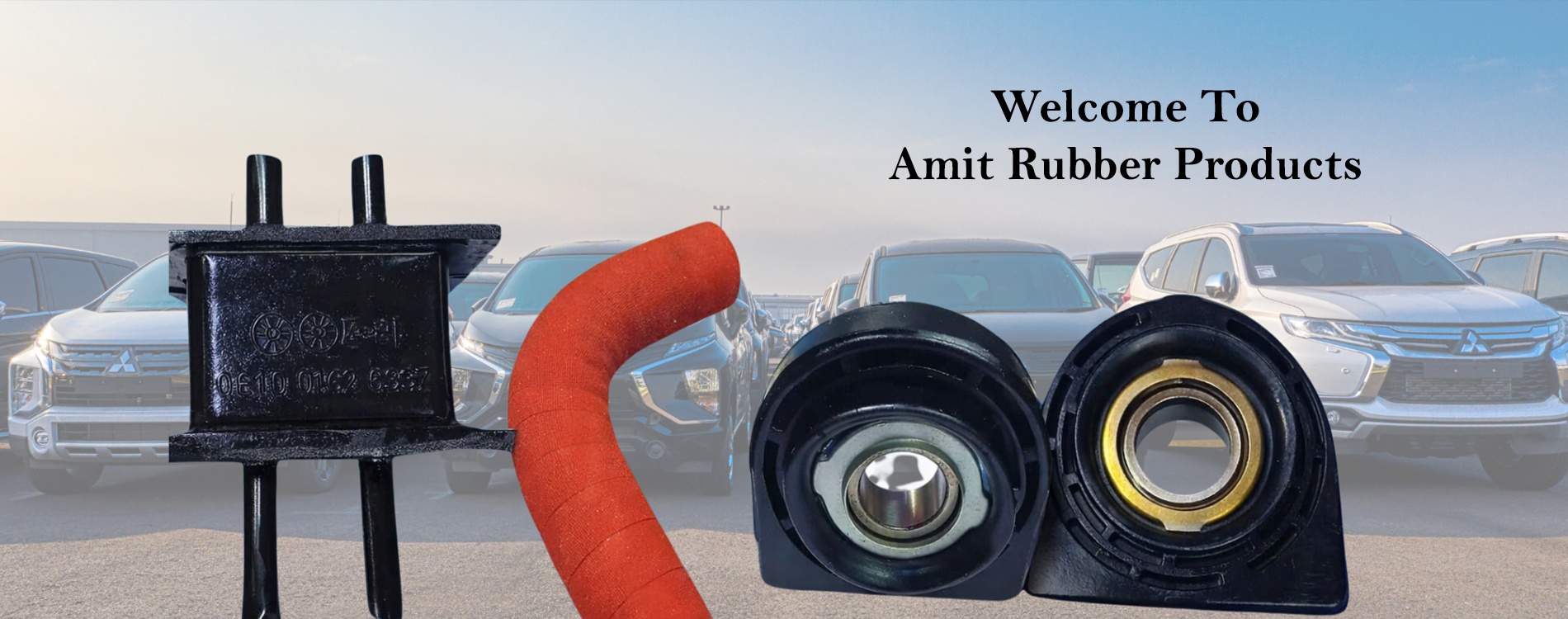
Since 1980, Amit Rubber Products has engineered and manufactured heavy-duty turbocharger rubber hose pipes, red rubber boost couplers, multi-ply silicone hump hoses, and custom-profile finger hoses in Delhi, India. Designed to surpass rigorous OEM fleet benchmarks for Tata Prima, Signa, 2515, 4018, and Ashok Leyland U-Truck platforms, our turbocharger hoses deliver zero-burst reliability and exceptional clamp-grip retention across global transport corridors.
Core Heavy-Duty Hose Families
Selecting the Right Turbocharger Rubber Hose Pipe Architecture
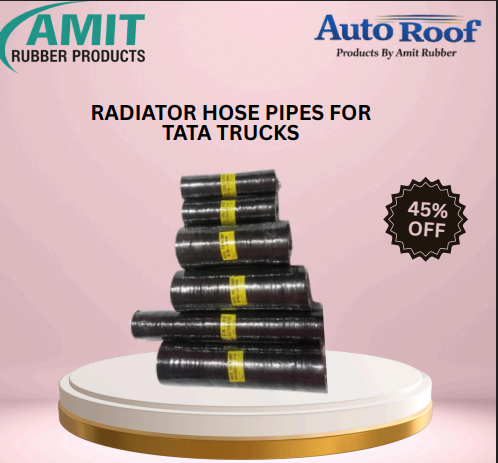
Not all turbo hoses face identical chemical and physical stresses. Sourcing managers must align wall architecture, reinforcement weave, and elastomer compounding to the exact position within the charge-air cooling circuit.
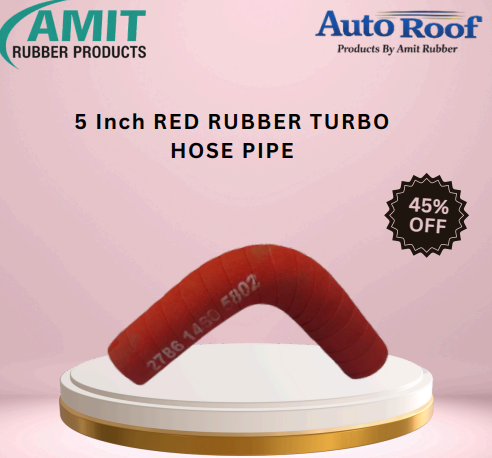
Heavy-Duty Red Rubber Turbo Hose Pipe (Straight & Reducer Profiles)
Engineered primarily for post-turbocharger discharge lines and charge-air cooler (CAC) interconnects, our proprietary red rubber turbo hoses combine high-tensile synthetic rubber outer jackets with multi-layered synthetic fabric plies. Formulated to resist surface hardening, thermal crystallization, and high clamp shear, these hoses maintain internal bore geometry without collapsing under dynamic vacuum or ballooning during transient boost spikes.
- Inner Diameters (ID)3.0" (76mm), 3.5" (89mm), 4.0" (102mm), 5.0" (127mm) straight & stepped reducers
- Reinforcement3 to 5 plies of tightly-calendered polyester or meta-aramid woven fabric
- Operating WindowContinuous -40°C to +150°C (Intermittent surges up to 180°C)
- Target FleetsTata 1613, 2515, 2518, Signa 4018, Ashok Leyland Taurus and Cargo fleets
 ddddddd.png)

Multi-Ply Silicone & Synthetic Hump Hose Pipes
Rigid aluminum or stainless steel charge-air plumbing will crack or fatigue if engine pitch and frame torsion are transferred directly across connections. Our silicone and specialized elastomer hump hoses feature precision-engineered annular convolutions that absorb both axial expansion and angular misalignment up to 12 degrees. The molded hump acts as a mechanical bellows, dissipating high-frequency powertrain resonance before stress reaches the intercooler inlet tanks.
- ConvolutionsSingle and double hump configurations with internal stainless steel retaining rings
- Thermal Range-55°C to +230°C continuous, accommodating extreme modern EGR/SCR heat soak
- Pressure EnvelopeOperating pressure: 0.3 to 0.9 MPa; burst pressure: > 2.2 MPa
- Primary FunctionDecouples torque vibration between chassis-mounted CAC and tilting engine block
.png)
dvd.png)

Multi-Angle Finger Hoses & Preformed Turbo Elbows
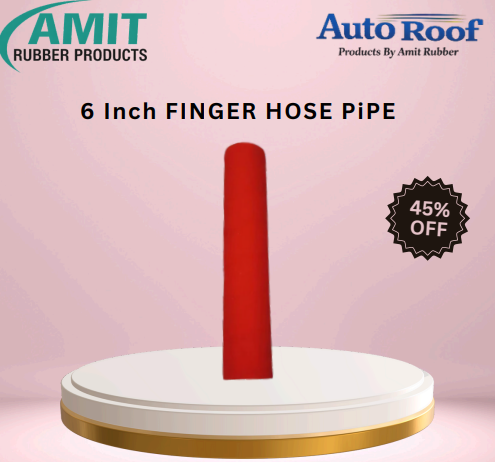
Engine bay packaging in Euro VI / BS-VI commercial transport leaves minimal clearance between radiator cowlings, exhaust heat shields, and suspension towers. Our 3-inch, 4-inch, and 6-inch preformed finger hoses and mandrel-shaped elbow pipes (45°, 90°, 135°) prevent flow throttling, internal boundary-layer turbulence, and kink-induced boost restriction under high suction or boost pressures.
- Bend GeometryPrecision steel mandrel molded; consistent wall thickness maintained across elbow radius
- Burst ResistanceMulti-directional fabric orientation stops localized blistering on the outside radius
- CustomizationBespoke tooling fabricated in-house for fleet drawings, legacy models, and export specs


Product Development Trends in Turbocharger Hose Engineering
Global emission mandates, downsized high-boost engines, and demanding fleet duty cycles are fundamentally transforming the design and material architecture of charge-air hose pipes.
1. Fluoroelastomer (FKM) Co-Extruded Liners
Modern closed-crankcase ventilation (CCV) systems route aggressive synthetic oil vapor, unburnt hydrocarbons, and acidic blow-by gas directly through the turbocharger. Conventional rubber degrades quickly when saturated with hot engine oil, leading to rubber swelling, softening, and ply separation. Leading turbo hoses now integrate a micro-thin FKM (Viton) or fluorosilicone inner barrier that isolates the rubber matrix from chemical attack.
2. High-Modulus Meta-Aramid (Nomex) Fabrics
Standard polyester reinforcement fabric experiences significant tensile strength loss when temperatures hover above 140°C for prolonged haul cycles. As a result, commercial vehicle turbo hoses are rapidly shifting toward meta-aramid (Nomex) woven textiles. Meta-aramid maintains dimensional modulus up to 240°C, preventing hose ballooning, hoop-stress expansion, and cyclic fatigue during sustained mountain climbs.
3. Integrated Retention Rings & Locking Beads
To eliminate catastrophic on-road blow-offs under transient pressure shocks (such as when the throttle valve snaps shut or during abrupt turbo exhaust braking), modern turbocharger rubber hose pipes now incorporate molded internal bead ribs and external stainless-steel retaining rings. These features guarantee mechanical interlock with beaded intercooler pipes even under clamp relaxation.
4. Non-Conductive Anti-Static Formulations
High-velocity dry compressed air passing through rubber or silicone boost ducts generates substantial electrostatic charge. Without proper formulation, electrostatic discharge can burn microscopic pinholes through thin hose plies or trigger electronic sensor faults. New compound formulations feature engineered conductivity additives that safely dissipate charge across grounded pipework.
5. Acoustic Damping Acoustic Resonators
Fleet operators and urban emission rules require dramatic reductions in high-frequency turbocharger whine and compressor pulsation noises. Advanced turbo hose designs now utilize elastomeric micro-perforated cavities and variable-thickness damping zones that suppress acoustic sound pressure without generating air-flow turbulence.
6. Multi-Layer Compounding for Thermal Decoupling
Rather than using a single homogeneous rubber compound, state-of-the-art turbo hoses utilize three distinct, vulcanized functional layers: an inner oil-impermeable barrier, a high-elasticity structural core sandwiching the aramid fabric, and an ozone/abrasion-resistant external jacket engineered to survive continuous road splash, salt spray, and chassis rub.
Future Sourcing Trends for Global Turbo Hose Importers (2026–2030)
How international parts distributors, fleet maintenance contractors, and OE tier suppliers are reshaping their automotive rubber supply chains for greater resilience and lower Total Cost of Ownership (TCO).
India as the Global Hub for Precision Rubber
Global procurement teams are diversifying away from single-source Asian hubs. India's highly integrated automotive clusters, specifically the legendary engineering ecosystem around Kashmere Gate in Delhi, offer an exceptional balance of metallurgical capability, synthetic elastomer compounding, competitive tooling economics, and English-speaking engineering collaboration.
TCO Over Initial Unit Purchase Cost
Fleet operators are realizing that saving $2.00 on a substandard turbo hose can cause $3,500 in highway recovery costs, cargo delay penalties, and premature turbocharger bearing failure. Procurement managers now demand verifiable burst test certifications, thermal aging validation, and documented ply counts over bare bottom-dollar pricing.
Demand for Agile Custom Tooling
With thousands of active vehicle models operating in mixed global fleets, buyers need suppliers capable of rapid tooling from sample pieces. Distributors look for manufacturers who can translate a worn physical hose or 2D technical drawing into finished production batches in weeks rather than months.
Need precision-molded turbocharger hoses manufactured to your fleet's exact specs or OE drawings?
Contact UsFour Decades of Direct Manufacturing Excellence from Delhi
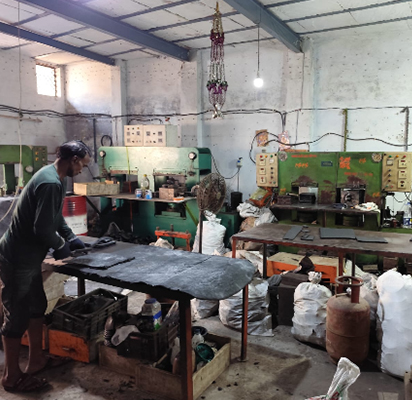
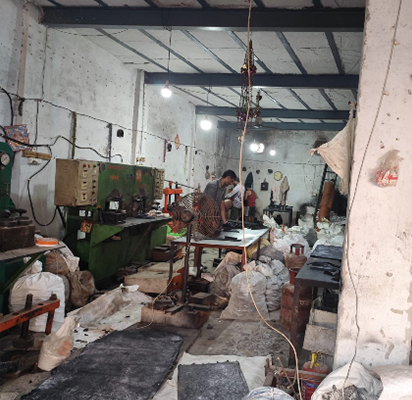
Founded in 1980 in Delhi, Amit Rubber Products is an established Indian manufacturer and exporter of heavy-duty commercial automotive rubber components. We operate as an authentic factory floor producer, not an intermediary trading desk. Over 46 years of hands-on rubber compounding allows us to manage every critical variable — from raw elastomer blending and calendered fabric alignment to hydraulic press vulcanization and pre-shipment dimensional inspection.
Under the direct technical leadership of Mr. Amit Chitkara, we serve international distributors, municipal fleet depots, and heavy truck repair organizations in over 20 countries. Our technical specialists personally review OE cross-references, vehicle operating temperatures, and boost envelope requirements before initiating batch extrusion.
- Direct manufacturer with in-house tooling
- 100% pre-dispatch burst and ply inspection
- Custom compounding to sample or drawing
- Rapid global express and container dispatch
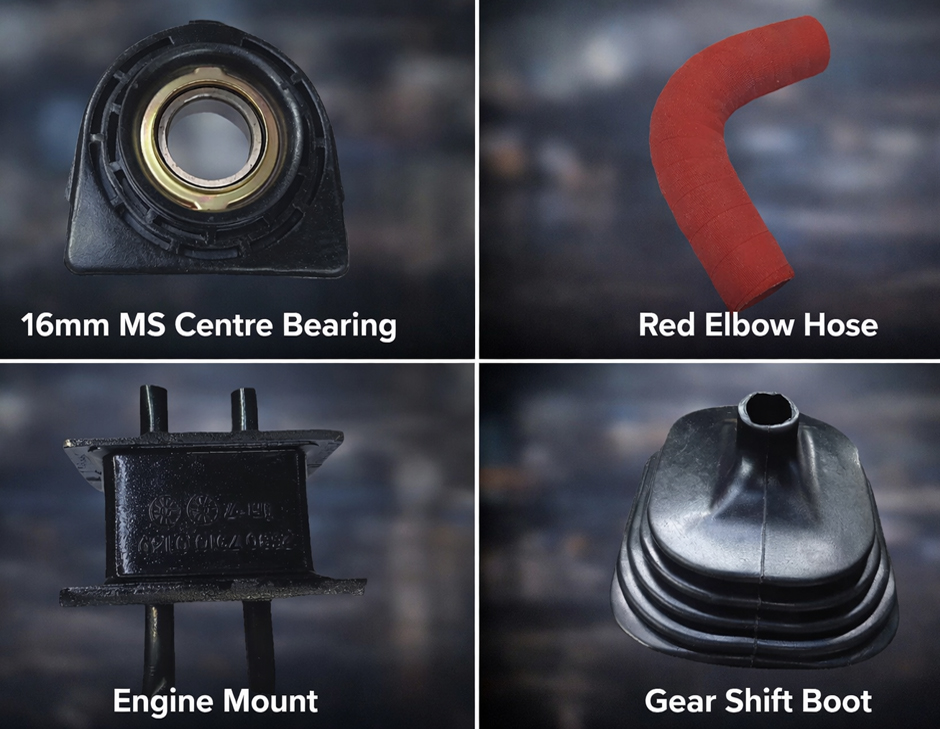
Commercial Applications Where Our Turbo Hoses Excel
From severe mining haulers to high-mileage interstate highway coaches, our turbocharger rubber hose pipes deliver uncompromising reliability.

Long-Haul Freighters
Signa, Prima, and Leyland 40T+ prime movers with continuous boost load.

Distribution Fleets
Stop-and-start urban duty for Tata 407, 709, and intermediate trucks.

Commercial Pickups
Mahindra Bolero, camper pick-ups, and rural transport applications.
Farm Machinery
Combines and high-horsepower turbo tractors facing dust and sustained load.
Intercity Coaches
Marcopolo and luxury bus fleets requiring low acoustic vibration and zero boost loss.
Frequently Asked Questions by Global Turbo Hose Importers
Answers to technical, operational, and supply questions frequently asked by international fleet buyers and engineers.
Why do conventional turbo rubber hoses soften, swell, and burst near the compressor discharge?
What is the difference between red rubber turbo hoses and multi-ply silicone hump hoses?
What clamping mechanisms should be installed with heavy-duty turbocharger rubber hose pipes?
Can Amit Rubber Products manufacture custom turbo hoses from physical samples or CAD prints?
How can fleet maintenance managers diagnose imminent turbo hose failure before a breakdown occurs?
What are your packing, MOQ, and international freight delivery arrangements?
Sourcing Direct From the Delhi Factory Floor
Send your turbocharger hose part numbers, dimensions, or technical drawings directly to our engineering desk. We provide clear fitment confirmation, compound advice, and wholesale pricing.
- Key ContactMr. Amit Chitkara
- Direct Email[email protected]
- Direct Line / WhatsApp+91-9871861285
- Address404/405/12, Rajan Kalan, Kashmere Gate, New Delhi-110006, India
Request a Fast Wholesale Quote
Include as much detail as possible to help us match the correct compound and fabric layers:
OEM numbers and vehicle brand names are cited solely for fitment identification and reference. Amit Rubber Products manufactures replacement and custom parts.
Trusted by Commercial Fleets and Parts Wholesalers
Serving Fleet Operators & Wholesalers Globally
Supplying dependable rubber components across major commercial vehicle networks.