A Drive Shaft Center Support Bearing is a small but essential component in many two-piece driveline systems. It supports the shaft near its midpoint and helps maintain proper alignment as the vehicle moves. Without stable support, the rotating shaft may vibrate, sag, or place stress on nearby joints.
The bearing usually sits inside a rubber cushion or carrier assembly. This cushion absorbs movement while the bearing allows the shaft to spin smoothly. During inspection, technicians often look for torn rubber, excessive play, rust, or a low humming sound beneath the vehicle. A noticeable vibration may increase with speed, especially during acceleration. Small noises matter.
Understanding this component requires more than memorizing its name. Drive shaft design varies between trucks, SUVs, commercial vehicles, and rear-wheel-drive cars. Service procedures also depend on the manufacturer’s specifications, shaft construction, and installation marks. Incorrect positioning can create vibration even when the replacement bearing is new.
A careful diagnosis should separate bearing failure from worn universal joints, damaged mounts, bent shafts, or tire problems. That distinction is important. Replacing the wrong part wastes time and money. Experienced technicians typically inspect the complete driveline, check shaft movement, and confirm symptoms through a controlled road test. Some noises remain difficult to identify at first, and a single test may not reveal the cause. This explanation cannot replace a vehicle-specific service manual. It does, however, provide a reliable starting point for understanding how the Drive Shaft Center Support Bearing works, why it fails, and when professional inspection becomes necessary.
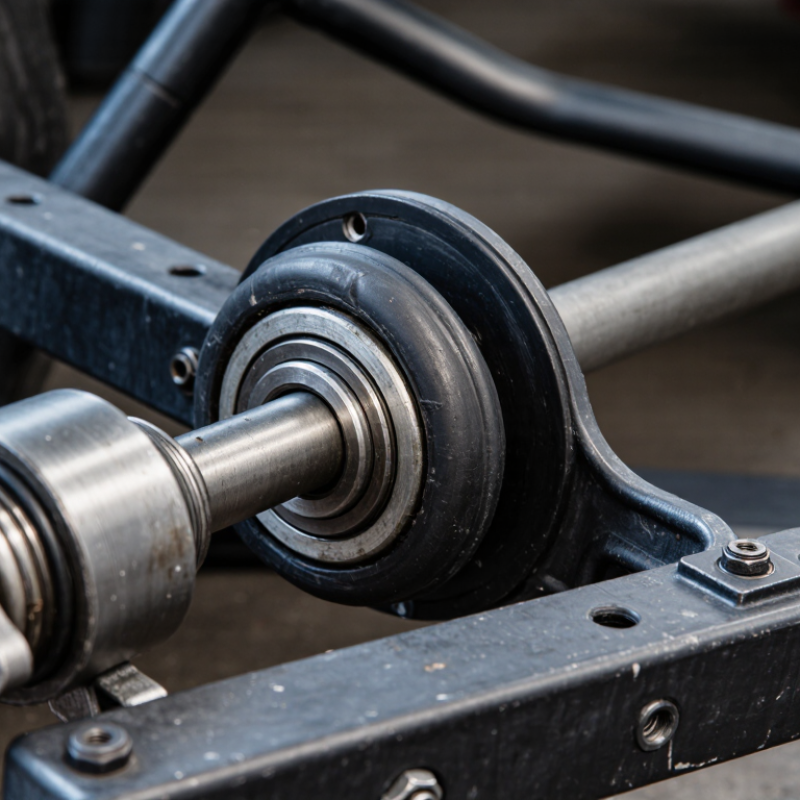
What Is a Driveshaft Center Support Bearing?
What Is a Driveshaft Center Support Bearing?
A driveshaft center support bearing, also called a carrier bearing, supports a long two-piece driveshaft. It sits inside a rubber isolator and holds the shaft near its midpoint. The bearing lets the shaft rotate smoothly while limiting harmful movement. I have seen worn units create a low rumble beneath the seats, especially during acceleration. Vibration may also appear between 30 and 60 mph. That symptom alone is not proof. Tires, universal joints, and differential mounts can feel similar.
The U.S. Bureau of Transportation Statistics recorded about 3.26 trillion vehicle-miles in 2022. Every mile adds rotating cycles, heat, and changing shaft loads. The U.S. Department of Energy’s 2023 Vehicle Technologies Market Report placed the average light-duty vehicle age near 12.5 years. Older driveline parts deserve closer inspection. Check for torn rubber, grease leakage, rough rotation, and excessive vertical play. A small amount of movement may be normal. A sharp clunk is not.
ISO 281 uses L10 life to describe the point when 10% of identical bearings may show fatigue. It is a calculation, not a guarantee for a road vehicle. Water, poor alignment, impact, and incorrect installation can shorten service life. That distinction matters. Replacing only the bearing may fail if the rubber support has collapsed or the shaft is bent. Measure carefully, use the correct preload, and verify driveline angles after installation. My practical mistake would be blaming the bearing too quickly. Diagnosis should come before replacement.
Where It Sits in Two-Piece Driveshaft Systems
What Is a Drive Shaft Center Support Bearing?
Where It Sits in Two-Piece Driveshaft Systems
A drive shaft center support bearing is a mounted bearing that supports the shaft’s middle section. In a two-piece driveshaft, it sits near the midpoint, where the front and rear shafts meet. A rubber-insulated bracket holds the bearing against the vehicle’s underbody. This location matters. It divides the shaft’s length and helps control vibration, bending, and rotational movement.
The front shaft connects to the transmission or transfer case. The rear shaft continues toward the differential. Together, they reach longer wheelbases without using one extremely long shaft. During workshop inspections, worn support bearings often show through humming, clunking, or vibration under acceleration. You may feel the floor tremble around the center tunnel. However, these signs are not proof. Tire noise, worn universal joints, or poor shaft alignment can create similar symptoms.
The diagnosis is not always clean. I have seen a support bearing blamed when a damaged joint caused the noise. With the vehicle safely supported, inspect the rubber mount for cracks, sagging, or separation. Check for unusual shaft movement around the bearing area. A replacement bearing must match the shaft design and sit in its original position. Small alignment errors can create new vibration. The bearing is not merely a spinning part; it keeps the two-piece system stable as torque passes through the vehicle.
How It Supports Radial Loads and 360° Shaft Rotation
What Is a Drive Shaft Center Support Bearing?
A drive shaft center support bearing carries the middle section of a two-piece drive shaft. It supports radial loads created by shaft weight, imbalance, and changing driveline angles. Without this support, the shaft may sag or vibrate at operating speed.
The bearing sits inside a rubber or polymer support mount. Its inner race rotates with the shaft, while the outer race remains fixed to the vehicle structure. This arrangement permits continuous 360° shaft rotation with controlled friction. The support also keeps the shaft aligned as torque passes through the driveline.
Radial load is not theoretical here. A long shaft can pull downward on the bearing during acceleration, especially when its balance is imperfect. The bearing must resist that force while allowing smooth rotation. Small clearance changes matter.
A healthy bearing usually operates quietly. A worn unit may produce humming, clunking, or vibration beneath the floor. Inspection should include the bearing surface, support rubber, shaft alignment, and mounting hardware. Replacing the bearing alone may not correct a damaged mount.
Installation details can be easy to underestimate. The shaft may need correct phasing, alignment, and support preload. These points vary by vehicle design. In practice, the repair is sometimes less tidy than a diagram suggests. A careful technician checks rotational smoothness by hand before final tightening and road testing.
Failure Diagnosis: NVH Symptoms, Wear Limits, and Replacement Criteria
What Is a Drive Shaft Center Support Bearing?
Failure Diagnosis: NVH Symptoms, Wear Limits, and Replacement Criteria
A drive shaft center support bearing supports the shaft between two sections. It usually sits inside a rubber cushion and mounting bracket. Its job is to control shaft movement while allowing smooth rotation. When the bearing wears, drivers may feel vibration through the floor or seat. A low humming sound can increase with road speed. Clunks may appear during acceleration, deceleration, or gear changes. These symptoms often indicate trouble, but they do not prove the bearing failed.
A careful inspection should check the rubber support for cracks, sagging, or separation. The shaft should not move excessively by hand. A mechanic can use a dial indicator to measure radial movement and shaft runout. However, allowable movement differs by vehicle design. Always compare readings with the service specification. A rough bearing may feel gritty when rotated by hand. That test is useful, but not perfect. Tire imbalance, worn universal joints, loose mounts, and differential problems can create similar NVH symptoms. A single test can mislead.
Replacement becomes reasonable when the bearing produces noise, shows rough rotation, or exceeds the specified movement limit. Replace it when the rubber isolator is torn or the bracket is distorted. Do not judge only by mileage. Some vehicles operate smoothly for years, while harsh loads accelerate wear. During replacement, shaft alignment and fastener torque matter greatly. Incorrect positioning can create a vibration that the repair did not solve. It is easy to overdiagnose this part. Road testing before and after inspection remains essential.
Drive Shaft Center Support Bearing: NVH Failure Diagnosis
The chart uses a relative diagnostic severity index from 0 to 100. Increasing humming or growling noise, floor vibration, radial play, and heat are common indicators of center support bearing deterioration. Actual wear limits are vehicle-specific; replace the bearing when inspection confirms excessive play, roughness, binding, damaged rubber support, failed seals, or noise that remains after driveline alignment and joint checks.
Conclusion
A Drive Shaft Center Support Bearing is a key component in a two-piece driveshaft system, positioned at the joint between the front and rear shaft sections. Mounted to the vehicle structure through a flexible support, it keeps the rotating shaft properly aligned while allowing smooth 360° rotation. The bearing is designed to carry radial loads, control shaft movement, and reduce vibration as torque travels through the driveline.
Its service life is commonly evaluated using an L10 rating, which estimates the operating life before a defined percentage of bearings may show fatigue. Load capacity, expressed in newtons (N), and rotational speed, measured in rpm, are important factors in this calculation. Failure may produce humming, rumbling, vibration, clunking, or other NVH symptoms that change with vehicle speed. Inspection should check for excessive play, rough rotation, cracking, or deterioration of the rubber support. Replacement is recommended when wear exceeds acceptable limits or when noise, vibration, and alignment problems indicate bearing damage.