Global buyers need more than a long supplier list when sourcing EPDM Radiator Hose. They need evidence of material consistency, pressure performance, production capacity, and dependable export service. The global automotive industry produced approximately 93.5 million vehicles in 2023, according to the International Organization of Motor Vehicle Manufacturers (OICA). That scale creates sustained demand for durable cooling-system components, especially in heavy-duty, commercial, and replacement markets.
Performance remains critical. The SAE J20 standard identifies key requirements for automotive coolant hoses, including temperature resistance, pressure tolerance, and dimensional stability. EPDM is widely selected because its rubber compound performs well against hot coolant, ozone, weathering, and repeated thermal cycling. However, not every EPDM Radiator Hose offers the same service life. Compound formulation, reinforcement quality, curing control, and end-fitting accuracy can change field results significantly.
The following outline evaluates leading suppliers through practical purchasing criteria. These include factory experience, test documentation, quality systems, customization capability, minimum order quantities, and international logistics. Industry studies from Grand View Research and Smithers continue to indicate strong demand for automotive rubber components, supported by vehicle production, maintenance, and aftermarket replacement activity. Yet market reports rarely reveal the full supplier picture. They may not show complaint rates, batch traceability, or how a hose performs after repeated coolant exposure.
That gap matters.
Buyers should verify ISO certifications, batch test records, sample approvals, and compatibility with regional vehicle models. Price alone can mislead. A cheaper hose may create installation delays, leakage risks, or premature replacement costs. No supplier ranking is universally correct. This guide therefore combines published market evidence with practical supplier-screening experience, while recognizing that specifications and performance data still require independent verification.
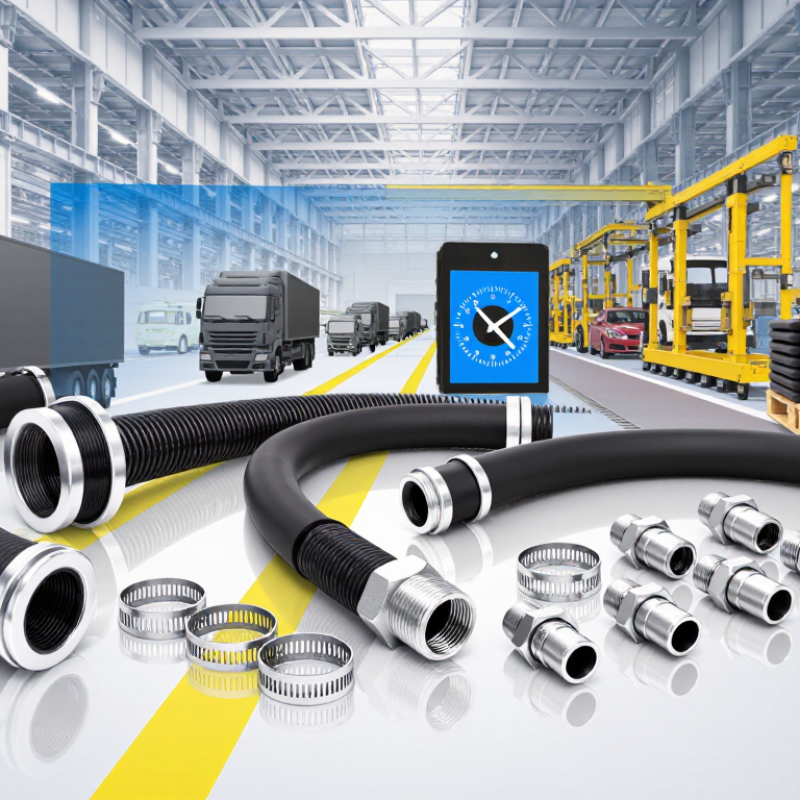
An EPDM radiator hose carries coolant between the engine, radiator, thermostat housing, and expansion tank. EPDM means ethylene propylene diene monomer, a synthetic rubber designed for demanding temperature cycles. It handles hot coolant, ozone, sunlight, and vibration better than many general-purpose rubber compounds. It handles heat well.
A quality hose must resist cracking, swelling, softening, and pressure changes. Typical coolant systems may operate near 90–110°C, while localized temperatures can rise higher. EPDM also works with common water-glycol coolant mixtures, but it is not suitable for petroleum oil or fuel. This detail matters during vehicle maintenance. During inspections, technicians should check for glossy surfaces, flattened bends, and small cracks near the clamps. A hose can look acceptable and still have weakened reinforcement inside.
For global buyers, dependable suppliers should provide dimensional drawings, compound specifications, batch traceability, and test records. Useful evaluations include pressure, burst, leakage, aging, and temperature-resistance tests. Buyers should also confirm inner diameter tolerance and compatibility with the intended coolant. Even a small mismatch can cause seepage after installation. Storage deserves attention too; direct sunlight and excessive heat can shorten shelf life before use. One detail is easy to miss. Over-tightened clamps may cut the hose, while loose clamps may allow coolant loss. I have found that installation instructions are often treated as secondary, although they can decide whether a well-made hose performs reliably. Supplier claims still need independent review and practical verification.
How to Evaluate EPDM Radiator Hose Suppliers Worldwide
A dependable EPDM radiator hose supplier should provide clear material specifications and repeatable test results. Ask for EPDM compound details, temperature ratings, pressure limits, and coolant compatibility. A professional supplier can explain these figures without vague promises. Request samples before placing a large order. Check the hose surface, inner wall, flexibility, and cut edges under bright light. Small cracks or uneven layers deserve attention.
Review the supplier’s quality system, production records, and batch traceability. Independent testing can confirm tensile strength, ozone resistance, heat aging, and dimensional stability. Verify certificates directly, because documents alone do not prove consistent production. Communication also matters. Measure response times, technical accuracy, packaging quality, and export experience. A supplier may look strong online but still struggle with urgent changes. I once focused too heavily on price. That decision made inspection and delivery more difficult than expected.
Tips: Compare at least three suppliers using the same checklist. Ask for a recent inspection report, not an old sample. Confirm hose dimensions in writing, including tolerances and connection lengths. Inspect packaging for crushed cartons, moisture, and missing labels. Discuss replacement procedures before payment. Regional stock may reduce delays, but it can also hide weaker traceability. Keep a small reserve for testing new batches. Supplier evaluation is never perfect. Some risks only appear after real vehicle use.
Global buyers should evaluate EPDM radiator hose suppliers against documented standards, not polished catalogs. SAE J20 remains a key reference for automotive coolant hoses, covering temperature resistance, pressure performance, dimensional stability, and aging. ASTM D2000 adds material classification and measurable property limits. ISO 1817 is useful for checking rubber swelling after fluid exposure. These tests matter when a hose sits beside a hot engine block for thousands of hours.
Quality control should include batch traceability, compound identification, and inspection records. IATF 16949-based systems can strengthen process consistency, especially for high-volume automotive programs. Industry reports from Smithers and The Freedonia Group continue to identify automotive thermal-management components as important rubber-hose demand areas. However, market growth does not prove supplier reliability. Ask for actual test reports, not only compliance statements. Small detail, big difference.
A capable supplier should report burst pressure, ozone resistance, adhesion, hardness, and low-temperature flexibility. For coolant service, buyers should also review compatibility with glycol mixtures, corrosion inhibitors, and modern coolants. Sample testing under real routing conditions is essential. A hose may pass laboratory tests yet kink near a clamp. That happens. Some specifications also leave room for interpretation, so buyers should confirm test temperatures, exposure time, sample preparation, and acceptance limits in writing. Independent laboratory verification is wise for new suppliers, although it adds cost and slows approval. That trade-off is often worth accepting.
The chart presents commonly used engineering reference points for screening EPDM radiator hose specifications: cold-flexibility performance around −40°C, continuous coolant service near 125°C, and short-term peak exposure near 150°C. Global buyers should confirm the actual values through supplier test reports and applicable requirements such as SAE J20, ISO 4081, ASTM D2000, and DIN 73411. Quality evaluation should also include coolant resistance, ozone resistance, burst pressure, dimensional stability, adhesion, and traceability.
Top EPDM Radiator Hose Suppliers for Global Buyers
Global buyers should compare EPDM hose suppliers beyond catalog photos and quoted prices. Experienced manufacturers can explain rubber formulation, reinforcement layers, curing methods, and temperature performance. Ask for test records covering pressure, ozone resistance, burst strength, and dimensional stability. Samples should match production materials, not a special laboratory batch.
Price comparisons need practical detail. A low unit price may exclude tooling, packaging, inspection, or ocean freight. Request quotations for several volumes, such as 1,000, 10,000, and 50,000 pieces. Check minimum order quantities and replacement policies. Lead times also matter. A supplier with local tooling control may shorten development, even when its initial price looks higher.
Production capacity should be measured, not simply advertised. Review the number of extrusion lines, curing ovens, shifts, and trained quality inspectors. Ask for monthly output by hose type and evidence from recent production records. Traceability through batch codes can support faster investigation when defects appear. However, capacity figures may change during seasonal demand. I would verify them through an audit or video inspection. No supplier is perfect. A capable partner should admit limits and explain corrective actions clearly.
An anonymized comparison of representative EPDM radiator hose supplier profiles for international sourcing evaluations.
| Supplier Profile | Typical Buyer Focus | EPDM Hose Construction | Common Standards | Typical Temperature Range | Nominal Size Range | Indicative Export Price* | Minimum Order Quantity | Estimated Annual Capacity | Typical Lead Time | Quality and Testing Capability |
|---|---|---|---|---|---|---|---|---|---|---|
| Profile A High-volume OE-oriented producer |
Vehicle manufacturers, Tier 1 distributors, large aftermarket importers | 3-layer EPDM High-strength textile reinforcement Molded and formed hoses | SAE J20; ISO 1307; customer-specific drawings and validation procedures | -40°C to +150°C continuous service; short-term peaks up to approximately +175°C depending on compound | 6–100 mm internal diameter | US$3.80–18.50 per meter, depending on diameter, geometry, and tooling | 500–1,000 pieces per reference | Approximately 4–6 million meters per year | 30–50 days for standard items; 60–90 days for new tooling | Dimensional inspection, burst pressure, leakage, ozone, aging, adhesion, and impulse testing |
| Profile B Multi-product industrial rubber manufacturer |
Commercial vehicles, agricultural machinery, industrial equipment, regional wholesalers | 2–3-layer EPDM Braided or knitted reinforcement Straight and formed hoses | SAE J20; ISO 1307; selected DIN-based dimensional requirements | -40°C to +140°C continuous service; short-term peaks up to approximately +160°C | 8–120 mm internal diameter | US$3.20–16.00 per meter, generally competitive for standard profiles | 300–800 pieces per reference | Approximately 2–4 million meters per year | 25–45 days for repeat orders; 45–75 days for custom products | Compound testing, hardness, tensile strength, elongation, dimensional checks, pressure testing, and visual inspection |
| Profile C Custom molded-hose specialist |
Low-volume vehicle programs, specialty vehicles, restoration and replacement-part distributors | Molded EPDM Multi-bend assemblies Optional elbows and reducers | SAE J20; ISO 1307; CAD and drawing-based customer specifications | -40°C to +150°C continuous service; application-dependent peak performance | 10–90 mm internal diameter; custom geometry available | US$8.00–42.00 per piece for molded parts; tooling quoted separately | 100–300 pieces per reference | Approximately 0.8–1.5 million pieces per year | 35–60 days for production; 60–100 days including new molds | 3D dimensional inspection, burst testing, vacuum-collapse testing, heat aging, ozone resistance, and fit validation |
| Profile D Aftermarket-focused catalog supplier |
Independent parts distributors, e-commerce sellers, repair networks, fleet maintenance buyers | Standard EPDM Textile reinforcement Large ready-stock catalog | SAE J20; ISO 1307; internal aftermarket inspection standards | -40°C to +135°C continuous service; short-term peaks up to approximately +150°C | 6–76 mm internal diameter | US$2.50–14.00 per meter equivalent; finished assemblies priced by application | 100–500 pieces per reference | Approximately 1.5–3 million pieces per year | 15–30 days for stocked items; 35–60 days for replenishment production | Incoming compound inspection, hardness, dimensional checks, pressure testing, and batch traceability |
| Profile E Premium compound and validation supplier |
Heavy-duty trucks, buses, high-temperature engine compartments, demanding export markets | High-grade EPDM Heat-resistant reinforcement Heavy-duty wall construction | SAE J20; ISO 1307; OEM-style validation and material traceability requirements | -40°C to +160°C continuous service; short-term peaks up to approximately +180°C for approved designs | 8–115 mm internal diameter | US$5.50–25.00 per meter, reflecting compound and validation requirements | 300–600 pieces per reference | Approximately 1–2.5 million meters per year | 40–65 days for standard products; 70–110 days for validated custom designs | Long-term aging, ozone, coolant compatibility, burst, impulse, vacuum, thermal cycling, and material analysis |
| Profile F Flexible private-label export supplier |
Importers, private-label brands, regional distributors, mixed-container buyers | 2-layer EPDM Straight, elbow, and universal hoses Private-label packaging | SAE J20; ISO 1307; buyer-defined packaging and labeling requirements | -40°C to +135°C continuous service; design-specific peak temperatures | 6–100 mm internal diameter | US$2.80–15.50 per meter equivalent, depending on order volume and packaging | 200–500 pieces per reference | Approximately 1–2 million meters per year | 20–40 days for standard products; 40–70 days for private-label orders | Visual inspection, hardness, tensile and elongation testing, dimensional checks, leakage testing, and random batch testing |
For global buyers, a top EPDM radiator hose supplier is not simply the lowest bidder. Grand View Research valued the global EPDM market at approximately US$4.7 billion in 2023. This scale creates many capable factories, but quality varies sharply. Request ISO 9001 certification, material traceability, and documented control of rubber mixing. Ask for production records, not attractive brochures. The supplier should understand SAE J20 requirements, coolant compatibility, burst pressure, ozone resistance, and temperature cycling.
Test before ordering. Require samples from normal production, not specially prepared pieces. Measure wall thickness at several points. Inspect clamps, bends, inner surfaces, and cut edges. An independent laboratory can verify hardness, tensile strength, elongation, compression set, and aging performance. The Society of Automotive Engineers identifies dimensional and performance controls as essential for coolant hose reliability. Still, standards do not replace judgment. I once treated a passing test report as complete proof; it was not.
Manage the relationship with a written quality agreement. Define approved materials, change-notification periods, inspection methods, packaging, and corrective-action deadlines. Use batch numbers on every carton. A practical supplier scorecard can track defects, on-time delivery, response speed, and claim resolution. The World Bank’s Logistics Performance Index shows that international delivery reliability differs considerably between markets. Build safety stock around port delays, not average transit times. Audit the factory periodically, preferably during mixing and extrusion. Keep communication technical and specific. “Looks good” is not a control. Expect occasional mistakes, record them honestly, and review whether your own specifications caused confusion.
It carries coolant between the engine, radiator, thermostat housing, and expansion tank. EPDM means ethylene propylene diene monomer. It handles heat, ozone, sunlight, and vibration well.
Cooling systems often operate around 90–110°C. Localized temperatures may rise higher. A suitable hose resists cracking, swelling, softening, and pressure changes.
No. EPDM generally suits common water-glycol coolant mixtures. It is not suitable for petroleum-based oils or fuel. Check compatibility before installation.
Look for glossy surfaces, flattened bends, and cracks near clamps. Pressing the hose may reveal unusual softness. The inside reinforcement can weaken without obvious external damage.
Request dimensional drawings, compound specifications, batch traceability, and recent test records. Confirm inner diameter tolerances and connection lengths in writing. Documents require verification.
Useful tests include pressure, burst, leakage, aging, and temperature resistance. Ozone resistance and dimensional stability also matter. Independent testing gives stronger evidence than claims alone.
Yes. Examine the surface, inner wall, flexibility, and cut edges under bright light. Uneven layers or tiny cracks deserve attention. A sample may not predict every batch.
Store them away from direct sunlight and excessive heat. Inspect cartons for moisture, crushing, and missing labels. Poor storage can shorten shelf life before use.
Over-tightened clamps may cut the hose. Loose clamps may allow coolant loss. Installation instructions matter more than many buyers expect. This detail is easy to miss.
Compare at least three suppliers with the same checklist. Review response times, technical accuracy, packaging, and replacement procedures. A low price may create harder inspections and delayed delivery. No checklist catches everything.
Choosing the right EPDM Radiator Hose supplier is essential for maintaining dependable cooling-system performance in vehicles and industrial equipment. EPDM rubber is valued for its resistance to heat, ozone, weathering, and coolant, but hose quality depends on material formulation, reinforcement, dimensional accuracy, and long-term durability. Global buyers should assess suppliers through product specifications, testing procedures, quality-control systems, certifications, and proven export experience rather than relying on price alone.
A thorough comparison should include production capacity, tooling capability, minimum order quantities, lead times, packaging, customization options, and total landed cost. Buyers should also confirm compliance with relevant international standards and request samples, inspection reports, and performance data before placing large orders. Clear communication, consistent documentation, transparent payment terms, and effective after-sales support are important for managing international supply relationships. By evaluating technical capability and commercial reliability together, purchasers can select a supplier that provides stable quality, competitive value, and dependable long-term delivery.