A Truck Coolant Hose Pipe carries coolant between the engine, radiator, heater core, and expansion tank. It works under heat, pressure, vibration, and repeated temperature changes. When the hose weakens, coolant may leak onto the ground or leave a sweet smell near the engine bay. Even a small crack can lead to overheating and expensive engine damage.
Choosing the correct hose requires more than matching its outside appearance. Check the truck’s make, model, engine type, hose position, and original dimensions. Measure the inside diameter carefully. A loose connection may leak, while a tight fit can stress the rubber. Confirm the hose material and temperature rating, especially for heavy-duty vehicles working in hot climates or carrying heavy loads. Reinforced silicone and high-quality EPDM are common options, but each application has different demands. That detail matters.
Look for smooth bends, strong clamps, and clean connection points. The hose should not touch sharp brackets, belts, or exhaust components. Experienced technicians often inspect nearby hoses because one failed part may indicate broader aging. Still, visual inspection has limits. A hose can feel firm outside while deteriorating internally. This is easy to miss.
This guide explains what a Truck Coolant Hose Pipe does and how to select one reliably. It focuses on practical inspection, fitment, materials, and maintenance decisions. Manufacturer specifications should remain the final reference. No universal hose suits every truck. That assumption can become costly.
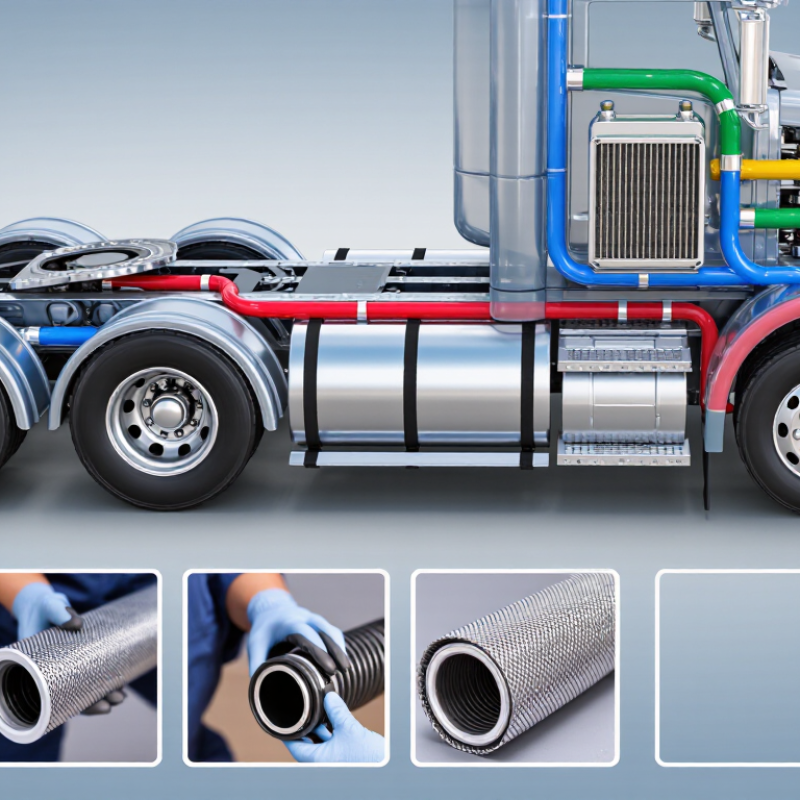
Truck Coolant Hose Pipes: Function in 80–105°C Diesel Cooling Systems
What Is a Truck Coolant Hose Pipe and How to Choose One?
A truck coolant hose pipe carries coolant between the engine, radiator, heater, and expansion tank. In diesel cooling systems, it commonly works between 80 and 105°C. It also faces vibration, pressure changes, and repeated heating cycles. A reliable hose should resist heat, coolant chemicals, ozone, and oil contact. Reinforced rubber or suitable synthetic materials usually provide better stability than thin, general-purpose tubing.
Measure the original hose carefully. Check its inner diameter, length, bend angle, and connection shape. A hose that looks close may still kink near the thermostat housing. That restriction can reduce coolant flow and raise engine temperature. Confirm the hose’s temperature rating and pressure rating before installation. Inspect clamps, too. A strong hose with a weak clamp can still leak. In workshop inspections, technicians often find damage hidden under clamps or protective sleeves. Even experienced people can miss it. Recheck the entire route.
Tips: Select coolant-compatible material, not just a matching size. Keep the hose away from exhaust heat, sharp edges, and moving belts. Use proper clamps without cutting the rubber. After installation, warm the engine gradually and inspect for seepage. Check again after the first working cycle. My checklist is not perfect, especially when access is limited. A second inspection is worthwhile.
Truck Coolant Hose Pipes for 80–105°C Diesel Cooling Systems
The chart compares the typical diesel coolant operating window with common coolant-hose material temperature capabilities. Select a hose with a continuous temperature rating above the system’s maximum temperature, and verify coolant compatibility, pressure rating, inner diameter, bend radius, and vacuum resistance.
Typical engineering ranges: diesel coolant systems commonly operate around 80–105°C; EPDM coolant hoses are often rated approximately 125–150°C continuously, while silicone coolant hoses are commonly rated approximately 150–180°C. Always confirm the exact specification for the vehicle and hose construction.
Hose Materials and SAE J20 Standards: EPDM, Silicone, and Reinforcement
A truck coolant hose pipe carries coolant between the engine, radiator, heater, and expansion tank. Its material must handle heat, pressure, vibration, and repeated flexing. In workshop inspections, I check the hose while the engine is cold. A soft spot, swollen end, surface crack, or dried-out bend can reveal internal damage. Appearance alone is not enough.
EPDM is widely used because it resists hot water, glycol-based coolant, ozone, and weathering. It suits many standard cooling systems. Silicone hose usually tolerates higher temperatures and remains flexible, but it may not resist oil contamination well. Keep it away from leaking lubricant. Reinforcement matters too. Textile layers improve pressure strength and reduce expansion. Some designs use extra reinforcement near bends or connections. More layers do not automatically mean better performance.
SAE J20 provides requirements for coolant hose construction, performance, dimensions, and temperature resistance. Check the hose marking and the vehicle manufacturer’s specifications before purchasing. Match the inside diameter carefully; a small mismatch can cause leakage or clamp damage. Measure the bend radius as well. A hose forced into a sharp turn may collapse internally. I prefer a hose with enough length for engine movement, but not so much that it rubs against nearby parts. This is where selection can become imperfect. Real engine compartments are crowded, and one measurement may not show every movement. Inspect the installed hose again after a short service period.
Sizing the Hose: Match Inner Diameter, Bend Radius, Length, and Clamps
A truck coolant hose pipe carries hot coolant between the engine, radiator, heater, and expansion tank. Correct sizing matters more than appearance. Measure the fitting’s outside diameter, then select a hose with a matching inner diameter. Do not rely only on the old hose. Heat can swell its opening and create a false measurement.
Check the bend radius before cutting any length. A hose may fit when the engine is cold but flatten near a bracket after warming. That restriction can reduce coolant flow. Follow the hose maker’s minimum bend radius, and allow gentle movement around the engine. Measure the installed path with a flexible wire, adding only enough length for movement and connection. Too little length causes tension. Too much length creates loops that may rub against belts, fans, or sharp edges.
Use clamps that suit the hose and fitting. Position each clamp behind the fitting bead, not on its edge. Tighten firmly, but avoid crushing the rubber. After the first heat cycle, inspect for seepage and check the clamp again when the system is cold. A pressure test can reveal weak connections without guessing. One detail is easy to miss: nearby exhaust heat can damage a correctly sized hose. Add proper shielding or reroute it when clearance is poor. Measurements are useful, but real movement under load still deserves another inspection.
Pressure and Heat Ratings: Allow for Typical 1.0–1.4 bar System Pressure
A truck coolant hose pipe carries hot coolant between the engine, radiator, heater, and expansion tank. Its pressure and heat ratings must match real operating conditions. Most heavy-duty cooling systems operate around 1.0–1.4 bar, but pressure rises during cold starts, pump surges, and blocked airflow. Choose a hose with a working-pressure rating above this range, not equal to it. SAE J20 testing guidance evaluates coolant-hose resistance to pressure, temperature, ageing, and chemical exposure.
Temperature matters just as much. Engine coolant commonly reaches approximately 90–110°C, while nearby exhaust components create much hotter zones. A hose may survive normal coolant temperature but fail early near a turbocharger or exhaust manifold. Check the hose’s continuous-temperature rating, bend radius, inner diameter, and reinforcement. ASTM D2000 material classifications can help compare rubber performance, although they do not replace the hose manufacturer’s technical sheet. Field inspections often find soft spots, surface cracking, or swollen ends before a visible leak appears.
Tips: Measure the old hose after removing it. Confirm both diameter and bend angle. Inspect the radiator cap and clamps too. A strong clamp cannot repair an under-rated hose. Do not rely only on appearance; an apparently clean hose can be internally hardened. Pressure-test the system when practical, and leave room for thermal expansion. My own selection rule would be conservative: allow pressure margin, respect the highest local temperature, and replace a hose when its service history is uncertain. Cost can influence the choice, but downtime usually costs more.
Inspection and Replacement: Check Cracks, Soft Spots, Leaks, and Aging
A truck coolant hose pipe carries coolant between the engine, radiator, and related components. It controls engine temperature under heavy loads. Inspect it only when the engine is completely cool. Look for cracks, swollen areas, soft spots, and flattened sections. Check around bends and clamp connections carefully. A damp surface, colored residue, or sweet smell may indicate a slow leak. Do not ignore small signs.
A reliable inspection includes gently squeezing the hose. It should feel firm but flexible. Replace it if the rubber feels spongy, brittle, or unusually hard. Surface aging can hide internal weakness. I have seen hoses look clean outside while failing near a clamp. Age, heat, vibration, and oil contamination can all shorten service life. Follow the vehicle’s maintenance guidance and use a hose with the correct size, pressure rating, and temperature resistance. Never force a poor-fitting replacement.
Tips: Photograph the hose routing before removal. Compare the new hose with the old one. Clean the fittings before installation. Position clamps behind the raised fitting edge. Avoid overtightening, which can cut the rubber. After refilling coolant, remove trapped air according to the service procedure. Run the engine, inspect for leaks, and check the coolant level again when cool. A second inspection is worthwhile. Even experienced technicians can miss a tiny seep.
Conclusion
A Truck Coolant Hose Pipe is a vital part of a diesel engine’s cooling system, carrying coolant between the engine, radiator, and other components to help maintain a typical operating range of 80–105°C. When choosing one, consider durable materials such as EPDM or silicone, along with suitable reinforcement and compliance with relevant SAE J20 requirements. The hose should also be designed for the system’s normal pressure, commonly around 1.0–1.4 bar, while providing enough heat and pressure resistance for reliable service.
Correct sizing is essential for safe and efficient coolant flow. Match the hose’s inner diameter to the connection, and select an appropriate length, bend radius, and clamp type to prevent kinking, loosening, or excessive strain. During maintenance, inspect the hose for cracks, soft spots, swelling, leaks, and signs of aging. Replace it promptly if damage or deterioration appears, helping prevent coolant loss, overheating, and unexpected engine downtime.
