Industrial Fleet Inventory
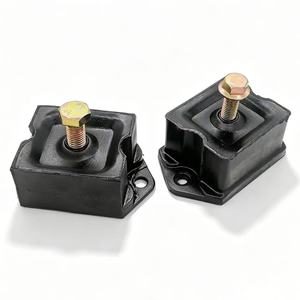
Featured OEM Suspension & Anti-Vibration Components
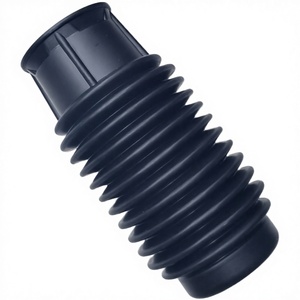
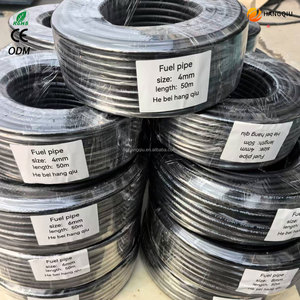
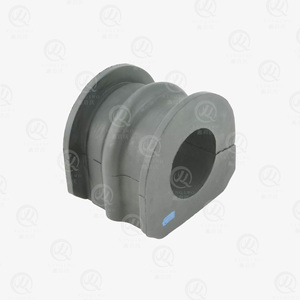
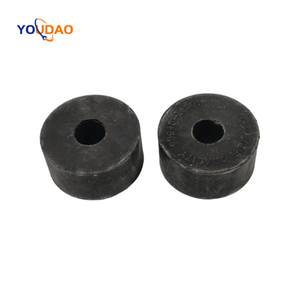
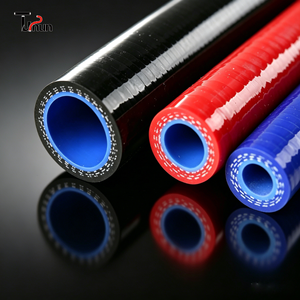
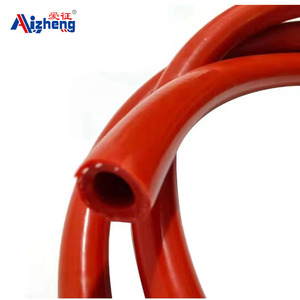
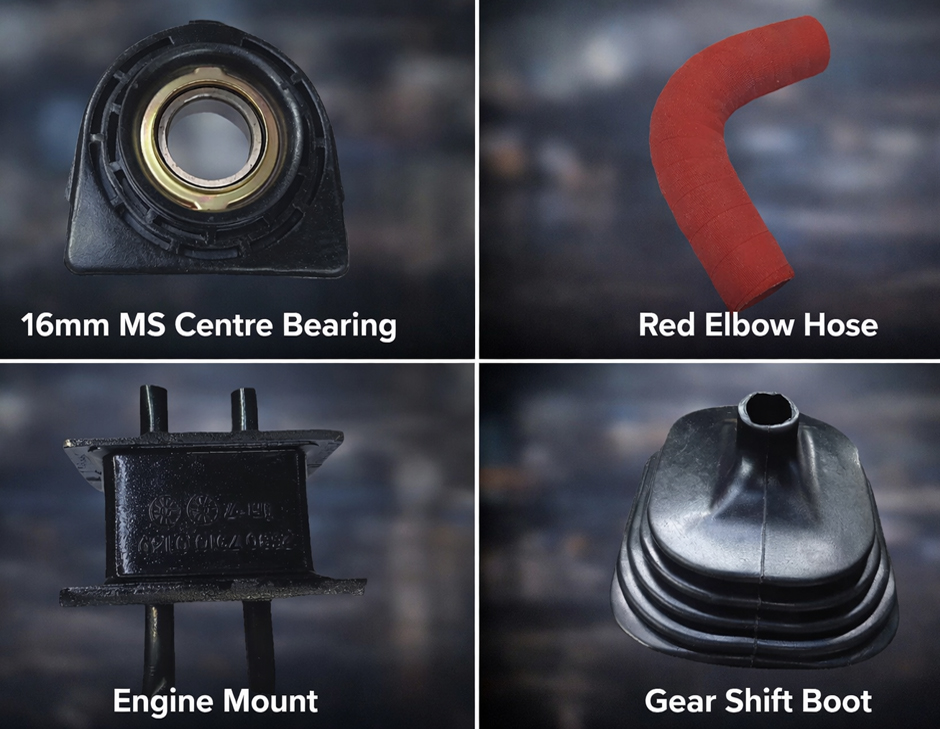
Precision-molded elastomer silent blocks, bonded engine isolators, high-pressure fluid conduits, and heavy-duty suspension bushings engineered to absorb extreme dynamic deflection under punishing commercial payload conditions.
Engineering Whitepaper & Metallurgy
Elastomeric Dynamics: Engineering High-Performance Shackle Rubber Bushings
In commercial vehicles, leaf spring eyelets and suspension shackle mounts encounter compound multiaxial stress vectors—combining torsional deflection, radial impact shocks, and axial thrust loads.
Chemlok® Vulcanized Bonding
Sub-standard bushings rely solely on mechanical friction, which precipitates internal sleeve slippage under dynamic braking torque. Our CE-certified facilities deploy multi-stage automated phosphating and Chemlok® polymeric adhesive bonding. Through thermochemically controlled autoclave vulcanization, the elastomer matrix cross-links directly with high-tensile seamless steel outer and inner sleeves, producing peel strengths surpassing 14.5 N/mm (ASTM D429 Method B).
Shore A Durometer Optimization
Suspension compliance requires a rigorous balance between vibration isolation and directional stability. By calibrating sulfur-cured Natural Rubber (NR) and Styrene-Butadiene blends within 65 to 75 Shore A durometer ranges, our shackle bushings offer controlled radial spring rates. They absorb road frequencies above 15 Hz while delivering the angular rigidity necessary to eliminate trailer yaw, axle tramp, and lane wander.
Dynamic Fatigue & Hysteresis Control
Elastomers undergo internal heat buildup under continuous cyclic deflection. We formulate virgin compounds with ultra-fine N330 furnace carbon black to minimize the loss factor (tan delta) across extreme operating temperatures (-40°C to +120°C). As validated in automated multi-axis servo-hydraulic rigs, our bushings comfortably exceed 500,000 continuous full-articulation cycles without catastrophic micro-cracking or permanent set deformation.
Critical Engineering Insight: Radial Pre-Compression Ratio
High-reliability shackle rubber bushings must maintain an engineered radial pre-compression ratio between 15% and 22% during final pressing into the leaf spring eyes. This residual compressive state prevents internal tensile stress fields from propagating when subjected to high-g terrain impact shocks, multiplying overall operational cycle life by a factor of 2.4 compared to non-pre-stressed alternatives.
Comparative Metallurgy & Elastomer Performance Benchmarks
| Evaluation Parameter | High-Grade Natural Rubber (NR/SBR) | Engineered Polyurethane (Cast PU) | Commercial Grade EPDM Blend | Standard Market Generic Rubber |
|---|---|---|---|---|
| Tensile Strength (ASTM D412) | 21.5 MPa Optimal Resiliency | 28.0 MPa Highest Rigidity | 14.8 MPa | 9.5 MPa (High Fillers) |
| Torsional Articulation Angle | ± 28° (Elastic, noiseless) | ± 15° (Requires lubrication) | ± 20° | < 12° (Early bond shear failure) |
| Compression Set (22h @ 70°C) | ≤ 18% | ≤ 24% | ≤ 22% | ≥ 42% (Permanent sagging) |
| Resistance to Hydrocarbons | Moderate (Neoprene barrier coated) | Exceptional (Immune to diesel/grease) | Poor (Hydrocarbon swell) | Poor (Rapid degradation) |
| CE & IATF 16949 Compliance | Fully Certified | Fully Certified | Fully Certified | Non-Compliant / Unverified |
Industry 4.0 & Global Supply Chain
Strategic Sourcing & Technological Trends in Heavy Suspension (2025–2030)
Fleet operating models are undergoing systemic transitions. Fleet managers, tier-1 chassis integrators, and replacement part distributors are navigating shifts in raw material traceability, ESG compliance, and digital predictive maintenance.
Hyperelastic FEA & Mooney-Rivlin Modeling
Traditional trial-and-error tooling has been replaced by finite element simulation of hyperelastic elastomer compounds. Employing Mooney-Rivlin and Ogden strain energy formulations, our engineering units calculate non-linear stress distribution across inner bonding radii prior to mold cutting. This mitigates local shear concentrations and accelerates custom sample delivery timelines by 60%.
Zero-Lead & Low-VOC Polymeric Chemistries
European environmental directives (REACH SVHC and RoHS 3) mandate stringent restrictions on aromatic plasticizers, heavy-metal activators, and short-chain chlorinated paraffins. Our export-grade shackle bushings are compounded using bio-derived plasticizers and non-toxic curing accelerators, satisfying CE and European environmental protocols without sacrificing elastomer tear strength.
Supply Chain Resiliency & Dual-Sourcing
Geopolitical turbulence and shipping bottleneck risks have catalyzed bulk stocking strategies among global fleet distributors. Buyers are migrating toward accredited manufacturing partners with complete vertical integration—from in-house steel sleeve CNC turning and surface passivation to precision rubber injection molding and batch rheometer testing under one roof.
Factory Excellence Since 1980
Amit Rubber Products: Over Four Decades of Precision Heavy-Vehicle Elastomer Engineering
Established in 1980 in Delhi's historic Kashmere Gate automotive industrial ecosystem, Amit Rubber Products, directed by Mr. Amit Chitkara, has grown into an international powerhouse in commercial driveline, suspension, and cooling components. We deliver OE-matched fitment across Tata commercial vehicles (407, 709, 1613, 2515, Signa, Prima), Ashok Leyland (including U-Truck), Marcopolo buses, Mahindra Bolero utility platforms, tractors, and combine harvesters.
- Direct Factory Economics: Zero intermediary trading markups; in-house tooling cut costs by 15-25% on volume distributor runs.
- Strict Metallurgical & Elastomer QA: In-house moving die rheometers (MDR), tensile dynamometers, and salt spray test chambers (ASTM B117 > 240 hrs).
- Custom Formulations & Rapid Reverse Engineering: 2D/3D CAD drafting or physical OE sample matching for custom hardness, temperature thresholds, or heavy polyurethane specifications.
- Rapid International Logistics: Expedited dispatch via premier ocean and multimodal air freight, packed in moisture-resistant sea-freight crates protecting bonded metal interfaces.
Procurement Intelligence
Frequently Asked Questions for Fleet Importers & Wholesalers
Direct technical and commercial answers addressing common engineering queries from suspension distributors, procurement directors, and tier-2 parts packagers.
What parameters verify CE conformity for shackle rubber bushings and suspension components? +
CE compliance for automotive and heavy-machinery suspension rubber-metal components is governed under the EU Machinery Directive (2006/42/EC) and harmonized standards addressing mechanical shock absorption, structural integrity under load, and chemical safety (REACH Directive EC 1907/2006). Our production lines uphold comprehensive Factory Production Control (FPC), including traceability logs for seamless steel tubing (chemical composition & tensile verification), polymer compound batch curing sheets, and certified dynamic fatigue life documentation demonstrating structural integrity without catastrophic sleeve detachment.
How do you handle cross-referencing for obsolete OE numbers or customized heavy-duty dimensions? +
Our engineering repository houses over 4,500 OE dimensional cross-references spanning commercial truck manufacturers worldwide (Tata, Ashok Leyland, Sinotruk HOWO, Mercedes-Benz commercial, Volvo, Scania, and trailer axle designs such as York, BPW, and Hendrickson). When an OE number is superseded or unavailable, our metrology team works directly from physical wear samples, assessing inner pin diameter (ID), outer shell diameter (OD), total sleeve length, flange geometry, and rubber shore hardness. Custom tooling can be fabricated in-house within 14 to 21 business days.
Natural Rubber vs. Cast Polyurethane: Which material is best suited for severe-duty mining haulage? +
For unpaved off-highway mining, logging, or continuous heavy-tonnage tipping, high-hardness Cast Polyurethane (85-95 Shore A) provides exceptional abrasion resistance, load-bearing capacity, and resistance to petroleum grease contamination. However, Polyurethane possesses higher hysteresis and stiffness, transmitting more high-frequency vibration into the chassis. For highway logistics, long-haul freight, and passenger bus chassis (e.g., Marcopolo), sulfur-cured Natural Rubber remains superior due to its high elasticity, silent torsional deflection, and natural vibration absorption. We manufacture both configurations to match specific client operational profiles.
What are your minimum order quantities (MOQ) and sample lead times for overseas distributors? +
For cataloged fast-moving part numbers (including standard centre bearing assemblies, front engine mounts, and balance rod bushes), our baseline production MOQ typically starts at 100 to 200 units per line item to optimize freight efficiency. For bespoke tooling developments, initial prototype evaluation batches of 5 to 10 sample pieces are dispatched via air courier within 10 days post-mold approval. Full container load (FCL) orders typically see dispatch within 25 to 35 calendar days from our central New Delhi export hub.
What anti-corrosion protective treatments are applied to exposed metal sleeves for ocean transit? +
All steel components—both outer pressed shells and inner hardened tubular pins—receive automated zinc phosphating, black trivalent chromate passivation, or electrophoretic deposition (E-coat) prior to adhesive application and bonding. This surface barrier achieves over 240 hours of continuous salt-spray chamber testing (ASTM B117) without red rust formation. Finished parts are wrapped with vapor-phase corrosion inhibitor (VCI) poly-liners inside export cartons, guaranteeing total protection against maritime humidity and condensation cycles.
How do your engineers prevent premature rubber-to-metal bond separation under shock loading? +
Bond degradation is primarily caused by insufficient surface preparation or poorly controlled vulcanization temperatures. Our facility utilizes automated grit blasting (SA 2.5 standard) to create a mechanical anchor profile on metal surfaces, followed immediately by clean-room degreasing and dual-coat primer and Chemlok® adhesive spraying. Injection transfer molds maintain strict temperature profiles (±2°C) during the cure cycle, ensuring 100% elastomer cohesive failure—meaning the rubber itself tears before the rubber-to-metal chemical interface releases.
Partner with an Established Global Suspension Manufacturer
Whether you require standard leaf spring silent blocks, custom-engineered engine mountings, reinforced EPDM fluid conduits, or exclusive OEM distribution agreements, our senior engineering team is ready to evaluate your technical drawings, samples, and annual delivery schedules.