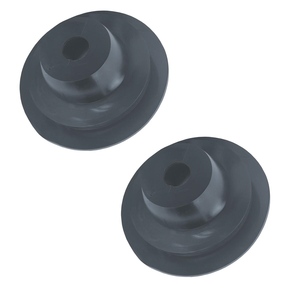
Suspension Protection
Rubber Dust Cover
Material: High-grade Neoprene / EPDM
Feature: Multi-convolution flex, grit seal
Explore our precision-formulated vibration isolation, dust sealing, fluid conduit, and anti-vibration mount catalog. Every component is rigorously tested against high shear stress, severe ozone exposure, and dynamic operational fatigues.
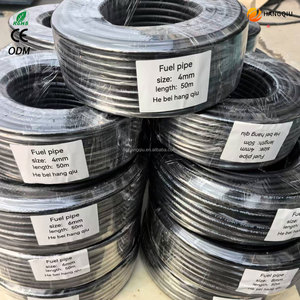
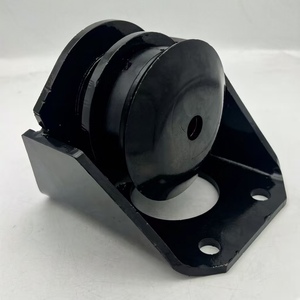
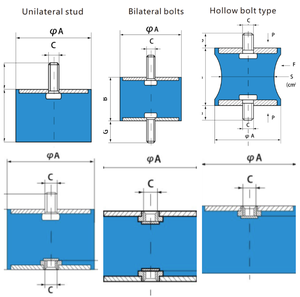
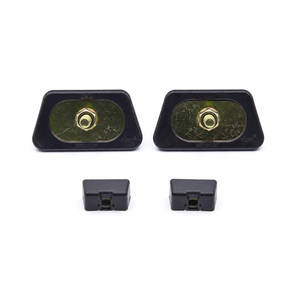
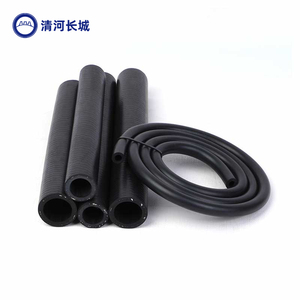
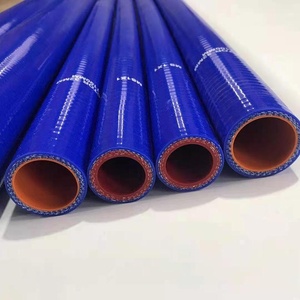
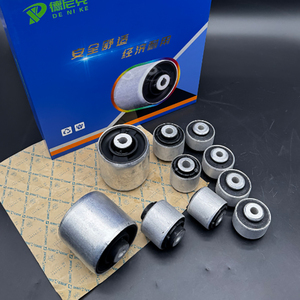
Modern commercial logistics and premium passenger vehicle architectures demand high-performance pneumatic isolation. Sourcing engineers require precise information gain regarding compound hysteresis, multi-ply fabric reinforcement, and cyclic burst pressure safety factors.
Pneumatic bellows undergo tens of millions of expansion and contraction cycles over their operational lifetime. Formulations utilizing cross-linked Natural Rubber (NR) coupled with specialized anti-flex cracking agents prevent micro-fissuring and sustain air-tight seal integrity under dynamic axle articulation.
Under-chassis environments subject air suspension rubber to intense infrared heat, motor oils, road de-icing salts, and high ambient ozone concentrations. Incorporating modern Chloroprene (CR) blends and microcrystalline waxes establishes a non-migrating barrier against environmental embrittlement.
Unlike steel leaf or coil springs, air spring rubber systems offer progressive spring rate curves that isolate high-frequency road vibrations (NVH) from reaching chassis frames, sensitive freight, and passenger cabins, substantially lowering structural wear across entire vehicle platforms.
Procurement officers must weigh chemical resistance, glass transition temperature, and tensile modulus when issuing tender specifications. The matrix below benchmarks key elastomer compounds utilized across commercial pneumatic systems.
| Elastomer Compound | Tensile Strength (MPa) | Dynamic Fatigue Life | Thermal Window (°C) | Hydrocarbon & Oil Resistance | Primary Industrial Application |
|---|---|---|---|---|---|
| Natural Rubber (NR High-Cis) | 22.5 - 28.0 | Exceptional (Grade A+) | -50°C to +85°C | Moderate / Low | Primary Air Spring Inner Liners & Chassis Damper Mounts |
| Chloroprene (CR / Neoprene) | 16.0 - 21.0 | Superior (Grade A) | -40°C to +115°C | High (Grease & Ozone Proof) | Exterior Bellows Protective Skin & Dust Boot Sleeves |
| EPDM (Terpolymer) | 14.0 - 18.5 | Good (Grade B+) | -45°C to +135°C | Low (High Coolant Stability) | Heavy-Duty Radiator Coolant Hoses & Weather Sealing |
| NBR (Nitrile Butadiene) | 15.0 - 19.5 | Standard (Grade B) | -35°C to +120°C | Maximum (Fuel & Oil Proof) | Internal Hydraulic Lines, Oil-Resistant Sleeves & Fuel Hoses |
| Silicone Elastomer (VMQ) | 8.5 - 12.0 | Moderate (Grade C+) | -60°C to +260°C | Good (Chemical Inert) | High-Temperature Turbocharger & Intercooler Hump Hoses |
An air spring rubber bellow is a composite structure. Between internal gas-retention rubber and external protective layers lie bias-angled cord plies (Polyamide 6.6 or Aramid). Calendering angles are maintained at ±53° to ±58° to balance radial expansion against axial stroke elongation without carcass ballooning.
Permanent airtight clamping is secured through high-strength carbon steel bead rings embedded during the compression molding cycle. Chemlok® adhesive bonding systems ensure rubber-to-metal tear strengths exceed parent rubber tensile properties, eliminating rim detachment blowouts.
Shifting vehicle architectures and international trade dynamics are reshaping how Tier-1 systems integrators, commercial fleets, and industrial distributors source precision elastomeric components from China.
Heavy electric vehicle battery packs add 400 kg to 900 kg to commercial trucks and luxury platforms. Traditional steel springs struggle with variable payload balancing. Procurement budgets are rapidly shifting toward multi-chamber air suspension rubber assemblies that guarantee variable spring stiffness and regenerative braking stability.
Global parts buyers are moving away from procuring loose rubber sleeves, separate top plates, and disconnected damping cushions. Buyers now demand integrated complete assemblies—including crimped aluminum pistons, vulcanized buffers, and matched control arm bushings—to streamline assembly lines and compress logistics overhead.
With the European Carbon Border Adjustment Mechanism (CBAM) and strict global ESG reporting, buyers favor Chinese manufacturers operating energy-efficient vulcanization presses, bio-based silica filling systems, and nitrosamine-free curing packages that meet REACH and RoHS directives without sacrificing dynamic life.
Advancements in chemical modeling, robotic automated calendering, and laser inspection are revolutionizing air spring reliability, delivering extended mileage durability that was previously impossible.
Modern toolmaking relies on nonlinear elastomeric FEA algorithms to simulate internal shear deformation under extreme roll angles. Predicting stress concentrations around the bead ring allows engineers to optimize wall-thickness gradations and cord pitch before tooling steel is ever cut.
Automated fabric spreading lines tension each cord thread individually to prevent slack zones. Continuous laser thickness sensors monitor extruded rubber sheet uniformity to within ±0.03 mm, eradicating air pocket trapping during the subsequent bladder building process.
Precision post-cure finishing utilizes liquid nitrogen tumbling chambers that cleanly shear flash without scarring the critical sealing lip. 100% of finished bellows then pass through pressurized helium and water immersion chambers to verify absolute airtightness prior to crating.
Rooted in four decades of precision elastomer compounding and commercial vehicle chassis parts manufacturing, we combine technical depth with agile supply chain fulfillment.
Founded on rigorous tool development and polymer blending, our production facilities have specialized in commercial rubber and polyurethane components since 1980, accumulating profound tribal knowledge in anti-vibration damping.
We maintain thousands of verified drawings matching OEM numbers for Tata, Ashok Leyland, Shacman, Audi, Sinotruk, and European trailers. Precise dimensional accuracy across bracket pitches, bore sizes, and flange depths ensures direct drop-in fitment.
By producing raw rubber compounds, metal stamping brackets, and vulcanized sub-assemblies fully in-house, we eliminate intermediate processing markups, passing decisive margin advantages to global wholesalers and distributors.
From fleet maintenance depots across Latin America, South Asia, and the Middle East to OEM aftermarket distributors in Europe, our parts are packed in moisture-barrier cartons and wooden pallets tailored for rough ocean transit.
Have an obsolete part or unique heavy-machinery vibration isolator? Provide a physical sample, CAD model, or dimensional schematic. Our tooling shop produces prototype cavities in under 20 business days with bespoke Shore A durometer hardness.
We maintain comprehensive safety stocks for fast-moving items like center bearings, silicone hump hoses, and engine pads. Standard orders depart our consolidation warehouses within 48 to 72 hours, minimizing fleet vehicle downtime.
Technical, operational, and commercial answers for sourcing managers, spare parts importers, and fleet logistics directors.
Contact our engineering desk today for comprehensive CAD cross-referencing, compound verification, competitive wholesale volume tiers, and custom tooling development.