Precision Automotive Rubber Hose Series
Engineered to SAE J20, DIN 73411, and ISO 1307 standards. Explore our high-volume export lines built for high-stress hydraulic, coolant, turbo, and fuel circuits.
Engineering Automotive Fluid Circuits: Polymer Science & Pressure Dynamics
A comprehensive technical brief for automotive procurement engineers, tier-1 system integrators, and OEM sourcing directors.
Modern internal combustion engines, hybrid powertrains, and emerging Battery Electric Vehicle (BEV) thermal architectures place unprecedented physical and chemical demands on elastomeric fluid conduits. Automotive rubber hoses are no longer passive conduits; they are critical system interfaces engineered to absorb violent multi-axis powertrain vibrations, survive aggressive cooling chemistries (such as organic acid technology—OAT coolants), and maintain dimensional stability across thermal swings spanning -50°C to +260°C.
Material Selection Matrix: Matching Polymers to Fluid Stressors
A frequent root cause of premature warranty claims in fleet operations is incorrect polymer-fluid pairing. Automotive fluid transfer systems involve distinct chemical mechanisms:
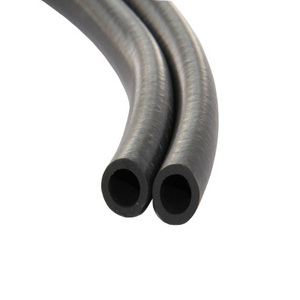
- Ethylene Propylene Diene Monomer (EPDM): The global benchmark for radiator, heating, and cooling circuits. Exceptional resistance to ozone, polar fluids, and hot water-glycol mixtures. Fully resistant to weathering and electrochemical corrosion. Non-resistant to hydrocarbons, petroleum fuels, and mineral lubricants.
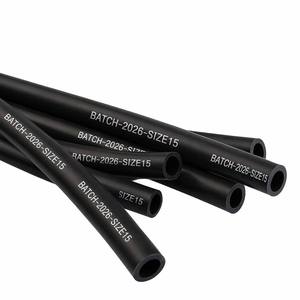
- Nitrile Butadiene Rubber (NBR): Formulated with variable Acrylonitrile (ACN) content (typically 28% to 45%). Provides impervious resistance to diesel fuel, unleaded gasoline, crankcase blow-by gasses, and hydraulic lubricants. Critical for low-pressure return hoses, fuel supply circuits, and PCV systems.
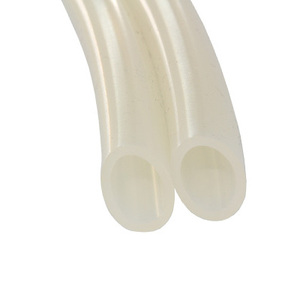
- Silicone (VMQ / Fluorosilicone FVMQ): Indispensable for turbocharger intercooler boots, high-pressure turbo air-bleed hoses, and extreme-heat engine bays. Features wide operating ranges (-50°C to +260°C) and superior elastic recovery, ensuring zero compression set against high-vibration clamp interfaces.
| Polymer Class | Reinforcement Substrate | Continuous Temp. Range | Chemical Resistance Scope | Target Applications |
|---|---|---|---|---|
| Peroxide EPDM | Braided/Knitted Polyester | -40°C to +135°C (150°C peak) | Glycol coolants, OAT/HOAT, water, ozone | Main radiator, cabin heater core, EV battery chillers |
| High-ACN NBR | Helical Nylon / Wire Braid | -35°C to +110°C (125°C peak) | Diesel, gasoline, mineral oils, hydraulic oils | Fuel line feed/return, crankcase breather, oil cooling |
| Silicone (VMQ) | 3-4 Ply Knitted Meta-Aramid | -50°C to +220°C (260°C peak) | Ultra-hot air, minor oil mist, coolants | Turbocharger hump hoses, CAC intercooler piping |
| Fluorosilicone | Aramid Textile Matrix | -50°C to +230°C | Aromatic fuels, aggressive exhaust condensate | EGR bypass circuits, extreme diesel turbo systems |
Electrochemical Degradation (ECD) Mitigation in Radiator Hoses
Electrochemical Degradation (micro-puncture failure) remains the primary hidden driver behind cooling hose failures. When coolant, cooling system brass/aluminum metals, and the hose's synthetic rubber substrate create an active galvanic cell, electrical micro-currents travel across the hose wall. Traditional carbon blacks used in low-grade compounding conduct these currents, causing the rubber inside the hose ID to fissure, form microscopic striations, and ultimately rupture under nominal system pressure. Our automated production line utilizes non-conductive, ultra-pure carbon black masterbatches engineered specifically to exceed SAE J1684 testing standards, eliminating ECD entirely.
Automotive Hose Procurement Trends (2025–2030)
Strategic purchasing vectors driving capital allocation, specification updates, and vendor auditing across North America, Europe, and Asia-Pacific.
EV Thermal Management Migration
Electric vehicle architectures utilize up to 4 times the linear meterage of cooling hoses compared to ICE cars. Multi-branch, tight-radius EPDM hoses carrying dielectric fluid or glycol must possess low volumetric expansion and strict flame-retardant certifications (UL94-V0).
Bio-Based Polymers & Circularity
Global Tier-1 procurement teams demand cradle-to-gate carbon transparency. Sustainable sourcing focuses on bio-derived EPDM synthesized from sugarcane ethanol and recovered carbon blacks (rCB) derived from end-of-life tire pyrolysis, shrinking product Scope 3 emissions.
Low-Permeation Multi-Layer Extrusion
Stringent Euro 7 and EPA Tier 4 emission standards require near-zero evaporative hydrocarbon loss. Extruded rubber hoses increasingly adopt multi-layer constructions featuring thin fluoropolymer (FKM/THV) internal chemical barriers protected by rugged NBR or EPDM outer jackets.
Why Global Distributors Choose Us as Their Strategic OEM Partner
Combining four decades of rubber engineering expertise with state-of-the-art automated manufacturing infrastructure.
46+ Years of Proven Tooling & Mold Heritage
With lineage dating back to 1980, our manufacturing facility houses over 2,500 active molds for light commercial vehicles, heavy-duty trucks (Tata, Ashok Leyland, Leyland U-Truck, Signa), agricultural tractors, and construction machinery. Rapid sample development within 10-14 days.
In-House Polymer Compounding & Rheology Lab
We do not rely on outsourced commercial rubber slabs. Every masterbatch is compounded in automated internal mixers (Banbury mixers) with continuous rotor dispersion control. Every batch undergoes Moving Die Rheometer (MDR) testing to guarantee vulcanization consistency.
Full Value-Chain Assembly & Custom Kitting
From custom CNC cutting processing service to integrated assemblies featuring zinc-plated steel brackets, spring clamps, and quick-connect push fittings. We deliver drop-in, OE-matched kits that lower client assembly overhead and streamline warehouse SKUs.
Procurement & Technical FAQ for B2B Importers
Direct answers addressing technical validations, quality certifications, minimum orders, and custom engineering.
Q1: How do you ensure high-pressure hoses do not delaminate over high-mileage cycles?
Delamination occurs when interfacial bonding between the reinforcement textile (polyester/aramid) and inner/outer rubber layers fails. We deploy computerized Resorcinol Formaldehyde Latex (RFL) dipping baths for our reinforcement fibers, ensuring deep molecular chemical bonding across continuous vulcanization autoclaves.
Q2: Can your factory reverse-engineer hoses directly from vehicle physical samples?
Yes. Our engineering department uses optical CMM 3D scanning arm technology to digitize physical hose geometries, complex bends, variable ID steps, and bracket mounting positions. We reverse-engineer exact chemical compounds via thermogravimetric analysis (TGA) and FTIR spectroscopy.
Q3: What testing documentation is provided with international container shipments?
Every commercial dispatch is accompanied by an inspection certificate including Shore A Durometer Hardness (ASTM D2240), Tensile Strength & Elongation at Break (ASTM D412), Burst Pressure Testing (ASTM D380), Ozone Resistance (ASTM D1149), and Fluid Immersion Swell tests.
Q4: What are your minimum order quantities (MOQ) and production lead times?
For standard catalog dies (EPDM coolant lines, NBR fuel tubes, standard silicone reducers), our MOQ starts at 100 to 300 pieces per SKU. Custom-tooled geometric molded hoses feature an initial tooling cycle of 12-15 days, followed by mass production runs within 20-25 days.