Engineered Suspension Solutions & Bushing Kits
Direct factory manufacturing featuring premium natural rubber compounds, hydraulic fluid damping chambers, and heavy-duty polyurethane bushings tested to OEM benchmarks.
Engineering Integrity in Elastomeric Anti-Vibration Systems
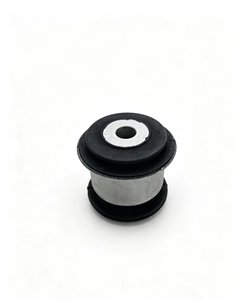
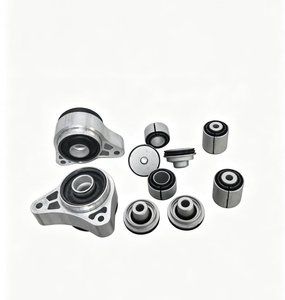
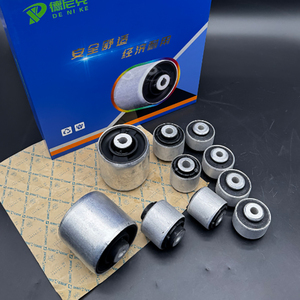
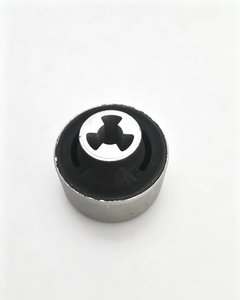
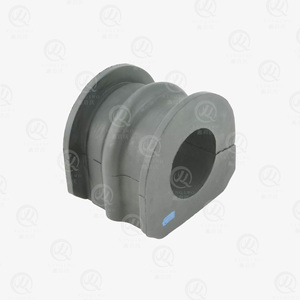
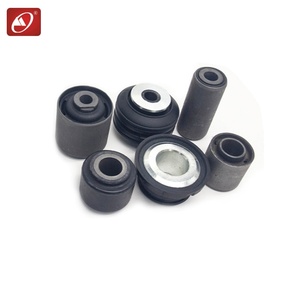
In modern automotive chassis architecture, the control arm bushing represents the critical elastomeric pivot determining wheel kinematics, steering response, and acoustic refinement. As leading China control arm bushing manufacturers and exporters, our production methodologies bridge fundamental polymer physics with rigorous structural metallurgy. From premium passenger cars like Mercedes-Benz W166 and Audi A8 to high-torque electric platforms including the Tesla Model 3 and Model Y, every chassis demands specific radial, axial, and torsional stiffness characteristics.
Our manufacturing philosophy leverages proprietary polymer compounding consisting of Thai and Malaysian RSS3 natural rubber (NR) compounded with optimized concentrations of high-structure carbon black. This structural synthesis preserves high dynamic-to-static stiffness ratios across wide thermal thresholds (-40°C to +120°C) while mitigating micro-crack initiation during high-amplitude deflection cycles. In heavy-duty truck suspension assemblies, where dynamic loads exceed thousands of kilonewtons, our precision cold-drawn steel inner and outer sleeves undergo automated phosphating and multi-layer silane bonding agents to ensure zero rubber-to-metal delamination under severe shear stresses.
Product Development Trends: NVH Physics & Dynamic Damping
How evolving vehicle architectures are fundamentally reshaping suspension bushing material science and structural design.
EV-Specific Viscoelastic Compounding
The mass density of high-capacity traction battery packs, paired with instant motor torque delivery, imposes up to 35% higher longitudinal braking and acceleration loads on control arm bushings. Modern product development shifts toward hyper-dense, cross-linked polyurethane and hybrid EPDM elastomers capable of resisting high mechanical creep without transmitting high-frequency battery cooler or inverter whine into the passenger compartment.
Hydraulic Damping (Hydro-Bushings)
Conventional solid rubber bushings present a constant compromise between dynamic ride comfort and sharp chassis control. The industry trajectory is aggressively adopting hydro-bushings featuring internal fluid channels, membranes, and tuned glycol reservoirs. These provide amplitude-selective damping: soft compliance under small road undulations and rigid hydraulic resistance during heavy braking or directional transitions.
Eco-Friendly Polymeric Bonding
Global environmental mandates (such as REACH and RoHS directives) demand the eradication of heavy solvent-based vulcanization primers. Next-generation bush manufacturing utilizes water-based silane conversion coatings and lead-free passivation on outer steel sleeves. These provide beyond 720 hours of neutral salt spray (ASTM B117) corrosion resistance without ecological harm.
Global Procurement Trends: What B2B Buyers Must Prepare For
Navigating geopolitical resilience, catalog standardization, and total landed cost efficiency in aftermarket and Tier-1 supply operations.
1. Modular SKU Bundling vs. Individual Bushing Replacements
In mature European and North American repair markets, workshop labor rates now far eclipse component parts costs. Consequently, professional distributors are prioritizing complete bushing kits (e.g., front upper and lower paired sets with eccentric bolts and subframe isolators) over individual part numbers. Sourcing partners in China who offer custom pre-packaged, barcoded kit configurations provide downstream distributors with a direct edge in inventory turns and counter sales.
2. In-Depth Technical Verification & Dimensional Metrology
Leading importers are moving away from surface visual inspection. Modern procurement agreements require detailed CMM (Coordinate Measuring Machine) verification, full dynamic stiffness curve reports (K-radial and K-axial curves), and continuous rubber rheometer cure batch documentation. Sourcing decisions increasingly depend on the manufacturer's ability to supply PPAP (Production Part Approval Process) Level 3 documentation directly off the line.
| Performance Metric | Standard Rubber Silentblock | Hydraulic Hydro-Bushing | Polyurethane (PU) Heavy Duty |
|---|---|---|---|
| Radial Stiffness Range | 1,200 – 2,500 N/mm | 800 – 1,800 N/mm (Dynamic) | 3,000 – 5,500 N/mm |
| NVH Isolation Rating | High (Standard Spectrum) | Superior (Low Frequency Damp) | Moderate (Road Feel Tuned) |
| Fatigue Endurance (Cycles) | > 500,000 @ ±8mm | > 750,000 @ ±10mm | > 1,200,000 @ ±6mm |
| Primary Application | Standard ICE Passenger Cars | Luxury OE (Audi, Benz, BMW) | Heavy Truck, Performance, Track |
3. Supply Chain Near-Shore Agility via Standardized Tooling Bases
With ocean freight volatility becoming a permanent consideration, tier-level importers maintain decentralized buffer stock while partnering with China manufacturing facilities capable of agile tooling changeovers. Modern factories that house standard modular mold tooling libraries can scale prototype-to-production runs in under 25 days, reducing inventory lead time from months to weeks.
Engineered Manufacturing Advantages & Reliability
Four decades of tooling mastery, compound customization, and end-to-end quality governance.
Integrated Factory Direct Line
We manage rubber compound formulation, internal elastomer banbury mixing, high-tonnage vacuum compression molding, metal sleeve CNC machining, and automated assembly in-house. Cutting out secondary trading intermediaries preserves direct factory pricing and uniform lot traceability.
100% Quality-Checked Spare Parts
Every single manufactured production batch undergoes automated dynamic fatigue cycler analysis, Shore A durometer hardness verification, and tensile pull-apart testing. Sleeve weld beads are non-destructively evaluated to eliminate unexpected on-chassis fracture risk.
Worldwide Logistics & Rapid Stock
Leveraging high inventory depth of high-turnover OE control arm references, we provide prompt consolidated container dispatch from major maritime ports, backed by premier express forwarding for sample cross-referencing and small-lot trial orders.
Frequently Asked Questions (FAQ)
Addressing common operational, technical, and engineering inquiries from automotive suspension parts buyers.
Can you match custom rubber formulations or develop parts from OE physical samples?
Yes. Our in-house reverse engineering laboratory includes multi-axis optical scanners, coordinate measuring equipment, and polymer spectrometers. By providing a physical control arm bushing sample or OE part reference (e.g., Mercedes-Benz, Audi, Tesla, or heavy commercial truck references), our engineering team identifies the exact outer casing draft angles, inner core dimensions, and baseline rubber durometer (Shore A). We customize compounds in NR, NBR, EPDM, or Polyurethane based on specified operational temperatures and mechanical load requirements.
How do you prevent rubber-to-metal bonding failure under high shear stresses?
Elastomer-to-metal delamination is the leading cause of field warranty claims in inferior aftermarket silentblocks. We eliminate this failure mode through a multi-stage chemical pretreatment protocol: metal sleeves are grit-blasted to remove oxide scales, degreased, and treated with zinc-phosphate conversion. Subsequently, computer-controlled spray robotic heads apply primer and high-bond silane vulcanizing adhesive agents before transfer molding. Finished units routinely pass rigorous peel-strength and axial shear-out destruction thresholds.
What are the primary differences between polyurethane (PU) and natural rubber (NR) bushings?
Natural rubber (NR) compounded with carbon black provides superior internal damping, absorbing high-frequency micro-vibrations and providing OEM-level acoustic refinement (NVH). Polyurethane (PU), on the other hand, exhibits substantially higher tensile strength, minimal deflection under high lateral G-forces, and immune resistance to oils, road salt, and ozone. PU is the preferred specification for track performance, lifted 4x4 off-road arms, and high-load commercial trailers, whereas NR remains the gold standard for passenger OE quietness.
How does your factory ensure fitment tolerances for interference-fit installations?
Control arm bushings rely on precise interference-fit (press-fit) tolerances into stamped, cast iron, or forged aluminum control arm eyes. If the outer sleeve OD is undersized by 0.05mm, the bush walks out under cornering loads; if oversized, the control arm will crack during hydraulic installation. We grind and calibrate outer steel sleeves to strict ISO tolerance classes (typically h6/h7 or specified OE limits) with lead-in chamfers designed for smooth press installations.
What is your typical minimum order quantity (MOQ) and production turnaround?
For existing tooling catalog parts, standard production MOQs generally start at 100 to 300 pieces per SKU. For custom tooling developments, prototype samples can be delivered within 20 to 30 days, with volume production following within 15 days of PPAP sample validation. In-stock inventory can be dispatched immediately through premier freight logistics.