Engineering Showcase: High-Performance Vibration Isolation Mounts
Engineered to suppress mechanical resonance, attenuate harmonic noise, and withstand harsh operating temperatures, hydrocarbon exposure, and dynamic shear forces.
Technical Primer: Principles of Elastomeric Vibration Isolation
Mechanical vibration is an inevitable consequence of rotating, reciprocating, or unbalanced kinetic systems. In applications ranging from commercial transport drivelines to precision CNC equipment and HVAC compressors, uncontrolled mechanical energy transmits through mounting points as structural noise, harmonic stress, and premature fatigue fractures. As a leading manufacturer and supplier based in China, we specialize in the science of elastomeric vibration mitigation—designing components that absorb dynamic kinetic pulses, disrupt resonance channels, and disperse vibration via viscoelastic hysteresis.
At the center of mechanical isolation is the ratio of excitation frequency to the natural frequency of the mounting system. To achieve effective isolation, a rubber damper mount must establish a natural system frequency substantially lower than the disturbing frequency of the operating machine. When the frequency ratio exceeds 1.41, isolation begins; when optimized past 2.5 to 3.0, vibration attenuation frequently surpasses 90% to 98% efficiency. Elastomers provide high inherent damping, preventing catastrophic displacement when mechanical systems accelerate through natural resonance during initial startup or shutdown.
A vital metric in industrial vibration dampening is rubber-to-metal bonding integrity. A damper is only as reliable as the chemical bond connecting the cured elastomer to its structural steel inserts, threaded studs, or support brackets. Utilizing high-performance silane primers and cross-linking adhesive vulcanization under strictly monitored multi-cavity press compression, our manufacturing processes eliminate delamination under high shear, torsional strain, and continuous shock loads.
Comprehensive Manufacturing Capabilities & Material Matrix
Precision rubber damper engineering requires meticulous compound optimization to meet exact shore hardness specifications, dynamic spring rate requirements, and operational environment conditions. Every OEM application operates under a unique combination of static load, dynamic stroke, cyclic speed, and fluid exposure.
Natural Rubber (NR)
Unrivaled mechanical elasticity, superior tear propagation resistance, and low dynamic creep. The premier solution for general industrial machinery, suspension bushings, and engine mounts where chemical contact is minimal.
EPDM Formulations
Exceptional resistance to environmental weathering, UV oxidation, ozone cracking, and high-temperature cooling fluids (-45°C to +150°C). Widely applied in outdoor HVAC units, marine equipment, and radiator mounts.
Nitrile (NBR) & Neoprene (CR)
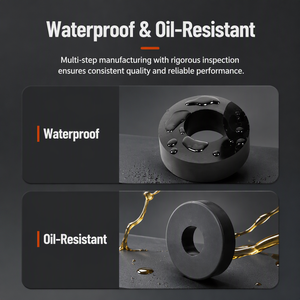
Specifically engineered for powertrains, oil-lubricated transmissions, and hydraulic pumps. Delivers outstanding resistance to petroleum oils, diesel fuel, and industrial grease without premature rubber swelling or softening.
Polyurethane (PU) Elastomers
Provides exceptional abrasion resistance and tensile bearing capacity. Designed for heavy mechanical suspension bushings, fifth-wheel couplers, and heavy-tonnage industrial damping systems.
Fluorocarbon (FKM / Viton)
The ultimate barrier against corrosive chemical splashes, aggressive fuels, and sustained thermal stress up to 220°C. Standard for specialized aerospace, military, and extreme automotive turbo platforms.
Silicone Rubber (VMQ)
Offers wide operational temperature resilience (-60°C to +200°C) and uniform dynamic damping response across cold climates. Applied extensively in sensitive electronics, laboratory instrumentation, and medical devices.
Future Sourcing Trends in the Global Vibration Damper Sector
The global vibration isolation market is evolving rapidly due to three major market forces: the electrification of vehicles (EVs), the modernization of precision manufacturing machinery, and stricter ESG-driven supply chain standards. As procurement specialists re-evaluate their international tier-1 and tier-2 vendor networks, sourcing criteria have moved beyond basic unit cost toward long-term lifecycle reliability.
1. The Rise of Acoustic NVH in Electric Vehicles (EVs): The absence of loud internal combustion engines unmasks high-frequency driveline hums, auxiliary motor vibrations, and road surface shocks. Damper manufacturers must supply advanced micro-cellular elastomers and specialized dual-rate dampeners that isolate low-amplitude, high-frequency excitation without introducing harsh cabin noise.
2. Finite Element Analysis (FEA) Integration in Pre-Tooling: Modern procurement contracts demand accelerated prototyping phases. Buyers require manufacturers equipped with nonlinear FEA modeling software to simulate dynamic stress distribution, strain energy density, and multi-axis fatigue life before cutting production mold steel. This drastically lowers NRE development risk and shortens design cycles.
3. REACH, RoHS, and Carbon-Footprint Traceability: Western markets enforce strict bans on restricted aromatic hydrocarbons, hazardous plasticizers, and toxic curing agents. Strategic buyers now partner directly with Chinese manufacturers operating transparent, compliant chemical inventory systems with verifiable raw material origins and lower carbon-intensity vulcanization setups.
Emerging Technology Trends in Elastomeric Vibration Isolation
The boundary between passive damping and responsive dynamic control is dissolving. Forward-thinking manufacturers are investing heavily in innovative manufacturing technologies, intelligent compound architectures, and advanced surface functionalization.
Magnetorheological (MR) & Electro-Rheological (ER) Fluid Dampers: Next-generation industrial dampening systems incorporate hybrid elastomeric bladders filled with iron-particle fluid suspensions. Subjecting the damper to a variable magnetic field changes its viscosity in milliseconds, shifting the damping coefficient dynamically to adapt to changing machine speeds and variable resonance frequencies.
Nano-Composite Reinforcement: Introducing carbon nanotubes (CNTs) and functionalized graphene platelets into standard natural rubber and synthetic matrices improves structural tear strength, increases thermal dissipation away from dynamic flexure zones, and doubles mechanical fatigue thresholds under continuous cyclical loading.
Eco-Friendly Bio-Based Monomers: As petroleum-derived rubbers face scrutiny, researchers are commercializing bio-polyols, silica fillers harvested from agricultural hulls, and recovered carbon black recovered from devulcanized end-of-life tires, cutting the embodied carbon footprint without sacrificing mechanical properties.
Enterprise Advantages: Why Partner with Our China Factory
Rooted in four decades of precision elastomer compounding and metal bonding manufacturing heritage, our operation provides end-to-end reliability for international procurement leaders and engineering firms.
Full In-House Tooling & CAD/CAM
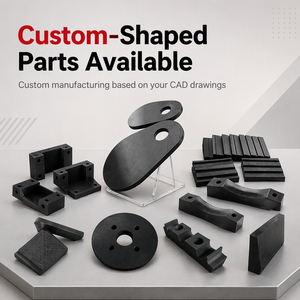
From initial part blueprints and 3D modeling to CNC die machining and multi-cavity injection molds, our internal tooling facility cuts sample validation lead times to just 7–12 working days.
Automated Surface Treatment & Bonding
Metal stamping, sandblasting, ultrasonic degreasing, and robotic adhesive spraying ensure 100% uniform primer thickness. Our metal-rubber shear failure test consistently tears the rubber body before the bond line gives way.
Comprehensive Laboratory Testing
Each production run is certified through rheometer cure testing, dynamic MTS fatigue analyzers, durometer shore hardness mapping, salt spray corrosion testing, and thermal aging ovens.
Procurement & Engineering FAQ
Key technical insights to guide your selection, customization, and bulk ordering process.
How do I select the right Shore A hardness for a vibration damper?
Shore A durometer (typically 40 to 75 Shore A) determines the damper's static deflection under load. Softer compounds (45–55 Shore A) provide greater deflection and superior isolation for low-frequency vibrations, but have lower static load capacity. Firmer durometers (60–75 Shore A) accommodate heavier weights and higher shear stresses, but deliver higher natural frequencies. Our team calculates optimal durometers based on static load per mount point and operational machine RPM.
Can you produce dampers with custom thread sizes and metric/imperial inserts?
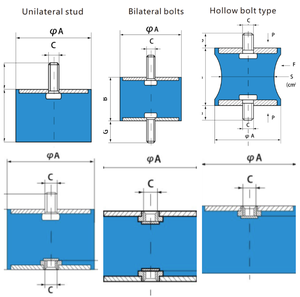
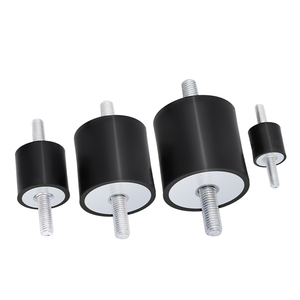
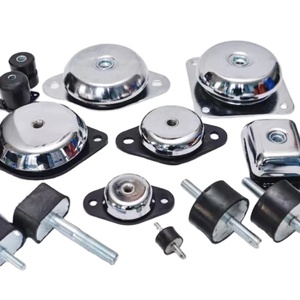
Yes. We manufacture standard VV, VD, VE, and DD cylindrical silent blocks with male/female threading from M3 through M24, as well as UNC/UNF imperial threads. Inserts can be fabricated in zinc-plated carbon steel, marine-grade AISI 304/316 stainless steel, or brass to withstand corrosive outdoor and chemical washdown environments.
What causes premature delamination between the rubber and metal stud?
Bond failure typically results from incomplete rust/oil removal on the metal surface, degraded bonding adhesive, improper vulcanization temperatures, or dynamic shear stress exceeding the joint's design limits. We prevent bonding failure through automated abrasive grit blasting, dual-coat silane adhesion primers, and continuous peel-strength destruction testing per ASTM D429 standards.
How does operating temperature affect damping performance over time?
Elevated temperatures accelerate polymer chain scission and cross-linking, causing hardening, loss of elasticity, and reduced fatigue life. Below freezing, elastomers approach their glass transition temperature (Tg), turning brittle and losing dynamic isolation capabilities. We balance each compound matrix specifically for your application's operating temperature range.
What is the typical production lead time for custom molded samples?
For custom engineered configurations requiring dedicated steel mold tooling, sample fabrication takes approximately 10 to 15 business days. Once tooling and PPAP inspection reports are approved, mass production runs are completed within 20 to 25 days, supported by reliable sea, air, and multimodal logistics.
Do you support OEM part replication from physical samples without CAD files?
Yes. If original manufacturing drawings are unavailable, our engineering team utilizes high-precision 3D optical scanning, CMM coordinate measuring machines, and chemical FTIR spectrometry to reverse-engineer physical mounts, precisely duplicating geometry, durometer, and base elastomer composition.