Featured Flexible Radiator & Coolant Conduit Solutions
Engineered to OEM and Tier-1 replacement benchmarks, our flexible coolant pipelines resist thermal crystallization, pressure surging, and aggressive monoethylene glycol solutions across demanding duty cycles.
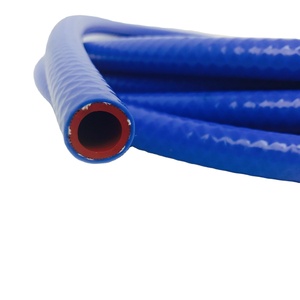
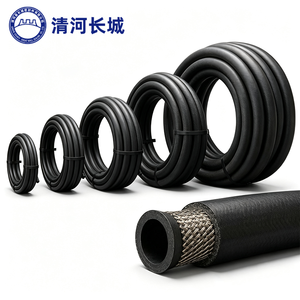
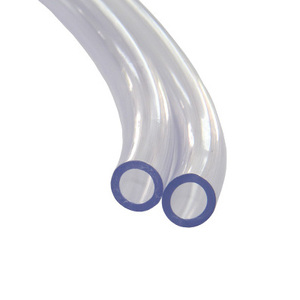
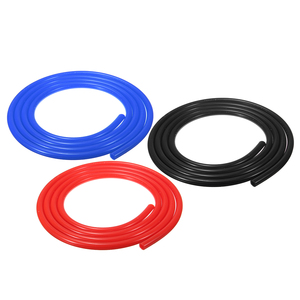
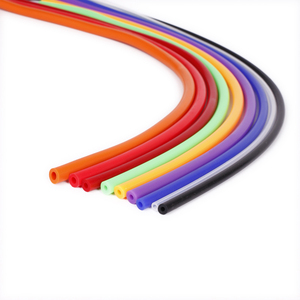
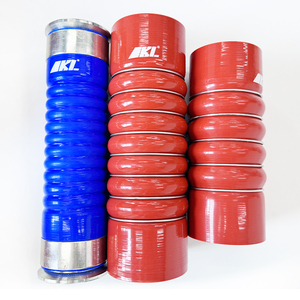
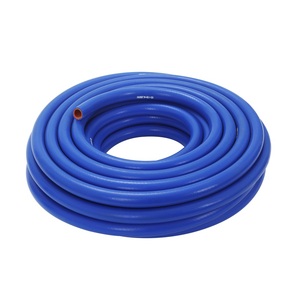
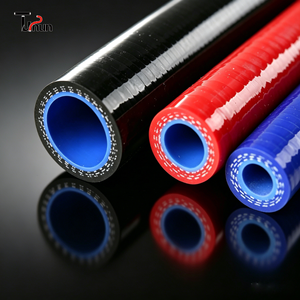
Engineering Whitepaper: Polymer Metallurgy & Elastic Mechanics in Engine Bays
In modern high-efficiency internal combustion engines, turbo-intercooled platforms, and hybrid powertrains, the flexible radiator hose serves as a critical pressure boundary. Far from being a simple rubber conduit, a performance-rated radiator assembly must withstand extreme continuous temperatures, chemical erosion caused by organic additive technology (OAT) long-life coolants, and cyclic structural displacement driven by chassis torque roll.
The manufacturing paradigm across premier Chinese industrial plants utilizes high-density peroxide-cured EPDM (Ethylene Propylene Diene Monomer) and MVQ / VMQ Polysiloxane elastomer platforms. The integration of high-tenacity knitted or spiral-wound aramid (Kevlar) and polyester textile cords gives these flexible channels ultimate burst tolerances up to 2.5 MPa, while preserving sufficient elasticity to absorb high-frequency vibrational stress without transferring shear loads to brittle plastic radiator end-tanks.
| Elastomer Property | High-Grade Sulfur EPDM | Peroxide-Cured EPDM | Silicone Polymer (VMQ/Aramid) |
|---|---|---|---|
| Operating Range | -40°C to +115°C | -45°C to +140°C | -55°C to +250°C |
| Burst Pressure Retention (1000h) | 58% | 84% | 92% |
| Electrochemical Degradation (ECD) | Moderate Susceptibility | High Resistance | Total Immunity |
| OAT/G-12+ Acid Resistance | Standard | Superior | Exceptional |
Why Leading OEMs & Distributors Partner With Us
By combining in-house tooling formulation, rapid prototyping, and automated vulcanization autoclaves, our manufacturing facilities eliminate quality dispersion across large global shipments.
Direct Tier-1 Pricing Structures
By eliminating trading intermediaries and managing compounding in-house, we reduce landed acquisition costs by 18-27% compared to regional distribution warehouses, while upholding stringent SAE J20 and DIN 73411 compliance benchmarks.
Precise Reverse Tooling
From complex multi-axis mandrel forms to tight engine bay routings, our CAD and reverse-engineering labs match physical samples, OE part numbers, and 3D STP step files down to ±0.25mm tolerances within a 7-day tooling turnaround.
Electrochemical & Pressure Assurance
Every flexible hose run passes rigorous salt-fog anti-aging tests, ASTM D395 compression set analyses, and automated cyclical pulse-pressure checks to prevent premature internal micro-fissuring.
Future Procurement Trends for Radiator Conduits (2025–2030)
Global procurement teams must manage key market shifts when sourcing automotive and heavy-machinery fluid transport lines. The industry is moving beyond standard sulfur-vulcanized tubing toward specialized materials:
1. Shift to Low-Permeation High-Temperature Elastomers: Increased turbo-charging and compact engine bays drive under-hood operating temperatures past 135°C. Fleets are moving from standard commercial rubber to multi-ply fluorosilicone (FVMQ) and AEM (Ethylene Acrylic Elastomer) to counter acidic oil-blowby mist and sustained thermal stress.
2. Electrification & Ultra-Pure Thermal Fluid Dynamics: The rapid growth of Electric Vehicles (EV) and battery energy storage systems (BESS) requires dedicated low-conductivity EPDM hoses. These avoid coolant ion leaching, protecting delicate heat exchanger cells and high-voltage power electronics from conductivity shorts.
3. Supply Chain Regionalization & Vendor Qualification: Buyers are reducing stock risk by choosing manufacturers that provide comprehensive PPAP Level 3 documentation, mill test certificates, and full batch traceability back to raw polymer lots.
Product Innovation: The Future of Flexible Coolant Transfer
Explore how automated continuous extrusion and advanced composite reinforcement improve flexible hose manufacturing.
Knitted Reinforcement
Automated multi-axis interlock yarn braiding prevents volumetric expansion under cyclic spikes and stops kink failures along tight radii.
ECD Barrier Liners
Micro-engineered synthetic inner liners stop dynamic micro-galvanic currents that cause internal rubber cracking.
Quick-Connect Integrations
Integrated PA66-GF30 locking collars reduce production line installation times and eliminate incorrect hose clamp torquing.
Bio-Based Polymers
Next-gen bio-EPDM matrices cut lifecycle product carbon footprints while meeting heavy-duty heat and pressure specs.
Flexible Radiator Hose Procurement: Technical FAQ
Common technical and logistics questions addressed by our engineering and export compliance teams.
How do you test and prevent Electrochemical Degradation (ECD) in flexible EPDM hoses?
What are the minimum order quantities (MOQ) and production lead times for custom-molded hoses?
When should an application use reinforced silicone over high-grade peroxide EPDM?
What QA documentation and compliance testing do you supply with commercial export runs?
Can your tooling match complex multi-branch profiles and integrate sensor ports?
Accelerate Your Fluid System Supply Chain Performance
Partner directly with China's dedicated industrial elastomer manufacturing hub. Contact our application engineers for full dimensional evaluations, custom tooling estimates, and factory-direct volume pricing.