Precision Driveline, Suspension & Anti-Vibration Products
Explore our export-certified product lines designed for severe torsional, dynamic, and thermal duty cycles.
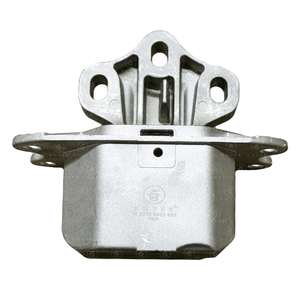
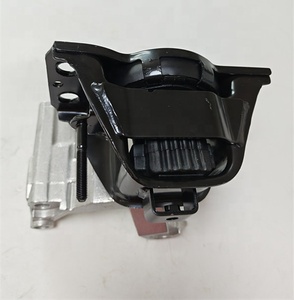
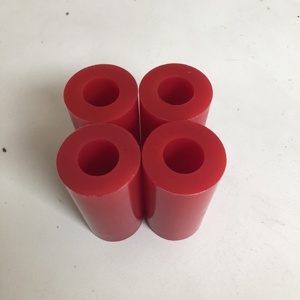
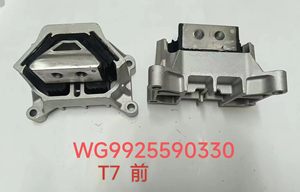
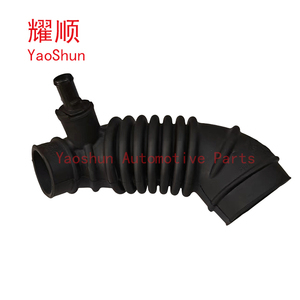
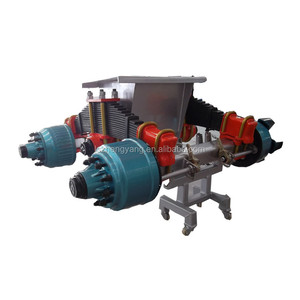
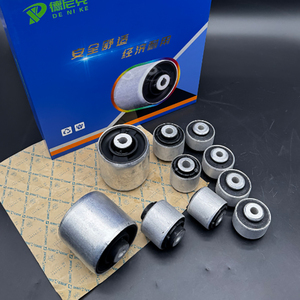
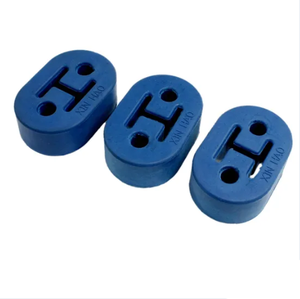
High-Integrity Propeller Shaft Support Systems: Kinematic Resilience & Dynamic NVH Attenuation
A comprehensive technical analysis of drive shaft center support bearings, rubber-to-metal bonding integrity, and elastomer formulations for commercial fleet longevity.
In modern commercial vehicle design, the propeller shaft (drive shaft) operates as the primary artery of torque transmission from the transmission gearbox to the differential drive axles. On medium-duty trucks, heavy-duty prime movers, articulated transit buses, and all-wheel-drive platforms, the driveline span necessitates a split multi-piece propeller shaft configuration to prevent catastrophic rotational deflection, critical whirling speed resonance, and shaft whip. At the epicenter of this driveline architecture sits the Propeller Shaft Center Support Bearing Assembly (commonly designated as the center bearing or hanger bearing). This precision assembly performs a dual mechanical role: it maintains concentric mechanical alignment under severe angular deflection while serving as an acoustic and elastomeric damper isolating high-frequency driveline torsional vibrations from the vehicle chassis.
As leading propeller shaft bearing manufacturers and global exporters originating from China's premier automotive industrial clusters, our manufacturing methodology addresses the rigorous demands of global fleet operators and Tier-1 driveline system integrators. By unifying structural metallurgical stamping, deep-groove precision bearing ball assemblies, multi-lip nitrile synthetic elastomer seals, and custom-formulated natural rubber (NR) and polyurethane (PU) damping cushions, our center support assemblies exceed the dynamic performance thresholds established by international OE standards.
Harmonic Vibration Absorption
Dual-rate durometer elastomer rings isolate torsional driveline frequencies between 30 Hz and 250 Hz, eliminating in-cab acoustic resonance and driveline boom.
Labyrinth Sealing Protection
Reinforced double-lip NBR contact seals augmented with external steel deflector slingers safeguard rolling elements against road slurry, abrasive grit, and brine.
High-Tensile Stamped Housings
Deep-drawn cold-rolled structural steel brackets (Q235B / SAPH440) electro-coated with anti-corrosion zinc phosphating to withstand 1,000+ hours salt spray testing.
The mechanical failure of a propeller shaft bearing represents far more than an isolated component malfunction; it generates destructive cascading loads across universal cardan joints, slip yokes, transmission output shafts, and pinion input bearings. Uncontrolled angular vibration rapidly deteriorates transmission tail-housing oil seals, resulting in premature lubricant loss and catastrophic gearbox seizure. Consequently, Tier-1 purchasing directors and aftermarket parts distributors prioritize suppliers that guarantee zero delamination between the vulcanized rubber cushion and the outer steel retention cage under cyclical dynamic shear loading.
Product Selection & Driveline Specification Recommendations
Aligning vehicle platform duty cycles with bearing core diameters, bracket geometry, and elastomeric durometer scales.
Specifying the correct propeller shaft center support bearing demands exact kinematic evaluation of static load capacities, maximum dynamic articulation angles, and peak rotational shaft speeds. A severe operational mismatch—such as mounting a passenger-car light-durometer cushion onto a high-torque commercial vocational vehicle—causes accelerated elastomer fatigue, bracket buckling, and catastrophic universal joint misalignment. Below is an engineering selection guide based on standardized vehicle platform classifications:
| Vehicle Classification | Typical Platforms | Inner Bearing Bore (Ø) | Elastomer Durometer (Shore A) | Target Torque Capacity | Corrosion Shielding |
|---|---|---|---|---|---|
| Light Commercial & Pickup (LCV) | Toyota Hilux, Mitsubishi L200, Ford Transit, Isuzu D-Max | 30 mm – 35 mm | 55 ± 5 Shore A | 1,200 – 2,800 N·m | Zinc Dichromate / E-Coat |
| Medium-Duty Commercial (MDT) | Tata 407/709, Isuzu NPR, Hino 500, Fuso Canter | 40 mm – 45 mm | 60 ± 5 Shore A | 3,500 – 6,000 N·m | Cathodic Epoxy Primer |
| Heavy-Duty Commercial (HDT) | Sinotruk Howo, Shacman, Mercedes Actros, Volvo FH, Tata Signa | 50 mm – 65 mm | 68 ± 5 Shore A | 8,500 – 18,000 N·m | Heavy Zinc-Nickel Alloy |
| Vocational & Off-Highway | Mining Tippers, Heavy Loggers, Agricultural Combines | 55 mm – 75 mm | 75 ± 5 Shore A (or Hybrid PU) | 15,000 – 26,000 N·m | Tri-Shield Marine Grade |
When selecting replacement assemblies, our engineering laboratory recommends auditing the following operational criteria:
- Centerline Height Tolerances: The vertical distance from the chassis mounting face to the center axis of the shaft bore must maintain a ±0.25 mm tolerance window to preserve driveline cardan angles and eliminate secondary torsional velocity fluctuations.
- Elastomer Damping Envelope: While natural rubber (NR) offers optimal low-temperature flexibility down to -40°C, commercial trucks exposed to persistent oil mist and hydraulic leakage require hydrogenated nitrile (HNBR) or specialized polyurethane (PU) sleeve protection to prevent chemical softening.
- Bearing Core Lubrication: Rolling elements must be pre-packed with high-temperature lithium complex or polyurea synthetic greases with extreme pressure (EP) additives capable of sustained continuous operation from -40°C to +150°C without shear thinning.
Future Global Procurement Trends in Commercial Driveline Bearings
How electrification, automated manufacturing, and carbon neutrality regulations are transforming Tier-1 and aftermarket purchasing dynamics.
The commercial vehicle powertrain sector is experiencing structural transformation. Global parts buyers—spanning multi-brand European warehouse distributors, North American commercial fleet consortiums, and emerging market bus operations—are fundamentally recalibrating their procurement paradigms. The traditional focus on rock-bottom unit price is rapidly yielding to metrics centered on Total Cost of Ownership (TCO), supply chain traceability, and material compliance.
Electric Vehicle (EV) Torque Dynamics
Battery-electric commercial trucks produce instantaneous maximum torque at zero RPM. Procurement mandates center support assemblies capable of absorbing instantaneous shock loads 40% higher than diesel equivalents.
Supply Chain Resiliency & Dual-Sourcing
Western distributors are consolidating supplier bases around Chinese manufacturers equipped with automated stamping, in-house tooling, and vertically integrated compounding facilities to hedge against geopolitical shocks.
Stringent Chemical Directives (RoHS & REACH)
Importers face severe port rejections unless rubber formulations strictly eliminate hazardous polycyclic aromatic hydrocarbons (PAHs), heavy metal vulcanization residues, and restricted nitrosamine accelerators.
Furthermore, cross-regional logistics optimization has sparked high demand for pre-kitted driveline replacement units. Importers increasingly source comprehensive maintenance assemblies that package the center bearing assembly alongside matching universal joints, dust boots, retaining clips, and precision balancing shims. This turnkey approach reduces warehouse handling overhead and guarantees workshop technicians achieve flawless single-step installation.
Technological Frontiers in Propeller Shaft Center Support Bearings
Breakthroughs in microcellular elastomers, acoustic finite element modeling, and sensorized predictive maintenance.
To meet the stringent NVH limits set by contemporary automotive acoustics legislation, center support bearing manufacturing has transitioned from purely empirical mechanical stamping into advanced multiphysics material science. China's top tier manufacturing facilities have introduced several proprietary innovations:
1. Microcellular Polyurethane (MCU) Integration: While conventional NR formulations exhibit linear stiffness degradation under sustained high-amplitude cyclic deflection, progressive MCU compounds deliver volumetric compressibility without lateral bulging. This design maintains exact propeller shaft alignment through dynamic chassis articulation and heavy vehicle payload oscillations.
2. Chemlok® Vacuum-Plasma Bonding: Interfacial adhesion failure between the rubber elastomer cushion and the metallic outer casing accounts for over 65% of field returns in budget aftermarket brands. Next-generation production lines utilize automated robotic shot-blasting, silane coupling primers, and vacuum injection transfer molding. This process creates covalent chemical bonds with shear bond strengths exceeding 14.5 MPa, ensuring the elastomer tears internally before the metal-rubber bond releases.
3. Smart Driveline Condition Monitoring: In collaboration with heavy-haul electric fleet operators, R&D teams are piloting bearing retaining brackets embedded with passive RFID vibration and temperature sensors. These telemetry units warn fleet dispatchers of abnormal bearing race micro-spalling or thermal runaway hundreds of operating hours prior to catastrophic driveline separation.
Industrial Mastery & Global Export Competence
Decades of specialized elastomer-metal engineering, vertical manufacturing infrastructure, and dependable global delivery.
Over 46 Years of Expertise
Founded on extensive automotive rubber compounding and driveline heritage dating back to 1980, we possess profound institutional mastery over commercial vehicle platforms.
Fully Integrated Modern Factory
Equipped with internal stamping presses, multi-cavity vulcanizing presses, robotic PU casting lines, and automated dynamic endurance test benches.
Rigorous Quality Assurance
Zero-defect philosophy: 100% inspection of inner bearing runout, durometer hardness validation, and tensile shear testing prior to container dispatch.
Rapid Custom Tooling & OEM Development
From CAD prints or physical benchmark samples to functional prototypes in 12–18 business days, accelerating your speed to market.
Global Export Supply in 20+ Nations
Proven export logistics across Europe, North America, Southeast Asia, the Middle East, and Africa, supported by comprehensive palletized and boxed seaworthy packaging.
Direct Factory Value & Scalable Volume
Eliminating broker layers to provide Tier-1 quality standards at direct manufacturing cost structures, maximizing gross margin profiles for regional distributors.
Frequently Asked Questions for Propeller Shaft Bearing Procurement
Authoritative answers addressing engineering tolerances, compound resilience, sample verification, and export terms.
How do you guarantee bearing concentricity and radial runout tolerances?
Every bearing assembly undergoes automated laser displacement checking on our balance test stations. Radial and axial runout tolerances are strictly maintained within ≤0.05 mm, preventing shaft whirling and secondary harmonic excitation under high-RPM operating regimes.
Can you manufacture center bearings from physical benchmark samples without OE drawings?
Yes. Our reverse engineering lab utilizes 3D optical coordinate measuring machines (CMM) to capture bracket hole pitch, centerline offset, and bore diameter with 5-micron precision. Our chemists perform thermogravimetric (TGA) analysis to replicate the exact durometer, tensile modulus, and polymer compound of the original sample.
What vulcanization testing protocols prevent rubber-to-metal delamination?
We implement continuous 90-degree peel adhesion tests according to ASTM D429 standards. Our structural components undergo 1,000,000 cycles of dynamic multi-axial fatigue simulation under 15 kN loading to verify absolute adhesive resilience across severe temperature transitions (-40°C to +125°C).
Which lubricant chemistries are specified for high-demand commercial fleet applications?
Our core rolling elements are factory-packed with premium NLGI Grade 2 synthetic lithium-complex or polyurea grease containing anti-wear zinc dialkyldithiophosphate (ZDDP) additives. This formulation prevents boundary friction, oil bleed, and oxidation across heavy vocational duty cycles.
What are your standard Minimum Order Quantities (MOQs) and production lead times?
For catalogued high-runner references (such as 88509, 2518/6013, 88508, 4018, and European truck sizes), MOQ starts at 50 to 100 units per reference. Custom engineered prototype runs require 15 to 20 days for tooling and 30 days for mass container production dispatch.
How do your export shipping protocols protect rubber and metal against marine corrosion?
Every assembly is treated with vapor corrosion inhibitor (VCI) poly-wrapping, encased in custom corrugated inner boxes with desiccant packs, and packed into fumigated seaworthy wooden crates strapped with corner edge protectors to ensure pristine warehouse arrival.
Request Custom Propeller Shaft Bearing Quotes & Engineering Catalogs
Partner with China's dedicated driveline bearing and precision rubber-to-metal manufacturer. Send us your OE part numbers, technical drawings, or physical samples for an immediate engineering assessment and competitive volume quotation.