Featured Commercial & Automotive Components
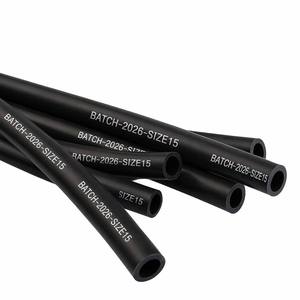
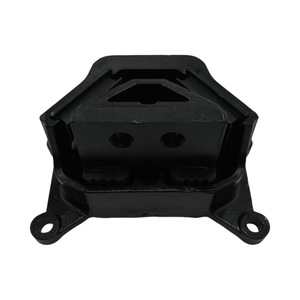
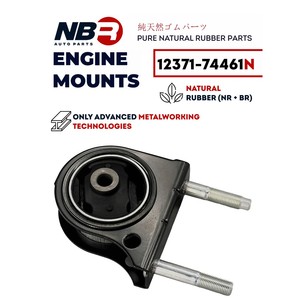
Explore our core range of high-durability rubber mountings, TPE floor protection, suspension bushings, and custom industrial boots optimized for global OEM/OES replacement standards.
Engineering Architecture of Modern Steering Rack Boots
A Comprehensive Industry Whitepaper on Materials, Manufacturing Dynamics, and Procurement Strategies for Global Tier-1 Aftermarket and OEM Sourcing
The steering rack boot—commonly referred to as the rack and pinion bellow or steering gear dust cover—is one of the most critical elastomeric protection components within a vehicle's chassis control framework. Positioned at both ends of the steering gear housing, this flexible bellow creates a hermetically sealed barrier around the inner tie rod joints, rack bar, and precision hydraulic or electronic power steering (EPS) actuators. Its primary mission is twofold: preventing the egress of specialized high-pressure gear grease while aggressively shielding the internal rack gear from environmental contaminants including road splash, salt spray, gravel impact, mud, and ozone degradation.
As a leading China top steering rack boot supplier, our engineering focus encompasses deep polymer research, precision CAD/CAM blow-molding tooling, and continuous dynamic stress validation. In modern vehicle architectures—where electric power steering (EPS) systems require ultra-precise dimensional consistency to prevent moisture ingress that could short sensitive electronics—selecting the correct steering boot material and manufacturing protocol directly dictates steering assembly longevity, warranty claim reduction, and overall vehicle safety.
1. Material Science Evaluation: CR vs. NBR vs. TPEE Elastomers
Historically, steering bellows were predominantly manufactured from Chloroprene Rubber (CR / Neoprene) or Nitrile Butadiene Rubber (NBR) via compression or transfer molding. However, the automotive industry's rapid evolution toward lightweighting, extended service intervals (100,000+ miles), and harsh underbody thermal envelopes has driven a massive shift toward Thermoplastic Polyester Elastomer (TPEE / TPE) blow-molded bellows.
| Performance Property | Chloroprene Rubber (CR) | Nitrile Rubber (NBR) | Thermoplastic Elastomer (TPEE) |
|---|---|---|---|
| Tensile Strength (MPa) | 12 - 16 MPa | 10 - 14 MPa | 28 - 42 MPa |
| Flex Fatigue Life (Cycles) | ~300,000 cycles | ~250,000 cycles | > 1,200,000 cycles |
| Operating Temp Envelope | -35°C to +100°C | -30°C to +110°C | -40°C to +135°C |
| Grease & Salt Resistance | Moderate | High | Exceptional |
| Wall Thickness Uniformity | Variable (±0.4mm) | Variable (±0.35mm) | Ultra-Precise (±0.15mm) |
| Weight Reduction Index | Baseline (100%) | Baseline (98%) | 35% Lighter |
While CR rubber remains popular in classical replacement markets due to its cost-effective elasticity and good oil resistance, TPEE blow-molded steering boots represent the current global OEM benchmark. TPEE combines the flexibility of rubber with the structural strength of engineering plastics. Its exceptional cut-growth resistance and memory-retention capabilities allow the bellow turns to collapse and extend millions of times without suffering localized thinning or stress-induced cracking.
Dynamic Flex Fatigue Engineering
During wheel articulation and full-lock steering turns, the steering boot undergoes severe torsional twist, axial extension, and radial compression. Our proprietary bellow geometry distributes flex stress uniformly across convolution crests and roots, preventing stress concentration peaks.
Ozone & Thermal Stability
Engine compartments and under-chassis zones experience extreme temperature spikes from nearby exhaust manifolds and brake rotors. Our compounded rubber and polymer matrices are fortified with anti-ozonant micro-waxes and thermal stabilizers to prevent environmental dry-rot.
Hermetic Sealing Integrity
Equipped with micro-ribbed inner clamping journals at both small and large ends, our steering boots accommodate stainless steel ear clamps or spring clips perfectly, forming a 100% airtight seal that tolerates internal pressure pulses.
Steering Boot Product Recommendations & Sourcing Categories
Matching the Right Bellow Architecture to Specific Automotive & Commercial Vehicle Fleet Requirements
When procuring steering rack boots from China suppliers, B2B importers, wholesale distributors, and remanufacturers must classify their inventory requirements according to vehicle weight class, steering gear type (hydraulic vs. EPS), and regional climate demands. Below are our key recommended product series available for custom manufacturing or catalog supply:
A. Universal Fit Split-Boot Replacement Series
Designed primarily for fast-service aftermarket automotive workshops and DIY repair sectors, universal split steering boots allow technicians to replace a damaged boot without dismantling the outer tie rod end or disturbing wheel alignment. Constructed from high-stretch Neoprene compounds, these boots feature a tongue-and-groove interlocking seam bonded via specialized anaerobic adhesives. *Key Sourcing Advantage:* Drastically reduces installation labor costs while maintaining high inventory turnover for general spare parts distributors.
B. Heavy-Duty Commercial Vehicle & Truck Steering Bellows
Heavy commercial trucks, municipal buses, agricultural harvesters, and off-highway mining rigs demand heavy-duty steering gear covers engineered to withstand extreme mechanical vibration and mud immersion. Utilizing reinforced EPDM or heavy-wall NBR formulations, these bellows feature thicker convolution roots (2.5mm - 3.5mm wall thickness) and integrated steel wire reinforcement rings where necessary. Compatible with major commercial platforms including Sinotruk HOWO, Shacman, Tata, Ashok Leyland, Volvo, and Scania steering gears.
C. Direct-Fit OEM Replacement TPEE Bellows for Passenger Vehicles
Precision blow-molded to match original equipment manufacturer (OEM) part dimensions with strict dimensional tolerances (±0.1mm). These boots feature specialized air-breather tube ports or internal pressure-equalization channels required for dual-chamber rack architectures. Fits major global vehicle platforms including Toyota, Honda, Nissan, Volkswagen, Ford, BMW, and Chery.
Need Custom Molded Steering Boots for Your Specific Gear Box?
Our engineering team can rapidly reverse-engineer or develop custom steering rack bellows directly from your CAD drawings (STEP/IGES) or physical samples in under 20 business days.
Contact UsFuture Development Trends in Automotive Steering Sealing (2025–2030)
Insights for Procurement Managers and Global Automotive Sourcing Directors
The global automotive supply chain is undergoing profound structural shifts driven by electrification, automated driving systems, and stringent ESG sustainability mandates. Sourcing managers must align with China suppliers who actively innovate across these key technological vectors:
1. Integration with Steer-by-Wire (SbW) & EPS Technology
As mechanical steering columns give way to digital Steer-by-Wire (SbW) actuators, steering rack housings are increasingly combined with high-frequency electric motors and sensors. In these next-generation assemblies, steering boots must offer zero static friction and ultra-low noise, vibration, and harshness (NVH) characteristics during rapid automated steering corrections. Polymer matrices must also be electrically non-conductive to shield internal electronics from static buildup.
2. Lightweighting & Thin-Wall Automated Blow Molding
Every gram counts toward extending Electric Vehicle (EV) battery range. Advanced 3D suction blow-molding technology allows manufacturers to produce TPEE steering boots with non-uniform, optimized wall profiles—thinner at non-stress convolutions and reinforced at structural ends. This achieves a 30% to 40% weight reduction compared to conventional rubber boots without compromising burst strength or structural rigidity.
3. Circular Economy & Recyclable Thermoplastic Polymers
Cross-linked vulcanized rubber cannot be re-melted, creating long-term environmental waste disposal challenges. Thermoplastic elastomers (TPE/TPEE) are 100% recyclable during production (reclassifying in-house sprues and runners) and at end-of-life vehicle dismantling. Tier-1 buyers sourcing from China are increasingly demanding certified post-industrial recycled (PIR) polymer blends that comply with European REACH and RoHS standards.
Why Partner with Our China Sourcing & Manufacturing Network
Four Decades of Polymer Excellence Combined with Modern Precision Blow-Molding Capabilities
Drawing from a legacy established in 1980, our manufacturing and export organization brings deeply rooted expertise in automotive rubber compounding, driveline support assemblies, radiator hoses, and elastomeric suspension components. We bridge traditional craftsmanship with state-of-the-art automated manufacturing infrastructure:
End-to-End Custom Compounding
We formulate custom elastomeric compounds in-house to meet exact customer specifications for durometer hardness (Shore A 40 to Shore D 60), tensile modulus, oil swell resistance, and low-temperature flexibility.
In-House CAD Tooling & Rapid Prototyping
Using high-precision CNC machining centers and 3D optical scanning, we design and produce blow-molding and compression tooling internally, drastically cutting sample turnaround times to days rather than months.
Rigorous Multi-Stage QA Testing
Every production batch undergoes 100% visual inspection, air-leak testing, wall-thickness ultrasonic measurement, and periodic destructive tensile/tear testing according to ISO 37 and ISO 34-1 standards.
Frequently Asked Questions (FAQ) for Sourcing Managers
Clear, Technical Answers to Common B2B Procurement and Engineering Enquiries
1. What is the expected dynamic fatigue life of your TPEE steering rack boots?
+
Our blow-molded TPEE steering bellows are engineered to exceed 1,000,000 continuous expansion-compression flex cycles under full-lock simulated steering angles without exhibiting localized micro-cracking, stress whitening, or structural wall collapse. This ensures a reliable service life matching or exceeding OEM requirements (10 years / 150,000 kilometers).
2. How do you prevent internal vacuum collapse during rapid steering rack stroke displacement?
+
During rapid steering wheel movement, the volume inside the boot changes dynamically. We engineer pressure-equalization pathways into our boots, including integrated air-breather tube ports or molded inner air-vent channels. This allows air to transfer freely between left and right bellows, preventing vacuum suction or ballooning inflation that could pop the boot off its mounting journal.
3. Can you custom manufacture steering boots according to OEM part numbers or physical samples?
+
Yes, absolutely. We regularly reverse-engineer legacy or specialized steering bellows. Customers can provide us with OEM reference numbers, 2D/3D engineering drawings, or physical worn samples. Our engineering team utilizes 3D laser scanners to capture exact internal rib geometry, journal diameters, and wall profiles to build identical production tooling.
4. What chemical compatibility testing is performed against internal steering rack greases?
+
All boot compounds are immersion-tested against standard lithium-complex, polyurea, and synthetic EP (extreme pressure) steering gear greases according to ASTM D471. Our materials exhibit less than 3% weight change and zero volumetric swelling or softening after 168 hours of continuous exposure at 100°C.
5. What are the typical lead times for custom tooling development and prototype sampling?
+
Standard aluminum prototype mold tooling is completed within 12 to 15 business days upon CAD drawing approval. First-article T1 sample parts are dispatched immediately via express courier for customer fitment and lab validation. Full mass-production steel tooling is typically delivered within 20 to 25 days.
6. How do TPEE steering boots perform in severe sub-zero winter environments (-40°C)?
+
Unlike standard rubber compounds that stiffen and become brittle at freezing temperatures, TPEE maintains high impact strength and low flexural modulus down to -40°C. Cold-chamber impact tests confirm our boots suffer zero cracking during full-lock steering cycles under arctic climate conditions.
7. What quality control documentation accompanies bulk export shipments?
+
Every commercial export order includes a formal Certificate of Analysis (COA), Material Safety Data Sheet (MSDS), Batch Inspection Report detailing hardness, tensile strength, and key journal dimensions, as well as full compliance confirmation for EU REACH and RoHS regulations.
8. What are your Minimum Order Quantities (MOQ) for catalog vs. custom steering bellows?
+
For standard catalog part numbers held in active stock, our MOQ is as low as 200 pieces per item. For custom OEM blow-molded or compression-molded items requiring specialized compounding and dedicated tooling runs, our standard production MOQ typically starts at 1,000 to 2,000 pieces depending on part size and complexity.
Partner with China's Premier Steering Rack Boot Engineering Supplier
Elevate your product quality, reduce warranty return rates, and optimize your global procurement costs. Contact our B2B sales engineering department today for custom quotes, technical drawings, or sample requests.
Contact Us