Featured Powertrain Cushion & Elastomer Assemblies
Engineered to OEM dimensional tolerances with specialized vulcanized polymers, our drive shaft cushions and commercial suspension components neutralize parasitic driveline harmonics and extend universal joint life under intense cyclic duty.
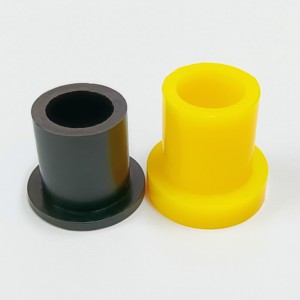
Factory Customized Nylon Auto Molded Urethane Bush PU Bushings Polyurethane Suspension Bushing
- Durometer: 75A - 95A Shore
- Application: Control Arm / Torque Rod
- Abrasion Loss: ≤ 30 mm³ (ISO 4649)
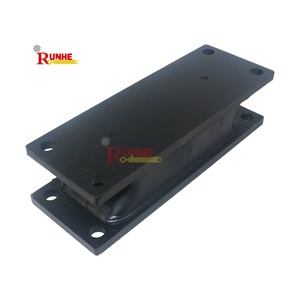
Custom Rubber Shock Absorbers Engineering Machinery Vibration Damping Buffer Blocks Engine Noise Reduction Cushion
- Compound: NR / High-Damping Blend
- Shear Modulus: 0.8 - 1.4 MPa
- Working Temp: -40°C to +120°C
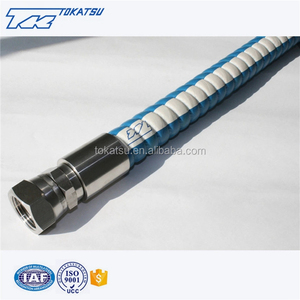
Brewery Food Grade EPDM Rubber Hose for Beer
- Lining: Ultra-smooth White EPDM
- Reinforcement: Spiral Synthetic Textile
- Burst Pressure: ≥ 30 Bar (3.0 MPa)
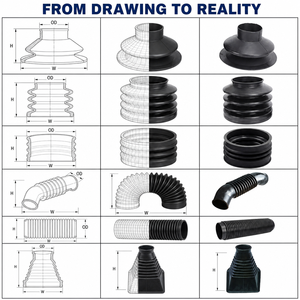
Rubber Dust Cover Bellows Boot Protective Flexible Shaft Lever Covers Handle Gaiters Gear Boots
- Geometry: Multi-convolution Bellow
- Fluid Resistance: ASTM 1 Oil & Grease Grade
- Flex Fatigue: > 500,000 Cycles
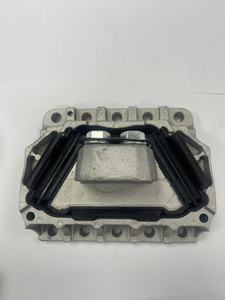
New Wholesale JYNBOW SemiTrailer Truck Engine Mounting Parts for 20399992 20399980 3198122 Manufacturer China
- OE Cross: 20399992 / 20399980 / 3198122
- Plate Bonding: Chemlok Hot-Vulcanized
- Static Load: Up to 28 kN
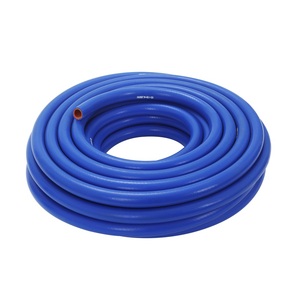
Custom Size 2 Layers Cooling System Truck Car Auto Coolant Radiator Air Pipe Silicone Heater Hose
- Construction: VMQ Silicone + Nomex / Aramid
- Operating Range: -50°C to +220°C
- Compatibility: OAT / HOAT Engine Coolants
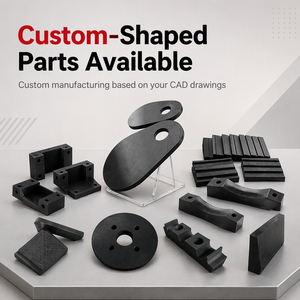
OEM ODM Molded Rubber Shock Absorber / Custom Rubber Feet For Vibration Damping
- Hardware: Electro-Galvanized M8-M24 Studs
- Damping Factor: ζ = 0.08 - 0.15
- Hardness Range: 45 to 70 Shore A
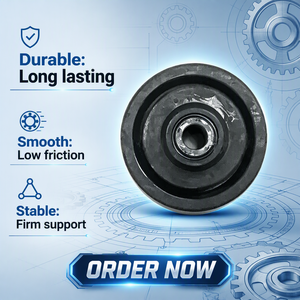
Anti-Bump Engine Support Spare Parts Rear Vibration Isolator 131602000108A Rear Engine Mount Cushion for SANY SKT105S SKT95S
- Part Number: 131602000108A
- Platform: SANY Wide-Body SKT95S/SKT105S
- Dynamic Rating: High Shock Load Absorption
Elastomeric Damping Mechanics in Two-Piece Propeller Shafts
In modern commercial haulage and rear-wheel-drive (RWD) vehicle architectures, the drive shaft (propeller shaft) spans considerable distances between the transmission output yoke and the rear axle differential carrier. To avoid supercritical rotational resonance—where the natural flexural frequency of an unsupported single shaft coincides with its operational RPM—chassis designers utilize segmented, two-piece or three-piece drivelines. The critical junction in this kinematic chain is the drive shaft center support cushion assembly.
The drive shaft cushion operates as a dynamic, dual-function structural interface. Mechanically, it must locate a deep-groove sealed radial ball bearing coaxially along the vehicle’s centerline to allow high-speed shaft rotation under torque loads exceeding 15,000 N·m in Class 8 trucks. Concurrently, it features a specialized elastomeric cushion profile (either ribbed, slotted, or bladder-molded) that absorbs secondary inertia forces, universal-joint angular acceleration variations, and road shock transmitted through the chassis cross-member.
Without an engineered elastomer compound with calibrated dynamic stiffness (Kd) and loss factor (tan δ), torsional flutter triggers violent cabin boom noise, accelerated universal joint needle bearing spalling, and premature transmission tailshaft seal extrusion. Our direct manufacturing facility employs chemical hot-vulcanization bonding agents (Chemlok® system) ensuring inter-molecular adhesion between the steel retaining bracket and the elastomer that exceeds the tear strength of the rubber substrate itself.
Elastomer Chemistry Comparison: NR vs. EPDM vs. Polyurethane
The selection of the base matrix directly dictates longevity under oil contamination, ozone degradation, dynamic fatigue, and operating thermal envelopes.
| Property Specification | Natural Rubber (NR) | EPDM Elastomer | Cast Polyurethane (PU) |
|---|---|---|---|
| Hardness (Shore A) | 55 ± 5 A | 65 ± 5 A | 75A - 92A |
| Dynamic Loss Factor (tan δ) | 0.08 - 0.12 (Optimal) | 0.14 - 0.20 | 0.06 - 0.10 |
| Tensile Strength (MPa) | ≥ 18.5 MPa | ≥ 14.0 MPa | ≥ 35.0 MPa |
| Tear Resistance (kN/m) | ≥ 50 kN/m | ≥ 38 kN/m | ≥ 85 kN/m |
| Hydrocarbon Oil Resistance | Moderate / Shielded | Poor | Superior (Grease Proof) |
| Operating Temperature | -40°C to +90°C | -45°C to +135°C | -30°C to +85°C |
| Primary OEM Application | Long-Haul Highway Fleets | Under-Hood Fluid Hoses | Heavy Off-Highway / Mining |
Radial Runout & Coaxial Accuracy
Every center bearing housing is CNC bore-turned after metal stamping. We enforce a total indicated runout (TIR) of less than 0.05 mm, eliminating high-frequency driveline whip and avoiding pre-load stress on the internal deep-groove bearing races.
Optimized Dynamic Spring Rates (Kd)
Our internal compound formulations maintain consistent dynamic-to-static stiffness ratios (Kd/Ks ≤ 1.35). This engineered flexibility guarantees that sudden throttle-lift and torque-reversal inputs do not translate into harsh chassis thumps or cab vibration.
Dual-Lip Viton / NBR Labyrinth Seals
Our complete center bearing assemblies are fitted with anti-extrusion multi-lip dust boots and water-slinging disc shields, verified to withstand 200-hour mud-slurry submersion tests without grease breakdown or contaminant ingress.
Why Global Tier-1 Distributors Source From Us
Operating since 1980 with foundational engineering roots spanning four decades, our facilities bridge custom polymer chemistry with automated mass-production scale.
In-House Tooling & Mold CAD/CAM
We design and EDM-machine progressive stamping dies and injection/transfer molds internally. OEM drawings or physical samples can be converted into high-volume tooling within 18 to 25 business days, drastically cutting project lead times.
Broad OE Cross-Reference Coverage
Our catalog features direct interchangeable references for Tata (407, 709, 1613, 2515, Signa, Prima), Ashok Leyland, Mahindra Bolero, Dana Spicer, Meritor, Volvo/Scania haulage trucks, and SANY mining dumpers (SKT95/105).
Multi-Stage Batch Quality Control
Every raw elastomer compound is validated via moving-die rheometer (MDR) testing for cure kinetics, Mooney viscosity, and dispersion. Metal retaining brackets undergo 480-hour ASTM B117 salt spray testing to prevent under-chassis rust.
Rapid Buffer Stock & Immediate Dispatch
We maintain ready-to-ship inventories across fast-moving center support bearing SKUs (88507, 88508, 88509, 88511, 88512, 2518/6013, 4018). Importers and regional master distributors benefit from reduced port-to-warehouse replenishment cycles.
Custom Polymer Compounding
Operating in tropical, sub-zero, or high-humidity territories? Our polymer chemists adjust antioxidant packages, carbon black grades (N330/N550), and plasticizer types to ensure no hardening, crazing, or dynamic embrittlement occurs in the field.
Dedicated Engineering Account Support
Direct communication with senior elastomeric tooling engineers and export managers ensures accurate fitment verification, OE cross-referencing, customized packaging, and consolidated container logistics for seamless customs clearance.
Technological & Sourcing Trends in Powertrain Cushions
How commercial vehicle electrification, advanced composite polymers, and predictive maintenance are reshaping the global procurement landscape for drive shaft center cushions.
Commercial EV Driveline NVH Demands
Electric commercial vehicles (e-LCVs & heavy electric haulers) generate near-instantaneous maximum torque at zero RPM. Without internal combustion engine noise masking driveline resonance, center cushions require high-damping, linear-rate polymers that prevent low-frequency cabin whirr and cabin drumming.
Graphene & Silica Infused Elastomers
Next-generation cushion matrices incorporate micro-dispersed carbon nanotubes and silanized silica. These formulations lower hysteresis heat accumulation during sustained 110 km/h highway speeds, extending elastomeric flex fatigue life by over 40% compared to legacy natural rubbers.
Embedded Telematics & Smart Bearings
Fleet operators are shifting toward predictive maintenance. Prototype center support cushions now feature recesses for thermal micro-sensors and 3-axis vibration sensors, alerting fleet telemetry centers to bearing spalling or cushion collapse before catastrophic shaft uncoupling occurs.
Nearshore Buffer & Strategic Sourcing
Global wholesale buyers are transitioning from single-source spot buying to direct supplier partnerships with certified Chinese manufacturers. Establishing annual scheduled release orders with pre-negotiated raw material hedges protects margins against freight and polymer volatility.
Total Cost of Ownership (TCO): Economy vs. Precision Cushions
Procuring inferior drive shaft cushions generates severe secondary driveline damage. Below is an operational impact audit based on a 100-vehicle long-haul commercial fleet over a 24-month operational cycle.
| Fleet Operational Parameter | Sub-Standard Aftermarket Cushion | Our Precision Engineered Cushion | Wholesale Procurement Advantage |
|---|---|---|---|
| Average Service Life | 35,000 – 50,000 km | 150,000 – 220,000 km | Over 3.5x extended component lifespan |
| Elastomer Failure Mode | Crazing, delamination, tearing | Uniform, gradual wear profile | Prevents sudden catastrophic shaft drop |
| Bearing Race Runout | > 0.12 mm (Vibration prone) | ≤ 0.04 mm (Precision turned) | Protects expensive universal joints & yokes |
| Unscheduled Fleet Downtime | High (Frequent road breakdowns) | Negligible (Scheduled maintenance) | Saves an estimated $1,400+ per truck annually |
| Warranty Claim Rate | 4.8% – 7.2% of orders | < 0.25% globally | Protects distributor brand equity & client retention |
Wholesale Procurement Quality Inspection Protocol
For import managers, automotive parts distributors, and OEM purchasing directors, verifying drive shaft cushion quality prior to volume dispatch prevents costly field recalls. We recommend executing this mandatory 5-step quality verification audit on first-article samples:
1. Vulcanization Peel Adhesion (ASTM D429 Method B): Subject the bonded rubber-to-metal flange to a 90-degree peel test. High-grade assemblies must exhibit 100% rubber cohesive failure (tearing of the rubber itself) rather than adhesive failure at the metal interface.
2. Durometer Hardness Uniformity: Measure Shore A hardness across 6 radial quadrants. Deviation should not exceed ±3 points. Excess variance indicates poor batch blending or incomplete cure cycling.
3. Axial Push-Out Shear Resistance: Apply hydraulic press force against the inner steel bearing sleeve while securing the outer bracket. Premium commercial vehicle cushions must hold minimum 12 kN without slip.
4. Bracket Stamping Micro-Cracking: Inspect deep-drawn bracket radii under 10x magnification. Sub-par steel grades develop micro-fractures during cold-forming that propagate into catastrophic fatigue cracks under road vibration.
Need Custom Tooling or Reverse-Engineering?
If you have a discontinued OEM part, custom driveline application, or heavy machinery chassis needing a tailored center support cushion:
- 2D/3D Drawings: Provide STEP, IGES, or DWG files with hole pitch and bore tolerances.
- Physical Golden Sample: Send a sample for coordinate measuring machine (CMM) dimensional capture and polymer spectrometry.
- Application Parameters: Specify shaft torque, max RPM, operating temperature, and environmental chemical exposures.
Frequently Asked Questions for Wholesale Buyers
Clear, technical answers to common questions regarding specifications, minimum order quantities, OE matching, and international logistics.
Can you cross-reference drive shaft cushions by OEM part numbers?
Yes. Our engineering cross-reference database spans major global vehicle platforms including Tata commercial vehicles (references 88507, 88508, 88509, 88511, 88512, 2518/6013, 6211, 3118, 4018), Ashok Leyland U-Truck series, Mahindra Bolero, Dana Spicer 210661-1X series, Meritor, SANY mining equipment, and European truck applications. Provide your OE number, internal stock code, or physical dimension specs (bearing bore, bracket hole center-to-center spacing, centerline height), and our engineers will cross-verify compatibility within hours.
What are the minimum order quantities (MOQ) for wholesale and custom-molded orders?
For standard cataloged items and active production SKUs, our typical MOQ starts at 50 to 100 units per reference, allowing distributors to consolidate diverse product families (center bearings, radiator hoses, engine mountings, PU bushes) into mixed-pallet container shipments. For fully customized or newly tooled OEM cushions requiring dedicated progressive dies and injection molds, MOQ ranges from 300 to 500 units depending on bracket geometry and tooling complexity.
How do you guarantee rubber-to-metal bonding integrity under dynamic torsional stress?
Bonding integrity is secured through an automated 4-stage preparation cycle: (1) steel bracket mechanical grit blasting to Sa 2.5 surface roughness, (2) automated vapor degreasing, (3) precision pneumatic spraying of Chemlok primer and topcoat adhesive within controlled humidity, and (4) high-pressure transfer molding with strict thermal dwell monitoring. We verify bonding strength through routine destructive peel testing according to ASTM D429 Method B, requiring 100% rubber substrate tear failure prior to batch lot release.
What type of bearings are incorporated into your center support assemblies?
We configure center bearing assemblies according to client market preferences. Standard high-durability assemblies feature deep-groove GCr15 high-carbon chromium bearing steel with ABEC-3 (P6) precision tolerance, internal radial clearance C3, dual-lip low-friction NBR/Viton rubber seals, and high-temp Mobil Polyrex™ EM synthetic polyurea grease (-30°C to +175°C). For premium tier programs, we can incorporate specified brand-name bearings (such as SKF, FAG, NSK, or Timken) upon contractual request.
How are products packaged for long-distance maritime export?
Every center cushion assembly is treated with vapor corrosion inhibitor (VCI) polybag wrapping to prevent condensation damage during ocean transit. Items are packed into heavy-duty 5-ply corrugated inner cartons (neutral export or custom-branded distributor box with barcoded labels) and strapped onto heat-treated, fumigated ISPM-15 compliant Euro or US wooden pallets sealed with multi-layer waterproof stretch film and heavy plastic corner edge protectors.
What lead times can overseas buyers expect for sample validation and production?
In-stock catalog samples dispatch via express air courier (DHL/FedEx/UPS) within 48 to 72 hours. For custom tooling projects, initial prototype samples with full CMM inspection reports are completed within 20 to 25 calendar days. Commercial batch production for full container load (FCL) orders typically takes 30 to 35 business days from final deposit and sample sign-off, supported by real-time status updates from our manufacturing floor.
Connect Directly with Our Automotive Polymer Engineering Team
Whether you require direct container pricing for high-turnover commercial vehicle center cushions, custom compound development, or urgent sample validation, our technical sales department is ready to assist your procurement roadmap.