Heavy-Duty Engine Damping Cushions & Vibration Isolators
Engineered for extreme torque absorption, low dynamic stiffness drift, and maximum structural stability under rugged cyclic excitation. Explore our high-precision product portfolio manufactured according to ISO/TS 16949 standards.
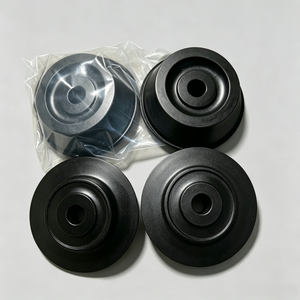
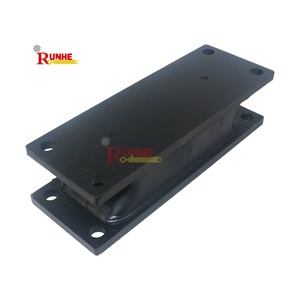
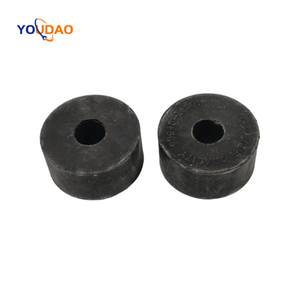
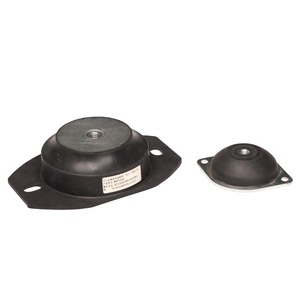
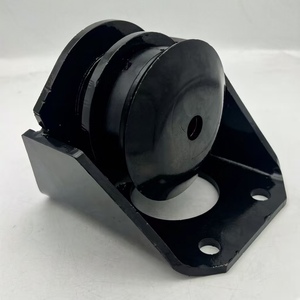
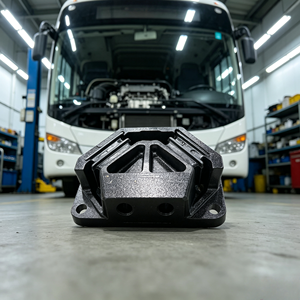
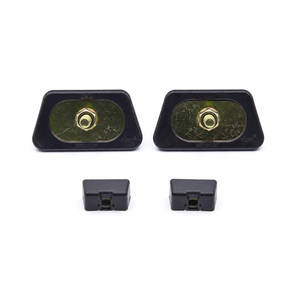
Engineering Principles: Elastomeric Engine Damping Cushion Formulation
In modern commercial vehicle dynamics and heavy industrial machinery design, an engine damping cushion is significantly more than a mechanical buffer; it serves as a tuned viscoelastic barrier between the internal combustion powertrain and the structural chassis. Powertrain operations induce multi-axis excitation frequencies spanning from low-frequency cyclic shock (3 Hz to 15 Hz caused by road surface variations and abrupt torque reversals) to high-frequency structural acoustic vibration (30 Hz to 250 Hz originating from reciprocating pistons and combustive cylinder pressures). Isolating these divergent frequency spectra requires advanced compounding metallurgy, precise Chemlok-assisted vulcanization, and optimized geometric profiling.
Leading Chinese manufacturing facilities leverage advanced polyisoprene (NR), ethylene propylene diene monomer (EPDM), and customized polyurethane (PU) formulations to balance static load deflection against dynamic stiffness ($K_d$). Under sustained shear and compressive loads, standard industrial rubbers suffer from molecular chain slippage, resulting in catastrophic plastic creep and elevated loss angles ($\tan \delta$) that elevate operating temperatures. By engineering controlled polymer crosslinking via sulfur-donor or peroxide curing systems, Tier-1 Chinese exporters produce engine cushions that sustain structural equilibrium across operating temperatures ranging from -45°C to +135°C.
For critical commercial vehicle applications (such as Tata, Shacman, Sany, and Komatsu platforms), maintaining a dynamic-to-static stiffness ratio between 1.15 and 1.35 at 100 Hz is crucial. Ratios exceeding 1.5 transmit excessive acoustic harshness to the cabin, while sub-unity ratios lead to unconstrained powertrain pitch under heavy transient braking.
Comparative Matrix: Material Formulations in Engine Damping Cushions
| Polymer Base | Shore A Hardness | Tensile Strength (MPa) | Elongation at Break (%) | Oil & Fuel Resilience | Primary Industrial Application |
|---|---|---|---|---|---|
| High-Purity Natural Rubber (NR) | 45 - 65 ± 5 | ≥ 22.5 | ≥ 480% | Moderate (Requires Wax Protective) | Heavy Excavator & Off-Highway Engine Mounts (Komatsu, SANY) |
| Formulated EPDM Elastomer | 55 - 75 ± 5 | ≥ 16.0 | ≥ 360% | Exceptional (Ozone/Coolant Resistant) | Automotive Powertrain & Radiator Cooling Systems (Toyota, Leyland) |
| Microcellular Polyurethane (MCU) | 60 - 85 ± 5 | ≥ 28.0 | ≥ 520% | High (Hydrocarbon Stable) | Auxiliary Cabin Leaf Mounts, Fifth Wheel & Severe Duty Commercial Fleets |
| Fluorosilicone / HNBR Blends | 50 - 70 ± 5 | ≥ 14.5 | ≥ 310% | Extreme Thermal & Synthetic Oil Shield | Turbocharged Intercooler Mountings & High-Output Marine Diesels |
Future Procurement Trends in the Global Damping Cushion Industry
Procurement paradigms for vibration isolation components are undergoing systematic disruption. Cross-border industrial buyers are no longer evaluating suppliers purely on base FOB prices. Instead, strategic decisions are dictated by long-term durability metrics, raw polymer supply chain transparency, and digital quality validation.
1. Life-Cycle Cost (LCC) Integration
Tier-1 fleet operators calculate part cost per 100,000 km. Eliminating unbudgeted breakdown downtime requires cushions with proven 500,000+ cycle fatigue resistance under tri-axial cyclic loading.
2. Rapid Custom Prototyping via FEA
Procurement contracts favor exporters capable of turning around CAD files into non-linear Mooney-Rivlin FEA simulations within 48 hours, compressing mold tooling lead times down to under 20 business days.
3. Dual-Source Geopolitical Resilience
Global OEMs maintain balanced hedging networks: sourcing baseline mass-production runs from certified Chinese high-capacity industrial hubs while maintaining synchronized distribution hubs in regional logistics centers.
Technological Development Horizons: Next-Gen Anti-Vibration Systems
The internal combustion and commercial transportation sectors are witnessing accelerated technical transformations. As diesel engines adopt higher injection pressures, selective catalytic reduction (SCR) configurations, and hybridized drive architectures, engine mountings must address broader harmonic variances.
1. Hydraulic Damping Integration (Hydromounts): Conventional elastomeric blocks provide static compliance but are compromised in dynamic damping when matching high-amplitude resonances. Modern Chinese manufacturing lines increasingly incorporate dual-chamber glycol-filled hydraulic units featuring inertia tracks and decouple membranes. These mechanisms deliver high damping ($\tan \delta > 0.4$) during low-frequency engine shake while reverting to low dynamic stiffness during high-frequency engine cruise.
2. Nanocomposite Polymer Matrix Reinforcement: Dispersion of surface-functionalized carbon nanotubes (CNTs) and precipitated silica within natural rubber masterbatches significantly minimizes hysteresis heating. This prolongs continuous fatigue life under elevated thermal environments where conventional mounts degrade prematurely.
3. Environmentally Compliant Chemical Adhesion: Modern automated plants have eliminated hazardous solvent-based primers, integrating eco-friendly aqueous Chemlok bonding systems applied via multi-axis robotic spraying. This achieves metal-to-rubber peel strengths exceeding 14 N/mm (100% rubber cohesive failure per ASTM D429 Method B).
Competitive Advantages: Why Source from Amit Rubber Products
Backed by over four decades of proven manufacturing heritage dating back to 1980, Amit Rubber Products stands at the nexus of high-precision compound formulation, tooling engineering, and dependable export capability. We have engineered thousands of specialized anti-vibration solutions for Tata, Ashok Leyland, Sany, Shacman, Komatsu, and global commercial platforms.
In-House Tooling & Compounding
Complete ownership of internal Banbury mixers, cryogenic flash deburring machines, and multi-cavity precision vacuum compression presses ensure strict consistency from raw polymer slab to finished bracket.
Zero-Defect Quality Assurance
Every production lot undergoes rheometer cure verification, automated tensile testing (ASTM D412), salt-spray bracket testing (ASTM B117 >480 hours), and computerized dynamic load verification.
Global Inventory & Logistics Agility
Our streamlined supply chain network provides fast order turnaround for fast-moving OE numbers (88509, 2518/6013, 21T-01-11150, DZ95259590067) with container-ready palletized packing.