Precision Automotive & Commercial Vehicle Rubber Engineering
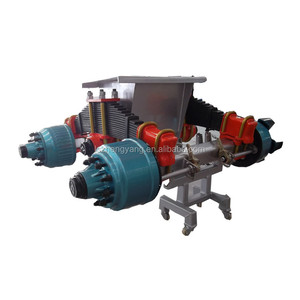
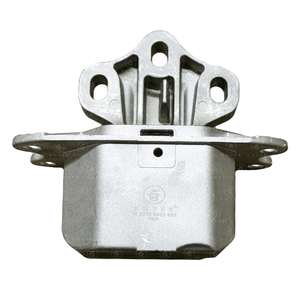
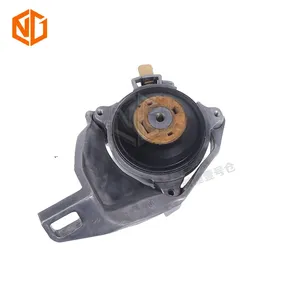
Explore our core export portfolio spanning high-temperature silicone elbow assemblies, heavy-duty truck chassis bogies, high-performance powertrain mounts, and precision polyurethane damping components.
Silicone Elbow Hose Architectures: Technical Selection & Reinforcement Matrix
In high-vibration, elevated-temperature, and pressurized charge-air and coolant circuits, choosing the correct silicone elbow configuration is vital to preventing premature delamination, pressure fatigue blowouts, and excessive volumetric expansion.
As premier China wholesale silicone elbow hose suppliers and exporters, our manufacturing platform synthesizes VMQ (Vinyl Methyl Silicone) high-purity polymers with multiaxial woven textile reinforcements. When fluid handling systems operate under dynamic chassis movements, thermal cycles, and severe vacuum or boost conditions, rigid piping fails due to fatigue, while conventional EPDM hoses suffer from thermal cross-linking hardening and oxidative embrittlement. Reinforced silicone elbow hoses provide the vital dampening, flexibility, and uninterrupted hydraulic performance demanded by modern automotive, marine, generator, and heavy-duty transport engines.
Geometry Configurations & Performance Differentiation
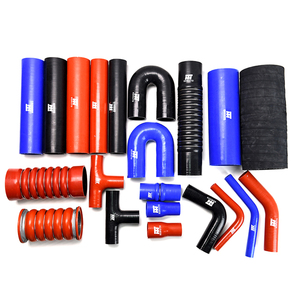
Silicone elbow hoses must accommodate precise packaging constraints within crowded engine compartments without inducing cross-sectional ovalization or turbulent flow restrictions. The hydraulic efficiency of an elbow depends on the centerline bend radius (CLR). We maintain specialized mandrels for 45-degree, 90-degree, 135-degree, and 180-degree U-bend geometries with leg lengths standardly calibrated from 100mm to 150mm, customizable to OEM packaging blueprints.
| Elbow Geometry | Reinforcement Layers | Continuous Temp Range | Burst Pressure Rating | Primary Industrial Application |
|---|---|---|---|---|
| 45° Silicone Elbow | 3-Ply to 4-Ply Polyester | -50°C to +180°C | 1.2 MPa to 1.8 MPa | Intercooler inlet routing, turbo compressor discharge transitions |
| 90° Standard Elbow | 4-Ply Woven Polyester | -50°C to +180°C | 1.0 MPa to 1.5 MPa | Radiator bypass loops, water pump cooling return passages |
| 90° Reducing Elbow | 4-Ply / 5-Ply Hybrid | -55°C to +200°C | 0.9 MPa to 1.4 MPa | Mismatched diameter connections between throttle body & intercooler |
| 135° Tight-Clearance | 4-Ply Nomex / Aramid | -55°C to +250°C | 1.4 MPa to 2.2 MPa | Commercial vehicle EGR gas loops, tight packaging exhaust bypass |
| 180° U-Bend Elbow | 5-Ply Multi-Axial Aramid | -60°C to +260°C | 1.5 MPa to 2.5 MPa | Auxiliary cab heaters, stationary engine oil cooling circuits |
Polyester Fabric Reinforcement
Ideal for commercial truck radiators, automotive cooling systems, and general industrial water-glycol lines operating continuously up to +180°C. Delivers outstanding tensile resilience against repeated thermal cycles.
Aramid / Nomex Reinforcement
Engineered for high-pressure turbocharger discharge connections, intercooler charge-air circuits, and extreme industrial environments operating up to +250°C continuously, with transient peaks to +280°C.
Fluorosilicone (FVMQ) Lining
Designed for turbo blow-by, PCV breather gases, diesel fuel splash zones, and continuous synthetic oil mist contact. The internal barrier prevents fuel permeation and catastrophic silicone rubber softening.
Global Sourcing Dynamics & Purchasing Trends in 2026–2030
International tier-1 automotive purchasers, commercial fleet operations, and industrial equipment builders are fundamentally restructuring their silicone elbow hose supply chains to address evolving regulatory and operational challenges.
Total Cost of Ownership (TCO)
Procurement teams are shifting away from cheap, unreinforced rubber hoses that require replacement every 12 to 18 months. High-durability silicone elbow hoses offer a 5- to 10-year service life, reducing unscheduled vehicle maintenance.
Electrification & Battery Thermal Runaway
Electric commercial vehicles, hybrid powertrains, and heavy energy storage systems require non-conductive, dielectric silicone elbows capable of handling low-viscosity dielectric fluids and deionized water-glycol coolant.
Mandatory Traceability & Certification
Wholesale distributors now require end-to-end material batch verification, compliance with REACH, RoHS, and California Prop 65 regulations, as well as formal burst pressure test certificates for every production run.
Just-In-Time OEM Tooling Adaptability
Buyers require rapid-response tooling turnaround times. While traditional European tooling paths require 10 to 14 weeks, leading Chinese exporters can produce CNC precision mandrel tooling in 7 to 14 calendar days.
Next-Generation Silicone Elastomer Technologies & Manufacturing Advancements
The convergence of higher engine thermal efficiencies, stricter emissions mandates (Euro VI / EPA 2027), and tight underhood packaging is driving rapid material science breakthroughs in silicone fluid transfer systems.
Traditional silicone hoses are historically permeable to hydrocarbon molecules, rendering them vulnerable in high-pressure crankcase ventilation and direct turbo blow-by zones. To solve this, advanced co-extrusion and multi-dip mandrel technologies combine a dense inner lining of Fluorosilicone (FVMQ) with an outer shell of high-tear-strength Vinyl Methyl Silicone (VMQ). This hybrid morphology creates an impermeable barrier against oil condensation while maintaining external resistance to ozone, radiant exhaust heat, and UV degradation.
Furthermore, automated computer-controlled mandrel winding guarantees uniform ply tension during the layup process. Hand-wrapped silicone hoses frequently exhibit internal yarn wrinkling, uneven wall thicknesses, and localized stress concentrations that trigger premature failure under cyclic pressure spikes. Modern robotic continuous fabric calendering and precision hot-air autoclave vulcanization produce completely uniform wall thicknesses (±0.25mm tolerance) across the entire elbow bend radius, eliminating localized weak points.
Another major technological advancement is the integration of wireless RFID chips and surface-vulcanized QR code markers directly into the outer silicone layer. This allows fleet managers and workshop maintenance technicians to immediately scan installed hoses and retrieve exact vulcanization dates, burst pressure ratings, original batch numbers, and recommended replacement schedules.
Direct Factory Wholesale Sourcing & Engineering Solutions
Leverage over four decades of rubber and elastomer engineering mastery. We maintain complete tooling inventories, in-house mixing labs, burst pressure testing chambers, and direct container shipping options for volume distributors worldwide.
Enterprise Strengths, Quality Assurance & Export Infrastructure
Founded on rigorous rubber formulation discipline and continuous testing, we bridge the gap between heavy-duty commercial vehicle demands and cost-efficient wholesale export logistics.
46+ Years Formulation Expertise
Established with decades of hands-on rubber compounding mastery, our engineering teams possess an unmatched library of vulcanized formulations covering VMQ, FVMQ, EPDM, and specialized Polyurethane elastomers for heavy commercial chassis.
Rigorous In-House Testing Laboratory
Every silicone elbow batch undergoes extensive quality control: hydrostatic burst testing up to 3.0 MPa, tensile modulus evaluation, durometer Shore A hardness verification, ozone chamber aging, and high-temp oil bath immersion tests.
Global Logistics & Fast Dispatch
Strategically positioned with vast central inventory reserves. Fast-moving standard elbow sizes and universal reducers are available for immediate dispatch, while custom OEM production orders are expedited through sea, air, and multimodal logistics channels.
Frequently Asked Questions on Silicone Elbow Hose Procurement
Get answers to common technical, commercial, and operational questions asked by international buyers, fleet operators, and industrial distributors.
What are the key technical differences between standard EPDM hoses and high-grade silicone elbow hoses?
Can silicone elbow hoses be used for oil lines, diesel fuel routing, or power steering fluids?
What international manufacturing and quality standards do your silicone elbow hoses satisfy?
What is your typical tooling lead time and minimum order quantity (MOQ) for custom-engineered elbow geometries?
How do you guarantee that silicone elbow hoses will not kink or collapse under high vacuum?
What clamps and coupling hardware should be used to prevent damage to silicone elbow hoses during installation?
Request Your Customized Silicone Elbow Hose Specification Sheet
Contact our engineering team to review 2D/3D technical drawings, confirm inner diameter and centerline bend tolerances, or request a complete wholesale price quotation and sample kit for testing.
Get Catalog