1. Technical Foundations: Elastomer Metallurgy and Fluid Circuit Integrity
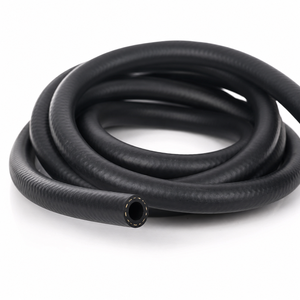
Modern engine thermal management, whether in internal combustion engines (ICE), battery electric vehicles (BEVs), or stationary power units, operates at thermodynamic thresholds far more demanding than legacy systems. Engine down-sizing, turbocharging, tighter engine bay packaging, and the integration of multi-circuit cooling loops have escalated internal operating temperatures to continuous spikes of 125°C to 150°C, accompanied by higher dynamic internal pressures up to 0.35 MPa. In this environment, selecting a specialized custom OEM rubber coolant hose manufacturer and exporter ceases to be a simple purchasing transaction; it becomes an exercise in risk mitigation against thermal-oxidative degradation, electrochemical degradation (ECD), and mechanical fatigue failure.
Ethylene Propylene Diene Monomer (EPDM) synthetic rubber remains the backbone elastomer for radiator and heater conduits due to its exceptional resistance to polar substances, hot water, ethylene glycol-water mixtures, and ambient ozone. However, generic commercial EPDM compounds fail rapidly under localized electrochemical charge gradients. When metal coolant fittings, low-conductivity coolant fluids, and rubber hoses form a closed galvanic circuit, micro-fissures propagate throughout the hose inner tube (lumen), creating striated microscopic channels that eventually cause catastrophic micro-bursts. Amit Rubber Products counteracts this failure mode through proprietary peroxide-cured EPDM compounding combined with electrochemical degradation-resistant carbon black dispersions, rigorously tested under SAE J1684 protocols.
Engineering Imperative (SAE J20 Class D Standard): Radiator hoses intended for severe heavy-duty cycles must achieve less than 20% tensile elongation loss after 1,000 continuous hours at 125°C in standard glycol/water blends, maintaining a compression set value below 25% under ASTM D395 Method B testing.
Reinforcement Topology: Balancing Hoop Strength Against Flexibility
The structural efficacy of an OEM coolant hose relies fundamentally upon its textile reinforcement layer. Raw uncured EPDM exhibits poor hoop strength under internal hydraulic pulse spikes. To guarantee continuous pressure retention without diameter creep, custom coolant hoses utilize knitted or spiraled polyester (PET) or para-aramid (Nomex/Kevlar) fabrics. For heavy commercial platforms such as Tata, Ashok Leyland, and Freightliner haulers, our hoses integrate high-tenacity, heat-stabilized polyester plies that accommodate thermal expansion while suppressing radial expansion under sustained cruise RPMs.
| Elastomer System | Thermal Window | Reinforcement Type | Burst Pressure Rating | Primary Industrial Application |
|---|---|---|---|---|
| Peroxide-Cured EPDM (Standard) | -40°C to +125°C | Polyester (Knitted/Braided) | ≥ 1.6 MPa | ICE Radiator Primary, Heater Cores, Commercial Fleet Cooling |
| High-Grade Peroxide EPDM (ECD-Free) | -45°C to +140°C | Aramid Yarn (Spiraled) | ≥ 2.2 MPa | Heavy Commercial Vehicles, Off-Highway Mining (SANY, XCMG) |
| Silicone (VMQ) 4-Ply Reinforced | -60°C to +230°C | Meta-Aramid / Polyester Scrim | ≥ 2.5 MPa | Turbocharger CAC Intakes, Charge Air Hump Hoses, High-Stress Loops |
| Polyurethane / Hybrid Elastomer | -35°C to +100°C | Steel Interlock / Filament | ≥ 3.0 MPa | Chassis Suspension Bushings, Hydraulic Transfer Conduits |
2. Future Procurement Trends in Industrial & Automotive Hose Systems
The global fluid transfer and powertrain cooling industry is undergoing its most radical transformation in five decades. Global tier-1 suppliers, automotive wholesalers, and municipal transport maintenance operations are realigning their procurement strategies around four distinct macroeconomic and technological axes:
Electrified Fleet Thermal Demands
Battery Electric (BEV) and Fuel Cell (FCEV) architectures rely on low-viscosity, non-conductive dielectric coolants. Sourcing managers now specify ultra-pure EPDM compounds with zero ionic leaching to maintain coolant insulation ratings over 10-year service lifespans.
Supply-Chain Dual Sourcing Resilience
Geopolitical turbulence and shipping bottleneck vulnerabilities have forced global procurement directors away from single-country dependency. Indian manufacturers located in major automotive clusters provide premier precision manufacturing, tariff diversification, and rapid maritime dispatch.
Total Cost of Ownership (TCO) Mandates
Fleet operators prioritize extended mean time between failures (MTBF). Cheap sulfur-cured hoses crack at 120,000 km, causing roadside engine seizure. Procurement contracts increasingly hinge on verified 500,000+ km longevity validations under mixed environmental cycles.
Furthermore, ESG (Environmental, Social, and Governance) compliances are pushing international importers to verify chemical traceability. Raw polymer feedstocks must meet rigorous EU REACH, Annex XVII plasticizer limits, and RoHS directives, barring toxic curing accelerators such as certain nitrosamine-generating carbamates. Amit Rubber Products structures all formulation chemistry to comply with international green manufacturing charters, enabling friction-free customs clearance and downstream liability protection across European, North American, and Asia-Pacific ports.
3. Industry Development Trends: Emerging Engineering Technologies
The manufacturing technology of industrial coolant hoses has moved far beyond hand-wrapped fabric mandrels into high-speed precision co-extrusion and automated 3D mandrel vulcanization. Crucial technological evolutions driving the industry include:
Continuous UHF Microwave Vulcanization vs. Autoclave Steam Curing
Traditional steam autoclave curing often causes localized wall-thickness irregularities and uneven cross-link density across complex 3D branched hoses. The industry benchmark has pivoted toward Ultra-High Frequency (UHF) continuous microwave curing tunnels paired with pressurized hot air systems. This delivers uniform molecular cross-linking across both the inner tube and the outer jacket, guaranteeing identical durometer hardness (±3 Shore A) across complex geometric contours.
Co-Extrusion Barrier Layers for Hydrocarbon and Glycol Resistance
Modern commercial vehicle engine compartments are dense and subject to localized oil vapor and hydraulic blow-by mist. While standard EPDM resists glycol and hot water exceptionally well, exposure to hot engine oil causes severe swelling and elastomer softening. Advanced hoses integrate co-extruded inner linings or protective fluoroelastomer (FKM) outer veneers, synthesizing the oil resistance of specialty rubbers with the cost-effective tensile toughness of reinforced EPDM.
Smart Embedded Sensor Conduits for Condition-Based Maintenance
In high-end mining haul trucks, combine harvesters, and military utility platforms, unmonitored hose failure risks catastrophic engine block destruction. Next-generation prototypes feature embedded fiber-optic or conductive polymer threads within the reinforcing braid. These circuits measure localized temperature spikes and micro-delamination, reporting predictive failure alarms to vehicle telematics prior to fluid loss.
4. Corporate Advantages: Amit Rubber Products Manufacturing & Global Export Infrastructure
With a continuous manufacturing history dating back to 1980 in New Delhi, India, Amit Rubber Products stands at the forefront of automotive and commercial vehicle elastomer engineering. Our operations integrate vertical manufacturing capabilities with direct export services designed for international distributors, OEM assemblers, and spare parts catalog brands:
Four Decades of Compounding Know-How
Founded in 1980, we possess over 46 years of hands-on polymer formulation experience, curating custom natural rubber, EPDM, polyurethane, and high-temp silicone compounds for diverse operating environments.
Comprehensive Platform Fitment Archive
Extensive catalog coverage spanning Tata (407, 709, 1613, 2515, Signa, Prima), Ashok Leyland (U-Truck, BS3/BS4/BS6), Marcopolo buses, Mahindra Bolero, combine harvesters, and international heavy trucks.
Rapid Reverse Engineering to Drawing/Sample
Equipped with in-house CAD tooling design and CNC mandrel fabrication, our technicians match exact OE reference numbers (e.g., 88509, 2518/6013, 4018) or deliver prototypes from customer-supplied physical parts within 14 days.
Rigorous In-House Batch Quality Control
Every vulcanization run is subjected to durometer verification, tensile strength and elongation testing, burst pressure validation, and dimensional CMM scanning before dispatch packaging.
Seamless Worldwide Freight & Export Packaging
Strategic dispatch from Kashmere Gate, New Delhi, connected to major dry ports and international airports, offering standard, express, and maritime container shipping with customs-compliant protective crating.
Direct Executive Communication & Support
Led directly by industry veteran Mr. Amit Chitkara, providing transparent technical consultation, accurate material pairing advice, and agile customer response across 20+ export countries.
5. Technical Procurement FAQ: Engineering & Sourcing Authority
What are the key technical indicators to verify when selecting an OEM radiator coolant hose?
Evaluating an OEM-grade coolant hose requires reviewing four primary test metrics:
1. Burst vs. Operating Pressure Margin: Standard light-commercial systems run at 0.1 to 0.2 MPa. The hose must guarantee a minimum 4:1 safety factor (burst pressure ≥ 0.8 to 1.2 MPa) under peak operating temperatures of 100°C.
2. Compression Set (ASTM D395 Method B): The compound must not take a permanent set greater than 25% after 70 hours at 125°C to prevent clamp loosening and cold-start leaks.
3. Ozone Resistance (ASTM D1149): Zero surface cracking under 50 pphm ozone exposure at 40°C for 72 hours under 20% elongation strain.
4. Lumen ECD Resistance (SAE J1684): Verification that micro-cracking does not penetrate the inner layer after immersion in electrolyte solution under voltage load.
Why is peroxide curing superior to sulfur vulcanization for heavy-duty EPDM coolant lines?
Sulfur curing forms mono-, di-, and poly-sulfidic cross-links between polymer chains. These sulfur bonds dissociate at continuous temperatures exceeding 100°C, leading to cross-link scission, rapid hardening, and brittle cracking under engine vibration. Peroxide vulcanization forms direct Carbon-Carbon (C-C) covalent bonds across the polymer matrix. These C-C bonds have higher bond-dissociation energies, yielding superior thermal resistance (up to 140°C continuous), minimal compression set, and improved resistance to modern organic acid technology (OAT) coolant additives.
Can Amit Rubber Products engineer custom geometry hoses without OEM part numbers?
Yes. When OEM part numbers are unavailable, our engineering team can work directly from 2D blueprints, 3D STEP files, or physical parts. For physical samples, we extract key geometric coordinates: inner diameter at inlet/outlet (including reducers), centerline bend radius, straight tangent lengths, wall thickness, and operating vibration envelope. We then produce production tooling mandrels to replicate the original part with accurate engine bay clearances.
How do silicone (VMQ) coolant hoses compare to EPDM in commercial vehicle fleets?
Silicone (VMQ) reinforced with polyester or meta-aramid exhibits an exceptional thermal range (-60°C to +230°C), making it ideal for turbocharger boost lines, charge air cooler (CAC) hump hoses, and high-temperature manifolds. However, standard VMQ has higher water-vapor permeability than EPDM, which can cause slow coolant loss over time if used exclusively throughout long-distance radiator loops. For standard radiator circuits, peroxide-cured EPDM offers an optimal balance of low fluid permeation, glycol resistance, and durability at an attractive cost per kilometer.
What are the typical tooling lead times, MOQs, and export packing configurations?
For custom-tooled mandrel hoses, prototype tooling typically takes 10 to 14 business days, with sample batches dispatched immediately for approval. Minimum Order Quantities (MOQs) for custom extrusions generally start at 100 to 500 units depending on diameter and geometry. In-stock catalog parts (covering popular Tata, Ashok Leyland, and tractor configurations) can be dispatched on short notice. Standard export packaging includes moisture-resistant poly-bag bundles inside heavy-duty corrugated cartons, palletized with heat-treated shrink-wrap to protect rubber surfaces and metal inserts during international ocean or air transit.