High-Performance Dust Boot & Strut Protection Assemblies
Explore our high-demand OEM-spec shock absorber dust boots, hydraulic rod shields, and microcellular polyurethane buffer units precision-engineered for world-class vehicle fitment.
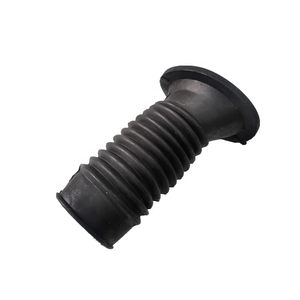
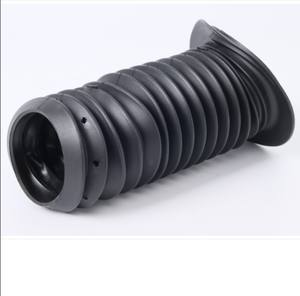
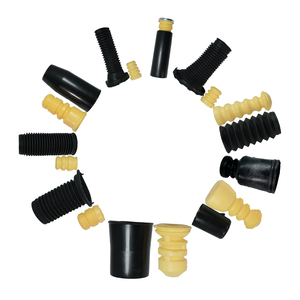
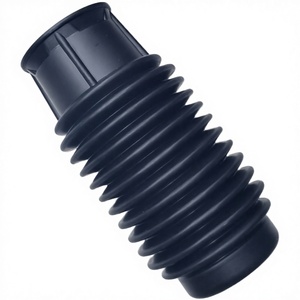
Automotive Dampening Mechanics & Boot Tribology
Why microscopic debris failure accounts for over 68% of hydraulic strut leaks, and how material selection directly impacts shock absorber service life.
The Critical Functionality of Shock Absorber Boots
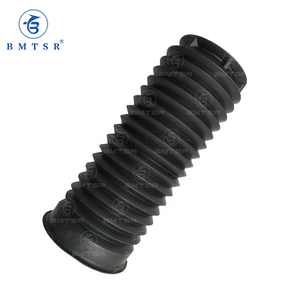
A shock absorber boot—frequently categorized as a strut dust boot, bellow gaiter, or shock dust cover—acts as the primary mechanical barrier defending the micro-finished chrome piston rod against airborne road grit, salt spray, sand slurry, stone impacts, and industrial pollutants. When an unprotected piston rod undergoes continuous stroking cycles, particulate intrusion creates micro-scratches along the chrome plating. These imperfections immediately degrade the nitrile or HNBR internal oil seals, resulting in irreversible hydraulic fluid leakage, loss of nitrogen gas pre-charge, premature damping cavitation, and total suspension failure.
Our custom OEM design philosophy incorporates finite element analysis (FEA) to ensure homogeneous convolution wall thicknesses throughout extreme expansion, compression, and high-frequency oscillation phases, eliminating radial buckle under negative interior pressure.
| Elastomer Compound | Thermal Window | Tensile Strength (MPa) | Dynamic Flex Fatigue Resistance | Primary Industrial Use-Case |
|---|---|---|---|---|
| Thermoplastic Polyurethane (TPU) | -40°C to +110°C | ≥ 35 | Superior (>1,500,000 cycles) | Modern lightweight passenger vehicles, high-frequency struts |
| Chloroprene Rubber (CR / Neoprene) | -35°C to +125°C | ≥ 18 | High grease & ozone protection | OEM European & American legacy platforms, hydraulic struts |
| EPDM Terpolymer | -45°C to +140°C | ≥ 14 | Exceptional environmental weathering | Commercial fleet chassis, high-temperature axle assemblies |
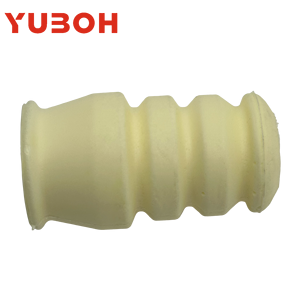
| Microcellular Polyurethane (MCU) | -35°C to +90°C | Integrated Buffer | Progressive end-stop absorption | Integrated jounce bumper & dust bellow combo units |
Why Tier-1 Importers Partner With Amit Rubber Products
Combining four decades of specialized Indian manufacturing with comprehensive tooling design, high-volume production facilities, and rapid dispatch capabilities.
Factory-Direct Economic Viability
By conducting continuous internal vulcanization, blow molding, and automated compression molding in-house at our Delhi facility, we eliminate intermediary trading markups. Distributors receive factory-direct wholesale pricing, ensuring healthy profit margins on high-turnover suspension repair components.
Custom OEM Tooling & Prototyping
Whether matching obsolete commercial part numbers or developing custom shock boots for electric vehicle conversions, our technical team reverse-engineers physical samples or 3D CAD files. We verify bore diameters, clamp mounting lip geometries, and stroke lengths within an accelerated 15-day turnaround.
Multi-Stage Quality Verification
Every production batch undergoes rigorous physical validation, including Shore A durometer hardness verification, tensile elongation tests, thermal cyclic exposure (-40°C to 125°C), and automated dynamic flex stroking to verify complete immunity against premature cracking and ozone embrittlement.
Extensive Fleet Inventory & Logistics
Situated in North India’s automotive hub at Kashmere Gate, New Delhi, we maintain immediate inventories across high-frequency Tata, Ashok Leyland, Mercedes-Benz, BMW, and Toyota suspension lines. Stock orders ship with express logistics dispatch, minimizing fleet maintenance downtime.
Polymer & Metal Bonding Integration
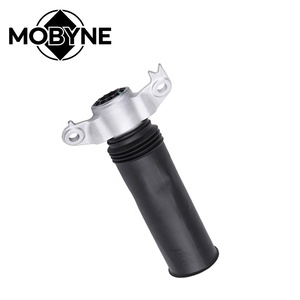
Our operational capabilities extend beyond standard rubber molding into precision rubber-to-metal vulcanization, integrated steel hydraulic rod shields, and dual-durometer co-molding, giving buyers a consolidated supplier for bushes, engine mounts, and suspension protection boots.
Global Export Compliance & Custom Packaging
Exporting to over 20 countries across Europe, the Middle East, Southeast Asia, and the Americas, our packaging protects delicate polymer convolutions against transit compression. Custom barcode labeling, individual branded polybags, and palletized bulk packaging ensure seamless warehouse intake.
Future Procurement & Product Evolution Trends (2025–2030)
Actionable intelligence for automotive aftermarket distributors, wholesale purchasing managers, and suspension rebuilders navigating technological transitions.
1. Electric Vehicle (EV) Dynamic Weight Profiles
The rapid adoption of battery electric vehicles (BEVs) introduces an average 20% to 30% curb weight increase due to heavy battery packs. This increased sprung mass places intensified loads on strut assemblies, generating higher internal hydraulic fluid operating temperatures and larger suspension stroke displacements.
Procurement Implication: Procurement directors must pivot from conventional low-cost natural rubber blends toward heat-stabilized thermoplastic copolyester (TPC-ET) and high-tear thermoplastic polyurethanes (TPU). These compounds sustain flex life up to 130°C without plasticizer leeching or convolution collapse.
2. Integrated Multi-Function Modular Strut Boots
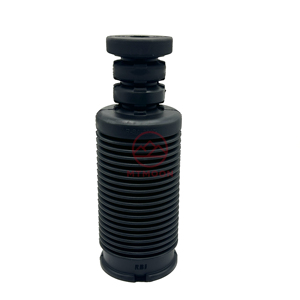
Automotive OEMs are actively abandoning the traditional two-piece assembly (separate loose jounce bumper inside an independent rubber bellow). Modern suspension designs demand single-unit co-molded or sonic-welded modular systems, integrating a microcellular polyurethane (MCU) bump stop directly into an elastomeric dust bellow.
Procurement Implication: Aftermarket distributors must stock consolidated SKU sets. Integrated assemblies reduce mechanic installation time by 40% and eliminate assembly misalignment errors, drastically lowering warranty claim ratios.
3. Decarbonized & Circular Polymer Formulations
Stringent European Union Corporate Sustainability Due Diligence and global Scope 3 carbon tracking standards are pushing tier-1 suppliers toward circular supply chains. As a result, commercial fleets prioritize elastomer components made with circular feedstocks.
Procurement Implication: Early adopters among aftermarket buyers are validating parts manufactured with bio-based monomers, devulcanized reclaimed rubber crumb, and energy-efficient cold-runner injection molding machines. These initiatives satisfy international ESG mandates while preserving dynamic flex life.
4. Advanced Resistance to Synthetic Road De-Icers
Municipal departments worldwide increasingly use concentrated magnesium chloride and calcium chloride brines instead of coarse road rock salt for winter de-icing. These chemical agents penetrate micro-cracks in standard elastomers, accelerating oxidative cleavage.
Procurement Implication: Sourcing specifications must mandate ASTM D471 fluid immersion certification and ASTM D1149 ozone exposure resistance. Boots molded with targeted antioxidant/antiozonant masterbatches prevent premature degradation in cold northern climates.
Frequently Asked Questions from Purchasing Directors
Clarifications on tooling validation, minimum order quantities, cross-reference mapping, and material testing protocols.
Can you manufacture shock absorber boots according to our physical samples or OEM numbers?
What polymer compound is recommended for severe sub-zero or tropical desert climates?
What are your standard Minimum Order Quantities (MOQ) and production lead times?
How do you prevent shock absorber boot cracking during high-frequency cycling?
Do you offer integrated assemblies combining dust boots with bump stops (jounce bumpers)?
Upgrade Your Suspension Supply Chain Today
Connect directly with our engineering and export team. Submit your OEM cross-references, custom vehicle technical drawings, or target tender quantities for immediate factory-direct pricing.