Featured Commercial Suspension & Anti-Vibration Assemblies
Manufactured with bonded vulcanized elastomeric polymers, tight radial tolerances, and corrosion-inhibiting outer casings for severe duty service.
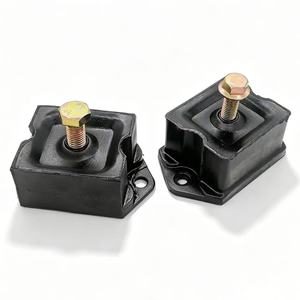
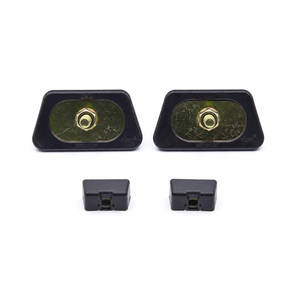
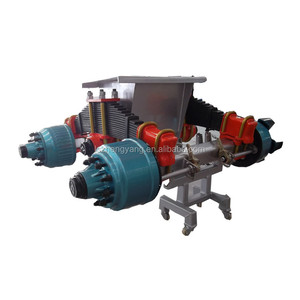
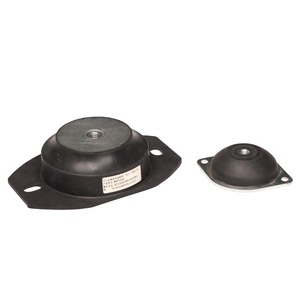
Kinematics, Elastomeric Formulations & NVH Isolation in Stabilizer Bushings
An in-depth metallurgical and polymer analysis of torsional compliance, radial preload, and hysteresis loss across commercial anti-roll bar (ARB) linkages.
Torsional Shear & Dynamic Stiffness
The stabilizer bar bushing functions as the primary fulcrum mediating sway bar deflection during vehicle roll maneuvers. A high-efficiency bushing must deliver targeted dynamic radial stiffness to resist body lean while maintaining controlled torsional compliance, preventing stick-slip friction and preserving suspension travel fidelity under multiaxial loading.
Elastomer Chemistry: NR vs. Polyurethane
Compounded Natural Rubber (NR) blends exhibit superior internal hysteresis damping, exceptional low-temperature elasticity down to -40°C, and superior isolation of micro-vibrations across 20–200 Hz. For ultra-heavy payload haulage, cast Polyurethane (PU) variants provide tensile modulus exceeding 35 MPa, tear strength over 80 kN/m, and resistance to petroleum grease washouts.
Tribological Liners & Bonding Integrity
Premature sway bar bushing degradation typically stems from frictional shear at the inner bar-to-rubber interface or chemical debonding from outer steel brackets. Modern OEM solutions utilize co-vulcanized woven PTFE inner liners to eliminate chattering noise, paired with chemlok-based bonding yielding rubber-tear failure thresholds higher than the elastomer matrix itself.
OEM Stabilizer Bar Bushing Compound Engineering Specifications
Standard mechanical parameters for tier-1 fleet replacement and OEM production runs.
| Polymer Base | Durometer (Shore A) | Tensile Strength (MPa) | Elongation at Break (%) | Operating Temp Range | Primary Commercial Application |
|---|---|---|---|---|---|
| High-Grade Natural Rubber (NR) | 60 ± 5 | ≥ 18.5 | ≥ 480% | -45°C to +85°C | City Transit, Coaches, Long-Haul Tractor Steer Axles |
| Oil-Resistant EPDM Formulation | 65 ± 5 | ≥ 14.0 | ≥ 380% | -40°C to +125°C | Engine-Adjacent Stabilizers, Hot-Climate Haulage |
| Cast Polyurethane Elastomer (PU) | 75 - 85 ± 3 | ≥ 32.0 | ≥ 420% | -35°C to +90°C | Off-Highway Dump Trucks, Mining Tippers, Bogie Pivots |
| PTFE-Lined Hybrid Elastomer | 62 ± 4 | ≥ 19.0 | ≥ 450% | -40°C to +100°C | Zero-Maintenance Luxury Buses, EV Delivery Fleets |
Future Sourcing & Procurement Trends for Commercial Fleet Bushings
Strategic imperatives reshaping how tier-1 importers, fleet distributors, and OEMs source chassis elastomer components through 2030.
Nearshore Tooling & Rapid Reverse Engineering
Global procurement teams are shifting away from rigid multi-month tooling lead times. The modern standard demands 15-day sample fabrication directly from 3D CAD models or physical worn samples, supported by regional logistics hubs capable of balancing container loads with urgent air courier dispatch.
Total Cost of Ownership (TCO) vs. Unit Price
Procurement directors increasingly audit parts by cost-per-operating-hour rather than initial piece rate. Premature bushing failure results in uneven tire wear, stabilizer bar gouging, and unexpected trailer downtime. Bushings engineered with superior ozone and cyclic fatigue life deliver up to 3.4x TCO savings across 500,000-kilometer fleet lifecycles.
ESG, REACH & Decarbonized Vulcanization
Export compliance to European and North American markets requires rigorous compliance with REACH, RoHS, and heavy metal limits (eliminating prohibited nitrosamines and toxic curing agents). Furthermore, energy-efficient micro-injection molding and bio-sourced natural rubber matrices are rapidly becoming mandatory vendor audit criteria.
Technological Roadmaps: Next-Generation Anti-Roll Bar Isolators
Addressing vehicle electrification demands, active chassis stabilization, and structural composite innovations.
High-Load Dampers for Heavy Electric Axles
Commercial battery-electric vehicles (BEVs) feature higher unsprung mass and lower centers of gravity, subjecting suspension stabilizer bars to higher static preloads and high-frequency vibrations. Next-gen bushings utilize dual-rate elastomer geometries with non-linear progressive spring rates to isolate high-frequency road input while mitigating extreme cornering roll.
Embedded Sensorization for Fleet Telematics
Smart suspension concepts integrate resistive film and piezoresistive elastomeric layers directly within the bushing substrate. These embedded transducers output real-time data on radial compression, dynamic shear deflection, and thermal build-up directly to onboard telematics, predicting mechanical wear long before catastrophic linkage failure occurs.
Thermoplastic Polyurethane (TPU) Hybridization
Molded TPU formulations with structural nanofiber reinforcement eliminate external steel brackets entirely by combining structural mounting ears and elastomeric cushioning into a single, fully recyclable monolithic part. This architecture reduces chassis weight by 35% while eliminating bracket rust and galvanic corrosion risks.
Why Global Fleets & Importers Partner with Amit Rubber Products
Four decades of manufacturing precision, extensive platform coverage, and strict quality control.
46+ Years Industrial Tooling Heritage
Founded in 1980 in Kashmere Gate, New Delhi, Amit Rubber Products brings deep domain engineering expertise to automotive elastomer manufacturing. Under the stewardship of Mr. Amit Chitkara, the enterprise has grown into a premier exporter supporting commercial vehicle platforms across more than 20 countries.
Comprehensive Commercial Vehicle Coverage
Our tooling catalog spans leading commercial platforms including Tata (407, 709, 1613, 2515, Signa, Prima), Ashok Leyland (U-Truck, Taurus), Marcopolo transit buses, Mahindra Bolero utility vehicles, as well as heavy agricultural tractors and combine harvesters. Fitment accuracy is backed by high-precision CMM dimensional verification.
End-to-End Quality Verification
Every compound batch undergoes rigorous rheometer cure profiling, tensile break evaluation (ASTM D412), accelerated ozone chamber exposure (ASTM D1149), and rubber-to-metal peel testing. Parts are visually and dimensionally verified before custom wooden crating and international export dispatch.
Stabilizer Bar Bushing Sourcing & Engineering FAQ
Common technical and contractual inquiries addressed by our senior application engineering team.
How do you verify fitment against OEM part numbers and legacy samples? +
What is the standard tooling lead time for custom stabilizer bushing designs? +
How do Natural Rubber and Polyurethane compare in severe-duty fleets? +
Can you manufacture bushings with low-friction internal PTFE fabric liners? +
What export packaging standards are implemented to prevent elastomer degradation? +
What Minimum Order Quantities (MOQs) apply to customized OEM production runs? +
Accelerate Your OEM Elastomer Sourcing Today
Submit your engineering blueprints, 2D/3D CAD models, or OEM part reference numbers. Our technical team delivers detailed DFM feedback, compound recommendations, and competitive container-direct export quotations within 24 business hours.
Contact Us