Featured OEM/ODM Rubber-to-Metal Bushings & Elastomer Assemblies
As a vertically integrated manufacturer established in 1980, Amit Rubber Products engineers high-durometer stability, superior shear resilience, and exact dimensional tolerances across suspension, cabin, engine, and fluid-transfer architectures.
Metallurgical & Elastomeric Physics of OEM/ODM Rubber Metal Bushings
In heavy-duty commercial vehicles, mining dumpers, and passenger car control arms, a rubber-to-metal bushing functions as a three-dimensional mechanical filter. It must simultaneously accommodate radial loads, axial thrust, torsional articulation, and conical deflection without suffering delamination or catastrophic hysteresis heating.
1. Chemical Adhesive Vulcanization
True OEM durability cannot be achieved through friction-fit sleeves alone. Our manufacturing line executes a multi-stage substrate preparation: alkaline degreasing, grit blasting, zinc-phosphate micro-crystalline coating, and dual-coat primer/cover-coat application (Chemlok-equivalent chemistry). During high-pressure compression or transfer injection molding at 160°C–185°C, covalent cross-links form directly between the steel sleeve and the elastomer matrix, ensuring bond strength exceeds the tear strength of the rubber itself (ASTM D429 Method B).
2. Dynamic-to-Static Stiffness Ratio (Kd/Ks)
For NVH (Noise, Vibration, and Harshness) engineers, the critical benchmark of a control arm bushing, cabin mounting, or engine cushion (such as our SANY SKT105S / SKT95S 131602000108A rear vibration isolator) is the ratio of dynamic stiffness (Kd at 15–100 Hz) to static spring rate (Ks). By blending high-cis Natural Rubber (NR) with specialized carbon black structures and anti-reversion agents, we maintain a low Kd/Ks ratio (typically 1.15 to 1.35), isolating high-frequency engine harmonic buzz while restricting gross axle displacement under braking torque.
3. Pre-Stressing & Swaging Geometry
Elastomers exhibit superior fatigue life under compression compared to tension. After vulcanization, as the rubber cools, thermal contraction induces undesirable tensile radial stress along the bonded interface. For high-articulation suspension and balance rod bushes, we engineer precise post-vulcanization outer-tube swaging (radial calibration) or inner-sleeve expansion. This neutralizes shrinkage stress and places the elastomer in permanent radial compression, multiplying torsional fatigue life by 300% to 500%.
Elastomer Compound Selection Matrix for Global OEM/ODM Buyers
Selecting the wrong polymer base is the #1 cause of premature field failure in aftermarket and OEM fleets. Below is our laboratory performance indexing across our core compound families (Shore A 40 to 95 Shore A / D):
Technological Development Trends in Rubber-Metal Bushings
The global automotive and heavy-machinery bushing sector is undergoing its most radical transformation in four decades. Driven by commercial vehicle emission standards (BS6 / Euro 6), heavy haulage electrification, and autonomous mining platforms, traditional solid-rubber sleeves are evolving into smart, multi-modulus structural components.
01. Hydro-Bushings & Tuned Void Geometry
To combat low-frequency road boom and high-torque diesel idle shake simultaneously, ODM bushing designs increasingly integrate asymmetrical internal voids, directional nylon fabric interlayers, and glycol-filled hydraulic chambers. By tuning the radial stiffness ratio between the X-axis (handling stiffness) and Y-axis (ride compliance) up to 1:8, modern control arm and cabin leaf bushes (such as Tata Signa & Prima platforms) eliminate steering shimmy without transmitting chassis shock.
02. EV & Hybrid Drivetrain Torque Demands
Electric commercial vehicles and hybrid utility fleets generate instantaneous peak torque from 0 RPM, alongside higher curb weights from battery packs. Furthermore, the absence of internal combustion masking noise makes structure-borne high-frequency whine (500 Hz – 2000 Hz) immediately audible. Bushing development is shifting toward dual-durometer bonded assemblies and high-damping micro-cellular polyurethane combined with lightweight anodized aluminum inner sleeves (6061-T6) to reduce unsprung mass.
03. Hybrid NR-PU & Bio-Elastomer Formulations
Historically, buyers had to choose between the superior acoustic damping of Natural Rubber and the tear/oil indestructibility of Polyurethane. Next-generation compounding utilizes co-continuous interpenetrating polymer networks (IPNs) and epoxidized natural rubber (ENR) reinforced with precipitated silica. Simultaneously, strict European and North American environmental mandates are accelerating PAH-free, nitrosamine-free, and RoHS/REACH-compliant vulcanization accelerators—mirroring our custom eco-friendly muffler and engine component lines.
04. FEA Digital Twin & 1,000-Hr Salt Spray Coatings
Instead of physical trial-and-error tooling, modern ODM development utilizes non-linear Finite Element Analysis (FEA) using Mooney-Rivlin and Ogden hyperelastic material models to predict strain crystallization before cutting steel molds. On the metallurgical side, standard zinc plating is being replaced by zinc-nickel alloy electroplating and Zn-Al flake coatings (Geomet/Dacromet equivalents), guaranteeing over 1,000 hours of neutral salt-spray resistance (ASTM B117) for corrosive export markets.
2026–2030 Global Procurement Trends for Automotive Rubber Parts
How Tier-1 aftermarket distributors, OEM purchasing directors, and heavy-fleet maintenance managers are restructuring their sourcing strategies to mitigate supply chain volatility and maximize lifecycle ROI.
The "India-Plus-One" Sourcing Shift
Global procurement teams are actively diversifying away from single-country dependency. India—and specifically New Delhi's Kashmere Gate and NCR manufacturing belt—has emerged as a dominant global export hub for bonded rubber-to-metal components. Backed by indigenous natural rubber cultivation, world-class steel forging/stamping ecosystems, and 40+ years of heavy-truck aftermarket expertise, Indian exporters provide Western and Middle Eastern buyers with superior metallurgical toughness at highly competitive landed duties.
SKU Consolidation & Full-System Kitting
Rather than issuing fragmented purchase orders to separate factories for metal brackets, moulded EPDM hoses, silicone turbo boots, and polyurethane suspension bushes, B2B buyers are consolidating vendors. Importers increasingly demand complete repair kits and multi-category container loads—combining Centre Bearing Assemblies (88507–88512), Front Engine Mountings, Balance Rod Cut Bushes, and Radiator Hose Kits under a single unified quality assurance protocol and Bill of Lading.
Total Cost of Ownership (TCO) Over Unit Price
In commercial trucking (Tata, Ashok Leyland, Marcopolo) and mining excavators (SANY), a $4 bushing failure can trigger $2,000 in vehicle downtime, labor, and collateral driveline U-joint destruction. Modern procurement algorithms evaluate suppliers on cost-per-100,000-kilometers, demanding batch-traceable Rheometer cure curves (MDR), precise Shore A hardness certification (±3 Shore A tolerance), and verified compression set testing before shipment approval.
46+ Years of Manufacturing Authority in Commercial & Custom Rubber Components
Established in 1980 in New Delhi, India, and led by Mr. Amit Chitkara, Amit Rubber Products bridges heavy-duty OE engineering with agile ODM customization for importers, wholesalers, and fleet operators across 20+ countries.
Comprehensive Cross-Platform Compatibility & Reverse Engineering
Whether you are sourcing custom passenger car suspension control arm bushings, SANY mining dump truck rear engine cushions, or high-volume commercial vehicle replacements for Tata (407, 709, 1613, 2515 TC, Signa, Prima), Ashok Leyland (including U-Truck & BS3/BS6), Marcopolo Buses, Mahindra Bolero / Turbo, or agricultural Tractors & Combine Harvesters, our engineering team guarantees zero-defect fitment.
Our 6 Pillars of Buyer Support:
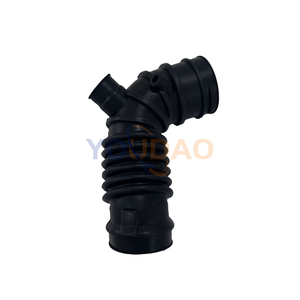
- Precision OE Cross-Referencing: Instant identification of critical references including Centre Bearings (88507, 88508, 88509, 88511, 88512, 2518/6013, 6211/2416, 3118, 4018) and passenger intake hoses (1505A630, 1505A628, 1505B030, 1505A423).
- Custom Tooling from Drawing or Sample: Send us your 2D/3D CAD files or physical worn samples. We verify bore diameter, bracket hole pitch, wall thickness, and operating temperature to formulate the exact NR, NBR, EPDM, Silicone, or Polyurethane compound.
- Factory-Direct Wholesale Economics: In-house compounding, metal stamping preparation, and vulcanization eliminate middleman markups, maximizing distributor profit margins.
- High Inventory Availability & Immediate Dispatch: Fast-moving references are stocked in depth for immediate dispatch via premier international air parcel, express courier, or LCL/FCL sea freight.
- Strategic Stocking Advisory: We help new overseas distributors build high-turnover initial orders by recommending proven fast-moving SKUs tailored to their regional fleet demographics.
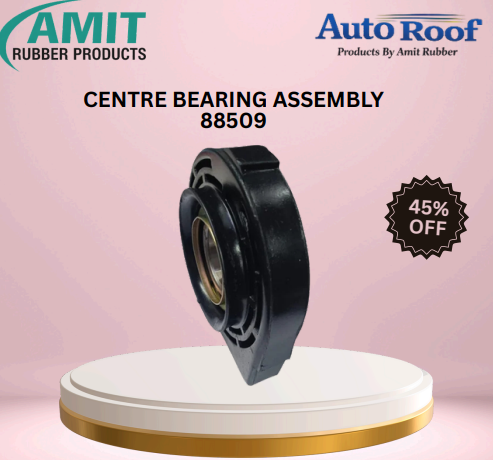 Centre Bearing Assembly 88509
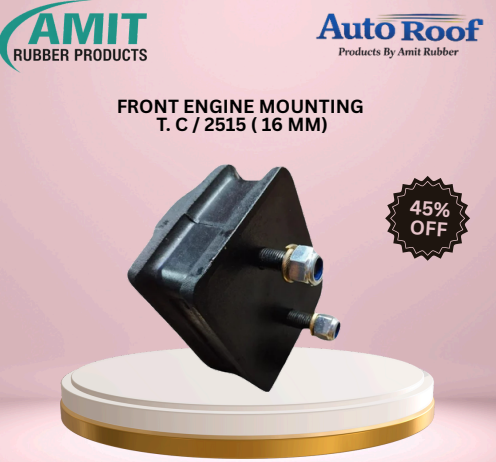 Front Engine Mounting 2515 TC
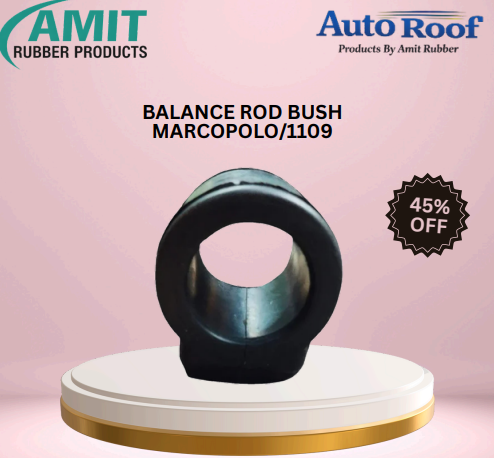 Balance Rod Bush (NR & PU)
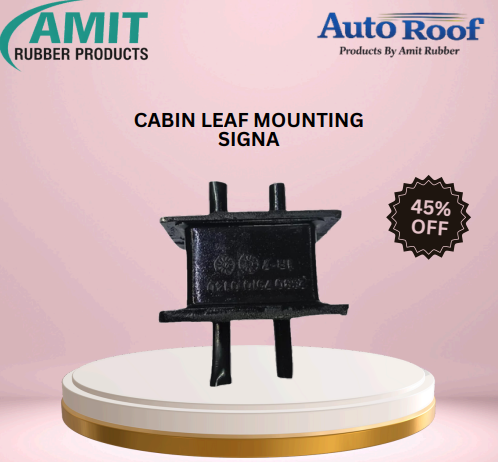 Cabin Leaf Mounting Signa
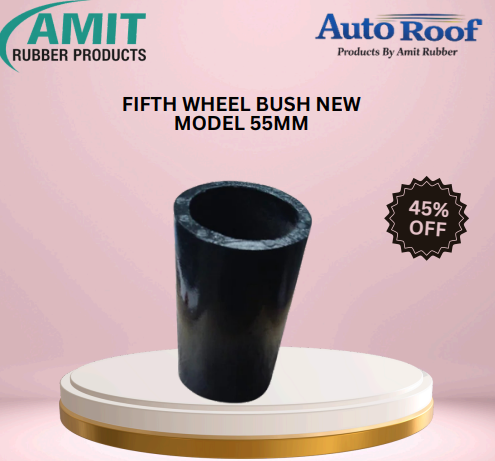 Fifth Wheel Bush (55mm Model)
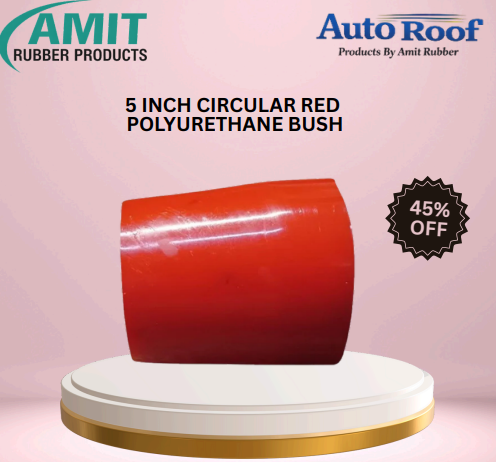 5" Red Polyurethane Bush
Frequently Asked Questions on Bushing & Rubber Component Procurement
Direct answers from our engineering and export desk regarding OEM/ODM customization, material testing, and international logistics.
Yes. Provide your OE reference number (such as 88509, 2518/6013, 131602000108A, or 1505A630), 2D/3D engineering drawings, or two physical samples. Our laboratory cross-checks inner/outer sleeve metallurgy, bore concentricity, bracket hole pitch, rubber hardness (Shore A), and spring rate before producing T1 validation samples for your sign-off.
Delamination is typically caused by oil contamination on metal inserts prior to molding or inadequate adhesive activation. We enforce strict mechanical grit-blasting, zinc-phosphate chemical conversion, and automated two-coat heat-activated bonding agents inside clean rooms, achieving a vulcanized chemical bond that exceeds ASTM D429 peel-strength standards.
It depends on your fleet's operating environment. Natural Rubber offers superior acoustic isolation and hysteresis damping for highway trucks and passenger cars. Polyurethane (such as our 40mm yellow PU balance rod bushes, 4018 TC round cabin mounts, and 5" red PU bushes) provides 3x to 4x higher abrasion, tear, and oil/grease resistance for overloaded trailers, mining roads, and severe off-highway duty.
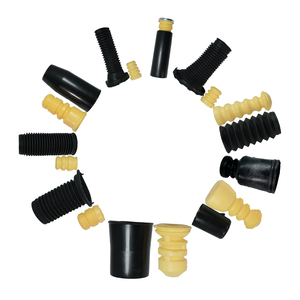
Radiator and coolant hoses utilize heat- and glycol-resistant EPDM reinforced with high-tensile polyester or nylon plies (-40°C to +125°C). Turbocharger and hump hoses use high-temperature red rubber or multi-ply silicone. Engine sealing parts and shock absorber boots are molded from precision 60 Shore A oil-resistant NBR or CR compounds.
For our 45+ catalogued standard references (Tata, Ashok Leyland, Marcopolo, Mahindra Bolero, tractor hoses), we offer flexible wholesale MOQs and immediate dispatch from stock. For custom ODM molds, prototype tooling takes 15–25 days depending on cavity complexity, with MOQs scaled to part weight and annual volume commitments.
Metal sleeves and brackets receive anti-corrosion phosphate or electroplated coatings. Parts are sealed in heavy-gauge polybags, packed in reinforced 5-ply/7-ply corrugated cartons, and palletized with moisture barriers for sea or air freight. We support Express Courier, Air Cargo, and FOB/CIF container shipments worldwide.
Ready to Optimize Your Rubber-to-Metal Bushing Supply Chain?
Connect directly with our engineering and export team in New Delhi. Share your OE part numbers, drawings, or annual RFQ list for a fast, factory-direct quotation.