Engineering Portfolio: OE-Grade Chassis & Elastomer Solutions
Engineered to isolate severe dynamic shocks, reduce harmonic resonance, and provide direct fitment across heavy truck, trailer, utility, and coach applications.
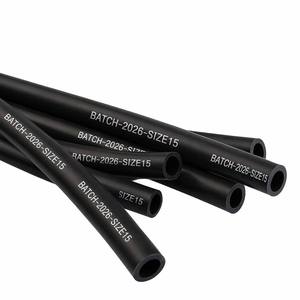
Custom Industrial Automotive Anti-Aging Flexible EPDM Rubber Hose Pipe
Product Specifications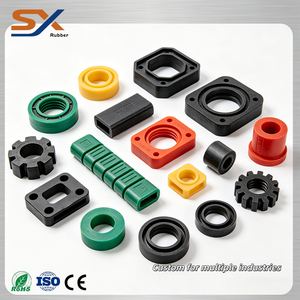
Industrial Universal Custom Rubber Wear-Resistant Sealing Components
Product Specifications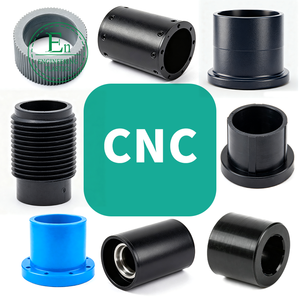
Factory Custom NR/NBR/EPDM/Silicone Rubber Suspension Control Arm Bushing
Product Specifications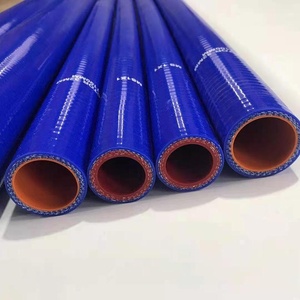
Customized Heat-Resistant Silicone Vacuum Coolant Straight Rubber Hose
Product Specifications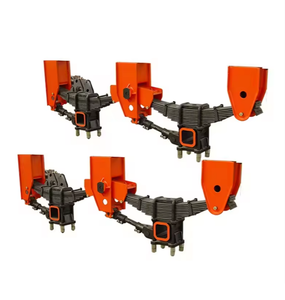
CIMC Steel Semi-Trailer Skeletal Flatbed Leaf Spring Equalizer Suspension
Product Specifications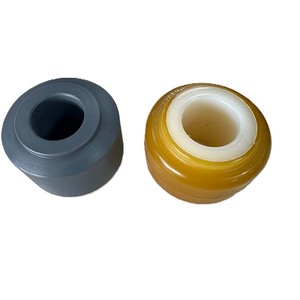
Semi-Trailer Mechanical Suspension Torque Arm Rod Heavy-Duty Bushing
Product Specifications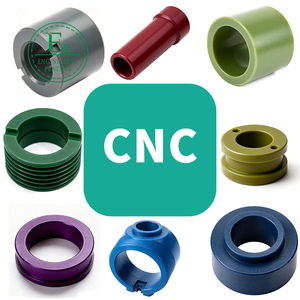
Custom High-Durometer Red Polyurethane Front Lower Arm Suspension Bushing
Product Specifications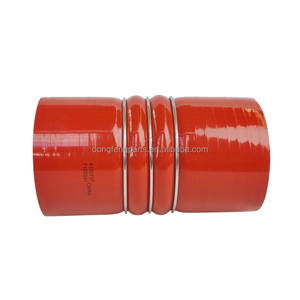
C4330737 Flexible Air Intake Turbo Hose for Heavy Commercial Diesel Engines
Product SpecificationsEngineering White Paper: OEM/ODM Strut Mounting & Dynamic NVH Isolation
In modern commercial vehicle and passenger chassis architectures, the suspension strut mount serves as the single critical mechanical pivot connecting the damping strut assembly to the unibody or structural chassis frame. Subjected to dynamic axial loads exceeding 15 kN, multiaxial radial shear, and continuous high-frequency road excitations, substandard strut mounts cause premature damper wear, acoustic harshness inside the passenger cabin, erratic steering caster return, and compromised wheel alignment geometries.
As an established manufacturing authority operating since 1980, our production methodology integrates advanced vulcanization bonding agents with premium virgin Natural Rubber (NR), synthetic Polyurethane (PU), and custom Nitrile/EPDM compounds. By calibrating Shore A durometers between 55 and 75 depending on vehicle payload classification, our mounts isolate high-frequency road vibrations (50–300 Hz) while maintaining the structural stiffness necessary for instantaneous lateral steering response.
- Elastomer-to-Metal Vulcanization: Utilization of automated zinc-phosphate surface pre-treatment and Chemlok bonding systems guarantees peel-adhesion strength exceeding 14 N/mm, eliminating rubber-shearing delamination under severe axle torsion.
- Integrated Axial Bearings: Sealed, low-friction polymer or hardened-steel ball bearing assemblies are integrated directly into front strut mounts to ensure ultra-smooth rotational travel and zero spring wind-up noise during tight lock-to-lock steering cycles.
- Environmental Corrosion Armor: Heavy-gauge stamped steel housings receive electro-deposition (ED) coating or DACROMET treatment capable of withstanding beyond 720 hours of ASTM B117 neutral salt spray testing without red rust formation.
Strategic Trends: Chassis & NVH Sourcing Horizons
Anticipating structural shifts in commercial and passenger mobility procurement strategies.
Electric Fleet Payload Adaptation
Commercial battery-electric vehicles (EVs) present kerb weight increases of up to 25–30% with immediate torque delivery. Future strut mount specifications require dual-rate rubber formulations that maintain soft compliance over low-amplitude ripples yet ramp up stiffness rapidly under high cornering g-forces to prevent mechanical bottoming.
Microcellular Polyurethane (MCU)
Procurement teams are shifting away from traditional dense elastomers toward microcellular polyurethane (MCU) and hybrid rubber-composite inserts. MCU offers high volumetric compressibility without lateral bulging, functioning simultaneously as a micro-damper and long-stroke bump stop inside high-duty strut towers.
Lightweight Aluminum & Composites
To reduce unsprung chassis weight, global procurement mandates demand cast-aluminum or high-rigidity engineered thermoplastic bracket integration. Our ODM development line accommodates high-pressure die-cast aluminum brackets, shaving up to 35% component weight while exceeding fatigue endurance life benchmarks.
Manufacturing Authority & OEM/ODM Engineering Edge
Founded in 1980 in the historic engineering hub of Delhi, Amit Rubber Products has continuously refined the art and science of rubber-to-metal compounding, high-pressure silicone extrusion, and driveline vibration management. Operating under the visionary technical leadership of Mr. Amit Chitkara, the enterprise manufactures mission-critical chassis hardware for demanding platforms including Tata (407, 709, 1613, 2515, Signa, Prima), Ashok Leyland (including U-Truck series), Marcopolo buses, Mahindra Bolero utilities, and heavy agricultural machinery.
Strict In-House Metallurgy & Rheology
Every compound batch undergoes moving die rheometer (MDR) testing, tensile elongation verification, and Shore durometer validation. Finished brackets undergo coordinate measuring machine (CMM) dimensional checks to guarantee pitch accuracy and axial runout control.
Rapid Reverse Engineering & Tooling
Whether matching an obscure OE reference or fabricating prototypes from worn mechanical samples, our CAD/CAM toolroom rapidly produces vulcanization compression molds and progressive stamping dies, truncating trial turnaround times down to 15–20 working days.
Global Export Logistics
With an active export distribution footprint spanning over 20 countries, all consignments are packed with rust-preventative VCI wrap, shock-absorbent outer cartons, and heat-treated wooden export pallets to ensure zero moisture degradation during maritime transit.
Procurement FAQ: Technical & Commercial Clearances
Direct answers for procurement specialists, chassis engineers, and overseas wholesale importers.
Can you manufacture custom strut mounts based purely on physical samples or OE part numbers?
Yes. Our engineering division routinely receives OE numbers (such as 88507, 88509, 2518/6013, 4018) or physical benchmark specimens. We measure inner bearing diameters, stud bolt PCD (Pitch Circle Diameter), bracket hole offsets, and elastomer durometer curves before delivering accurate 3D CAD models and prototype samples for dimensional sign-off.
What elastomer compounds are specified for heavy commercial versus passenger duty?
For standard commercial and passenger strut mountings, we specify sulfur-cured virgin Natural Rubber (NR) blends engineered for superior tear strength and low compression set. For severe fleet duty exposed to motor oil, transmission fluids, or elevated heat, we deploy chloroprene (CR), hydrogenated NBR, or high-modulus polyurethane to guarantee extended flex fatigue endurance.
How do you evaluate and eliminate dynamic NVH resonance during the tooling phase?
Tooling design incorporates finite element analysis (FEA) to verify shear stress distribution across the vulcanized bonding planes. We conduct dynamic mechanical analysis (DMA) to evaluate loss factor (tan delta) across temperatures ranging from -40°C to +120°C, verifying that resonant frequency peaks do not coincide with common suspension excitation ranges.
What are your production lead times, minimum order quantities (MOQ), and export packing standards?
Cataloged reference items maintain buffer inventory for rapid dispatch within 3–7 business days. Custom OEM/ODM development requires 20–30 days for mold construction and sample PPAP sign-off, followed by 25–35 days for serial lot manufacturing. Typical MOQs range from 200 to 500 units per reference. Cargo is bundled in heavy-duty export boxes, palletized, and shrink-wrapped against transit moisture.