Engineered Torsional Dampers & Dynamic Damping Assemblies
Mitigate crankshaft crankpin stresses, smooth driveline torque spikes, and protect heavy-duty powertrains with certified elastomeric and mechanical harmonic attenuation solutions.
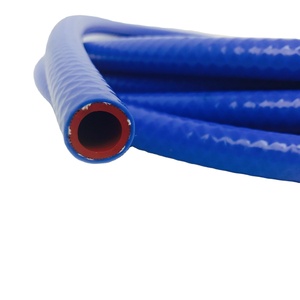
High-Temp Silicone Radiator & Intake Vibration Decoupling Hose
Explore Specifications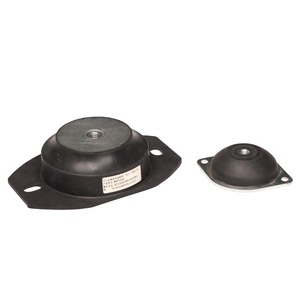
Anti-Vibration Heavy-Duty Engine Rubber Shock Absorbing Isolator
Explore Specifications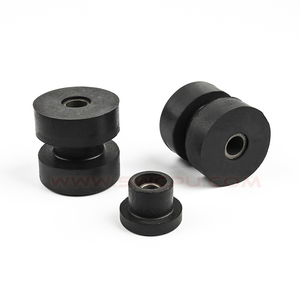
Turnkey OEM/ODM EPDM Rubber Torsional Dynamic Damping Damper Pads
Explore Specifications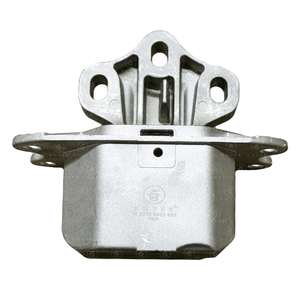
OEM Quality Rubber Transmission & Driveline Mount 22316853453
Explore Specifications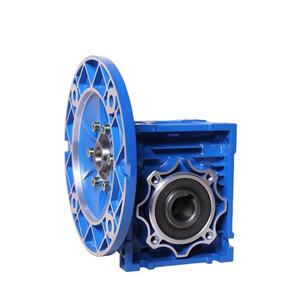
NMRV30 Industrial Worm Gearbox Torque Dampening Drive Unit
Explore Specifications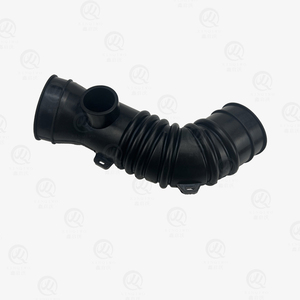
Cold Air Engine Resonance Absorber & Intake Hose 17881-0C010
Explore Specifications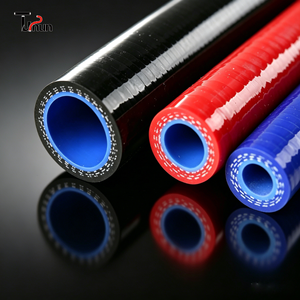
Textile-Reinforced EPDM Flexible Coolant Damper Connector Pipe
Explore Specifications
Acoustic & Vibration Damping Thermal Shielding Sheet
Explore SpecificationsTechnical Deep-Dive: Torsional Vibration Damping in High-Torque Drivelines
Internal combustion engines generate cyclical torque impulses during combustion events. In heavy commercial vehicles, high-displacement turbodiesels, and agricultural machinery, every cylinder firing induces a momentary angular twist in the crankshaft. When these excitation harmonics coincide with the shaft assembly's natural torsional frequency, uncontrolled resonance occurs. Left unchecked, torsional stress leads to crankshaft shear failure, premature bearing pitting, timing gear chatter, and accessory drive belt slippage.
A professional Torsional Vibration Damper (TVD), also commonly referred to as a harmonic balancer or crankshaft damper, acts as a dynamic mechanical energy absorber. By tuning an inertia ring connected via a precision-vulcanized elastomer ring (or suspended within high-viscosity silicone fluid), the damper introduces a phase shift against the angular oscillations, converting disruptive torsional kinetic energy into dissipated thermal energy.
Comparative Metallurgy & Elastomer Compounds
Modern engine downsizing and turbocharging generate elevated peak cylinder pressures (PCP), placing aggressive thermal loads on the harmonic damper assembly. As specialized OEM/ODM manufacturers, our engineering focuses on high-integrity bonding chemistries and metallurgical durability:
| Damper Technology | Core Material Architecture | Operating Temp Range | Primary Industrial Application | Damping Mechanism |
|---|---|---|---|---|
| Bonded Elastomer TVD | Ductile Cast Iron (GGG60) + EPDM / Natural Rubber | -40°C to +130°C | Commercial Trucks, Utility Vehicles, Buses | Viscoelastic hysteretic shear damping |
| Non-Bonded (Pressed) TVD | Forged Steel Hub + Compression EPDM Ring | -35°C to +120°C | Light Commercial, Light Diesel Engines | Frictional contact & rubber compression |
| Viscous Silicone TVD | Laser-Welded Steel Housing + Dimethyl Silicone | -40°C to +160°C+ | Marine Powertrains, Heavy Gen-Sets, Haulage | Fluid shear resistance across micro-clearances |
| Dual-Mass TVD / Decoupler | Cast Steel Flywheel Ring + Integrated Polyurethane/EPDM | -40°C to +125°C | Start-Stop Diesel Powertrains, Hybrid Transmissions | Multi-frequency resonant attenuation |
To eliminate early degradation caused by engine oil splash, ozone exposure, and persistent ambient radiant heat, our compounding utilizes high-cohesion synthetic EPDM blends. Compared to traditional natural rubbers, advanced crosslinked EPDM maintains stable shear elasticity (G*) over hundreds of millions of duty cycles, preventing common operational problems such as tuning drift and unbalance vibration.
Future Sourcing Trends for Global NVH Procurement
Strategic purchasing insights for Tier-1 distributors, vehicle fleet managers, and industrial OEMs navigating decarbonization, electric commercial transitions, and supply chain integrity.
TCO & Lifecycle Fleet Procurement
Purchasing teams are moving away from evaluating initial unit purchase price in favor of Total Cost of Ownership (TCO). A lower-grade damper with poor elastomeric vulcanization can fail prematurely, leading to destroyed front crankshaft oil seals, damaged timing chains, and engine failure. Industrial buyers increasingly require dynamic balancing reports with residual imbalance below 10 g·cm.
Stringent Raw Material Traceability
Stringent compliance frameworks mandate batch-level polymer chemistry certificates, rubber durometer verification (Shore A tolerance within ±3), and microstructural analysis of ductile cast iron inertia rings. Importers demand non-destructive testing (NDT), ultrasound hub bond testing, and documented salt-spray corrosion protection exceeding 240 hours.
Rapid Flexible ODM Tooling Turnaround
With diverse engine platforms in commercial use (Tata, Ashok Leyland, Mahindra, Cummins, Deutz, Perkins), supply chains require suppliers with in-house mould making and rapid prototyping. Production runs must accommodate specialized aftermarket batches alongside volume OE orders without prolonged retooling lead times.
Industry Technological Evolution: Next-Gen Torsional Control
The internal combustion landscape is changing under strict Euro VI / Stage V emission norms and the integration of mild-hybrid (48V) starter-generator systems. These technical advancements are reshaping damper design:
- Dual-Track & Decoupled Overrunning Alternator Dampers: Modern front-end accessory drives (FEAD) experience extreme cyclic deceleration. Decoupled dampers combine a dynamic torsional vibration mass with an integrated overrunning clutch mechanism, decoupling the high rotational inertia of the alternator during gear shifts and engine shutdowns.
- Lightweighting Through Multi-Material Engineering: Reducing parasitic mass at the crankshaft snout improves engine response and fuel efficiency. Dampers increasingly utilize high-strength aluminum alloy hubs or flow-formed thin-wall steel stamped outer shells bonded with advanced synthetic fluoroelastomers.
- Viscous-Rubber Hybrid Damping: In high-output long-haul commercial diesels, broad-band resonance cannot always be addressed by a single rubber compound tuning frequency. Hybrid dampers combine a tuned elastomeric secondary ring for high-frequency accessory control with an internal fluid-filled viscous cavity to dampen fundamental crankshaft resonance.
Why Partner With Amit Rubber Products
Over four decades of dedicated metallurgical bonding, precision rubber vulcanization, and automotive component export experience.
Four Decades of Industry Heritage (Est. 1980)
Under the stewardship of Mr. Amit Chitkara, our Delhi facility has developed deep engineering insights into heavy-duty commercial vehicle platforms, driveline center bearing assemblies, suspension bushes, and elastomeric damping systems.
Advanced Rubber-to-Metal Vulcanization
Using automated degreasing, grit-blasting, and multi-stage silane bonding primer systems, our bonded mounts and dampers achieve high adhesive peel strengths, preventing delamination under aggressive torque reversing conditions.
Complete Global Export Logistics
Strategically positioned near transport hubs with proven distribution across 20+ countries. We provide tailored sea-freight barrier export packaging, barcode inventory tracking, and full documentation to support distributors and fleet operators.
Frequently Asked Questions (FAQ)
Direct technical and operational answers to support your sourcing decisions.
How do you verify the resonance frequency tuning of an OEM damper?
Every newly cast and vulcanized damper undergoes modal vibration analysis using laser vibrometers and accelerometers. Natural torsional resonance frequencies are calibrated by adjusting the inertia ring mass and optimizing the rubber compound's dynamic shear modulus (G').
Can you manufacture custom dampers from physical samples or CAD?
Yes. Our in-house engineering team reverse-engineers or direct-models from STEP/IGES files. We analyse shaft splines, keyways, press-fit bore tolerances, and dynamic mass requirements to manufacture prototypes and production tooling in our machine shop.
What are the common symptoms of a failed crankshaft vibration damper?
Common field indicators include severe in-cab vibration at specific engine RPM bands, cracked or bulged rubber bonding layers, radial runout on the pulley face, continuous accessory belt squeal, and uneven front crankshaft main bearing wear.
How is residual unbalance managed before shipment?
Every damper unit is evaluated on dynamic balancing machines. Balancing corrections are performed by precision CNC radial drill balancing along the inertia ring outer edge, ensuring residual balance meets ISO 1940-1 Grade G6.3 or G2.5 specifications.