Engineered Turbocharger, Fluid & Heavy-Duty Damping Assemblies
Explore our certified performance parts designed for high-stress powertrain applications, heavy commercial hauling, industrial power generation, and specialized mechanical damping.
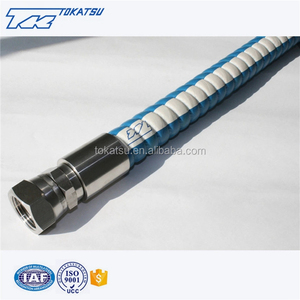
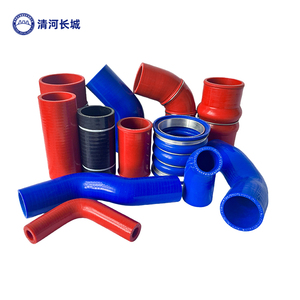
Anatomy of OEM/ODM Turbo Silicone Hoses: Polymer Science & Structural Mechanics
A comprehensive analysis of multi-ply fabric reinforcement, fluorosilicone barrier integration, and high-frequency dynamic compliance in modern forced-induction applications.
Polymer Compounding: VMQ vs. FVMQ Liners in Modern Charge-Air Systems
In high-performance turbocharger plumbing, standard synthetic elastomeric polymers like ethylene propylene diene monomer (EPDM) face severe degradation when subjected to continuous temperatures exceeding 130°C in the presence of blow-by oil mist and crankcase ventilation hydrocarbons. As an established OEM/ODM manufacturer, our compounding methodology pairs VMQ (Vinyl Methyl Silicone) matrices with selective internal liners of FVMQ (Fluorosilicone Rubber).
While VMQ offers broad operating limits (−50°C to +200°C) and superior elastic recovery, it exhibits swell susceptibility when exposed to synthetic synthetic motor oils and aggressive fuel aromatics. Integrating an impenetrable FVMQ inner liner acts as a chemical shield, isolating the silicone carrier body and reinforcement mesh from diesel exhaust gas recirculation (EGR) condensates, aerosolized lubricant vapors, and acid blow-by. This multi-layer approach ensures that boost pipes maintain wall integrity without delaminating, softening, or sweating oil through the carcass over prolonged engine service intervals.
| Material Configuration | Continuous Thermal Limit | Peak Temperature | Oil/Fuel Mist Resistance | Common Engine Domain |
|---|---|---|---|---|
| Standard EPDM (Textile Knit) | −40°C to +125°C | +140°C | Poor (Prone to swelling) | Standard Radiator / Coolant Plumbing |
| High-Grade VMQ (4-Ply Polyester) | −50°C to +180°C | +200°C | Moderate (Dry boost lines) | Intercooler Cold-Side Piping |
| Nomex/Aramid-Reinforced VMQ | −50°C to +220°C | +250°C | Moderate (High thermal stability) | Turbo Hot-Side Discharge / Heavy Haul |
| FVMQ Lined + Aramid (4 to 5-Ply) | −50°C to +230°C | +260°C | Exceptional (Zero oil permeation) | Euro VI / EPA Tier 4 Diesel Turbo Induction |
Why Global Procurement Teams Choose Our Manufacturing Infrastructure
Merging over 46 years of proven precision vulcanization with world-class engineering validation for global commercial vehicle OEMs and aftermarket distributors.
Legacy of Manufacturing Precision
Operating continuously since 1980, our manufacturing footprint blends decades of hands-on rubber compounding mastery with computerized autoclaves. From Kashmere Gate's central automotive engineering hub to global distribution hubs, our heritage represents reliability and proven field durability across tough tropical and sub-zero operating duty cycles.
Comprehensive Custom Tooling & Prototyping
Whether transitioning an existing vehicle platform or initiating rapid development for prototype induction architectures, our tooling workshop cuts precision mandrels based directly on 3D CAD step files or reverse-engineered physical master samples, ensuring exacting bead geometries, hose inner diameters, and tight centerline bend radiuses.
Full Ecosystem Integration
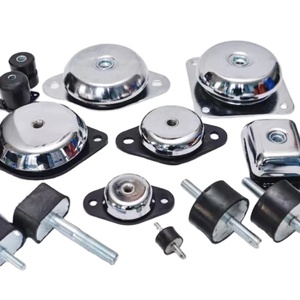
Beyond silicone turbo hoses, we control in-house vulcanization for engine vibration dampeners, driveline centre bearing cushions, polyurethane suspension bushings, and heavy-duty cabin leaf mounts. This multi-material mastery guarantees single-source supply consolidation for large fleet logistics operations and chassis assemblers.
Future Sourcing & Procurement Trends in Turbocharged Fluid Systems
Key technological, regulatory, and supply-chain shifts shaping Tier-1 purchasing strategies across the next five to seven production cycles.
Downsized High-Boost Engines
Automakers continue decreasing internal combustion engine displacement while escalating turbo boost pressures up to 2.5–3.5 Bar. This forces procurement teams to transition away from 3-ply polyester towards 4-ply and 5-ply aramid fabrics that prevent burst failures during sustained transient throttle spikes.
Stricter Low-Permeation Regulations
Global environmental mandates (Euro VII and EPA Tier 4) penalize evaporative hydrocarbon loss. As crankcase gases circulate directly through intake tracts, buyers specify fluorosilicone (FVMQ) lined tubing with zero micro-weep properties, replacing unlined silicone hoses that sweat oil and fail long-term emissions audits.
Hybrid & Fuel Cell Thermal Balance
Hydrogen fuel cell and hybrid EV architectures demand high-purity, sulfur-free, peroxide-cured silicone coolant and charge ducting. De-ionized cooling circuits require zero ionic contamination from curing agents, requiring pristine compounding facilities and clean-room post-curing procedures.
Diversified Supply Chain Geographies
Global procurement executives are systematically moving away from single-country manufacturing vulnerabilities. India's mature industrial rubber corridors offer tariff resilience, strong ISO-certified metallurgic partnerships, and comprehensive English-speaking technical documentation for seamless OEM auditing.
Production Innovations: How Modern Silicone Factories Achieve Zero-Defect Batches
An in-depth review of mandrel forming, automated fabric bias laying, and laser-assisted dimensional validation.
Precision Mandrel Wrap vs. Automated Extrusion: Choosing the Right Production Route
Manufacturing high-integrity turbo hoses requires distinct processing strategies depending on part complexity. Straight charge air sleeves and uniform coolant transfer lines are formed efficiently via continuous co-extrusion with automated knitted fabric spirals. However, complex intercooler intake pipes, multi-axis reducers, and bellowed hump hoses require meticulous hand-wrapped bias calendered plies over precision CNC-machined aluminum or steel mandrels.
During manual mandrel wrapping, continuous sheets of silicone calendered onto bias-cut reinforcing fabric (woven at 45-degree opposing angles) are applied in precise successive passes. This specific 45-degree orientation yields optimal hoop strength against burst pressures while maintaining dynamic flex endurance along the axial plane. Post-layup, mandrels enter high-pressure curing vessels (autoclaves) where steam or hot air under 4 to 6 Bar consolidates the elastomer plies, permanently fusing them into a homogenous carcass free of entrapped air pockets or micro-voids.
Following autoclave curing, all high-performance silicone hoses undergo a secondary post-curing cycle in convection ovens for 4 to 6 hours at 200°C. This vital step drives off residual cross-linking peroxides, minimizes compression set, and guarantees that the finished silicone hose delivers zero odor, low volatile loss, and rock-solid Shore A durometer hardness throughout millions of chassis load cycles.
Frequently Asked Questions in OEM/ODM Silicone Hose Procurement
Real-world technical answers addressing dimensional tolerances, burst tests, material certifications, and custom tooling parameters.
What is the difference between polyester, meta-aramid (Nomex), and wire-reinforced silicone hoses?
Why do standard silicone turbo hoses weep oil over time, and how does your factory prevent it?
Can you manufacture custom turbo silicone hoses directly from our physical samples or 2D/3D CAD models?
What international quality certifications and automotive testing standards do your silicone hoses meet?
How do hump hoses protect turbocharger plumbing compared to standard straight couplers?
What are your typical production lead times, minimum order quantities (MOQs), and tooling schedules?
Ready to Discuss Your Custom Turbo Hose Specifications?
Connect immediately with our technical engineering sales staff for OEM/ODM mandrel manufacturing inquiries, compound compatibility consultations, or formal wholesale tender estimates.