High-Performance Catalog
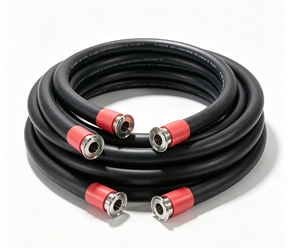
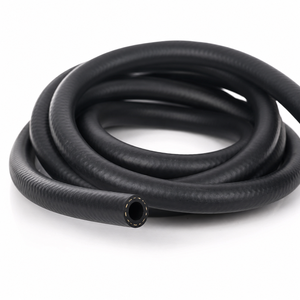
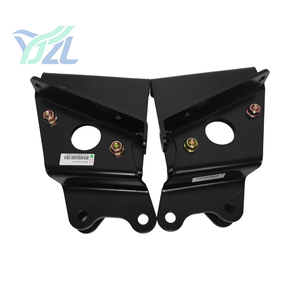
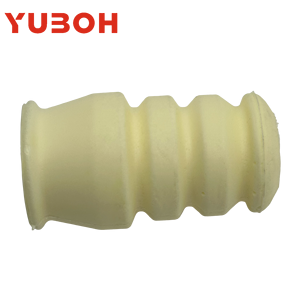
Featured EPDM Fluid & Vibration Control Assemblies
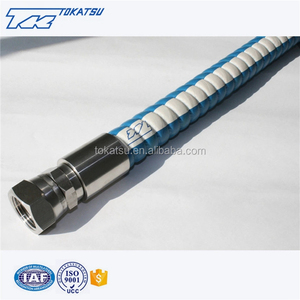
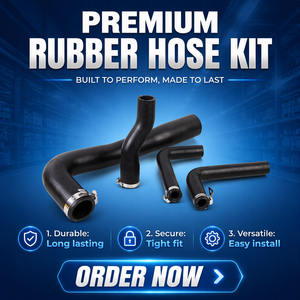
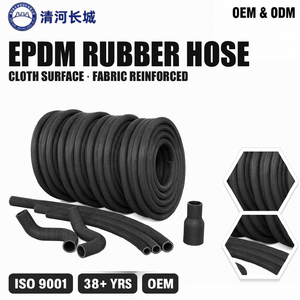
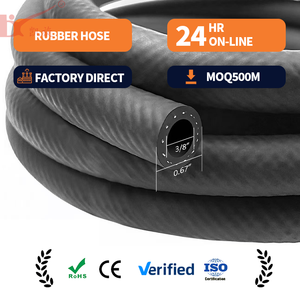
Explore precision-extruded, peroxide-cured, and fabric-reinforced EPDM coolant hoses, non-conductive server tubing, and heavy-duty chassis isolators built to withstand aggressive OAT coolants and extreme thermal oscillation.
Technical Benchmark & E-E-A-T Framework
Engineering Excellence in Elastomeric Coolant Transfer Systems
Selecting an EPDM (Ethylene Propylene Diene Monomer) coolant hose manufacturer demands comprehensive validation of polymer formulations, compounding purity, reinforcement architecture, and curing vulcanization technologies. Today's commercial powertrain platforms and high-density liquid-cooled computing architectures operate under extreme thermochemical conditions.
Peroxide vs. Sulfur Curing
Standard sulfur-vulcanized EPDM degrades rapidly under extended exposure to organic acid technology (OAT) coolants at temperatures exceeding 100°C. Tier-1 manufacturers implement peroxide-curing systems, establishing direct carbon-to-carbon crosslinks that provide superior resistance against thermal hardening, compression set, and oxidative breakdown.
Electrochemical Resistance (ECR)
Microscopic electrical currents between aluminum cylinder heads, copper heater cores, and synthetic coolants induce electrochemical degradation (ECD), resulting in inner wall micro-cracking and striation. Qualified fabricators utilize carbon-black-free inner tubes or highly branched, electrochemically inert compounds complying with SAE J20 R4 Class D-1 benchmarks.
Reinforcement Matrix Mechanics
Working burst-pressure safety ratios require precisely tuned reinforcement layers. Using spiral or knitted polyaramid (Kevlar) or high-tenacity polyethylene terephthalate (PET) plies, top factories prevent volumetric expansion and wall fatigue caused by rapid hydraulic pressure cycling and thermal water-hammer effects.
Global Sourcing Dynamics
Future Procurement Trends for EPDM Coolant Hoses
Strategic supply chain management in the automotive, heavy commercial vehicle, and high-performance computing sectors is evolving from spot-order purchasing to long-term risk management and total cost of ownership (TCO) optimization.
Data Center & AI Thermal Management
The transition toward liquid-to-chip direct cooling and rack immersion in hyperscale data centers requires specialized non-conductive, ultra-low extractable EPDM tubing. Procurement teams increasingly mandate zero zinc leaching, ultra-low ion elution, and carbon-free EPDM liners to prevent short-circuits and micro-channel cold plate clogs.
Integrated Quick-Connector Modularization
Global assembly plants demand pre-assembled modular coolant lines equipped with PA66-GF30 or PPS quick connectors, internal temperature sensors, and spring clamps. Purchasing departments avoid raw bulk tubing in favor of 3D mandrel-formed hose systems that minimize assembly tact times and eliminate human clipping errors.
Stringent Life-Cycle & ESG Traceability
Corporate sustainability mandates drive procurement directors toward suppliers that utilize bio-based EPDM polymers, clean vulcanization without heavy-metal nitrosamine accelerators, and full circular scrap reclamation. Verification of REACH, RoHS, and carbon footprint declarations is now a baseline qualification standard.
R&D Horizons
Technological Evolution in Coolant Conduit Systems
Modern cooling systems face complex thermal envelopes: internal combustion downsized turbo engines create intense underhood heat, whereas electric battery modules require extreme flow uniformity and chemical stability across lengthy lifecycles.
Multi-Layer Co-Extrusion Architectures
State-of-the-art production lines deploy multi-layer co-extrusion technology combining inner peroxide-cured EPDM for OAT fluid contact, an intermediate barrier layer (such as polyamide or fluoropolymer) to limit coolant permeation, and an outer chlorinated/chlorosulfonated elastomer shell providing resistance to engine compartment oil splash and ozone weathering.
Advanced Finite Element Analysis (FEA) Mandrel Forming
Complex powertrain geometries with tightly packed subsystems leave minimal clearance for coolant routing. Suppliers deploy FEA simulation tools to analyze dynamic engine roll and chassis flex, precision-molding custom bends without crimping or restricting laminar flow profiles under severe suction or discharge states.
Microcellular Lightweight Elastomers
To reduce component weight without sacrificing hydraulic burst strength, material scientists are developing microcellular foamed EPDM outer protective layers. These engineered structures provide integrated thermal insulation, guarding the coolant fluid against external heat radiation while trimming overall hose assembly mass by up to 18%.
Manufacturing Heritage
Why Industry Leaders Partner with Our Factory
Building on continuous industrial operations since 1980 from our New Delhi engineering and distribution base, our production facilities combine practical automotive platform expertise with precision rubber compounding and strict quality governance.
46+ Years of Elastomeric Mastery
Founded in 1980, we have engineered and supplied mission-critical rubber bushes, centre bearing assemblies, EPDM radiator conduits, silicone turbo couplers, and anti-vibration mountings for over four decades, mastering the complex behavioral mechanics of natural and synthetic polymers.
Precision Reverse Engineering & Custom Tooling
Our engineering division cross-references physical samples, 2D technical drawings, or OE part references (Tata 407/709/1613/2515/Signa/Prima, Ashok Leyland U-Truck, Marcopolo, Mahindra Bolero, SINOTRUK HOWO). We verify bore sizes, pitch diameters, bend geometries, and hardness specifications with tight tolerances before cutting production tooling.
Comprehensive Material Inventory & Rapid Dispatch
Our centralized Kashmere Gate logistics infrastructure maintains inventory of high-demand standard parts and raw masterbatches. We minimize fleet downtime and supply chain disruptions through flexible air parcel dispatch and sea freight consolidation.
Procurement Intelligence
Frequently Asked Questions for Sourcing Directors
Technical, logistical, and commercial clarifications addressing the essential concerns of automotive aftermarket distributors, OEM procurement leads, and industrial fleet engineers.
Can you replicate hoses based directly on OEM part numbers or physical samples?
Yes. We routinely match OE part numbers (e.g., Tata, Ashok Leyland, SINOTRUK, Honda, Marcopolo) as well as worn physical samples. Our engineering team conducts coordinate measurement on 3D bend geometries, evaluates inner wall ID tolerances across varying end diameters, identifies base elastomers via FTIR spectroscopy, and produces direct-replacement production tooling.
What distinguishes peroxide-cured EPDM from standard sulfur-cured compounds?
Sulfur curing relies on polysulfide crosslinks (C-Sx-C) that break down at temperatures above 100°C, causing early hardening, micro-cracking, and leaks. Peroxide curing creates direct carbon-to-carbon bonds (C-C) with higher dissociation energy. This yields superior continuous heat resistance (up to 125°C–150°C), low compression set, and enhanced compatibility with modern organic acid technology (OAT) coolants.
Which vehicle platforms and heavy machinery applications are covered in your catalog?
Our range covers Tata commercial platforms (407, 709, 1613, 2515 TC, Signa, Prima), Ashok Leyland (BS3, BS4, BS6, U-Truck), Marcopolo buses, Mahindra Bolero utility vehicles, heavy tractors, combine harvesters, and export platforms including SINOTRUK HOWO and selected passenger vehicles.
How do non-conductive EPDM hoses prevent damage in data center liquid cooling?
Conductive carbon black in standard rubber hoses can leach conductive ions into dielectric or water-glycol coolants, posing a short-circuit risk near high-power server nodes. Our AI rack cooling hoses use non-conductive, carbon-free formulations with ultra-low precipitation and extractables, protecting cold-plate micro-channels against clogging and dielectric fluid degradation.
What are the lead times and quality verification standards for international freight orders?
In-stock parts dispatch within 48 to 72 hours via express courier or air freight. Custom-tooled production orders typically require 15 to 25 calendar days depending on compound validation and mold completion. Every batch undergoes dimensional checks, burst-pressure testing, and durometer hardness inspection prior to export packaging.