Precision Dust Covers, Vibration Mounts & Bushing Assemblies
Engineered to absorb severe kinetic vibration, exclude particulate contaminants, and endure prolonged dynamic flexing across extreme thermal operating environments.
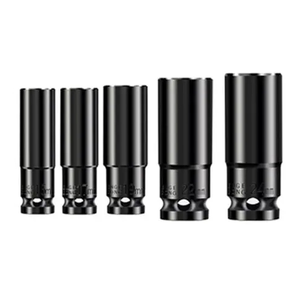
Leaf Spring Bushings for Double Eye Springs Equalizers, Trailer Shackle Bushings Kit
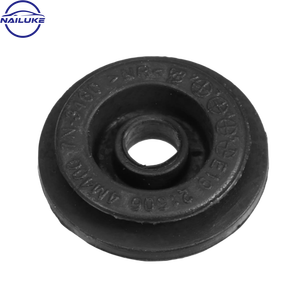
NAILUKE High Quality Car Mounting Rubber Radiator Upper 21506-AX300 / 21506-4RA0A
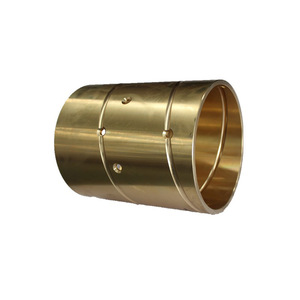
Bogie Suspension Leaf Spring Mechanical Suspension Truck Trailer Copper Bush
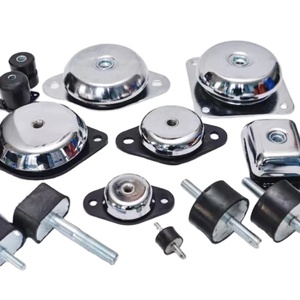
NBR FKM EPDM Automotive Rubber Damper Leg Buffer Isolator for Vibration Protection
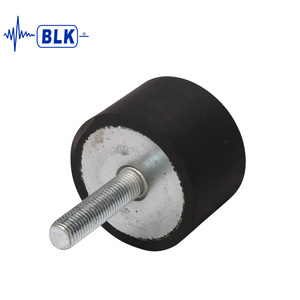
Cylindrical Vibration Isolators Anti Vibration Rubber Mount for Generator & Radiators
Durable 4-Pack Rubber Shock Mounts for Vibration Reduction & Noise Isolation
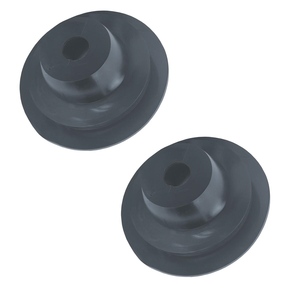
Custom Molded Industrial Silicone & EPDM Rubber Dust Cover Boot Assembly
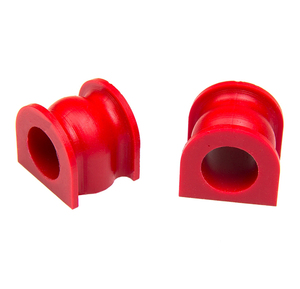
Heavy Duty Polyurethane Suspension Bushing & High-Impact Automotive Sleeve
Comparative Elastomeric Matrix: Silicone vs Synthetic Rubbers
Selecting the optimal polymer backbone dictates component longevity, dynamic stroke survival, and chemical resilience under harsh operating environments.
| Evaluation Parameter | Liquid Silicone Rubber (LSR / VMQ) | EPDM (Ethylene Propylene) | Chloroprene (Neoprene / CR) | Cast Polyurethane (PU) |
|---|---|---|---|---|
| Thermal Range | -60°C to +230°C (Continuous) | -45°C to +130°C | -40°C to +105°C | -35°C to +85°C |
| Flexural Fatigue Life | Exceptional (> 5,000,000 cycles) | High (Fatigue prone below -20°C) | Moderate (Degrades under heat) | Ultra-High (Load-limited) |
| Ozone & UV Weathering | Zero Degradation (Inert backbone) | Excellent | Moderate to Poor | Moderate (Requires stabilizers) |
| Grease & Mineral Oil Barrier | Requires Fluorosilicone (FVMQ) | Poor (Prone to swelling) | Good | Exceptional Resistance |
| Compression Set (22h @ 100°C) | < 15% (Retains sealing geometry) | 20% - 30% | 35% - 45% | 25% - 35% |
Procurement Intelligence Note
For ball joint, tie rod, and steering rack dust boots subjected to ambient sub-zero temperatures along with turbo-adjacent thermal radiation, Liquid Silicone Rubber (LSR) and Fluorosilicone prevent brittle fracture failures that commonly impact traditional polychloroprene boots.
Future Procurement Trends: 2026-2032 Industrial Demands
Supply chain leaders, tier-1 automotive purchasers, and industrial equipment builders are transforming their elastomeric sourcing matrices based on three key macro drivers.
Total Lifecycle Cost Analysis
Procurement teams are shifting away from lowest initial piece-price purchasing. Because the unexpected failure of a $1.20 steering rack dust cover causes lubricant leakage, ingress of road brine, and subsequent destruction of a $600 steering gear, tier-1 OEMs require validation life extending past 150,000 miles via premium silicone compounds.
EV Thermal Density Adaptations
Electric commercial vehicles and heavy platform architectures eliminate traditional front-engine air cooling paths, trapping elevated thermal loads near battery packs and steer-by-wire electromechanical actuators. Dust covers in these locations require continuous operational integrity at 180°C, accelerating the replacement of standard rubber with platinum-cured silicone boots.
Audited Near-Source Traceability
Supply chain vulnerabilities have shifted global sourcing toward established manufacturers that manage internal compound formulation, laser dimensional scanning, and rapid tooling creation. Certified production facilities with four-decade heritage provide institutional stability against supply shocks.
Evolutionary Frontiers in Silicone Enclosure Manufacturing
Breakthroughs in multi-cavity injection tooling, FEA-simulated convolution walls, and hybrid co-molding drive the next generation of protective seals.
Dynamic Finite Element Analysis
Modern convolute profiles are mathematically optimized using non-linear elastomeric FEA simulation. By modulating convolution apex radii and wall-thickness gradients from 1.2mm down to 0.8mm at flex points, localized stress concentrations are mitigated, eliminating rotational shear tearing during complex combined angular and axial strokes.
High-Precision Multi-Cavity LSR Injection
Transitioning from compression molding to cold-runner Liquid Silicone Rubber (LSR) injection ensures flashless part production with zero parting-line weakness. Tight dimensional repeatability across clamping beads ensures air-tight retention without slicing under heavy stainless-steel ear clamps.
Silicone-to-Metal Chemical Bonding
Advanced primer silane chemistry provides true cohesive bonds between silicone elastomers and stamped steel or brass inserts. During destructive peel tests, elastomeric cohesive tear occurs prior to any adhesive substrate separation, maintaining dust-tight structural integrity under violent gravel impacts.
Amit Rubber Products: Four Decades of Polymer Excellence
Operational heritage since 1980 from our New Delhi industrial hub, providing engineered driveline mounts, silicone assemblies, and suspension solutions globally.
46+ Years of Proven Manufacturing
Established in 1980, we bring deep compound mixing and precision molding capabilities to global markets, supporting Tata, Ashok Leyland, Marcopolo, Mahindra, and heavy agricultural platforms.
Strict Quality Verification Protocols
Every component batch undergoes comprehensive testing for durometer hardness, tensile elongation, and dimensional fidelity before outbound dispatch, ensuring zero-defect installation for fleets and distributors.
Custom Tooling from Sample or Print
Our rapid engineering shop develops custom silicone dust covers, polyurethane bushes, and reinforced hoses tailored directly to client engineering drawings, 3D CAD models, or physical legacy specimens.
Frequently Asked Questions for Engineering Buyers
Clear, direct answers regarding compound selection, tooling timelines, quality inspection, and international export logistics.
How do you verify fitment against OEM part numbers or physical samples?
What specific polymers do you utilize for severe-duty dust covers and radiator hoses?
What is your lead time for bespoke tooling development of non-standard dust boots?
How do silicone dust covers perform under extreme mechanical flex at sub-zero temperatures?
What shipping and export procedures are applied for overseas volume consignments?
Request Custom Quotations & Engineering Consultation
Speak directly with our technical production team to review OEM part matches, review silicone compound requirements, or initiate custom mold manufacturing.