Industrial Cooling Systems & Polymer Evolution
Why Tier-1 automotive assemblers, commercial fleet maintainers, and mission-critical cooling architects are replacing standard organic elastomers with engineered VMQ silicone formulations.
In modern high-efficiency internal combustion engines (ICE), hybrid commercial vehicles, turbocharger charge-air systems, and ultra-dense liquid-cooled computing architectures, thermal management represents the definitive constraint governing reliability and lifespan. Historically, sulfur-cured EPDM (Ethylene Propylene Diene Monomer) dominated coolant transfer lines due to acceptable cost-performance curves. However, the continuous elevation of engine compartment temperatures—often exceeding ambient levels of 120°C alongside internal coolant temperatures spiking toward 135°C under high-boost conditions—has pushed organic rubbers past their thermodynamic stability threshold.
Silicone radiator hoses, synthesized from high-purity polydimethylsiloxane polymer chains (VMQ) and reinforced with multi-ply meta-aramid or polyester fabrics, introduce a crystalline-stable inorganic siloxane (Si-O-Si) backbone. This molecular architecture prevents cross-link degradation, thermal embrittlement, electrochemical degradation (ECD), and micro-cracking caused by ozone and ultraviolet exposure. To assist engineering procurement teams, original equipment distributors, and parts wholesalers in navigating the global supply matrix, this comprehensive whitepaper outlines the benchmark capabilities of leading silicone radiator hose manufacturers and exporters.
Engineered Product Showcase & Technical Specifications
Explore precision-molded and continuously extruded silicone cooling hoses, turbocharger transitions, and specialized dielectric conduits manufactured to international SAE J20 and ISO standards.
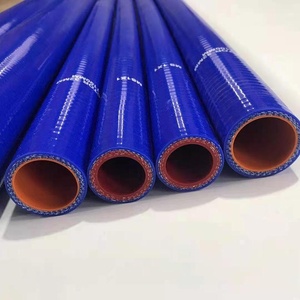
Customized 1 Meter Heat Resistant Silicone Vacuum Tube Radiator Coolant Straight Rubber Hose with Cutting Processing Service
- Internal Diameter: 6mm – 102mm
- Reinforcement: 3-Ply / 4-Ply Polyester
- Temperature: −50°C to +180°C
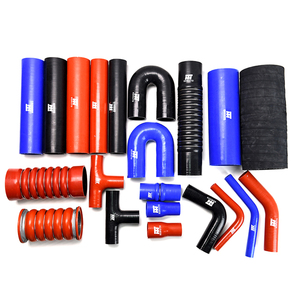
High Performance Customized Universal Car Heat Resistant Silicone Radiator Rubber Hose
- Burst Pressure: ≥ 1.2 MPa (174 PSI)
- Wall Thickness: 4.5mm – 5.5mm
- Application: Universal OE Coolant Line
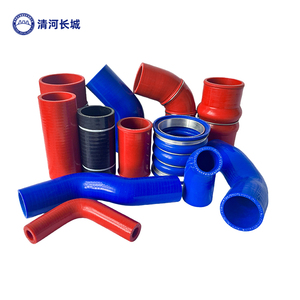
High Temp Resistant Silicone Rubber Hose For Supercharger/Intercooler 4-300mm ID 65-75A Hardness 1MPA Pressure Custom Cutting
- Durometer: 65 – 75 Shore A
- ID Range: 4mm – 300mm
- Reinforcement: Nomex Aramid Multi-Ply
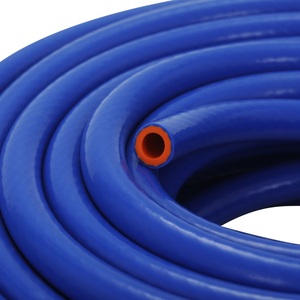
Custom 10*18mm High Pressure Radiator Intercooler Rubber Air Intake Water Pipe Turbo Silicone Heater Hose
- Dimension: 10mm ID x 18mm OD
- Tensile Strength: ≥ 8.5 N/mm²
- Flexibility: Anti-Kink High Elasticity
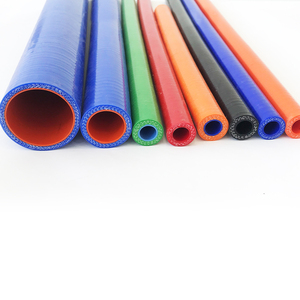
Wholesale Auto Parts 6mm 10mm 19mm Extruded Reinforced Turbo Radiator Straight Meter Coolant Flexible Silicone Hose
- Standard Sizing: 6mm / 10mm / 19mm
- Packaging: 1m, 5m, 20m Coils
- Resilience: Ozone & Glycol Chem-Resistant
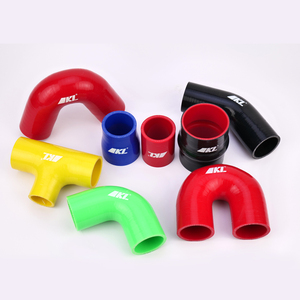
Factory Custom Heat Resistant Radiator Silicone Hose 2.5 Inch Black Blue Straight 45/ 90 Degree Elbow Flexible Silicone Hose
- Bend Angles: Straight, 45°, 90°, 135°
- Diameter: 2.5 Inch (63.5mm) Nominal
- Color Options: Gloss Blue, Matte Black, Red
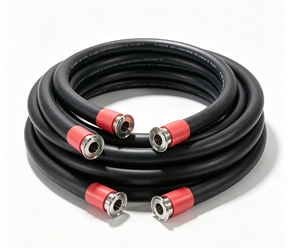
Data Center Liquid Cooling Hose Server Liquid Cooling Hose Non Conductive Coolant Hose Carbon Free EPDM Tube for AI Rack
- Dielectric Spec: Carbon-Free Non-Conductive
- Application: AI High-Density Server Racks
- Permeation Rate: Ultra-Low Vapor Loss Formula
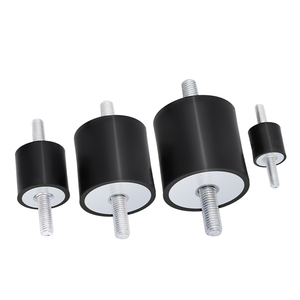
VV-type Rubber Vibration Damper Double Male Thread Anti Vibration Mount Cylindrical Rubber Vibration Isolator Silent Block
- Thread Profile: Dual Male Thread (VV Type)
- Elastomer Bond: High-Tear Bonded Rubber/Silicone
- Function: Radiator & Pump NVH Damping
Elastomer Performance Benchmark Matrix
Comparative analysis between pure VMQ Silicone, Fluorosilicone (FVMQ), Sulfur-Cured EPDM, and Peroxide-Cured EPDM in automotive cooling fluid loops.
| Property Parameter | VMQ Pure Silicone | FVMQ (Fluorosilicone Lined) | Peroxide-Cured EPDM | Standard Sulfur EPDM |
|---|---|---|---|---|
| Operating Temperature | −50°C to +200°C Superior | −60°C to +230°C Maximum | −40°C to +135°C Standard | −35°C to +110°C Baseline |
| OAT Coolant & Glycol Resistance | Excellent (Hydrolysis Resilient) | Impervious to Organic Acids | Good (Degrades with Silicates) | Moderate (Prone to Softening) |
| Oil / Hydrocarbon Vapor Resistance | Poor (Permeation Swelling) | Outstanding (<3% Volumetric Swell) | Poor (Severe Degradation) | Very Poor (Dissolves) |
| Tensile Set & Elastic Memory | Near-Zero Creep over 10,000h | Exceptional Resilience | Moderate Compression Set | High Permanent Hardening |
| Electrochemical Degradation (ECD) | Completely Immune (Dielectric) | Completely Immune | Resistant if Carbon-Black Free | High Failure Risk |
| Service Life Cycle (Heavy Commercial) | > 500,000 km | > 1,000,000 km (Extreme Duty) | 150,000 – 200,000 km | 80,000 – 120,000 km |
From an engineering specification standpoint, while standard VMQ silicone demonstrates virtually unmatched longevity under aqueous cooling conditions, it displays high molecular permeability when exposed to engine lubricants, diesel fuel mist, or blow-by hydrocarbons. For turbocharger intercooler lines and crankcase ventilation bypass lines, leading manufacturers co-extrude or hand-wrap an inner lining of Fluorosilicone (FVMQ). This dual-layer architecture shields the structural outer silicone layers from hydrocarbon swelling while sustaining complete thermal and mechanical flexibility.
Future Procurement Trends in Industrial Hose Sourcing
Key macro-economic, regulatory, and technological shifts defining how international procurement directors will source silicone and elastomeric components from 2026 to 2030.
1. Transition to IATF 16949 Audited Mid-Tier Hubs
Global original equipment manufacturers (OEMs) are shifting procurement volumes toward certified tier-1 and tier-2 manufacturing hubs that offer transparent traceability from base gum polymer raw material to vulcanization batch reports, reducing reliance on unverified trading intermediaries.
2. The Explosion of AI Data Center Liquid Cooling
The rapid proliferation of 100kW+ per rack AI clusters requires specialized cooling manifolds. Sourcing managers are urgently contracting suppliers capable of manufacturing non-conductive, low-permeation, zero-sulfur coolant conduits that prevent electrical shorts in direct-to-chip and immersion systems.
3. Nearshoring & Agile Tooling Prototypes
Supply chain shocks have accelerated demand for fast-response tooling. Exporters capable of turning 3D CAD step files into production-grade mandrels within 7 to 10 days are taking market share from rigid high-volume factories burdened with 8-week tooling backlogs.
Technological Innovations in Silicone Hose Engineering
Material science breakthroughs and smart manufacturing techniques altering modern thermal conduit production.
1. Multi-Layer Co-Extrusion with Integrated Barrier Films
Historically, complex shaped coolant hoses required manual, labor-intensive hand-wrapping over polished steel or aluminum mandrels. Advanced manufacturing facilities now employ computer-controlled multi-head extrusion lines capable of continuous vulcanization (UHF microwave and salt bath lines). This enables automated application of ultra-thin, pinhole-free fluoropolymer barrier layers (THV or FKM) fused directly with silicone substrates, achieving exceptional burst uniformity and reducing unit costs for high-volume commercial vehicle production.
2. Advanced Nano-Composite Heat Dissipation
While traditional silicone functions strictly as a conduit and thermal insulator, next-generation research integrates surface-modified graphene, carbon nanotubes (CNTs), or aluminum nitride nanoparticles directly into the outer silicone matrix. This micro-doping significantly enhances thermal conductivity through the hose wall without sacrificing mechanical flexural fatigue resistance, effectively transforming every linear meter of coolant hose into an auxiliary heat radiator.
3. Platinum-Catalyzed Addition Curing Systems
The transition from conventional organic peroxide curing agents (such as DBPH) to platinum-catalyzed addition curing completely eliminates volatile organic peroxide byproducts, acid residues, and bloom crystallization. Platinum-cured silicone radiator hoses exhibit crystal-clear purity, minimal leaching into specialized hybrid vehicle dielectric fluids, and far superior long-term tensile retention under repeated thermal shock.
Amit Rubber Products: 46+ Years of Precision Manufacturing
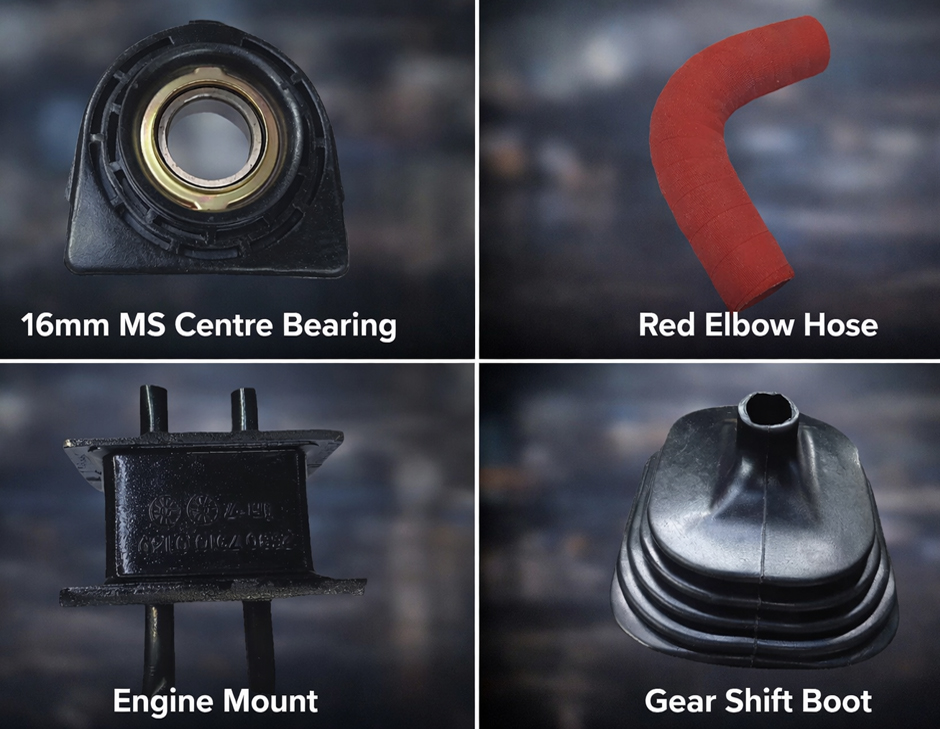
Established in 1980 in New Delhi, India, Amit Rubber Products (BMF Autos) has spent over four decades perfecting the compounding, precision tooling, and vulcanization of heavy-duty commercial vehicle elastomers, EPDM coolant conduits, and high-performance silicone hoses.
Under the veteran leadership of Mr. Amit Chitkara, our facility serves fleet distributors, OE-replacement wholesalers, and precision engineering buyers across 20+ countries, maintaining strict dimensional and metallurgical adherence to international vehicle platforms.
- OE-Exact Compatibility: Direct fitments engineered for Tata, Ashok Leyland, Mahindra, Marcopolo, and universal commercial platforms.
- In-House Tooling & Mold Workshop: Rapid development of custom mandrels, reducers, hump geometries, and elbow transitions from client CAD drawings.
- Comprehensive Rigorous QC: Tensile strength verification, burst pressure hydro-testing, ozone aging chambers, and strict Shore A durometer audits on every production lot.
- Fast Global Dispatch: Strategic export handling from Delhi automotive distribution hubs with export-grade protective packaging to preserve elastomer shelf integrity.
Field Deployment & Application Environments
Engineered to survive punishing vibrations, chemical exposure, and continuous duty cycles across diverse industries.
Heavy-Duty Freight & Commercial Haulage
Long-haul tractor trailers, dump trucks, and intercity buses subject cooling systems to continuous high-RPM thermal stress. Our silicone radiator hoses prevent roadside coolant leaks and withstand aggressive vibration between chassis-mounted radiators and vibrating diesel engine blocks.
Agricultural Machinery & Earthmoving
Combine harvesters, backhoes, and tractors operate in environments saturated with abrasive dust, seasonal temperature swings, and prolonged low-speed, high-load operation. Silicone's zero-ozone-degradation property prevents environmental embrittlement during off-season outdoor storage.
High-Density Data Centers & EV Power Units
Next-gen GPU cluster cooling and electric bus battery thermal management systems (BTMS) demand flame-retardant (UL94 V-0 certified), carbon-free non-conductive hoses that isolate high electrical currents while handling dielectric heat transfer fluids.
Frequently Asked Questions (Procurement & Engineering)
Authoritative answers to critical technical, certification, and commercial queries encountered by international buyers.