Precision Anti-Roll & Suspension Components
Engineered specifically to minimize lateral body roll, neutralize high-frequency NVH resonance, and provide extreme load-bearing integrity across commercial, heavy-duty, and passenger platforms.
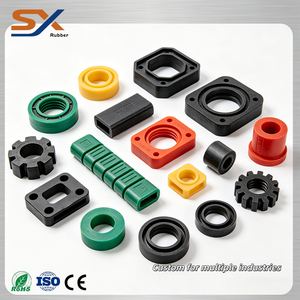
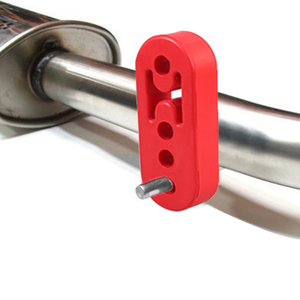
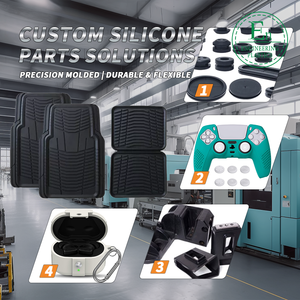
Engineering Anti-Roll Bushings: Kinematic Decoupling and Material Synergy
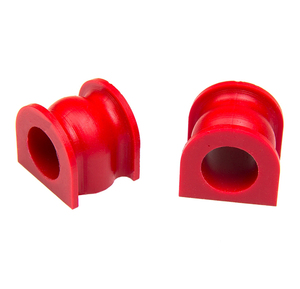
Anti-roll bar bushings (frequently designated as stabilizer bar bushings or sway bar cushions) constitute critical elastomeric pivot points within modern vehicle chassis systems. Operating as the primary elastic constraint between the chassis frame crossmember and the high-tensile spring-steel anti-roll bar, these components are tasked with an intricate mechanical objective: providing exceptionally high torsional compliance to facilitate uninhibited bar rotational articulation, while concurrently sustaining rigid radial and axial stiffness to immediately transfer cornering roll-moment forces without parasitic deflection. In commercial trucks, severe-duty haulers, and performance passenger platforms, premature bushing yield compromises handling predictability, escalates tire uneven wear, and exposes the steering rack and link assemblies to excessive harmonic chatter.
Leading Chinese manufacturing facilities have migrated past conventional raw compression rubber processing. Contemporary tier-1 manufacturing integrates finite element analysis (FEA) to balance dynamic load paths, optimizing internal pre-stress profiles and inner bore lubrication retention channels. Modern OE-grade manufacturing controls inner bore diameter (ID) tolerances within ±0.15mm, avoiding both unconstrained sleeve play that incites audible knocking and over-clamping conditions that generate severe stick-slip torsional binding.
Material Comparison Matrix: Natural Rubber vs. Polyurethane vs. Dual-Elastomers
| Property Parameter | High-Grade Natural Rubber (NR) | Polyurethane Composite (PU) | PTFE-Lined Vulcanized EPDM |
|---|---|---|---|
| Tensile Strength (MPa) | 18 – 24 MPa | 35 – 50 MPa | 20 – 28 MPa |
| Shore Hardness Range | 55A – 65A | 70A – 90A | 60A – 75A |
| NVH Damping Capability | Superior (Optimal isolation) | Moderate (Transmits high freq) | High (Linear damping) |
| Oil & Chemical Resistance | Moderate (Swelling risk) | Exceptional (Hydrocarbon inert) | Exceptional (Ozone/Acid immune) |
| Friction Coefficient (μ) | 0.65 – 0.85 (High stick-slip) | 0.35 – 0.45 (Requires grease) | < 0.15 (Self-lubricating dry) |
Strategic Procurement Trends: Navigating Supply Shifts Through 2030
Global procurement teams across North America, Europe, and Asia-Pacific are radically upgrading their supplier qualification frameworks. As electric commercial vehicles (e-CVs) and battery-electric passenger fleets expand, axle loads have increased by an average of 15% to 28% due to localized battery pack mass. This structural evolution is compelling global supply chain directors to prioritize three distinct procurement pillars when sourcing from premier Chinese industrial manufacturing hubs:
1. Decoupled Dynamic Stiffness Targets: Traditional sway bar bushings permitted progressive dampening decay under elevated thermal loads. Modern EV applications dictate anti-roll components that maintain flat loss factor (tan δ) curves between −40°C and +120°C, ensuring predictable road adhesion even when regenerative braking systems aggressively alter dynamic longitudinal-to-lateral weight distribution.
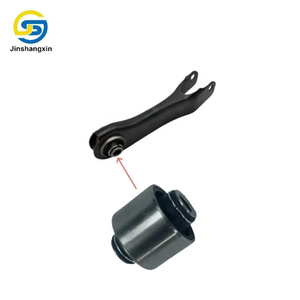
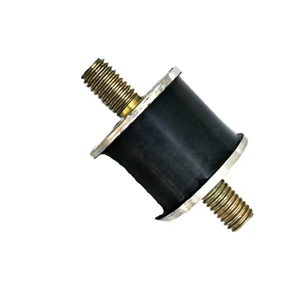
2. Vulcanized Bonding Integrity: While historical aftermarket designs utilized split or mechanical two-piece configurations, advanced OEM platforms increasingly procure permanently bonded rubber-to-metal stabilizer bushings. Direct chemical vulcanization (employing aqueous silane-based adhesive interlayers) eliminates micro-movement, completely mitigates road brine intrusion, and prevents the internal bore abrasion typical of unbonded mechanical sleeves.
3. Supply Chain Resiliency & Digital Traceability: Global purchasing executives are moving away from intermediaries in favor of vertically integrated factories that maintain in-house tool design, rubber internal mixing banburies, automated transfer injection molding, and dynamic mechanical thermal analysis (DMTA) testing facilities. Direct factory provenance ensures lot-specific rheometer validation curves and full raw compound pedigree.
Technological & Manufacturing Innovations in Sway Bar Isolation
The manufacturing paradigm within cutting-edge Chinese elastomer manufacturing hubs has evolved into an exact science. High-shear internal mixers paired with computer-controlled chemical metering systems eradicate batch-to-batch polymer variance. The deployment of automated vacuum-compression and injection-molding presses eliminates micro-porosity defects within the rubber volume, which are historically the primary root cause of accelerated shear fatigue under alternating dynamic torsional stress.
Furthermore, surface treatment technology on mated metallic brackets has transitioned to zinc-nickel alloy plating and high-adhesion cathodic electro-deposition (e-coat). These protective layers systematically exceed 1,000 hours of continuous neutral salt spray testing (ASTM B117), safeguarding the suspension structural mounting points against premature corrosion in aggressive winter-climate, de-iced road environments.
Enterprise Capabilities & Manufacturing Edge
Four decades of manufacturing discipline backed by comprehensive test laboratories, in-house tooling, and robust global logistics execution.
Factory-Direct Competitive Value
By conducting internal chemical compounding, banbury mixing, metal stamping, and automated vulcanization under one roof, we eliminate intermediate supply chain margins, delivering Tier-1 structural reliability at competitive direct-factory pricing.
Precision Tooling & Custom Formulation
Our engineering division supports custom formulation across NR, EPDM, NBR, PU, and high-purity VMQ silicone. We configure durometer targets from 45A to 90A, rapid prototyping customized CAD geometries to sample approval within 14 working days.
Stringent Multi-Axis QC Standards
Every production lot undergo strict dimensional optical screening, rheometer cure verification, dynamic fatigue cycling exceeding 500,000 cycles, and ozone environmental exposure chambers (ISO 1431) to guarantee zero defective assemblies reach our global distribution partners.
Procurement & Technical FAQ
Direct answers addressing technical validations, customization timelines, and commercial distribution parameters.
Q1 How can your factory cross-reference proprietary OE or aftermarket reference codes?
Our technical database maps cross-references across major commercial and passenger platforms including Scania, Volvo, Mercedes-Benz, Tata, Leyland, Ford, Toyota, and Stellantis. Clients can provide physical worn samples, OE part numbers, 2D technical drawings, or STEP/IGES 3D models. Our engineering team validates the critical bore inner diameter, bracket mounting hole spacing, ear retention width, and rubber compound durometer before generating quotation drawings.
Q2 What compound configuration is recommended for severe-duty commercial mining or transit applications?
For standard transit environments with high compliance requirements, a micro-cellular natural rubber formulation optimized with anti-ozonant waxes delivers unmatched NVH dampening. However, for severe-duty off-highway, mining, or specialized commercial fleet operations subject to heavy oil mist and high abrasive dirt, we recommend our cast polyurethane (PU) formulations (80A to 85A durometer) or PTFE-knitted inner fabric liners to eliminate squeaking without grease degradation.
Q3 What are the standard production lead times and Minimum Order Quantities (MOQs)?
For existing tooling catalog parts, standard MOQs start at 200 to 500 units per line item, with dispatch schedules typically completed within 15 to 25 calendar days. For bespoke development requiring new compression or transfer injection mold tooling, tool fabrication requires 12 to 18 days, followed by initial sample delivery (ISIR / PPAP Level 3 documentation) within 7 days. Full production proceeds immediately following sample sign-off.
Q4 How do you prevent low-frequency squeaking and sticking on dry-assembled sway bar bushings?
Audible dry-friction stick-slip squeaks are eliminated through two primary engineering solutions: either internal radial knurled grease retention grooves engineered with high-temperature silicone molybdenum disulfide lubricants, or co-vulcanized interior PTFE/polyester woven fabric liners. The woven liner creates a permanent, maintenance-free, self-lubricating barrier between the spring steel bar and elastomeric matrix, removing noise permanently.
Q5 What testing protocols accompany volume production shipments?
Standard QA protocol includes a Certificate of Analysis (COA) containing tensile strength, elongation at break, durometer hardness validation, and specific gravity results. Upon commercial request, our laboratory delivers rheological curve logs, dynamic axial deflection curves, rubber-to-metal bonding peel-strength certifications (ASTM D429), and ozone chamber exposure reports.
Streamline Your Global Chassis Bushing Supply Chain
Connect directly with our engineering sales group. Request our complete commercial anti-roll catalog, review technical specifications, or initiate rapid custom-tooling verification today.
Get Catalog