Featured Commercial Driveline & Chassis Assemblies
Precision-engineered drive shaft center bearings, vulcanized vibration isolators, and custom polyurethane suspension systems built to international DIN, ISO, and SAE standards.
Propeller Shaft Center Support Bearings: The Science of Driveline Stability
In modern commercial multi-axle trucks, articulated tractors, and long-wheelbase buses, split propeller shaft arrangements are indispensable to circumvent hazardous resonant bending frequencies.
The truck center bearing assembly—frequently catalogued as the drive shaft center support bearing—serves as the pivotal kinetic anchor between split driveline sections. As commercial hauling envelopes push gross vehicle weights (GVW) beyond 49 metric tons, driveline center supports operate under compounding stress vectors: simultaneous high-speed torsional rotation (up to 3,500 RPM), secondary driveline bending moments, severe chassis flex, and dynamic shock loads from torque reversals. Without meticulously engineered center support damping, harmonic vibrations rapidly propagate throughout the transmission tailshaft and differential pinion, initiating catastrophic universal joint failure, bearing spalling, and uncontained driveline dropouts.
Driveline Tribology & Rubber-to-Metal Vulcanization Architecture
A premium commercial vehicle center bearing is not merely a deep groove ball bearing pressed into a rubber ring; it is a scientifically calibrated elastomeric vibration absorption sub-assembly. The dynamic performance of China's top tier exporters hinges on three interlocked engineering parameters:
| Sub-Component | Material Standard | Technical Thresholds | Engineering Function |
|---|---|---|---|
| Internal Ball Bearing | GCr15 High-Carbon Chromium Bearing Steel (AISI 52100) | Hardness: HRC 60-64; ISO P6 (ABEC-3) tolerance runout; Grade 10 steel balls. | Absorbs radial thrust loads; maintains shaft alignment under sustained multi-thousand RPM rotation. |
| Vulcanized Cushion | Virgin Natural Rubber (NR) / Polybutadiene (BR) blend | Shore A Hardness: 55–65; Tensile strength ≥ 17.5 MPa; Elongation ≥ 450%; Compression set ≤ 18% (70°C × 22h). | Isolates high-frequency torsional harmonic boom; absorbs angular misalignment (±3° dynamic deflection). |
| Support Housing / Bracket | Deep-drawn cold-rolled structural steel (SPCC / Q235B) | Tensile yield ≥ 235 MPa; Zinc-nickel alloy electroplating / Cataphoretic electro-coating (E-coat) > 720h salt spray. | Rigid structural fastening to chassis crossmembers; resists road debris impingement and stone chipping. |
| Dynamic Sealing Barrier | Double-lip Fluoroelastomer (FKM) / NBR with stainless garter springs | Thermal range: -40°C to +150°C; IP67 equivalent exclusion against silt, slurry, and high-pressure spray. | Retains synthetic lithium-complex polyurea grease while blocking silica slurry and winter de-icing chemicals. |
The critical failure point of inferior aftermarket center bearings is vulcanization interface delamination. When inferior adhesives or contaminated steel housings are utilized, dynamic torque tearing shears the rubber away from the outer ring under hard acceleration. China's premier export manufacturing lines incorporate multi-stage ultrasonic degreasing, zinc phosphatizing, automated dual-coat silane-phenolic adhesive spraying, and high-tonnage vacuum compression moulding. This ensures a chemical covalent bond with peel strengths exceeding 15 N/mm, guaranteeing zero rubber-to-metal separation across extreme ambient temperature swings from -45°C Siberian conditions to +55°C Middle Eastern mining operations.
Emerging Procurement & Technological Trends in Commercial Center Bearings
The global medium- and heavy-duty commercial vehicle landscape is experiencing structural evolution. Strategic parts distributors, procurement managers, and fleet engineers must align with five forward-looking manufacturing trajectories:
Instant Torque Profiles in Electric Commercial Trucks
With the rapid adoption of battery-electric and hybrid class 6–8 commercial haulers, drivelines face instantaneous, near-zero-RPM peak torque spikes. Traditional rubber compounds suffer severe hysteresis breakdown under these square-wave load profiles. Leading Chinese manufacturers are developing high-damping hybrid elastomers and microcellular polyurethanes that resist permanent shear deformities while handling 40% higher starting torque loads.
Labyrinthine Multi-Lip Sealing & Synthetic Polyurea Greasing
Long-haul fleet warranties now mandate 500,000 km maintenance-free service intervals. In response, modern center bearings are transitioning from conventional lithium hydroxystearate greases to high-temperature synthetic polyurea lubricants fortified with extreme-pressure (EP) bismuth complexes. Multi-stage labyrinth metal slingers deflect abrasive contaminants before they can reach the primary elastomeric seal lip.
Integrated NVH Simulation & Dynamic Tuned Mass Dampers
Rather than supplying universal one-size-fits-all brackets, Tier-1 Chinese exporters utilize Finite Element Analysis (FEA) to map the natural resonance frequency modes of specific chassis crossmembers. Custom-tuned elastomer stiffness gradients (radial versus axial durometer differentials) eliminate low-frequency booming inside commercial truck cabins, directly complying with stringent European and North American in-cab acoustic standards.
Root-Cause Failure Mode & Effects Analysis (FMEA) for Fleets
Proactive fleet maintenance directors cross-reference center bearing replacement cycles with systematic vibration telemetry. Recognize the primary wear mechanics before drive shaft drop occurs:
Low-Speed Take-Off Shudder (0–25 km/h)
Primary Symptom: Heavy cabin vibration localized under the floorboards during initial torque application under full payload.
Root Cause: Excessive radial clearance caused by internal rubber fatigue or thermal softening of the cushion. The shaft whips outside its rotational center line until gyroscopic forces self-align it at higher rotational speeds. Immediate replacement required.
High-Speed Resonant Drone (70–90 km/h)
Primary Symptom: Persistent acoustic whine or acoustic harmonic hum permeating the sleeper cab at highway cruise.
Root Cause: Micro-spalling, false brinelling, or water contamination within the GCr15 ball raceways. Greasing failure allows metal-to-metal contact, leading to rapid bearing seizure which can friction-weld the inner race directly to the propeller shaft slip yoke stub.
Metallic Clunking Upon Deceleration / Shifting
Primary Symptom: Pronounced auditory dull thud through the chassis when disengaging the clutch or during transmission retarder activation.
Root Cause: Complete axial shear separation of the vulcanized rubber cushion from the outer stamped bracket. The bearing cartridge is free to slam against the stamped bracket perimeter. Unchecked, this rapidly fractures the adjoining slip yoke splines and U-joints.
Why Global Distributors Partner With Our Manufacturing Hub
Combining four decades of technical heritage with modern automated vulcanization presses, CNC machining, and comprehensive international compliance.
46+ Years Manufacturing Heritage
Rooted in specialized automotive rubber and driveline manufacturing since 1980, we possess mature tribological archives and tooling libraries covering more than 3,000 distinct OE chassis configurations.
- Direct tooling availability for 88507, 88508, 88509, 88511, 88512 series
- Complete interchange for Tata 407/709/1613/2515, Signa, Prima platforms
- Comprehensive coverage for Ashok Leyland U-Truck, Volvo, and HOWO series
Zero-Defect Quality Control Laboratory
Every production batch undergoes exhaustive destructive and non-destructive validation prior to export release, guaranteeing seamless direct-to-line assembly for international clients.
- 1,000,000+ cycle multi-axis dynamic radial and axial fatigue durability testing
- Automated 100% bearing rotation torque verification & dynamic runout checks
- Neutral salt spray corrosion chamber testing surpassing 720 continuous hours
Full-Spectrum Custom Engineering
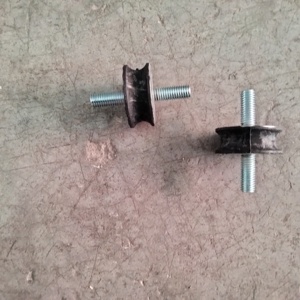
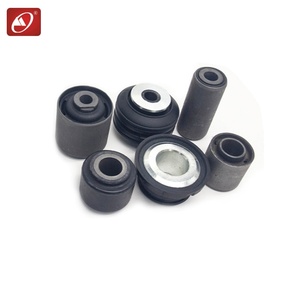
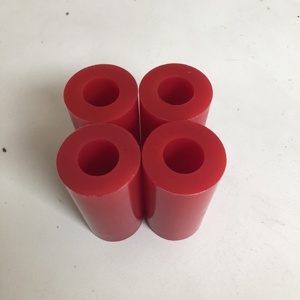
Beyond catalogued center bearings, our facility leverages dedicated rubber mixing mills, polyurethane cast lines, and precision stamping dies for comprehensive bespoke parts manufacturing.
- Bespoke compound formulating: EPDM, NBR, Silicone, and High-Toughness PU
- Rapid 25-day reverse engineering from physical customer samples or CAD files
- Tailored B2B packaging: private labelling, barcode tagging, and container palletizing
Frequently Asked Questions by Commercial Vehicle Importers
Essential technical, commercial, and quality assurance answers for wholesale buyers, regional distributors, and fleet purchasing teams.