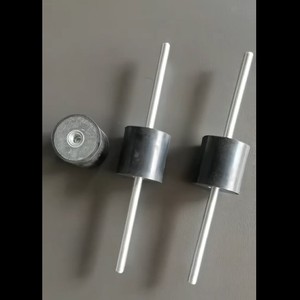
OE-Engineered Catalog
Precision Driveline, Sealing & Anti-Vibration Assemblies
Engineered to absorb severe torsional deflection, prevent particulate ingress, and withstand destructive cyclic oscillation across commercial, industrial, and passenger chassis.
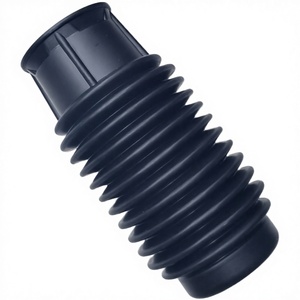
Front Shock Absorber Dirt-proof Boot 2053230292 Mercedes-Benz C/E Class
Thermoset Dust Bellow
Universal Exhaust Mount Rubber for Light Truck Van SUV Muffler
Heat & Torsion Resistant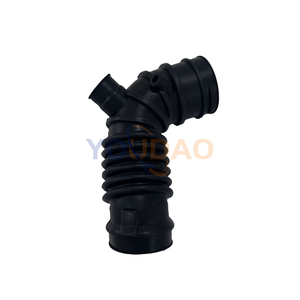
Car Engine Durable Rubber Air Intake Hose 1505A630 1505A628
High-Pressure EPDM Duct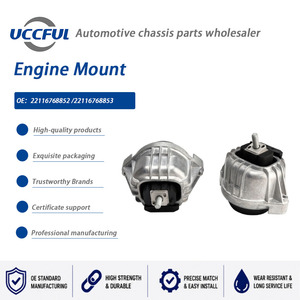
Engine Transmission Mount Front 22116768852 for BMW E84 316I 116I
Rubber-to-Metal Bonded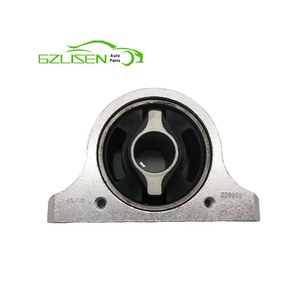
Automatic Transmission Rubber Mounting Bracket Support OE 239753
High-Torsional Damper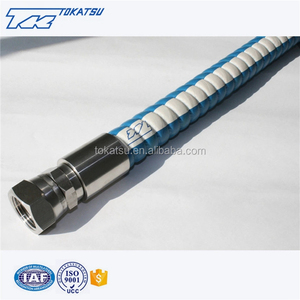
Brewery Food Grade Certified EPDM Flexible Rubber Hose
Sanitary Grade EPDM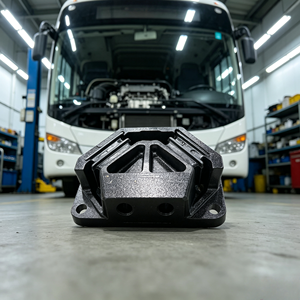
Heavy Duty Commercial Vehicle Engine Rear Support Cushion Dampener
Dynamic Cushioning Core46+
Years of Elastomer Tooling (Since 1980)
< 0.02%
Defect PPM on Precision CV Boots
150,000+
Dynamic Flex Fatigue Test Cycles
20+
Global Export Destinations Supported
Engineering Authority: The Critical Role of Drive Shaft Boots in Driveline Longevity
The constant-velocity (CV) joint boot and drive shaft bellow assembly represent a micro-component with macro-level mechanical significance. Serving as the primary physical barrier between high-stress planetary bearings and caustic road environments, an advanced drive shaft boot must reliably execute two diametrically opposed functions: hermetically retaining high-viscosity synthetic molybdenum greases while continuously shedding external threats including saturated salt sprays, gravel impacts, abrasive silicate particulates, and corrosive road petrochemicals.
Modern driveline dynamics dictate extreme operating environments. Front-wheel drive (FWD) and all-wheel drive (AWD) axle configurations demand constant angular deflection reaching up to 45 degrees in outer joints, combined with rapid telescopic plunge in inner tripod joints. Subjected to rotational velocities exceeding 2,200 RPM, centrifugal force threatens to expand bellows, leading to ballooning, frictional contact with adjacent steering knuckles, and catastrophic premature fatigue cracking. Sourcing managers and chassis design engineers require boots fabricated with microscopic dimensional precision, exacting wall-thickness uniformities, and chemically advanced thermoset polymers.
Material Topology: CR Neoprene vs. Hytrel Thermoplastic Elastomers (TPEE)
In high-performance automotive and industrial drivelines, selecting the proper material morphology dictates component lifecycle reliability. Historical chloroprene rubber (CR) exhibits superior high-angle elasticity, low durometer flexibility, and ease of assembly. However, contemporary high-torque downsized internal combustion engines (ICE) and high-load electric vehicle (EV) battery architectures generate higher localized undertray temperatures, demanding modern Thermoplastic Polyester Elastomers (TPEE / Hytrel) or fluorocarbon-enhanced formulations.
| Performance Parameter | Standard Neoprene Rubber (CR) | Thermoplastic Elastomer (TPEE / Hytrel) | Hydrogenated Nitrile (HNBR) |
|---|---|---|---|
| Continuous Temp Resistance | -40°C to +100°C | -45°C to +145°C | -35°C to +150°C |
| Puncture & Tear Strength | Moderate (35 kN/m) | Exceptional (> 90 kN/m) | High (65 kN/m) |
| Centrifugal Expansion Stability | Prone to ballooning >120 km/h | Rigid bellow ribs prevent expansion | Controlled low deformation |
| Grease Compatibility | Standard Lithium / Soap Greases | Synthetic Polyurea / MoS2 Esters | High Extreme-Pressure (EP) Additives |
| Target Application | Aftermarket Repair & LCVs | OEM High-Speed Outer CV Joints | Industrial Drivelines & Turbodiesel CVs |
When driveline boots undergo dynamic oscillation, friction within convolution troughs can cause self-abrading failure. By deploying multi-cavity injection blow-molding alongside precision wall-thickness distribution systems, top-tier factories ensure that stress concentration nodes distribute uniformly across the convolutions rather than shearing at the clamp retention collars.
Market Intelligence
Future Procurement Trends in Driveline Sealing Systems
Predictive operational shifts, evolving EV driveline architectures, and green polymer integration shaping global OEM and tier-1 procurement strategies over the next decade.
EV Instantaneous Torque Sealing
Electric drivetrains generate 100% torque output at zero RPM. This rapid acceleration generates immense torsional whip across half-shafts. Modern buyers prioritize boots engineered with stiffer, reinforced convoluted ribs designed to eliminate "rib contact chatter" and handle the unique dynamic envelope of battery-electric mobility.
Bio-Monitored Circular Polymers
Stringent European and North American carbon lifecycle regulations demand recycled crumb polymer compounds and bio-derived TPEE blends. Tier-1 exporters are aggressively shifting tooling configurations to process bio-based feedstocks that achieve equivalent fatigue life without altering cross-linking integrity or grease degradation curves.
Pre-Clamped Modular Boot Kits
Global wholesale distributors are pivoting from individual loose boot sales to complete pre-assembled maintenance cartridges. Sourcing bundles comprising OEM-grade stepless ear clamps (Oetiker style), low-friction organic greases, and bespoke circlips reduce distributor SKU complexities while driving higher margin capture across global repair chains.
E-E-A-T Benchmark
Amit Rubber Products: Four Decades of Driveline & Sealing Mastery
Founded in 1980 at Kashmere Gate, New Delhi, we provide precision rubber-to-metal bonding, high-performance molded hoses, and industrial sealing systems worldwide.
Factory-Direct Cost Architecture
By controlling tooling design, elastomeric compounding, vulcanization, and secondary trimming in-house, we eliminate intermediate brokerage fees. Distributors, workshops, and commercial fleets secure top-tier components at competitive factory-floor economics without sacrificing dimensional tolerances.
Rigid Dimensional Inspection
Every production lot undergoes rigorous quality checks: shore hardness testing, elongation-at-break assays, ozone environmental resistance checks, and bore gauge verification. Our zero-defect production doctrine guarantees fitment across commercial chassis such as Tata, Leyland, and international marques.
Broad Application Coverage
From heavy-load center bearing assemblies and radiator hoses to specialized suspension bushings and transmission dampeners, our extensive tooling library supports rapid prototyping and timely execution for standard catalog lines and custom sample drawings.
Knowledge Base
Frequently Asked Sourcing & Engineering Questions
Direct technical answers addressing critical parameters in drive shaft boot procurement, compound selection, failure mitigation, and international wholesale logistics.
What is the primary cause of premature drive shaft boot failure in commercial fleets?
Premature boot failure typically traces back to three factors: incorrect clamping tension, dynamic ballooning at high RPMs, or chemical incompatibility with synthetic molybdenum disulphide (MoS2) grease. Over-tightening clamps can sever the rubber collar bead; under-tightening allows high-pressure grease venting, which creates an internal vacuum that collapses the convolutions. Additionally, selecting standard neoprene boots for high-temperature exhaust-proximate configurations leads to rapid vulcanization hardening, micro-cracking, and circumferential tearing.
Can you custom-manufacture boots according to drawing, STEP files, or physical OE samples?
Yes. Our engineering division reviews physical components, 2D technical drawings, and 3D CAD files (STEP/IGES). We verify shaft diameter collars, joint bell housing grooves, free length, convolution pitch, and working angularity. After confirming these parameters, we develop rapid pilot tooling, run cross-linking formulation trials, and provide full CMM dimensional test reports alongside hardness and tensile certifications before proceeding with series manufacturing.
How do you evaluate ozone resistance and dynamic flex life in your testing laboratory?
Our quality system conducts environmental testing compliant with ASTM D1149 standards. Vulcanized specimens are loaded into an ozone testing cabinet under 20% static strain exposed to 50 pphm ozone concentrations at 40°C for up to 72 hours, verifying zero micro-crack formation. Dynamic validation utilizes cyclic endurance testing rigs that rotate booted CV joints through continuous 35-degree sweeps at 1,000 RPM over 150,000 cycles, verifying grease containment, zero rib contact wear, and structural resilience.
What are the standard international packing, logistics, and dispatch terms?
Products are packaged in moisture-resistant internal polyethylene barriers, packed into five-ply corrugated cartons, and palletized with stretch-wrap and composite edge protectors to prevent crush damage to convolution ribs during transit. We regularly execute dispatch under FOB, CIF, CFR, and EXW terms through major maritime shipping hubs (including Nhava Sheva / Mundra) as well as air freight from IGI Airport New Delhi, supported by comprehensive tracking documentation.
Why choose specialized elastomer formulations over generic aftermarket rubber boots?
Generic aftermarket boots frequently rely on high-filler, low-polymer reclaimed rubber formulations to reduce unit costs. While dimensionally identical upon initial unpacking, these compounds experience plasticizer migration, structural hardening, and loss of tensile modulus when exposed to sub-zero temperatures or prolonged hydrocarbon immersion. Our precise compounding controls virgin elastomer content, vulcanization accelerators, and anti-ozonants, ensuring reliable joint sealing and protection over multi-year operational cycles.
Partner with an Established Driveline Sealing Manufacturer
Discuss your OEM specifications, request sample evaluations, or review custom elastomeric mold development with our senior engineering team.
Get a Quote