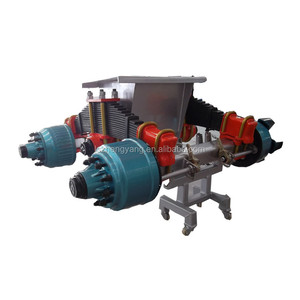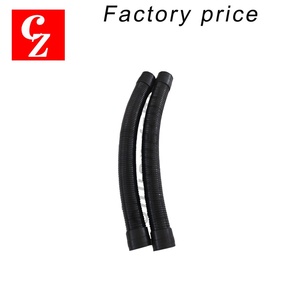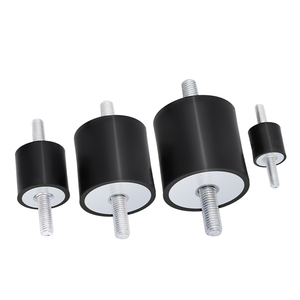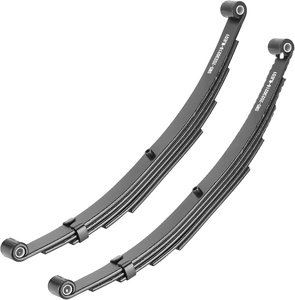
Suspension System
Manufactured using virgin synthetic polymers, high-tensile steel inserts, and Chemlok® thermo-reactive bonding technology to guarantee maximum torsional stability and lifecycle durability.
Combining legacy metallurgical knowledge with modern synthetic polymer chemistry, Amit Rubber Products operates at the nexus of high-durability vibration engineering and rapid OEM component manufacturing.
We formulate virgin Natural Rubber (NR), EPDM, Chloroprene (Neoprene), and cast Polyurethane (PU) internally. Our compound recipes undergo rheometer testing to guarantee consistent curing kinetics, tensile limits exceeding 20 MPa, and Shore A durometer consistency batch-to-batch.
Engine mounts live or die by rubber-to-metal adhesion. We employ multi-stage ultrasonic degreasing, shot blasting to SA 2.5 white-metal standards, and automated silane-based Chemlok® adhesive coatings to guarantee that tensile failure happens within the elastomer matrix, never at the metal bond line.
Engineered directly for grueling operational environments: Tata Commercial Platforms (407, 709, 1613, 2515 TC, Signa, Prima), Ashok Leyland U-Truck series, Marcopolo passenger buses, Mahindra Bolero utility vehicles, as well as high-torque agricultural tractors and harvesters.
From worn field samples, 2D blueprints, or 3D CAD models (STEP/IGES), our in-house CNC toolroom fabricates multi-cavity compression and transfer injection molds within 15–20 working days, providing rapid validation through low-volume prototype trials.
Every export shipment passes dimensional verification via optical coordinate comparators, static deflection checks, dynamic hysteresis characterization, and accelerated aging assessments under elevated ozone (50 pphm) and hot-oil immersion environments.
Headquartered in Delhi's historic Kashmere Gate automotive district, led by Mr. Amit Chitkara, we ensure agile logistics dispatch via Mumbai (Nhava Sheva) and Mundra maritime terminals, reducing container turnaround cycles by up to 25% for international accounts.
A comprehensive examination of rubber-to-metal shear behavior, static-to-dynamic stiffness ratios (Kd/Ks), and polymer lifecycle degradation under heavy-duty internal combustion torque dynamics.
Engine mounts are primary isolation conduits within automotive engineering. They exist in functional conflict: the mount must possess adequate static stiffness ($K_s$) to constrain excessive driveline displacement under peak torque reactions, high-G braking, and abrupt deceleration, while simultaneously delivering low dynamic stiffness ($K_d$) and an optimized loss angle ($\tan \delta$) across broad frequency bands (20 Hz to 250 Hz) to decouple high-frequency engine harmonics from the passenger compartment and structural chassis.
The operational longevity of an engine mounting is determined by the selected base elastomer compound. While commercial aftermarket distributors often prioritize cost, industrial procurement directors must evaluate the trade-offs between tensile strength, rebound resilience, and environmental resistance.
| Polymer Classification | Tensile Strength (MPa) | Dynamic Damping ($\tan \delta$) | Thermal Stability (°C) | Hydrocarbon / Oil Resistance |
|---|---|---|---|---|
| Natural Rubber (NR / Polyisoprene) | 18 – 26 | 0.05 – 0.15 (Exceptional Resiliency) | -40 to +85°C | Moderate (Requires Neoprene Enclosure) |
| EPDM (Ethylene Propylene Diene) | 12 – 18 | 0.12 – 0.25 (Superior Weathering) | -45 to +135°C | Low (High Glycol & Ozone Resistance) |
| Chloroprene (CR / Neoprene) | 15 – 22 | 0.10 – 0.20 (Balanced NVH) | -35 to +105°C | High (Excellent Fluid Barrier) |
| Cast Polyurethane (PU Elastomer) | 25 – 45 | 0.08 – 0.30 (Load Bearing) | -30 to +90°C | High (Exceptional Abrasion Tolerance) |
The primary point of failure in commercial vehicle mounts is bond separation caused by shear fatigue or thermal-induced micro-delamination. At Amit Rubber Products, our multi-stage vulcanization protocols utilize high-purity silane organofunctional primers followed by cross-linking bonding adhesives applied in strictly climate-controlled spray enclosures. When subjected to compression vulcanization under 150–180°C at 15–20 MPa, covalent cross-links form between sulfur bridges in the elastomer compound and the oxide surface of the phosphated steel bracket. In standard ASTM D429 Method B 90-degree peel tests, our specimens exhibit 100% rubber tear (R), confirming that the adhesive bond interface is chemically stronger than the bulk tensile strength of the elastomer itself.
Continuous cyclic loading causes dynamic creep—the progressive plastic deformation of vulcanized rubber over time. When an engine mount creeps beyond 4–6 mm of vertical deflection, driveline misalignment ensues, inducing accelerated universal joint wear on the propeller shaft, center support bearing chatter, and severe secondary resonance inside the vehicle cabin. By optimizing our carbon black particle sizing (furnace black N330/N550 blends) and refining anti-ozonant wax packages, our mounts limit vertical creep to under 2.5% across a verified 500,000-cycle operational bench test.
How global purchasing managers, fleet maintenance directors, and replacement parts wholesalers are recalibrating their vendor selection criteria for the next decade.
Global procurement teams are shifting away from initial landed-unit cost toward Total Cost of Ownership (TCO). A lower-grade engine mount that fails at 35,000 kilometers incurs severe costs in vehicle downtime, tow charges, and collateral warranty claims on cracked exhaust manifolds or distorted drive shafts. Importers now mandate certified 100,000 km lifecycle validation reports.
Geopolitical volatility and tariff restructurings have accelerated supply chain diversification strategies. Indian precision manufacturers with proven track records like Amit Rubber Products—established in 1980—offer tariff-efficient, highly engineered alternatives with mature raw material supply chains and immediate maritime access to European, Middle Eastern, and African logistics corridors.
Procurement contracts now require comprehensive documentation: full compound material test reports (CMTR), REACH / RoHS chemical compliance certificates, IMDS registration, and strict laser-etched batch identification numbers directly on the metal stamping to guarantee zero-defect traceability throughout international wholesale channels.
Addressing the NVH challenges presented by downsized high-boost internal combustion engines, hybrid powertrains, and electric commercial vehicles.
Conventional passive rubber mounts present a single compromised tuning point between idle isolation and shock absorption. The commercial transport sector is increasingly adopting hydraulic engine mounts featuring glycol fluid chambers separated by orifice channels and decoupling membranes, dynamically neutralizing low-frequency cabin shake (10–15 Hz) while retaining high-load stiffness.
As light commercial fleets transition toward battery-electric powertrains, the masking noise of the combustion engine disappears, exposing previously inaudible high-frequency driveline whine (800 Hz to 2 kHz) and instant electric motor torque surges. Mounts require multi-durometer elastomer architectures and micro-cellular polyurethane inserts to absorb instant torque shock without transmission of high-pitch acoustic vibration.
To support global fleet weight reduction mandates, stamped heavy sheet metal brackets are being re-engineered into topology-optimized, high-pressure die-cast aluminum alloys or fiber-reinforced polyamides. Non-linear Finite Element Analysis (FEA) simulates von Mises stress distributions across the rubber-metal bond face, stripping surplus mass while eliminating localized stress peaks.
Direct technical answers addressing physical tolerances, compound verification, sample matching, and export shipping procedures.
Yes. Our engineering division operates advanced CMM measurement arms and optical profilometers to capture accurate bracket geometry, hole pitch, center bore offset, and stud thread pitch from physical samples—even if the rubber is fatigued or fragmented. We conduct durometer cross-section mapping to identify original Shore A hardness, perform FTIR spectral analysis to identify the base elastomer (Natural Rubber, EPDM, or Nitrile), and reconstruct full 3D CAD tooling models within 72 hours for client sign-off before manufacturing pilot tooling.
We maintain a strict durometer tolerance of ±5 Shore A across standard production batches, and ±3 Shore A for critical OEM contracts. Every batch is vulcanized from compound verified by our moving die rheometer (MDR), ensuring uniform crosslink density and predictable static-to-dynamic spring rates ($Kd/Ks$) throughout full production cycles.
Our tooling library covers heavy, medium, and light commercial vehicles widely deployed across Asia, Africa, South America, and Eastern Europe. This includes Tata Commercial Vehicles (Tata 407, 709, 1613, 2515 TC, Signa BS4/BS6, and Prima), Ashok Leyland (Comet, Taurus, U-Truck 2518/3118/4018), Marcopolo bus chassis, Mahindra Bolero utility trucks, along with universal center support bearing assemblies (88507, 88508, 88509, 88511, 88512), and agricultural tractors (Mahindra, Tafe, Swaraj, Massey Ferguson).
Bond failures are eliminated through a strict 4-step surface preparation and chemical bonding protocol: 1) Automated grit blasting with aluminum oxide to achieve an anchor profile of 35–50 μm; 2) Ultrasonic degreasing to remove microscopic drawing oils; 3) Controlled dual-coat application of Lord Chemlok® chlorinated primer and thermo-reactive covercoat; 4) Closed-loop temperature-controlled vulcanization under high hydraulic pressure. We subject random lot samples to ASTM D429 90-degree pull testing, mandating a 100% cohesive rubber failure mode rather than adhesive interfacial peeling.
For catalog items with active tooling, our standard MOQ is 100 to 300 pieces per part number, with dispatch within 10–15 business days. For custom designs requiring new mold tooling, prototype samples are delivered within 20 days of drawing approval, and initial containerized production runs are completed within 30–35 days. We accommodate mixed-container consignments to assist distributors in managing inventory turnover.
All stamped and cast steel brackets receive anti-corrosive electrophoretic coating (E-coating) or trivalent yellow/clear zinc electroplating exceeding 240 hours in neutral salt spray testing (ASTM B117). The vulcanized rubber surfaces are compounded with non-staining microcrystalline anti-ozonant waxes that bloom to the exterior, creating a protective barrier against atmospheric UV and ozone. Parts are individually sealed in polyethylene barrier film, cushioned with corrugated dividers, and securely packed on heat-treated, fumigated ISPM-15 wooden pallets wrapped in waterproof stretch film.
Partner with an authentic, direct-to-factory manufacturer with over 46 years of proven precision vulcanization. Provide your OEM part numbers, dimensional sketches, or physical samples for immediate engineering validation and competitive B2B wholesale pricing.
Contact Us