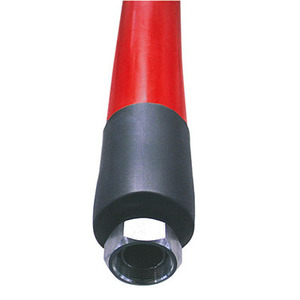
Featured Engineering Components
Precision Rubber & Suspension Assemblies for Commercial & Automotive Platforms
Explore our export-certified collection of heavy-duty muffler rings, vibration isolators, coolant transfer hoses, and automotive chassis dampeners fabricated under rigorous quality benchmarks.
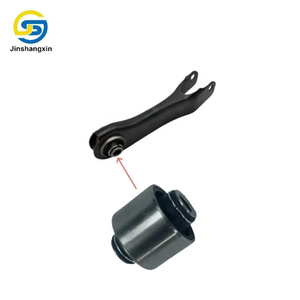
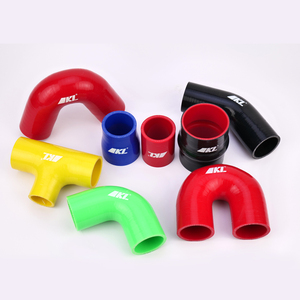
Silicone Induction
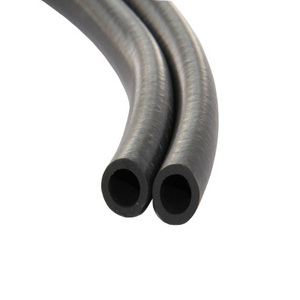
Heat-Resistant 2.5" Flexible Radiator Silicone Hose (Elbow/Straight)
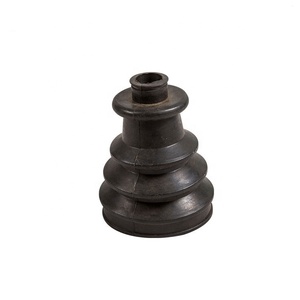
Engineering Whitepaper
Dynamic Mechanics of Exhaust Rubber Hangers: NVH Damping & Underbody Elastomers
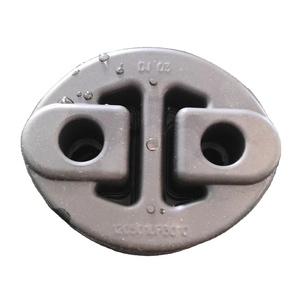
In modern automotive design, the internal combustion engine (ICE) and hybrid-electric vehicle (HEV) exhaust train functions not merely as an emissions conduit, but as a dynamic harmonic oscillator subject to multi-axis mechanical excitement. Exhaust rubber hangers—frequently cataloged as silencer mounting rubbers, muffler isolator brackets, or exhaust lugs—are precision-formulated elastomeric decoupling links designed to decouple the severe structural vibrations of the exhaust manifold, catalytic converter, and tailpipe from the vehicle chassis. Without properly tuned elastomeric hangers, cyclic engine harmonics transmit directly into the passenger cabin as intrusive structural booming and low-frequency Noise, Vibration, and Harshness (NVH).
"Exhaust system hangers must withstand dynamic cyclical loading exceeding 2.5G along vertical and transverse axes while resisting operating thermal radiation exceeding 150°C near particulate filters and silencers, demanding strict compliance with ASTM D2000 and ISO 4649 wear metrics."
From an engineering perspective, elastomeric exhaust hangers operate as viscoelastic dampers governed by complex dynamic stiffness and phase lag characteristics. Under engine idle speeds (typically 600 to 900 RPM for heavy commercial trucks and passenger sedans), exhaust gas pulsations produce high displacement oscillations. At elevated vehicle velocities, high-frequency road vibrations transmit upward through the chassis subframe. High-quality synthetic EPDM (Ethylene Propylene Diene Monomer) and cross-linked Polyurethane (PU) formulations are compounded to exhibit an optimal tan delta (δ) loss factor between 0.15 and 0.28, ensuring adequate internal hysteretic energy dissipation without precipitating premature thermal failure.
46+
Years Engineering Expertise
180°C
Max Heat Resistance (EPDM)
65 ± 5
Optimal Shore A Hardness
20+
Export Destination Markets
Elastomeric Material Comparison for Exhaust Isolation Systems
Procurement engineers and Tier-1 automotive purchasers must balance tensile resilience, oil and fuel resistance, ozone degradation resistance, and raw material compounding economics when specifying exhaust hangers. The comparative matrix below outlines performance parameters validated in automotive testing labs:
| Elastomer Type | Hardness (Shore A) | Tensile Strength (MPa) | Continuous Temp (°C) | Ozone & Weathering Rating | Primary Industrial Use Case |
|---|---|---|---|---|---|
| Natural Rubber (NR) | 55 - 65 | ≥ 18.5 | -40°C to +85°C | Moderate (Prone to Cracking) | Cost-effective light chassis & cab suspension mounts |
| Peroxide-Cured EPDM | 60 - 75 | ≥ 14.0 | -45°C to +150°C | Superior (ASTM D1149 Pass) | OEM passenger & commercial vehicle exhaust hangers |
| Cast Polyurethane (PU) | 70 - 85 | ≥ 22.0 | -30°C to +100°C | Outstanding Abrasion Life | Heavy commercial vehicles, trailers & motorsport |
| Fluoroelastomer (FKM) | 65 - 80 | ≥ 12.0 | -20°C to +220°C | Immune to Ozone / Fuel | Extreme downpipe & turbocharger exhaust mounting |
When selecting between molded EPDM isolators and high-durability polyurethane bushes, system mass distribution plays a defining role. In commercial vehicle fleets (such as Tata 2515, Ashok Leyland U-Truck, and heavy trailer platforms), exhaust piping weighs substantially more than passenger vehicle assemblies. Consequently, high durometer formulations (65 to 75 Shore A) are mandated to prevent excessive static deflection, which can cause exhaust pipes to impact cross-members or pull down on catalytic converter flanges.
Procurement Intelligence
Strategic Procurement Trends: The Next Horizon in Automotive Rubber Components
Global automotive supply chains are navigating profound structural shifts driven by supply chain nearshoring, electrification, rigorous environmental directives, and digital product-matching systems. Procurement directors must account for several major sourcing vectors:
Consolidated Tier-2 Supply Chains
Global wholesale distributors are shifting away from fragmented spot-market sourcing, consolidating vendor portfolios with established manufacturers that offer integrated product suites—including centre bearing assemblies, radiator hoses, turbo silicones, and suspension bushes under one roof.
Zero-Defect Quality Mandates
Commercial vehicle fleet managers enforce rigorous total-cost-of-ownership (TCO) analytics. Premature hanger snapping or dry-rot failure induces catastrophic exhaust assembly drop-offs. Importers now demand batch vulcanization rheometer documentation and automated tensile proof testing.
Rapid OEM Cross-Referencing
Procurement velocity has replaced standard catalog bidding. Fleet buyers require instant cross-mapping between OEM part numbers (e.g., Tata, Leyland, BMW, Jeep OE references) and aftermarket mold codes, accelerating cross-border container dispatches with zero dimensional mismatch returns.
Technological Roadmap
Technological & Material Evolution in Exhaust Isolators
The transition toward cleaner, Euro VI / Bharat Stage VI (BS6) diesel architectures and hybrid vehicles has altered the underbody operating envelope. Exhaust temperatures have risen significantly due to diesel particulate filter (DPF) regeneration cycles, while hybrid start-stop sequences introduce aggressive low-frequency torque oscillations.
Thermally Stabilized EPDM Blends
Traditional sulfur-cured elastomers degrade rapidly above 100°C. Modern exhaust hangers incorporate peroxide cross-linking paired with micro-crystalline antiozonant waxes, extending continuous thermal tolerance to 150°C and resisting peak regeneration flashes up to 180°C without polymer backbone cleavage.
Reinforced Multi-Durometer Architectures
Next-generation hangers utilize dual-durometer polyurethane molding or embedded polyester cords. A softer inner ring absorbs high-frequency vibrations, while an ultra-stiff outer skeleton prevents excessive sway during emergency cornering or rough-road articulation.
RoHS & REACH Compliant Plasticizers
International environmental directives have phased out short-chain chlorinated paraffins and hazardous polycyclic aromatic hydrocarbon (PAH) oils. Leading manufacturers formulate using bio-based, eco-friendly plasticizers without sacrificing tensile modulus or cold-weather flexibility (-40°C).
Manufacturing Excellence
Amit Rubber Products: 46+ Years of Proven Manufacturing Mastery
Established in 1980 in New Delhi, Amit Rubber Products has stood at the forefront of the automotive rubber manufacturing sector for over four decades. Operating from the Kashmere Gate automotive industrial hub, we have grown from a dedicated vulcanization workshop into an international manufacturer and wholesale exporter of heavy-duty driveline, suspension, and cooling system components.
Under the stewardship of Mr. Amit Chitkara, our facility blends decades of empirical compound engineering with precision tooling. We serve OEM suppliers, state transport undertakings, international wholesale distributors, and commercial fleet workshops across more than 20 countries.
- Extensive Vehicle Fitment Coverage: Dedicated production lines for Tata Motors (407, 709, 1613, 2515, Signa, Prima), Ashok Leyland (U-Truck, BS3/BS6), Marcopolo buses, Mahindra Bolero, combine harvesters, and tractors.
- Custom Compounding & Rapid Reverse-Engineering: Direct development from technical CAD drawings or physical customer samples, optimizing durometer, tensile elongation, and compound formulation.
- Zero-Compromise Quality Control: Pre-dispatch batch verification covering tensile modulus, durometer tolerance (±5 Shore A), bonding strength, and anti-corrosion plating for metal sleeves.
Amit Rubber Products Advanced Vulcanization & Assembly Facility — Since 1980
Buyer Guidelines
Frequently Asked Questions on Exhaust Hanger & Rubber Procurement
What causes premature failure of exhaust rubber hangers in heavy commercial vehicles?
Exhaust rubber hangers typically fail due to three concurrent factors: excessive thermal oxidation from DPF/catalytic converter proximity, oil contamination from drivetrain leaks that softens low-grade natural rubber, and cyclic mechanical over-extension caused by loose engine mounts. Amit Rubber Products mitigates these failure modes by utilizing peroxide-cured EPDM compounds with superior oil-mist and heat resistance up to 150°C.
Can you manufacture custom exhaust hangers and rubber isolators from physical samples?
Yes. Our in-house engineering and tooling division specializes in reverse engineering. Clients can submit a physical sample or dimensioned drawing. We verify mounting hole pitch, bracket pin diameter, durometer hardness, and load ratings, delivering pre-production tooling and approval samples within compressed lead times.
What are the key differences between EPDM and Polyurethane (PU) exhaust hangers?
EPDM offers superior thermal resilience (up to 150°C) and excellent dynamic vibration absorption, making it the preferred material for OEM-spec passenger vehicles and light trucks. Polyurethane (PU) exhibits significantly higher tensile strength and abrasion resistance, making it ideal for severe-duty haulage, heavy trailers, and high-performance applications where sway control is prioritized over high-frequency acoustic dampening.
How are export shipments packed to prevent transit degradation during ocean freight?
Every consignment is protected against atmospheric ozone, moisture, and ultraviolet light. Components are bagged in sealed heavy-gauge polythene liners, boxed in reinforced export-grade corrugated cartons, and palletized with industrial stretch-wrapping to ensure parts arrive in factory-fresh condition.
What minimum order quantities (MOQ) and lead times apply for international orders?
For standard catalog parts—such as Tata 709, Leyland 88512, or universal muffler rings—we dispatch immediately from our Delhi inventory. For custom compounded runs or bespoke tooling, MOQs typically range from 200 to 1,000 units depending on mold cavitation, with production cycles completing in 2 to 4 weeks.