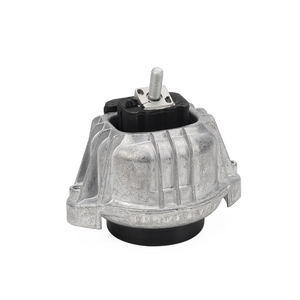
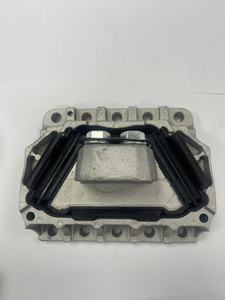
Original Equipment Spec Rubber Mountings & Reinforced Air Springs
Precision-molded elastomeric components configured for excessive torsion, extreme heat dissipation, and dynamic vibration damping under high axial loads.
Engineering Air Spring Bladders for the Rigors of Nigerian Freight Corridors
Operational dynamics along the Lagos-Ibadan expressway, Sagamu-Benin corridor, and Kaduna-Kano trunk roads demand enhanced structural integrity, ozone mitigation, and thermal durability from heavy-duty pneumatics.
Haulage operations across the Federal Republic of Nigeria present an unforgiving proving ground for pneumatic suspension systems. Long-haul logistics fleets servicing maritime off-dock container terminals in Apapa and Tin Can Island face multi-factor physical degradation: chronic axle overloading, sustained ambient temperatures exceeding 38°C, elevated relative humidity, and rough asphalt conditions interspersed with corrugated rural terrain. In these high-stress environments, commercial multi-ply air spring bladders, rolling lobe bellows, and convolute pneumatic air springs fail primarily through mechanical delamination, ozone checking, and high-cycle bead seat deformation. As a dedicated manufacturer and global exporter, our pneumatic vulcanization processes incorporate high-tensile multi-strand cord fabric bonded with compounded chloroprene (CR) and premium-grade natural rubber (NR) to conquer thermal softening and dynamic shear strain.
Multi-Ply Cord Ply Topology
Standard suspension bellows employ dual-bias cord layers susceptible to inter-ply friction under Nigerian road vibrations. We apply cross-plied synthetic polyamide cord fabrics dipped in resorcinol-formaldehyde-latex (RFL) adhesive, maximizing rubber-to-cord peel strength beyond 14 N/mm to eliminate sudden delamination during high-frequency rebound.
Thermal & Ozone Resistance
Tropical West African solar radiation and stop-and-go exhaust thermals cause premature micro-cracking in unprotected polybutadiene elastomers. Our external cover stock utilizes specialized anti-ozonants and high-styrene block polymers, verified to withstand 50 pphm ozone exposure at 40°C for 168 hours without surface micro-fissuring.
Anti-Corrosive End-Closure Crimping
Coastal moisture around Port Harcourt and Lagos accelerates electrochemical corrosion on cold-rolled steel bead plates. Our industrial assemblies integrate hot-dip passivated steel or high-density glass-reinforced composite pistons, sealed using calibrated 360-degree orbital swaging that guarantees zero air loss up to 2.8 MPa peak hydraulic surge.
Localized Heavy-Duty Deployment Across Nigerian Industries
Targeted damping and articulation components mapped directly to operating fleets across freight, industrial extraction, and municipal transit.
Interstate Heavy Freight & Dry Ports
Long-distance haulers hauling 40-foot shipping containers between Lagos seaports and northern dry ports in Kano or Kaduna depend on rolling lobe air springs to safeguard delicate payloads, equalize tri-axle loads, and shield fifth-wheel assemblies from frame twist.
Oil & Gas Heavy Equipment Transport
Exploration and production logistical movements throughout the Niger Delta region require heavy-duty lowbed trailers and specialized mud-logging trucks equipped with double-convoluted air bellows, offering variable ride-height control across wetland causeways and unimproved gravel sites.
BRT & Metropolitan Public Transit
High-capacity commuter buses in Lagos (BRT network) and Abuja require kneeling air suspension bags engineered for constant curb-side cycling. Our precision-metered sleeves resist internal oil vapor erosion from compressor bypass, maintaining passenger comfort through dense urban congestion.
Quarrying & Solid Mineral Haulage
Granite quarry operations surrounding Abeokuta, Ogun State, and mining operations across Plateau State rely on reinforced parabolic leaf springs paired with auxiliary helper air springs to prevent mechanical bottoming-out when handling bulk density aggregates.
Market Projections: Fleet Modernization & AfCFTA Integration
How regulatory shifts, corridor infrastructure improvements, and currency-efficient sourcing are reshaping commercial vehicle rubber demand across Nigeria.
The Nigerian commercial vehicle after-sales landscape is currently undergoing a structural transformation. With ongoing implementations under the African Continental Free Trade Area (AfCFTA) and substantial Federal Government capital investments into multimodal transit corridors—such as the Lagos-Calabar Coastal Highway and enhanced rail-road intermodal depots—fleet operators are pivoting from traditional, fatigue-prone multi-leaf spring steel suspension systems toward integrated pneumatic air spring configurations.
Key economic indicators reveal three pivotal market drivers: First, operating life cycle economics are superseding initial purchase price considerations. While leaf springs are inexpensive to re-arch locally, the indirect costs of broken center pins, damaged kingpins, cracked chassis rails, and ruined perishable goods due to unmitigated road chatter vastly exceed the investment in air suspension retrofits. Second, the widespread importation of modern European (Mercedes-Benz Actros, MAN, Scania, DAF) and Chinese prime movers (Sinotruk HOWO, Shacman, FAW) into the Nigerian market has established a steady baseline consumption of standard OE-replacement rolling lobe sleeves and cabin damping bellows. Third, fleet maintenance supervisors are prioritizing suppliers who offer compounded rubber formulas specifically modified for tropical heat dissipation rather than cold-climate European specifications, ensuring bladders do not experience premature hardening, thermal softening, or sidewall checking.
Enterprise Strengths: Decades of Mastery in Elastomers & Polyurethanes
Combining proprietary compounding, computerized molding, and deep automotive fitment catalogs to guarantee precision aftermarket performance.
Over 46 Years of Industrial Heritage
Founded in 1980, our production leadership brings unmatched operational history to polymer molding, rubber-to-metal vulcanization, and pneumatic bellows manufacturing, ensuring every part is backed by decades of proven engineering.
Factory-Direct Competitive Advantage
Eliminating brokerage layers through integrated manufacturing in New Delhi's renowned Kashmere Gate automotive corridor delivers tier-one engineering quality directly to Nigerian warehouse distributors at competitive factory prices.
Custom Tooling & Rapid Reverse Engineering
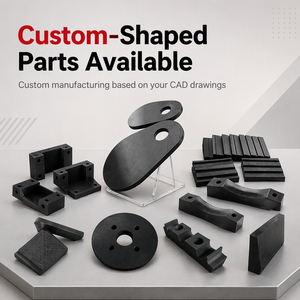
From complex industrial bellows and anti-vibration damping pads to proprietary truck torque rod bushes, our in-house tool design team constructs custom molds directly from engineering drawings or worn field samples within rapid delivery windows.
Frequently Asked Questions by Nigerian Importers & Fleet Managers
Clear, direct answers regarding customs clearance, shipping routes, compound integrity, and cross-reference matching.
What documentation do you provide for Nigerian Customs (SONCAP & Form M)?
We work smoothly with Nigerian import regulations, providing complete commercial invoices, packing lists, clean bills of lading, and verified test certificates required to obtain the Standards Organisation of Nigeria Conformity Assessment Programme (SONCAP) certificate and open Form M through your commercial bank.
How do your rubber formulations withstand Nigeria's high humidity and ambient temperatures?
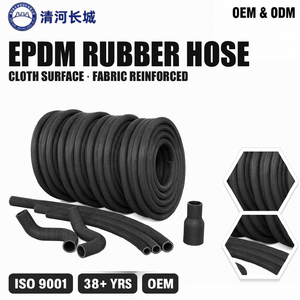
Unlike standard off-the-shelf elastomers that quickly dry-rot or soften under sustained tropical conditions, our export-grade air springs and radiator hoses are compounded with high-grade EPDM, premium natural rubber, and synthetic chloroprene infused with proprietary microcrystalline wax anti-ozonants that repel UV degradation and prevent heat checking.
Can you cross-reference original European and Chinese truck part numbers?
Yes. Our engineering catalog cross-references major international OEM and aftermarket numbering systems, including Contitech, Phoenix, Firestone, Goodyear, CF Gomma, as well as Sinotruk HOWO (AZ/WG series), Shacman, DAF, Mercedes-Benz, Tata, and Ashok Leyland reference numbers. Provide your stamped part code or physical dimensions to receive immediate confirmation.
What are the minimum order quantities (MOQ) and ocean freight transit times to Lagos/Onne?
We accommodate both full container loads (20ft/40ft FCL) for large automotive part wholesalers in Ladipo or Aspamda Trade Fair complexes, as well as Consolidated LCL consignments for private fleet operators. Ocean transit from port of origin typically ranges from 28 to 35 days to Lagos (Apapa/Tincan) or Onne Port in Rivers State.
How are the products packaged to prevent moisture ingress during maritime transit?
Every air spring, radiator hose kit, and engine mounting assembly is individually coated with protective anti-adhesion powder, sealed in thick polyethylene film bags, and packed into reinforced export-grade corrugated cartons strapped to fumigated, shrink-wrapped wooden pallets to prevent dampness and deformation during equatorial sea transport.
Partner with an Established Automotive Rubber Manufacturer
Whether you require scheduled container shipments for regional parts distribution or custom-engineered elastomeric solutions for an industrial fleet, our technical sales engineers are ready to support your business requirements.