Engineered Heavy-Duty Elastomer & Suspension Solutions
Factory-direct vibration isolation mounts, torque rod bushings, and high-spec automotive elastomer components configured for heavy freight vehicles operating under harsh East African topographical stresses.
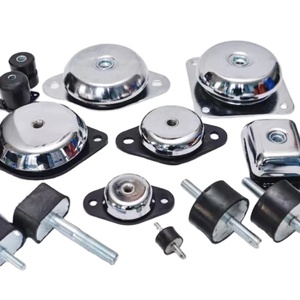
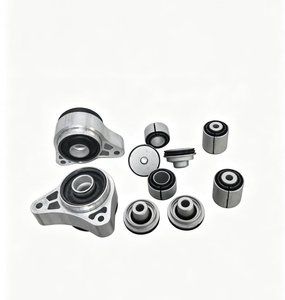
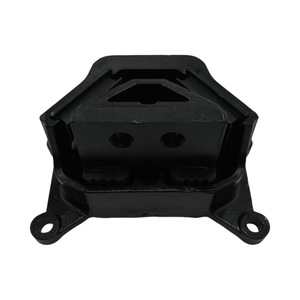
Technical Evaluation: Cabin Tilt Mounting Architecture in Ethiopian Haulage Corridors
In modern heavy-duty commercial vehicle (HCV) architectures, the driver cabin is designed as an independently isolated sprung mass decoupled from the structural ladder chassis. The cabin tilt mount assembly serves a critical dual engineering purpose: first, providing a durable pivot mechanism allowing the entire cab structure to rotate forward up to 60 degrees via hydraulic or mechanical tilting systems to facilitate engine bay maintenance; second, functioning as the primary front suspension interface dampening vertical impact loads, angular pitch vibrations, and high-frequency torsional road shocks transmitted through the vehicle frame.
For heavy logistics operations spanning the Federal Democratic Republic of Ethiopia, commercial fleets confront an operational environment defined by severe mechanical demands. Between the Red Sea gateway at the Port of Djibouti and the inland manufacturing hub of Addis Ababa (Finfinne), commercial freight prime movers encounter dramatic topographical gradients, alternating from below sea level in the Afar Depression to elevations exceeding 2,500 meters across the central Ethiopian Highlands. This elevation profile generates continuous chassis flex and torsional twist across the frame longitudinals.
Standard, generic cabin tilt bushings manufactured without rigorous vulcanization control and resilience-tuned elastomer matrices experience premature rubber-to-metal delamination, hardening, and permanent plastic deformation under these operating environments. As a professional, direct-to-market manufacturer operating our specialized rubber synthesis and metal bonding foundry, Amit Rubber Products provides heavy fleet operators, spare parts wholesalers in Merkato, and institutional transport enterprises throughout Ethiopia with precision-engineered cabin tilt mounts, rear cab air spring buffers, and driveline center support bearings built to withstand continuous, severe-duty cyclical loading.
Structural Dynamics & Failure Modes in African Heavy Transport
Analysis of failed cabin tilt mounting units retrieved from heavy freight corridors—predominantly traversing the Ethio-Djibouti Highway (National Route 1), the Modjo-Hawassa Expressway, and the northern arterial corridors through Kombolcha and Mekelle—reveals three primary modes of destructive breakdown:
1. Thermomechanical Elastomer Degradation: Ambient operating temperatures across the Awash basin and Galafi border station frequently exceed 42°C. Concurrently, radiant heat originating from heavy turbocharged diesel engines increases under-cab ambient temperatures beyond 85°C. Conventional commercial rubber formulations experience accelerated thermo-oxidative crosslinking, leading to embrittlement, micro-cracking, and structural flaking.
2. Interfacial Vulcanization Cleavage: The mechanical interface where vulcanized rubber is chemically bonded to the inner steel sleeve and outer casting bracket is subjected to immense shear stresses during sudden braking, emergency downhill retarder actuation, and lateral road cambers. Substandard phosphating or inadequate silane-based bonding primers result in instantaneous mechanical detachment of the elastomer from the metal core.
3. Abrasive Basalt Particle Intrusion: Unpaved transit corridors and ongoing road modernization sectors create heavy clouds of fine volcanic basalt dust and silica silt. Without dual-lip dust shielding and grease-resistant compound formulations, abrasive minerals infiltrate the pivot axis, accelerating mechanical grinding of the inner sleeve and causing cab alignment tilt angles to drift off center.
| Performance Parameter | Standard Commercial Spec | Amit Rubber Heavy-Duty Export Spec | Operational Impact in Ethiopia |
|---|---|---|---|
| Base Polymer Matrix | Reclaimed SBR / Carbon Mix | 100% Virgin RSS-1 Natural Rubber / Synthetic EPDM | Prevents embrittlement during dry season heat cycles |
| Durometer Hardness | 50 – 55 Shore A (±8) | 65 ± 3 Shore A (Precision Controlled) | Eliminates cab wallow and uncontrolled chassis contact |
| Bonding Shear Strength | < 4.5 MPa | ≥ 8.2 MPa (Two-Coat Chemlok Adhesive Process) | Resists lateral shear over corrugated mountain passes |
| Metal Sleeve Metallurgy | Standard Mild Steel (Q235) | Seamless Cold-Drawn Precision Alloy ST52 / C45 | Withstands high-torque tilt pivot loads without warping |
| Surface Protection | Basic Primer Spray | Zinc Phosphating + Electrostatic Epoxy E-Coating | Prevents rust from chemical washes and coastal humidity |
Operating Environments Across Ethiopian Freight Logistics
Our specialized product lineup is tailored directly to the commercial vehicle platforms dominating the Ethiopian automotive market—including Sinotruk HOWO, Shacman, FAW J6, Tata Prima/Signa, Ashok Leyland, Isuzu FSR/FTR, and heavy Mercedes-Benz Actros units.
Djibouti-Addis Import Freight Line
Carrying over 90% of Ethiopia's total foreign maritime commerce, this 1,100 km arterial highway demands continuous 40-ton gross vehicle weight operation. Continuous vibration on thermal-corrugated asphalt demands tilt mounts that isolate high-frequency road vibrations without transferring destructive resonant frequencies into cab tilt hydraulic actuators.
Industrial Park & Dry Port Shunting
At high-density freight consolidation terminals such as the Modjo Dry Port, Qality Customs Terminal, and industrial zones in Hawassa and Bole Lemi, yard trucks and distribution tractors undergo frequent stop-and-go maneuvers, cab unlatching, and full tilting for daily fluid maintenance. Reinforced tilt pin eyelets prevent ovalization under continuous duty.
Highland Construction & Mining Tippers
Operating across rugged infrastructure development projects, cement quarries in Mugher and Derba, and hydro projects along the Blue Nile, Sinotruk HOWO 6x4 and 8x4 dump trucks operate on severe unpaved terrains. Our vulcanized cabin mounts absorb torsional articulation, preventing cab distortion and cracking of windshield assemblies.
Strategic Sourcing Shifts in the East African Commercial Fleet Sector
The Ethiopian commercial transport sector is currently undergoing structural shifts characterized by rapid heavy fleet growth and a parallel industrial transition toward standardized fleet maintenance methodologies. Several macro factors define the automotive spare parts landscape:
1. Expansion of Multi-Modal Logistics Corridors: With public and private investments expanding logistics connectivity along the Ethio-Djibouti Railway and parallel expressway linkages, heavy truck registrations continue to climb. Chinese platform dominance—particularly Sinotruk HOWO, Shacman F2000/F3000, and Beiben—alongside persistent fleets of Japanese medium-duty trucks and Indian utility transport, has created high demand for direct-interchangeable replacement chassis parts that match original factory geometric clearances.
2. Strategic Foreign Exchange Optimization: Importers in Addis Ababa face foreign exchange management frameworks administered by the National Bank of Ethiopia (NBE). Procurement managers and commercial spare parts importers can no longer risk utilizing limited foreign exchange allocations on cheap, substandard components that fail prematurely within 20,000 kilometers. Fleet operators are prioritizing factory-direct partnerships with verified manufacturers capable of delivering extended operating life, reducing total cost of ownership (TCO) and avoiding recurring downtime.
3. Transition from Primitive Repairs to Engineered Sub-Assemblies: Historically, localized field workshops in Kality and Merkato frequently resorted to artisanal re-bushing using cut tire casings or generic cylindrical blocks. Fleet modernizations across state-owned logistics enterprises and corporate agricultural fleets (such as sugar and sesame haulers) now require complete, calibrated tilt bracket assemblies and vulcanized isolators that preserve driver ergonomics, conform to ISO occupational vibration thresholds, and protect sensitive cab electronics.
Why Ethiopian Importers & Fleet Distributors Partner With Us
Backed by more than four decades of dedicated engineering excellence, we offer unmatched manufacturing capabilities and dedicated export services from New Delhi's premier Kashmere Gate automotive district.
Four Decades of Proven Metallurgy & Moulding
Established in 1980, Amit Rubber Products brings over 46 years of hands-on expertise in rubber compounding, cryogenic de-flashing, and mold design. We control every stage of tooling, compounding, and metal stamping under one roof to guarantee batch consistency.
Precision Rubber-to-Metal Bonding Technology
Utilizing state-of-the-art dual-stage phosphating baths and Chemlok bonding systems, our mounts undergo high-pressure vulcanization that eliminates interface separation even under extreme angular shear loads.
Export Supply Track Record (20+ Nations)
We regularly supply distributors and transport workshops across Africa, the Middle East, and Asia. Our team understands container packing protocols, rust-preventive export oiling, and high-strength seaworthy packaging designed for rough maritime transit.
Fast-Track Cross-Referencing & OEM Matching
Provide your OEM part numbers (e.g., Sinotruk WG9925590350, Tata 2518/6013, Ashok Leyland 88512) or physical samples. Our engineering team confirms bore sizes, center-to-center hole pitch, and durometer ratings with zero guesswork.
Executive Leadership & Personal Technical Care
Under the guidance of Mr. Amit Chitkara, every export account receives personalized technical consultation. We advise on compound optimizations and customized packaging suited to the specific demands of your target market.
Complete Commercial Range Beyond Mounts
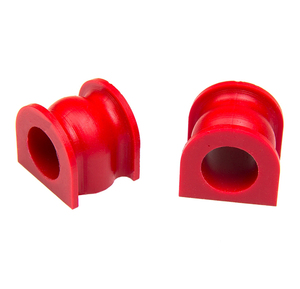
Consolidate your shipments: In addition to cabin tilt components, we produce drive shaft center support bearings, EPDM radiator hose pipes, red silicone turbocharger hump hoses, torque arm bushes, and 5-inch polyurethane suspension blocks in single container shipments.
Frequently Asked Questions for Ethiopian Importers & Fleet Buyers
Key details on commercial terms, technical cross-referencing, container dispatch, and documentation compliance for customs clearing through the Port of Djibouti.
We are experienced in processing export documentation strictly compliant with international Letter of Credit (LC) requirements approved by commercial banks in Ethiopia. We generate precise Proforma Invoices with explicit HS code designations, detailed packing lists, Certificates of Origin, and complete commercial invoices to facilitate smooth import permits and customs valuation through the Ethiopian Revenues and Customs Authority (ERCA).
Ocean freight consignments depart via premier Indian container ports—primarily Nhava Sheva (JNPT) or Mundra. Average sailing transit time to the Port of Djibouti is approximately 10 to 14 days. From Djibouti, shipments are routed under transit customs seal directly to Mojo Dry Port or Qality Inland Clearance Depot via multimodal railway or road transit. Standard production lead times vary from 2 to 4 weeks depending on order volume.
Yes. When part numbers are missing, buyers can provide physical samples or engineering drawings indicating key dimensions: inner sleeve diameter, outer diameter, bracket width, center distance between mounting holes, and anticipated vehicle axle loading. Our engineering division confirms tooling feasibility, compound durometer suitability, and produces validation prototypes before mass production.
For cataloged fast-moving part references (including Sinotruk, Tata, and Ashok Leyland mountings), our minimum order quantities start at 50 to 100 units per reference. We offer full consolidation capabilities, allowing importers to combine cabin tilt mounts, propeller shaft center bearings, radiator hoses, and turbo silicone couplers into mixed Less-than-Container-Load (LCL) or Full-Container-Load (20ft/40ft FCL) shipments.
Ethiopia's high altitude creates intense ultraviolet radiation combined with wide diurnal temperature fluctuations between day and night. Our compounding formulation integrates specialized anti-ozonant waxes and paraphenylene diamine antioxidants. These active agents migrate to the elastomer surface during service, providing an ongoing chemical barrier that prevents surface crazing, embrittlement, and dynamic flex cracking.
Mounting brackets and outer housings receive heavy electrostatic powder coating or yellow zinc dichromate passivation, providing over 480 hours of salt spray corrosion resistance. Assemblies can be configured with or without grade 8.8 / 10.9 high-tensile mounting pivot bolts and self-locking castle nuts depending on customer specification requirements.