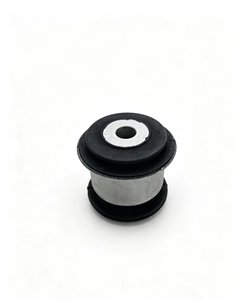
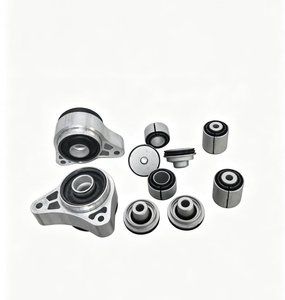
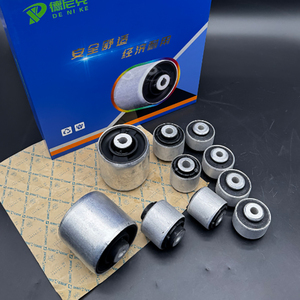
Featured OE-Spec Control Arm Bushings & Silent Blocks
Engineered in compliance with ISO/IATF 16949 and CE standards, these suspension assemblies provide micro-damped NVH isolation and rigorous tear resistance for high-stress fleet operations.
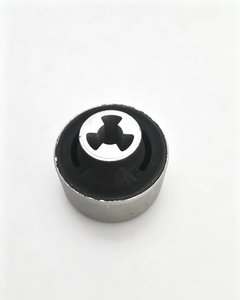
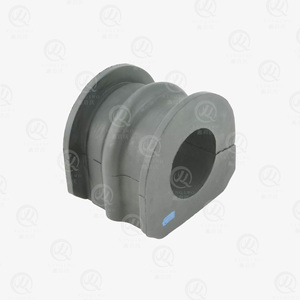
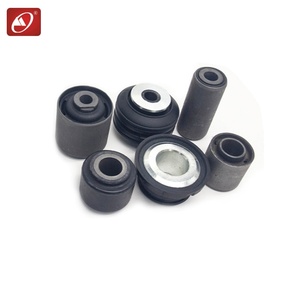
Engineering Control Arm Bushings for Peru's Severe Topography
Vehicular suspension systems deployed across the Republic of Peru are subjected to a set of mechanical, chemical, and atmospheric stress factors rarely paralleled elsewhere in South America. From the coastal fog zones of the Lima Metropolitan Area with saline-saturated humidity to the extreme altitude of the Andean Mountain Range reaching beyond 4,500 meters above sea level, control arm bushings face severe operational demands. In unpaved mining corridors such as the Corredor Minero del Sur (traversing Apurímac, Cusco, and Arequipa), suspension components absorb relentless high-amplitude vibration, cyclical compressive impacts, and abrasive volcanic dust.
A standard aftermarket rubber bushing engineered solely for smooth suburban asphalt degrades rapidly under these operating conditions. The combination of thermal cycling—where midday desert heat transitions to below-freezing temperatures at high altitude—accelerates rubber micro-crystallization, surface micro-cracking, and premature debonding from internal steel sleeves. As a dedicated OEM-tier manufacturer and wholesale supplier with engineering roots established since 1980, we formulate our CE-certified natural rubber (NR) and polyurethane (PU) formulations to address these precise failure modes.
Critical Failure Modes in Peruvian Fleets & Engineering Mitigations
In metropolitan taxi fleets (such as Toyota Yaris, Probox, and Nissan Versa in Lima and Callao) and long-distance commercial freight haulers navigating the Carretera Central, premature bushing failure directly causes dynamic toe and camber deflection. This misalignment results in severe inner shoulder tire scuffing, degraded directional stability during hard braking on steep mountain descents, and harsh acoustic transmission through the chassis rails. Our manufacturing process deploys three structural engineering countermeasures:
Chemlok® Primer Dual-Layer Bonding
We apply high-pressure, thermal-cured Chemlok® adhesive systems to cold-drawn seamless steel inner and outer sleeves. This eliminates sleeve-rubber separation under extreme multi-axis shearing up to 28 kN of torsional load.
Broad-Spectrum Durometer Stabilization
Compounded with high-grade natural rubber and anti-ozonant micro-waxes, our bushings retain their nominal Shore A hardness (62 to 68 Shore A) across temperature gradients spanning from -35°C in Juliaca to +42°C in Piura.
Cathodic Electrophoretic (E-Coat) Steel
All outer sleeves undergo immersion zinc phosphatizing and cathodic electrodeposition painting exceeding 1,000 hours of ASTM B117 salt spray exposure, protecting against Callao maritime salt fog and road debris.
Operational Demands by Peruvian Economic Corridors
To assist wholesale distributors, automotive repair networks, and institutional fleet purchasers in Arequipa, Lima, Trujillo, and Cusco, our engineering team categorizes our control arm bushings according to distinct regional load cycles:
Heavy Mining Support & 4WD Pickups
Primary Platforms: Toyota Hilux, Nissan Frontier (NP300), Mitsubishi L200, Ford Ranger.
Operating Environment: Open-pit copper and gold concessions in Cajamarca, Moquegua, and Pasco. Constant washboard gravel, unpaved inclines, and heavy payloads demand heavy-duty polyurethane bushings with high tear strength (≥45 kN/m) to prevent articulation binding.
Interprovincial Freight & Long-Haul Buses
Primary Platforms: Scania, Volvo B-Chassis, Mercedes-Benz Actros, Freightliner, Tata Heavy Haulage.
Operating Environment: The Pan-American Highway (Panamericana Norte/Sur) and trans-Andean switchbacks. Torque rods, V-stays, and lower control links experience continuous oscillating torsional shear under full gross vehicle weight ratings (GVWR).
Urban Passenger Transit & Ride-Hailing
Primary Platforms: Toyota Yaris/Corolla, Hyundai Accent, Kia Rio, Nissan Sentra, Chevrolet Sail.
Operating Environment: Intense stop-and-go cycles over speed breakers (rompemuelles), potholes, and unpaved urban sectors in San Juan de Lurigancho, Comas, and Villa El Salvador. Soft dynamic damping preserves steering rack components and cabin isolation.
Engineering Material Specification Comparison
Different fleet operational envelopes require distinct elastomer formulations. The matrix below compares the structural properties of our OEM-replacement compounds engineered for Peruvian climatic zones:
| Performance Parameter | OEM Standard NR (Natural Rubber) | High-Damping EPDM Compound | Mining-Grade Polyurethane (PU) | Hydraulic-Core Bushing (Hydrobush) |
|---|---|---|---|---|
| Shore A Hardness Range | 60 ± 5 | 70 ± 5 | 80 to 90 ± 3 | 58 ± 5 |
| Tensile Strength (MPa) | ≥ 18.5 MPa | ≥ 14.0 MPa | ≥ 35.0 MPa | ≥ 17.0 MPa |
| Elongation at Break (%) | ≥ 450% | ≥ 350% | ≥ 420% | ≥ 400% |
| Operating Temp Range (°C) | -40°C to +85°C | -45°C to +135°C | -35°C to +90°C | -30°C to +80°C |
| Peel Adhesion (Rubber to Steel) | ≥ 10.5 N/mm (100% Rubber Tear) | ≥ 9.0 N/mm | Mechanical & Bond Interlock | ≥ 10.0 N/mm |
| Ozone & UV Degradation | Good (Wax-Stabilized) | Exceptional (Inherent) | Excellent | Good |
| Primary Application in Peru | Sedans, light urban taxis, and coastal commercial vans | High engine-bay proximity, turbo linkages, cooling hoses | Mining haul pickups, unpaved off-road Andean routes | Luxury SUVs (Mercedes W166, Audi A8, Tesla Model Y) |
Structural Shifts in Peru's Suspension Bushing Import Market
The aftermarket spare parts sector in Peru is transitioning through significant structural adjustments governed by vehicle fleet maturation, regulatory inspections, and shifting supply chain routes:
Tightening CITV Technical Inspections
The Centros de Inspección Técnica Vehicular (CITV) under MTC regulations have increased scrutiny over front-end lateral slip and suspension play. Worn bushings exhibiting more than 2.5 mm of axial play lead to immediate vehicle failure, compelling workshops to seek certified, durable replacement components rather than low-grade unbranded alternatives.
Surge in Asian Pickup & Chinese Commercial Fleets
Alongside dominant Japanese platforms (Toyota, Nissan), Chinese commercial vehicle brands (Foton, JAC, Great Wall, Dongfeng, Sinotruk) are growing rapidly across Lima's distribution corridors. Importers require manufacturing suppliers capable of delivering unified OE cross-referencing for both legacy Japanese and emerging Chinese platforms under consistent quality controls.
The Callao / Chancay Mega-Port Logistics Transformation
The inauguration of the Port of Chancay alongside modernizations at Puerto del Callao is reshaping maritime transit times from Asia to Peru. Direct trans-Pacific sea routes shorten lead times to 22–28 days. This enables Peruvian importers to transition from fragmented air freight orders to high-cube containerized consolidated shipments with reduced landed costs.
Why Importers Partner With Amit Rubber Products
Drawing on an industrial legacy established in 1980, Amit Rubber Products (BMF Autos) manufactures high-performance automotive rubber and polyurethane components. Under the technical leadership of Mr. Amit Chitkara, we combine deep material compounding knowledge with high-precision tooling to support distributors across Latin America, Asia, and Europe.
46+ Years Industrial Compounding
Founded in Delhi's automotive hub in 1980, our formulations are optimized to mitigate ozone cracking, thermal degradation, and heavy cyclic fatigue.
Full OEM Part Cross-Referencing
We match OEM numbers, technical drawings, and physical samples across Japanese, European, American, Indian, and Chinese vehicle architectures.
Servo-Hydraulic Dynamic Testing
Every bushing design undergoes 500,000 to 1,000,000 multi-axial cycle fatigue tests to verify bonding integrity before mass container loading.
Custom Mold & Polyurethane Tooling
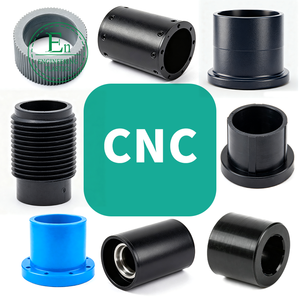
In-house CNC mold production allows rapid delivery of new references in 15–25 days from sample receipt or CAD dimensional blueprints.
Frequently Asked Questions by Importers in Peru
What are the customs and tariff classifications (SUNAT partida arancelaria) for importing control arm bushings into Peru? +
How do your natural rubber and polyurethane bushings withstand high-altitude Andean degradation? +
Can your factory supply custom private-label branding and localized packaging for distributors in Lima? +
What are your standard manufacturing lead times and maritime shipping schedules to Puerto del Callao? +
How do you manage quality control to prevent rubber-to-metal delamination under extreme road impacts? +
What payment terms and documentation do you offer for institutional importers in Peru? +
Can you cross-reference and manufacture bushings from physical worn samples sent from Peru? +
Request Factory-Direct Quotations & Technical Samples for Peru
Direct sourcing from a 46-year established rubber and polyurethane manufacturer. Share your target OE part numbers, annual volumes, or custom specifications for competitive wholesale pricing and rapid sample dispatch.
Inquire Now