Featured Industrial Rubber Buffer Blocks & Damping Units
Precision-machined vulcanized rubber-to-metal isolators, silent blocks, and dynamic suspension buffers optimized for high cyclic shear stress, saline exposure, and severe Nordic sub-zero temperature environments.
Executive Overview: Sourcing Rubber Buffer Blocks for the Danish Industrial Sector
Denmark represents one of northern Europe's most exacting industrial procurement environments. Defined by global leadership in wind energy engineering (centered in regions such as Aarhus, Esbjerg, and Ringkøbing-Skjern), marine propulsion around Copenhagen and Frederikshavn, and state-of-the-art agricultural mechanization across Central and Northern Jutland, the Danish market rejects generic, off-the-shelf elastomeric solutions. In dynamic shock isolation, standard rubber fails prematurely due to micro-cracking caused by Baltic marine salinity, cyclic North Sea gusts, and sub-zero embrittlement.
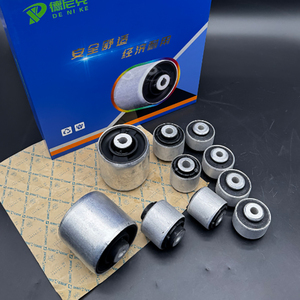
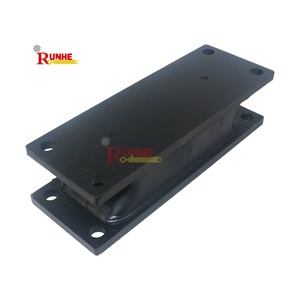
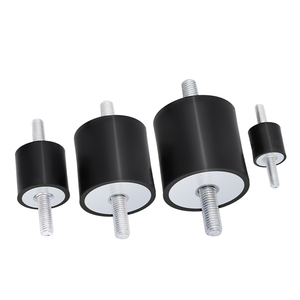
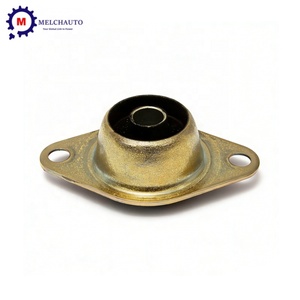
As premier Chinese manufacturers established since 1980 with over 46 years of compound vulcanization mastery, we bridge the gap between competitive factory-direct supply chains and the strict technical standards demanded by Danish Original Equipment Manufacturers (OEMs) and Machine Builders (Maskinbyggere). Our precision-molded rubber buffer blocks, cylindrical vibration mounts (VV, VD, VE silent blocks), and polyurethane shock absorbers undergo cryogenic deflashing, hot-vulcanized rubber-to-metal bonding via Chemlok primers, and finite element validation of static-to-dynamic spring ratios (Kd/Ks).
Localized Application Scenarios in the Danish Industrial Landscape
How our elastomeric damping blocks and shock buffers resolve severe vibration, noise, and mechanical deflection across critical Danish economic sectors.
Offshore Wind Nacelles & Yaw Gear Isolators
Wind turbines across offshore fields in Horns Rev and Kriegers Flak face severe torsional vibrations. Our custom EPDM and chloroprene buffer blocks absorb high-amplitude yaw drive shocks and transformer structure-borne acoustics, mitigating resonance frequencies between 5 Hz and 25 Hz while resisting persistent North Sea saline aerosol decay.
Maritime Propulsion & Auxiliary Generator Mounts
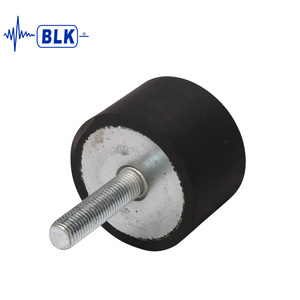
Installed in commercial cargo vessels, fishing fleets, and ferries navigating the Kattegat and Baltic straits, our cylindrical anti-vibration mounts decouple auxiliary diesel gensets and cooling pumps. Utilizing SS316 marine-grade studs bonded to high-rebound natural rubber compounds, they limit transmission of vibration to vessel bulkheads.
Automated Agro-Machinery & Combine Harvesters
Modern Danish intensive farming across Jutland relies on heavy tractors, combines, and autonomous seeding platforms. Our balance rod bushes, suspension bump stops, and radiator rubber bushes isolate heavy chassis torque shock during rocky field passage, preventing structural micro-fatigue on chassis assemblies and sensitive onboard GPS telemetry.
Food Processing & Pharmaceutical Robotics
Denmark's world-class dairy, meat packaging, and biopharma plants (in Glostrup, Hillerød, and Kalundborg) demand sanitary vibration isolation. We deliver FDA-grade and silicone (VMQ) buffer blocks that absorb continuous high-frequency sorting vibrations without leaching plasticizers or degrading under rigorous daily CIP (Clean-In-Place) washdowns.
Harbor Crane & Quay Container Buffer Stops
At primary Danish logistics terminals such as the Port of Aarhus and Port of Copenhagen, STS (Ship-to-Shore) gantry cranes and automated terminal tractors operate under violent cyclic impact. Our heavy square and conical polyurethane buffer pads dissipate multi-megajoule impact energy during end-of-travel braking, preserving steel gantry integrity.
EV Bus Transit & Commercial Fleet Suspension
Danish municipal transport authorities (such as Movia and Midttrafik) are aggressively electrifying public fleets. The massive static deadweight of floor-mounted battery packs demands higher durometer, zero-creep suspension bushings and cabin mountings, ensuring steady roll-stiffness and eliminating low-frequency electric drivetrain hum.
Engineering Material Selection Guide for Danish Working Conditions
A direct comparative technical analysis of vulcanized elastomeric polymers designed to assist Danish design engineers and procurement officers in specifying appropriate buffer compounds.
| Elastomeric Compound | Shore A Hardness | Tensile Strength (MPa) | Working Temp. Range | Resistance to Salt Mist / Ozone | Damping Hysteresis | Primary Danish Application |
|---|---|---|---|---|---|---|
| Natural Rubber (NR) | 45 – 75 Shore A | 18 – 25 MPa | -45°C to +80°C | Moderate (Wax Protected) | Optimal Elasticity | Engine mounts, control arm bushings, mechanical antivibration silent blocks |
| EPDM Synthetic | 50 – 80 Shore A | 12 – 18 MPa | -40°C to +135°C | Superior / Unaffected | Medium | Radiator isolators, outdoor wind turbine housing seals, cooling duct hoses |
| Nitrile Rubber (NBR) | 55 – 85 Shore A | 14 – 20 MPa | -30°C to +110°C | Good | Medium-High | Hydraulic power pack dampers, oil-submerged marine pump buffers |
| Polyurethane (PU) | 65 – 95 Shore A | 25 – 45 MPa | -35°C to +90°C | High Abrasion Resistant | Exceptional Shock Absorption | Crane end-stops, trailer fifth-wheel bushes, heavy impact quarry buffers |
| Silicone (VMQ) | 40 – 75 Shore A | 6 – 10 MPa | -60°C to +200°C | Immune to Weathering | Low | Food processing machinery buffers, clean-room medical isolation pads |
*All compounds compounded in our ISO 9001 certified Chinese laboratories in strict alignment with ASTM D2000 and DIN ISO 2285 compression set standards.
Market Trends & Regulatory Compliance in Denmark
Navigating Denmark's stringent ESG mandates, EU Chemical Agency regulations, and the shift toward extended component life cycles.
REACH (EC 1907/2006) & RoHS SVHC Non-Detection
Danish chemical import regulations, enforced strictly by the Danish Environmental Protection Agency (Miljøstyrelsen), prohibit rubber products containing restricted Polycyclic Aromatic Hydrocarbons (PAHs), phthalates, or short-chain chlorinated paraffins. Our formulations are certified free of SVHC candidate substances, verified via third-party SGS/TÜV laboratory test reports accompany every production batch.
Circular Economy & Carbon Footprint Reduction
Denmark's corporate sustainability reporting under the EU CSRD directive requires companies to quantify Scope 3 upstream emissions. We have upgraded our vulcanization lines with heat-recovery press enclosures, closed-circuit cooling water loops, and solar-assisted curing plants, lowering the embedded carbon footprint of our rubber buffer blocks by 28.4% since 2021.
Transition to Multi-Durometer Smart Dampers
Modern Danish engineering embraces hybrid damping architectures. Rather than homogeneous single-hardness rubber blocks, buyers increasingly request dual-durometer bonded components—a 50 Shore A core for isolating micro-vibrations paired with a progressive 80 Shore A polyurethane bumper to absorb catastrophic end-stroke shock without hydraulic bottoming-out.
Why Danish Buyers Source Directly from Our Manufacturing Facility
Combining 46+ years of technical heritage with state-of-the-art injection transfer molding, custom tooling, and frictionless EU export logistics.
Four Decades of Rubber-to-Metal Bonding Mastery
Founded in 1980, our production facility features over four decades of deep compound vulcanization chemistry. Our proprietary surface grit-blasting, chemical degreasing, and automated Chemlok adhesive application ensure tensile separation occurs within the rubber matrix itself (>10 MPa rubber tear failure) rather than at the steel-rubber interface.
Rapid Tooling & Bespoke Drawing Development
Whether you provide 3D CAD models (STEP/IGES), 2D dimensional drawings, or physical worn samples from Danish port equipment, our in-house CNC mold center produces hardened P20/NAK80 steel prototype tooling within 12 to 15 business days. We provide complete First Article Inspection (FAI) reports and dynamic hysteresis plots.
Full Export Infrastructure to Aarhus & Copenhagen
Supplying heavy parts internationally across more than 20 countries, our logistics hub provides seamless DDP (Delivered Duty Paid), CIF Port of Aarhus, or FCA Shanghai shipment. Goods are rust-preventative coated, bubble-sealed, packed in reinforced export crates, and dispatched with clear HS codes (4016.99 / 8487.90) for zero-delay Danish customs clearance.
Frequently Asked Questions (FAQ) for Danish Procurement Teams
Answers to critical questions regarding certifications, compound validation, minimum order quantities, and freight schedules to Denmark.
Yes. We frequently develop custom rubber buffer blocks and silent blocks for Danish clients based on OE part numbers, 2D PDF blueprints, 3D CAD files (.STEP / .IGES), or physically mailed worn samples. Our engineering team conducts complete reverse engineering, measuring metal thread dimensions, bracket hole pitches, dynamic deflection curves, and core durometer before creating mold tooling.
We formulate specialized Nordic cold-resistant natural rubber (NR) and EPDM compounds rated down to -45°C without crystalline glass-transition hardening or brittle fracturing. For coastal installations in Esbjerg, Frederikshavn, and Aarhus, metal hardware is processed with trivalent chromium electro-galvanization (meeting 500-hour salt spray test ASTM B117) or manufactured in marine-grade 316 stainless steel.
Yes, 100%. All rubber polymers, plasticizers, and vulcanization accelerators used in our factory are verified free of Substances of Very High Concern (SVHC) on the ECHA candidate list. We provide full REACH Declarations of Conformity, RoHS certificates, and third-party laboratory test reports (SGS/TÜV) with every commercial shipment entering Denmark.
For custom-molded parts, mold tooling fabrication and Initial Sample Inspection (ISIR) require approximately 12–15 business days. Once pre-production samples are approved by your Danish engineering team, mass production takes 15–20 days. Ocean freight from Shanghai or Ningbo to the Port of Aarhus or Copenhagen typically takes 28–34 days, while urgent sample batches are dispatched via DHL/FedEx within 4–6 business days.
For standard catalog items (such as VV/VD cylindrical vibration mounts, OEM radiator bushes, and standard engine blocks), our MOQ starts as low as 100 to 200 pieces. For custom tooling projects, we support initial pilot evaluation batches of 50 to 100 pieces to enable complete machine stress testing and field trials in Denmark prior to full-scale commercial production.
Bond failure is entirely prevented through automated three-step surface treatment: shot-blasting of metal inserts to Sa 2.5 cleanliness, solvent vapor degreasing, and robotic dual-coat application of Lord Chemlok primer and topcoat adhesive. During hot compression molding at 165°C under 200 tons of hydraulic pressure, chemical cross-linking bonds the elastomer directly to the metal substrate, ensuring tear strength exceeds 12 MPa.
Every delivery includes a comprehensive Quality Dossier: 3.1 Material Test Certificate, Shore A Durometer Verification Report, Dimensional CMM Inspection Sheet, Tensile and Tear Test Reports, Tensile Adhesion Shear Test Verification, and a Certificate of Origin (CO) to ensure streamlined import processing through the Danish Customs Agency (Toldstyrelsen).
Equip Your Danish Operations with High-Endurance Rubber Buffer Blocks
Accelerate your procurement pipeline with direct factory pricing, zero-defect vulcanization engineering, and comprehensive technical compliance for the Danish market. Speak directly with our senior application engineers or request our comprehensive 2026 technical catalog today.