Featured Heavy-Duty Suspension & Rubber Assemblies
Precision-engineered components verified for extreme axle vibration damping, high tensile resilience, and structural fatigue resistance under harsh West African transit corridors.
Optimizing Axle Balance Rod Bushes for Commercial Transit in Ghana
A rigorous examination of suspension kinematics, polyurethane elastomer compounding, and thermal fatigue mitigation for heavy haulage operations.
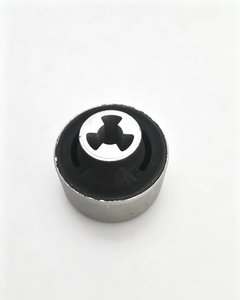
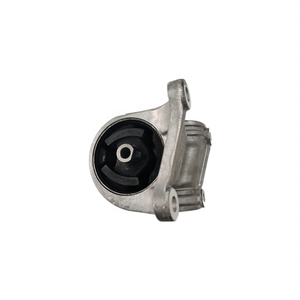
In the demanding logistics corridors connecting Tema Port and Takoradi Harbour to landlocked mining districts and northern trading boundaries (Burkina Faso, Mali, and Niger), heavy-duty commercial vehicles operate under severe mechanical stresses. Balance rod bushes—also designated across fleet workshops as torque rod bushes, V-stay bushings, or stabilizer link dampeners—serve as the critical pivot joint within a truck's bogie suspension and tandem axle geometry. Their mechanical objective is dual-faceted: they must preserve pinpoint drive axle alignment and pinion angles during high-torque acceleration and severe pneumatic braking, while simultaneously absorbing punishing multi-axis torsional shear caused by uneven road topographies.
When operating on the unpaved arterial roads connecting Kumasi, Obuasi, Tarkwa, and Tamale, standard commercial vehicle rubber bushings consistently exhibit premature structural failure. The underlying failure mechanisms stem from a combination of excessive radial loads, severe lateral impact forces, and unrelenting tropical ambient heat. Conventional natural rubber formulations, when subjected to the prolonged cyclic compression typical of overloaded timber, bauxite, and container haulage, experience rapid molecular hysteresis. The resulting internal heat build-up leads to permanent bond fracture at the rubber-to-metal interface, severe bushing de-lamination, and excessive axle clearance play. For Ghanaian fleet directors, this mechanical breakdown cascades rapidly into uneven tire scrubbing, driveshaft universal joint destruction, and high-frequency vehicle downtime.
To solve this operational bottleneck, leading Chinese suspension component manufacturers have engineered customized, heavy-duty polyurethane (PU) and premium composite balance rod bushes explicitly tailored to the African freight profile. By integrating high-resilience MDI-based cast polyurethane elastomer cores with precision-machined, anti-corrosive carbon steel inner pins, modern Chinese manufacturing hubs provide an elevated wear baseline that outlasts standard commercial market bushings by over 300% under identical axle load conditions.
Engineered Balance Rod Bush Variants for Heavy Fleets
Matched specifications designed for the prevailing heavy commercial vehicle platforms operating across Ghana's industrial sectors.
Sinotruk HOWO / Shacman Type 85/105
Engineered for the ubiquitous Sinotruk HOWO 371/420 and Shacman F3000 tipper chassis operating across Accra's construction arteries. Built with high-tear polyurethane cores (Shore 85A) to prevent lateral displacement under severe mining aggregate weight.
Tata Prima & Ashok Leyland Spherical Bushes
Designed for heavy cargo platforms with tandem bogie pivots common in transnational transit corridors. Incorporates dual-layer vulcanized bonding with high-tensile seamless steel sleeves, resisting rotational stress without premature outer shell cracking.
European Platform Retrofit (Actros & DAF)
Tailored for second-hand European prime movers (Mercedes-Benz Actros MP2/MP3/MP4, DAF XF) repurposed for long-distance transport. Offers high chemical resistance against spilled diesel, road salts, and excessive red-dirt abrasives.
Navigating Ghana's Heavy Industrial Transport Demands
Critical operating environments where balance rod bushing integrity dictates operational longevity, driver safety, and fleet profitability.
Across the Ghanaian industrial landscape, three distinct commercial vehicle environments exert catastrophic operational demands on chassis balance rod bushings:
| Transport Sector | Operating Environment | Predominant Bushing Stress | Optimal Bushing Specification |
|---|---|---|---|
| Mining Haulage (Gold & Bauxite) | Tarkwa, Obuasi, Awaso off-road unpaved pits | Extreme lateral twisting, high-tonnage shock loading, abrasive dust intrusion | Solid Polyurethane (90 Shore A) with sealed grease-retaining spherical bearings |
| Corridor Freight & Port Transit | Tema - Kumasi - Paga Transit Corridor (N1 & N6) | Continuous high-frequency harmonic vibration, heavy gross combination weight (GCW) | High-Elastic EPDM/NR hybrid rubber bonded to induction-hardened steel pins |
| Timber & Agricultural Logistics | Western & Brong-Ahafo forest feeder tracks | Severe axle articulation, mud contamination, repetitive high-angle torsion | Dual-flanged composite split bushes with self-lubricating inner contact surfaces |
In municipal and port logistics around Tema, container haulers frequently negotiate severe port-gate queues interspersed with high-speed highway transits where suspension components must cycle rapidly between static load-bearing and dynamic dampening. Conversely, the mining tracks in the Western North region expose balance rod joints to aggressive lateral sheer as triple-axle tippers maneuver through deep, waterlogged laterite ruts. Utilizing standard, non-reinforced replacement bushes under these conditions invariably results in complete core extrusion within ninety days, forcing fleets into repetitive replacement cycles and unrecoverable downtime.
Local Market Evolution: The Shift Toward Precision Chinese Sourcing
Why Ghanaian fleet owners, workshops in Abossey Okai, and major transport unions are modernizing procurement workflows.
Historically, the automotive and truck aftermarket in Ghana—centered around major commercial hubs such as Accra's Abossey Okai, Suame Magazine in Kumasi, and Kokompe—relied heavily on mixed-grade European scrap imports or substandard generic replacement parts. However, structural macroeconomic shifts and localized operational demands have altered this procurement model dramatically:
1. Dominance of Sino-Truck Fleets: The massive proliferation of Chinese commercial heavy trucks—including Sinotruk HOWO, Shacman, Beiben, and Foton—across Ghanaian state infrastructure and commercial construction projects has created unprecedented demand for direct OE-matched balance rod assemblies. Procurement directors now bypass third-party intermediaries to source directly from verified tier-one Chinese factories capable of providing exact blueprint compliance and guaranteed batch hardness.
2. Transition from Natural Rubber to Polyurethane Compounds: Experienced fleet mechanics across Kumasi and Takoradi are systematically shifting away from standard natural rubber towards high-performance polyurethane (PU) formulations. While natural rubber provides adequate baseline isolation on smooth asphalt, it degrades rapidly when exposed to tropical UV exposure, engine oil leaks, and abrasive red-dirt clay. Formulated polyurethane offers superior oil resistance, exceptionally high tear resistance, and zero structural memory loss under sustained dynamic load.
3. Lifecycle Total-Cost-of-Ownership (TCO) Prioritization: With inflation and foreign exchange volatility impacting the Ghanaian Cedi, transport companies can no longer afford short-cycle replacement components. Corporate fleet operators evaluate spare parts based on cost-per-kilometer metrics rather than initial acquisition outlay. High-spec Chinese manufacturing partners offering documented fatigue cycles (exceeding 1.5 million cycles under standard oscillation testing) deliver an exceptionally high return on maintenance capital.
Why Tier-1 Chinese Manufacturing Leads Global Suspension Engineering
Decades of continuous manufacturing excellence, advanced metallurgy, and strict adherence to international quality certification.
Four Decades of Polymer Authority
Rooted in over 40 years of continuous rubber and polyurethane compound innovation. Our collaborative factory networks operate precision hydraulic vulcanization presses and computerized polyurethane cast automation, ensuring zero void flaws or porosity in any bush matrix.
Certified Metallurgy & Bonding
Every central pivot pin is manufactured from premium 45# carbon steel or 40Cr alloy, hardened via high-frequency induction quenching and coated with specialized zinc phosphating to prevent tropical corrosion and catastrophic shear fractures.
Direct Export Logistics & Packing
Dedicated logistics processing provides export-grade palletized boxing, humidity-resistant vapor corrosion inhibitor (VCI) shrink wrapping, and rapid container stuffing for direct seafreight routing to Tema and Takoradi ports.
Frequently Asked Questions: Sourcing Balance Rod Bushes for Ghana
Essential insights addressing technical specifications, port delivery logistics, custom toolings, and minimum order requirements.