High-Performance Flexible Radiator Hose Solutions
Explore our heavy-duty EPDM, multi-ply polyester/aramid reinforced silicone, and precision fluid transfer hoses engineered specifically for passenger vehicle thermal systems, heavy machinery, and next-generation electric vehicle cooling loops across the Republic of Korea.
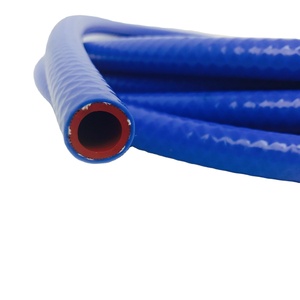
Custom Straight Silicone Radiator Hose with Logo & Color Coding
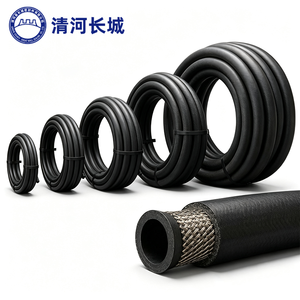
Flexible Reinforced EPDM Engine Radiator & Turbo Coolant Hose
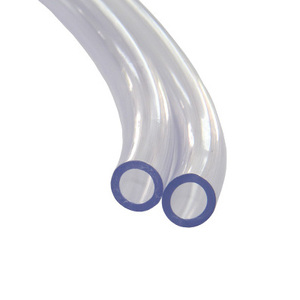
NW3.2 Non-Pressurized Transparent Flexible Coolant & Fluid Tube
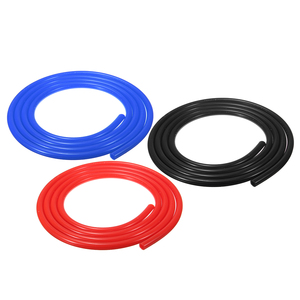
Universal Heat-Resistant Intercooler Turbo Silicone Vacuum Hose
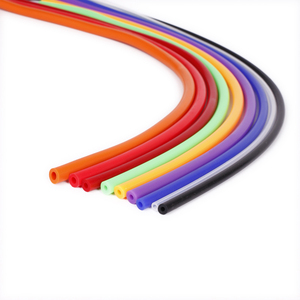
Automotive Radiator Vacuum Rubber Silicone Air/Water Pipe
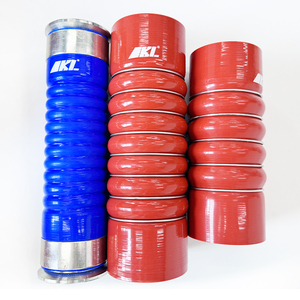
Braided Reinforced Flexible Straight Truck Radiator Silicone Hose
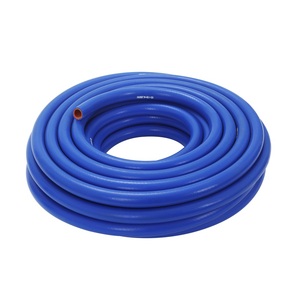
2-Layer Truck & Auto Coolant Radiator Air Silicone Heater Hose
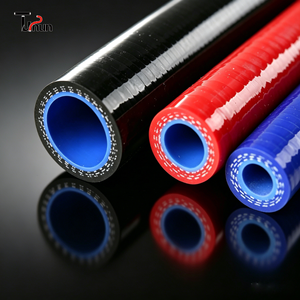
Universal EPDM Polyester Reinforced Coolant Heater Rubber Hose
The Engineering Imperative: High-Integrity Coolant Routing for Korean Automotive & Machinery Platforms
In the demanding South Korean industrial sector—spanning Tier-1 automotive manufacturing in Ulsan and Gwangju, heavy construction manufacturing in Changwon and Gunsan, and high-density commercial fleets traversing the Seoul-Busan logistics corridor—radiator coolant hoses operate under intense thermomechanical fatigue. Radiator and heater hoses must maintain absolute structural integrity against high surge pressures (reaching up to 0.45 MPa in continuous cycles), sub-zero operating environments reaching −40°C in Gangwon winters, and localized engine bay temperatures exceeding +180°C.
As a premier China-based flexible radiator hose manufacturer with over four decades of polymer research and mandrel vulcanization mastery, we partner directly with South Korean procurement managers, Tier-1 system assemblers, and aftermarket wholesalers. By formulating sulfur-cured and peroxide-cured EPDM (Ethylene Propylene Diene Monomer) compounds as well as multi-ply VMQ silicone polymers paired with meta-aramid or high-tenacity polyester fabrics, our engineering facility eliminates electrochemical degradation (ECD), micro-fissuring, and cold-flow deformation. Our direct supply channel optimizes lead times, enforces strict compliance with Hyundai-Kia MS 263-55 standards, and leverages RCEP/CKFTA duty-free customs clearance directly into Busan and Incheon.
| Material Matrix | Continuous Thermal Range | Reinforcement Core | Tensile / Burst Strength | Electrochemical Degradation (ECD) | Primary Target Applications |
|---|---|---|---|---|---|
| Peroxide-Cured EPDM | −40°C to +135°C (peaks +150°C) | Knitted / Braided High-Tenacity Polyester | Burst ≥ 1.6 MPa (232 psi) | Immune (Carbon black < 10¹&sup0; Ω·cm) | Standard ICE Passenger Cars, LCVs, Agricultural Tractors |
| Multi-Ply VMQ Silicone | −50°C to +200°C (peaks +230°C) | 3-Ply to 5-Ply Knitted Polyester Fabric | Burst ≥ 2.2 MPa (319 psi) | 100% Non-Conductive Dielectric Barrier | Turbocharged Coolant, EV Battery Packs, Commercial Buses |
| Aramid-Reinforced Silicone | −55°C to +260°C | 4-Ply Heavyweight Meta-Aramid (Nomex) | Burst ≥ 3.0 MPa (435 psi) | Total Inertness to Organic Acid Coolants | Heavy Excavators, Defense Vehicles, Extreme Marine Engines |
| Fluoro-Silicone (FVMQ) Lined | −50°C to +220°C | Aramid Webbing + Fluorosilicone Liner | Burst ≥ 2.5 MPa (362 psi) | Complete Oil, Fuel Vapor & Hydrocarbon Barrier | EGR Coolant Return, Turbocharger Blow-By Zones, Hybrid Powertrains |
Engineered for Korea's Heavy Duty & Precision Ecosystem
From dense urban delivery fleets to high-torque excavators working in extreme quarrying sites, our flexible radiator hoses are tailor-made for domestic Korean operating environments.
Commercial Trucks & Bus Fleets
Direct dimensional and compound matching for Hyundai HD120, Mighty, Pavise, Kia Bongo III, and Tata Daewoo Novus & Prima platforms. Our braided EPDM and hump-silicone hoses eliminate hose slippage, cold leaks under sub-zero Korean expressway operation, and glycol softening during continuous hill climbs across the Taebaek Mountain network.
Construction & Heavy Equipment
Optimized for heavy excavators, wheel loaders, and forklifts from HD Hyundai Infracore, Doosan Bobcat, and Volvo Construction Equipment Korea. Formulated to withstand immense hydraulic heat dissipation, continuous high-frequency vibration, and prolonged exposure to rock dust, mineral oils, and external abrasives without premature outer-cover hardening.
EV & Fuel Cell Thermal Management
Specialized for electric commercial buses (e.g., Hyundai Elec City) and specialized hydrogen fuel-cell commercial vehicle battery cooling circuits. Ultra-low conductivity silicone and peroxide EPDM prevent ion extraction into the dielectric coolant, ensuring strict isolation resistance standards mandated by Korean safety authorities (KATRI).
Strategic Coolant Routing Trends in the Korean Market
Adapting to rising EV adoption, aggressive emissions guidelines, and automated production shifts throughout the Korean peninsula.
Electrochemical Immunity
Modern Organic Acid Technology (OAT) long-life coolants utilized by Korean auto brands generate micro-galvanic currents. Our specialized non-conductive EPDM compounds mitigate internal striation and micro-cracking over 300,000 km maintenance intervals.
Downsized Engine Bays
As Korean hybrid and commercial powertrains compress packaging, tighter bend radii without hose kinking are mandatory. We employ custom 3D pre-formed mandrel bending to maintain unobstructed laminar coolant flow in cramped compartments.
Direct-Fit Quick Connectors
Shift away from worm-gear clamps toward automated push-to-connect PA12/GF30 nylon quick connectors. Our assembly lines offer factory-swaged, automated crimp retention rings that pass pressurized helium pull-off validation tests.
RCEP & Zero Tariff Logistics
Under the Regional Comprehensive Economic Partnership (RCEP) and China-Korea FTA, compliant certificates of origin eliminate import tariffs at Incheon and Busan. We supply complete bilingual trade documentation within 24 hours of vessel loading.
Why Korean Industrial Buyers Partner With Us: 46+ Years of Elastomeric Mastery
Building on an elastomeric manufacturing heritage established in 1980, our production facility combines precision compound formulation, automated microwave continuous vulcanization lines, and multi-axis CNC mandrel forming. Every flexible radiator hose, turbocharger connection, and coolant transfer tube is tested against rigorous international specifications—including SAE J20 R1/R3/R4, DIN 73411, ISO 4081, and Korean Standard KS M 6518.
Custom Tooling & 3D Prototyping
Rapid mold fabrication based on physical OE samples, 3D STEP/IGES files, or 2D technical drawings. Sample prototypes dispatched to Incheon within 7–10 working days.
Multi-Tier Quality Verification
In-house rheometer viscosity testing, tensile pull benches, 3-million-cycle pulsation pressure rigs, ozone chambers (50 pphm), and burst pressure testing up to 50 bar.
Full OEM Traceability
Batch-coded vulcanization tracking with material test reports (MTR), full IMDS submission support, and comprehensive REACH / RoHS compliance for European and Korean regulatory export.
Frequently Asked Questions from Korean Buyers
Answers to critical questions regarding standards, tooling, delivery schedules, and customs procedures for importers across South Korea.
Q1 Can your flexible radiator hoses meet Hyundai-Kia (HMC/KMC) MS 263-55 and Korean KS M 6518 standards?
Yes. Our peroxide-cured EPDM compounds and high-grade silicone blends are engineered to meet and exceed the mechanical, thermal, and chemical immersion thresholds outlined in Hyundai-Kia MS 263-55, Daewoo EDS-T-7517, and KS M 6518 (Rubber hoses for automotive engine cooling water). We routinely supply official test reports covering tensile elongation retention (>80% after 150°C x 168h aging), volume swell in 50/50 ethylene glycol solutions (≤10%), and cold impact flexibility at −40°C without micro-fracturing.
Q2 What are the standard lead times and shipping routes for volume container orders into Busan or Incheon?
For cataloged products or established mold profiles, production takes between 15 to 25 business days depending on order volume. Our logistics network maintains seamless freight corridors via Qingdao, Ningbo, or Shanghai ports directly to Busan New Port or Incheon Port, with sea transit times typically taking only 2 to 4 days. Fast-track LCL consolidation and express air courier options via Incheon International Airport (ICN) are available for urgent assembly line maintenance needs.
Q3 How do you verify part fitment when reverse-engineering from physical samples or Korean OE numbers?
Our engineering lab utilizes 3D optical coordinate measuring machines (CMM) and laser scanning to reverse-engineer physical hose samples, brackets, and quick-connect interfaces. We cross-verify inner diameter (ID), wall thickness uniformity, centerline bend radii, expansion tolerances, and branch take-off angles against vehicle bracket geometries before mold casting. We verify compatibility across popular Korean cross-references including Hyundai/Kia, Tata Daewoo, and Doosan part numbering matrices.
Q4 What are your Minimum Order Quantities (MOQ) and mold tooling fees for custom molded designs?
For standard straight silicone or universal flexible EPDM hoses, our MOQ starts as low as 100 to 200 pieces. For custom 3D-molded radiator hoses requiring custom vulcanization mandrels, our standard MOQ is typically 500 pieces per configuration. Mandrel tooling fees are highly competitive and are fully refunded once cumulative purchasing volume exceeds agreed tier thresholds (typically 3,000–5,000 units).
Q5 Do your shipments qualify for preferential tariff treatment under the China-Korea FTA or RCEP?
Yes. All automotive rubber and silicone hose exports from our plant are eligible for preferential tariff certificates, including the official China-Korea FTA Certificate of Origin (Form Korea) or RCEP Certificate of Origin. These documents allow our South Korean trading partners and manufacturing clients to claim zero or substantially reduced import customs duty at port clearance, maximizing bottom-line cost competitiveness.
Ready to Optimize Your Korean Coolant Hose Supply Chain?
Connect directly with our engineering sales team. Request technical data sheets (TDS), material certificates, customized mandrel tooling evaluations, or instant competitive quotation comparisons today.
Send an Inquiry