OEM & Industrial EPDM Rubber Solutions
High-integrity vulcanized elastomers engineered for extreme thermal gradients, aggressive glycol-based coolant chemistry, and high mechanical pulse fatigue across Eurasian heavy transit corridors.
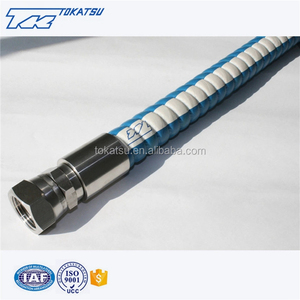
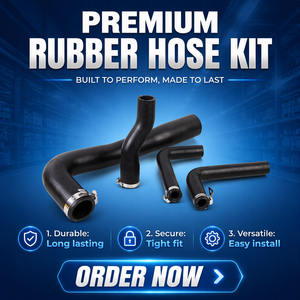
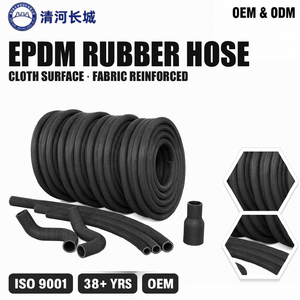
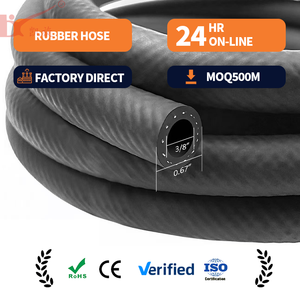
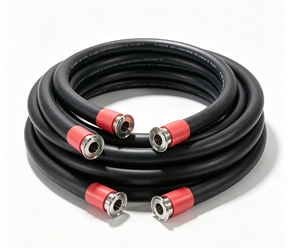
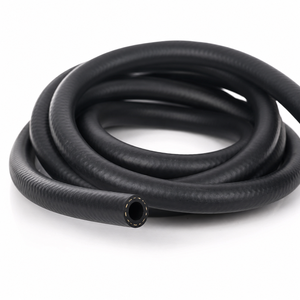
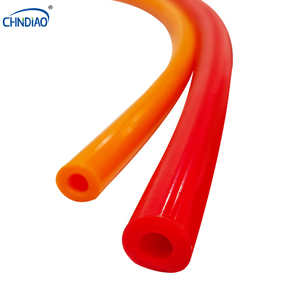
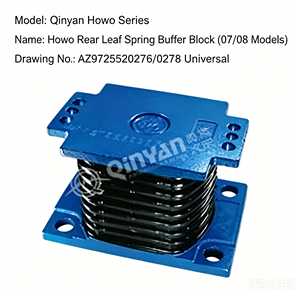
1. Technical Engineering of EPDM Coolant Hoses: Chemical Resistance & Mechanical Integrity
Ethylene Propylene Diene Monomer (EPDM) elastomer forms the empirical gold standard for liquid heat rejection and thermal transfer loops across commercial vehicle powertrains and stationary industrial units. When formulating automotive radiator and bypass cooling circuits destined for Azerbaijan, polymer compound design must balance high-tensile elastic recovery with chemical inertness against harsh commercial anti-freeze concentrates.
Standard cooling fluids utilized in heavy-duty engines operating within the South Caucasus corridor utilize concentrated ethylene glycol or propylene glycol matrices combined with Organic Acid Technology (OAT) or hybrid silicate-OAT corrosion inhibitors. Conventional sulfur-cured elastomers suffer from dynamic cross-link cleavage under long-term immersion in hot glycol above 100°C. Our industrial-grade EPDM hose formulations deploy peroxide-cured vulcanization systems. The carbon-carbon single bonds developed through peroxide curing exhibit substantially higher dissociation energies (~347 kJ/mol) compared to polysulfidic linkages (~268 kJ/mol), effectively preventing matrix embrittlement, hardening, and micro-cracking across continuous operational thermal ceilings up to +125°C, with intermittent excursion limits reaching +150°C.
Engineered micro-carbon distributions eliminate electrical pathway channeling between brass/aluminum radiator necks and engine blocks, eliminating striated micro-fissuring and pinhole coolant leaks.
Spiral knitted or woven high-tenacity Aramid (Kevlar) and Polyethylene Terephthalate (PET) plies ensure burst containment exceeding 1.6 to 2.5 MPa while dampening powertrain torsional oscillations.
Formulated to resist thermal cycling extremes ranging from severe Caucasian mountain sub-zero temperatures down to -40°C up to high-boost sustained thermal loads of +150°C without plasticizer migration.
| Performance Characteristic | Standard Commercial EPDM | Heavy-Duty Peroxide-Cured EPDM | Reinforced Silicone Hybrid Hose |
|---|---|---|---|
| Continuous Temperature Range | -35°C to +105°C | -40°C to +135°C (150°C peak) | -50°C to +200°C |
| Hydrostatic Burst Pressure (ID 38mm) | 0.8 MPa - 1.2 MPa | 1.6 MPa - 2.5 MPa | 1.8 MPa - 2.8 MPa |
| Electrochemical Resistance (SAE J1684) | Uncertified / Variable | Class II Passed (Zero micro-cracking) | Immune (Inherent Non-conductive) |
| Compression Set (100h @ 100°C) | < 38% | < 18% | < 15% |
| Resistant to Ozone & Saline Mist | Moderate (50 pphm) | Superior (150 pphm @ 72h) | Extreme (Immune to atmospheric ozone) |
Engineered Deployment Across Azerbaijan's Industrial Sectors
From maritime logistics at the Port of Baku to mountain transit across Shamakhi and Ganja, our hoses sustain critical uptime under severe localized environmental conditions.
Trans-Caspian Heavy Haulage Fleet Operations
The Alat International Sea Trade Port and Baku-Tbilisi-Kars transit lines experience severe duty cycles. Heavy trucks (Kamaz, MAZ, Mercedes Actros, Volvo FH) require custom-molded EPDM radiator and heater bypass hoses that resist mechanical vibration, abrasive dust, and sustained engine torque over steep mountain passes.
Offshore & Onshore Oilfield Auxiliary Cooling
Azerbaijan's vital oil and gas infrastructure in the Caspian basin requires robust auxiliary cooling for diesel backup generator sets, mud pumps, and hydraulic power units. Our industrial EPDM assemblies withstand airborne salt mist, coastal UV exposure, and intermittent chemical washes without surface degradation.
Aran Plain Heavy Agricultural Equipment
Irrigation pumps, combine harvesters, and high-horsepower tractors in the Aran economic zone operate under high ambient summer temperatures exceeding +45°C. Reinforced flexible coolant tubes prevent cavitation, hose collapse under suction pressure, and premature splitting during prolonged harvesting cycles.
Sumgait Chemical Industrial Park (SCIP) Process Plants
Industrial fluid distribution systems within petrochemical and polymer processing units require chemical-resistant EPDM hoses capable of circulating tempered water, mild alkaline solutions, and dilute acid streams without vulcanizate leeching or swelling.
Baku Municipal Transit & Intercity Passenger Buses
Urban bus fleets (BakuBus) encounter continuous start-stop traffic, fluctuating cooling circuit pressures, and high coolant line turbulence. Specialized multi-branch EPDM coolant harnesses ensure reliable climate control, radiator loop integrity, and reduced depot maintenance turnaround times.
Digital Hubs & AI Server Racks Liquid Cooling
As Azerbaijan invests in regional cloud data centers, our carbon-free non-conductive EPDM hoses ensure safe, flame-retardant coolant transfer directly to server manifold racks, mitigating dielectric fluid breakdown and short-circuit hazards.
2. Strategic Industrial Development Trends in Azerbaijan (2025–2030)
Azerbaijan's positioning as the cornerstone of the Middle Corridor (Trans-Caspian International Transport Route) is driving a rapid modernization of the country's transport and heavy machinery fleets. This geographical pivot requires component supply chains to adapt to international regulatory, logistical, and technical standards.
Fleet Modernization & Euro 5/6 Standards
National environmental mandates and transit regulations across the South Caucasus are driving fleet upgrades toward Euro 5 and Euro 6 commercial powertrains. These engines operate at higher exhaust gas recirculation (EGR) temperatures and elevated radiator head pressures, making standard rubber hoses obsolete and mandating peroxide-cured EPDM and silicone-lined composite assemblies.
Expansion of Caspian Free Economic Zones
The rapid expansion of the Alat Free Economic Zone (AFEZ) and regional logistics clusters has accelerated demand for localized stocking and fast-turnaround assembly replacements. Distributors require direct B2B supply lines from Chinese manufacturers capable of supplying custom tooling and batch-traceable OE replacement kits.
Agricultural Mechanization Incentives
State-backed agricultural modernization subsidies in regions like Kur-Araz and Ganja-Dashkasan have catalyzed imports of advanced harvesting and seeding machinery. Ensuring a dependable supply of robust EPDM radiator hoses protects agribusiness operators from catastrophic engine seizures during high-load harvesting windows.
Factory-Direct Advantage & Global Supply Chain Integration
Combining over 46 years of rubber processing heritage with precision compounding, custom mold design, and streamlined logistics dispatch directly to Baku and Caspian regional ports.
ISO 9001 & IATF 16949 Quality Systems
Every extrusion batch undergoes strict rheometer curing curve verification, automated wall-thickness laser measurement, and tensile elongation testing to ensure tight dimensional tolerance and zero porosity.
Custom Tooling & Rapid Prototyping
We engineer custom Mandrel-bent and compression-molded rubber profiles directly from 3D CAD step files, technical drawings, or physical samples provided by Azerbaijani fleet workshops and distributors.
Hydrostatic Burst & Pulse Cycling Rigs
Our in-house lab validates dynamic burst strength, volumetric expansion under thermal soak, and 500,000-cycle pressure pulsation fatigue under continuous glycol circulation at +125°C.
Flexible Multimodal Logistics to Baku
We provide comprehensive freight coordination: direct railway container shipping across the China-Kazakhstan-Baku corridor, sea-rail intermodal freight, and air express dispatch for emergency fleet maintenance.
Custom Labeling & Private Branding
We support local wholesalers with custom barcode labeling, OE part number laser printing, custom-branded packaging cartons, and organized container palletization optimized for customs clearance.
Competitive Direct Factory Pricing
By eliminating intermediate broker markups, we deliver substantial cost savings to Azerbaijani parts importers while guaranteeing compound consistency from primary virgin polymer stock.
3. Frequently Asked Questions (FAQ) for Importers & Procurement Teams in Azerbaijan
What minimum order quantities (MOQ) apply for custom-shaped EPDM coolant hoses?
For existing standard tooling (common European, CIS, and Asian truck and passenger platforms), our standard MOQ starts at 50 to 100 units per reference. For newly developed custom mandrel configurations requiring dedicated production tooling, our typical initial order threshold is 200 to 500 units, with tooling fees credited back upon reaching predetermined volume benchmarks.
How are cargo shipments handled from China to Baku, Azerbaijan?
We regularly utilize direct rail freight via the China-Kazakhstan border (Alashankou/Khorgos) across the Caspian Sea via feeder vessel directly to the Port of Baku (Alat), achieving a predictable transit window of 18 to 25 days. For smaller consolidated batches or urgent replenishment, we support air cargo into Heydar Aliyev International Airport (GYD) as well as full container loads (FCL) through traditional multimodal corridors.
Do your EPDM formulations comply with international SAE and DIN standards?
Yes. Our automotive and industrial coolant hoses are manufactured in strict compliance with SAE J20 (Class D-1 and D-2 for heavy-duty coolant systems), DIN 73411, and ISO 4081. Batch inspection reports covering tensile strength, elongation at break, ozone resistance, and burst performance accompany commercial shipping documentation.
Can you provide reverse engineering from old, worn samples from local fleets?
Yes. Procurement departments and fleet service providers in Azerbaijan can courier worn or damaged sample hoses to our technical center. Our metrology team performs laser scanning, cross-sectional geometry verification, inner/outer diameter mapping, and compound durometer analysis to fabricate precise duplicate tooling with enhanced wall thicknesses where required.
What documentation is provided for Azerbaijan Customs clearance?
We provide complete import-export compliance packages including Certificate of Origin (Form A or General CO), Commercial Invoices and Packing Lists verified with precise HS codes (typically 4009.31 or 4009.32), Mill Test Certificates, and RoHS/REACH compliance declarations to facilitate rapid release through the State Customs Committee of the Republic of Azerbaijan.
Connect Directly with Factory Engineering Specialists
Request comprehensive technical datasheets, full 2026/2027 EPDM coolant hose product catalogs, custom mold quotes, or physical material samples for laboratory validation in Azerbaijan.