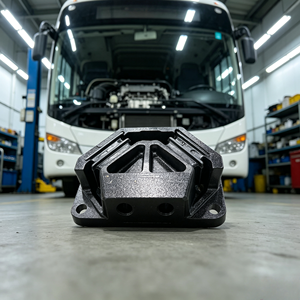
Engineered Portfolio
Featured Commercial Fleet Rubber & Polyurethane Assemblies
Discover our precision-engineered driveline dampening, exhaust hanging, and structural chassis components manufactured to endure extreme operating parameters across Scandinavian transit routes.
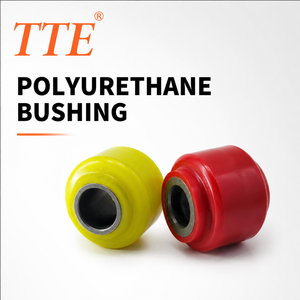
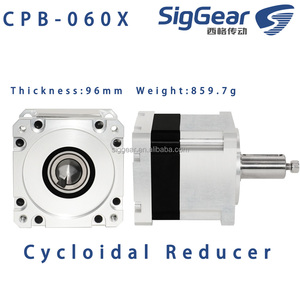
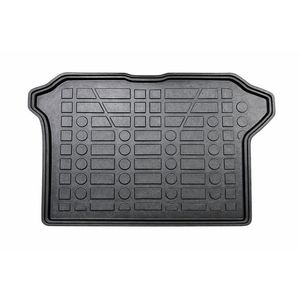
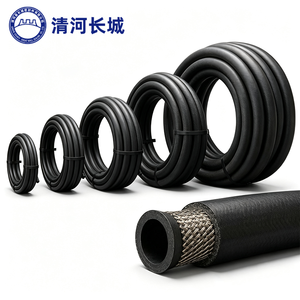
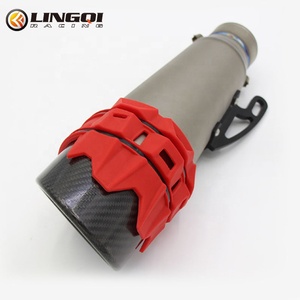
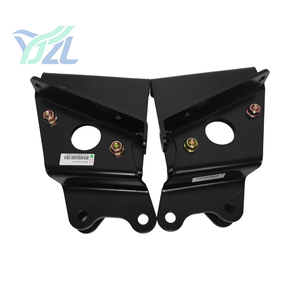
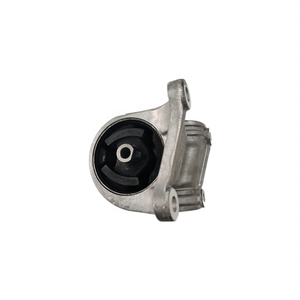
Nordic Environmental Dynamics
Localized Application Scenarios Across Sweden's Transport Ecology
Deploying elastomeric exhaust mountings in Sweden demands rigorous engineering beyond standard European baselines. Sub-zero temperatures, intense road de-icing agents, and long-haul forestry logistics create unique material fatigue challenges.
Sub-Zero Glass Transition Resistance
Standard synthetic rubbers experience glass transition (Tg) below -20°C, causing micro-fracturing along exhaust bracket stress risers. In Swedish northern corridors such as Norrland and Västerbotten, winter temperatures routinely sink below -35°C. Our specialized EPDM and silicone-modified formulations maintain dynamic viscoelasticity and tensile recovery down to -45°C, preventing sudden brittle fractures during high-amplitude cold starts.
De-Icing Chemical & Salt Slurry Immunity
Trafikverket (Swedish Transport Administration) applies significant concentrations of sodium chloride (NaCl) and calcium chloride (CaCl2) brine solutions to maintain clear winter motorways (E4, E6). This chemical spray corrodes underlying metal pins and rapidly degrades low-grade vulcanized rubbers via ozone and electrolyte penetration. Our exhaust hangers utilize antioxidant-dense polymers and zinc-nickel passivation on all steel insert mounts, guaranteeing 1,000+ hours salt spray resistance under ISO 9227 testing.
High-Payload Scania & Volvo Haulage
Sweden allows high-capacity commercial vehicle combinations exceeding 64 to 74 tonnes along dedicated timber, iron ore, and regional logistics arteries. Severe chassis torsion coupled with intense low-frequency diesel harmonics from high-displacement engines subjects exhaust hangers to cyclical shear stress. Our double-reinforced elastomer structures dampen vibration harmonics between 15 Hz and 80 Hz, protecting costly SCR and DPF emissions systems from structural weld failure.
Strategic Market Evolution
Swedish Regulatory & Technical Trends Shaping Exhaust Isolation
Analyzing the technological and regulatory transitions reshaping OEM parts supply, aftermarket distribution, and fleet procurement standards throughout Scandinavia.
Euro VII Emissions Compliance & Thermal Management Mandates
With the approaching implementation of stringent Euro VII emissions directives across the European Union, exhaust aftertreatment assemblies—including Selective Catalytic Reduction (SCR) canisters, Diesel Particulate Filters (DPF), and sophisticated NOx sensing arrays—are positioned closer to the exhaust manifold. This architecture elevates sustained operating temperatures around suspension points from traditional levels of 90°C up to 140°C–180°C. In response, Tier-1 Swedish automotive distributors are transitioning rapidly away from conventional natural rubber (NR) hangers toward high-density Ethylene Propylene Diene Monomer (EPDM) and high-tear Fluoroelastomer (FKM) hybrids capable of resisting continuous high-heat oxidation without accelerated creep deformation.
1. Thermal Surge
DPF regeneration cycles push bracket localized heat above 150°C.
2. Dynamic Creep
Preventing exhaust pipe sagging that causes road obstacle collision.
3. NVH Acoustic Attenuation
Eliminating cabin resonance under stringent Swedish working noise laws.
4. Extended Service Intervals
Targeting 500,000+ km maintenance cycles for Nordic fleet leasing groups.
1980
Established Manufacturing Heritage
46+
Years Polymer & NVH Experience
12
Core Product Families Exported
20+
Global Regional Markets Supplied
Manufacturing Leadership
Corporate Engineering Advantages & Export Competence
Tracing our heritage back to 1980 in Delhi's historic Kashmere Gate industrial hub, Amit Rubber Products delivers industrial-scale compounding, bespoke tooling, and robust global trade fulfillment under the strategic direction of Mr. Amit Chitkara.
In-House Compounding Precision
Every compound batch is custom-formulated using computerized internal Banbury mixers. We control Durometer Shore A hardness tolerances within ±3 Shore A, tensile strength up to 18 MPa, and elongation rates exceeding 450%, guaranteeing absolute uniformity across high-volume production runs.
Rubber-to-Metal Vulcanization
Heavy commercial exhaust mounts demand unbreakable bond strength between cold-rolled steel mounting plates and elastomeric dampers. We utilize automated Chemlok adhesive application and heated compression-transfer presses to ensure cohesive elastomeric failure rather than adhesive separation under severe shear loads.
Reverse-Engineering & Prototyping
We rapidly translate physical Swedish OEM samples (Scania, Volvo Truck, BPW, SAF-HOLLAND) or 3D STEP drawings into hardened production tooling. Our in-house toolroom completes mold fabrication, dimensional verification, and pilot batch vulcanization within 18–25 business days.
Export-Optimized Logistics
Shipping regularly to Scandinavian ports (Gothenburg, Helsingborg, Stockholm), our export packing utilizes multi-layer moisture-barrier poly linings, palletized edge protectors, and barcode SKU serialization compliant with Nordic automated warehouse distribution systems.
| Evaluation Parameter | Standard Commercial Rubber | Amit Rubber Nordic-Grade EPDM | Reinforced Polyurethane (PU) |
|---|---|---|---|
| Operating Temperature Window | -15°C to +85°C | -45°C to +150°C (Intermittent +175°C) | -30°C to +90°C |
| Shore Hardness Range | 55 - 65 Shore A | 60 - 75 Shore A (Calibrated) | 75 - 95 Shore A |
| Tensile Strength (MPa) | 10 - 12 MPa | 15 - 18 MPa | 22 - 35 MPa |
| Ozone & Salt Slurry Immunity | Moderate (Micro-fissures within 12 mos) | Exceptional (Zero cracking @ 200 pphm) | Superior Abrasion & Hydrocarbon Resistance |
| Optimal Scandinavian Application | Light indoor or sheltered utility | Exhaust hangers, Turbo hoses, Radiator ducts | Torque rod bushings, Fifth wheel cushions |
Procurement FAQ
Swedish Buyer Inquiries & Technical Validation
Comprehensive engineering and trade answers addressing common concerns raised by Nordic fleet operators, replacement parts distributors, and automotive aftermarket buyers.
How do your exhaust hangers maintain elasticity under Scandinavian sub-zero conditions?
Our formulations for northern European markets utilize high-molecular-weight saturated EPDM elastomers crosslinked using peroxide vulcanization rather than conventional sulfur vulcanization. Peroxide carbon-carbon bonds feature significantly higher bond dissociation energy, maintaining polymer elasticity and damping capacity down to -45°C without crystallization or brittleness during cold engine starts.
Can you manufacture exact matches based on Scania and Volvo OEM part numbers?
Yes. Amit Rubber Products maintains an extensive library of cross-reference specifications for European commercial platforms, including Scania R/G/P series, Volvo FH/FM, as well as trailer axle platforms like BPW, SAF, and York. Buyers can supply OEM numbers, dimension sheets (hole spacing, pin diameter, overall width), or physical worn parts for rapid dimensional verification and compound matching.
Are your rubber products compliant with EU REACH and RoHS regulations?
All compounds exported into the European Economic Area strictly adhere to EU Regulation (EC) No 1907/2006 (REACH), ensuring that Substances of Very High Concern (SVHC) such as polycyclic aromatic hydrocarbons (PAHs), heavy metal stabilizers, and restricted plasticizers remain well below statutory concentration thresholds. Detailed material safety data sheets (MSDS) and chemical declaration certificates accompany our export shipments.
What is your typical production lead time and sea freight schedule to Gothenburg?
For standard catalog parts in our recurring manufacturing runs, stock dispatches can occur within 5 to 10 working days. For custom compression molds or private-label volume contracts, production lead time averages 20 to 30 days. Standard containerized maritime transit from Nhava Sheva (JNPT) or Mundra to the Port of Gothenburg (Göteborgs hamn) typically takes 24 to 30 days, supported by complete commercial invoices, packing lists, and Certificates of Origin.
Do you offer custom hardness grades or hybrid polyurethane options for mining applications?
Yes. For harsh industrial sectors such as Kiruna mining haulage or timber transport trailers operating on unpaved gravel tracks, standard 60 Shore A rubber can be upgraded to high-tear Polyurethane (PU) ranging from 75 to 90 Shore A. This provides over 300% greater abrasion resistance and maximum shear modulus against violent road oscillations.
Accelerate Your Fleet Supply Reliability with Amit Rubber
Whether you require high-volume replacement exhaust hangers, custom suspension bushings, or engineered coolant hoses tailored for Scandinavian winters, our technical engineering team in New Delhi is ready to review your blueprints and part numbers.