Engineered Driveline, Suspension & Dust Enclosure Components
Precision-molded automotive and industrial elastomeric components manufactured to withstand extreme torsional fatigue, volcanic micro-abrasion, and salt-laden humidity across Philippine transport corridors.
Localized Application Scenarios Across the Philippine Archipelago
The operational stress encountered by transmission linkages, shifter towers, and gear boots throughout Luzon, the Visayas, and Mindanao requires far higher material thresholds than standard international catalog parts provide.
PUV Modernization & Jeepney Fleets
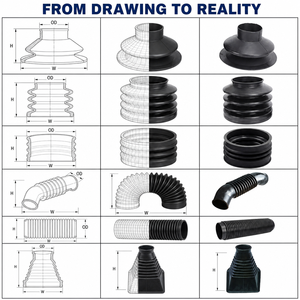
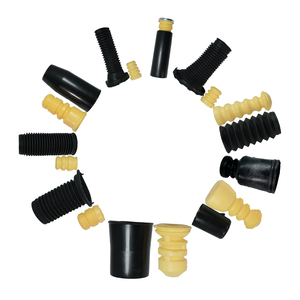
Urban stop-and-go driving along congested routes like EDSA, Commonwealth Avenue, and Cebu City subjects manual transmissions to continuous shifting. Standard aftermarket PVC boots crack prematurely under 38°C ambient heat and trapped underbody exhaust temperatures. Our vulcanized EPDM and NBR gear gaiters maintain their elastomeric flex modulus across hundreds of thousands of cycles without hardening or splitting.
Monsoon Inundation & Coastal Logistics
Inter-island Roll-on/Roll-off (RoRo) transport through Batangas, Iloilo, and Cagayan de Oro exposes vehicle undercarriages to brackish water splash and heavy monsoon flash flooding. A failed gear boot allows silt and saltwater direct entry into the selector shaft housing, contaminating gear oil and scouring sync rings. Our bellows feature double-lip oil seals and compression-molded clamping ribs for true watertight integrity.
Mining, Agro-Forestry & Haulage Corridors
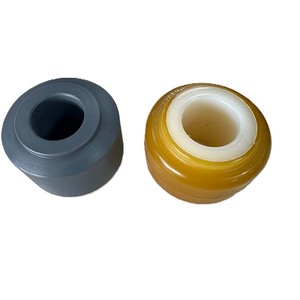
From nickel mines in Surigao to plantation routes across Bukidnon and Benguet, heavy trucks face abrasive volcanic basalt, unpaved logging paths, and continuous chassis twisting. Standard boots degrade when exposed to grease and hydraulic mist. We formulate heavy-duty gaiters in reinforced polychloroprene and PU that resist mechanical abrasion, stone impingement, and oil erosion.
Engineering White Paper: Overcoming Elastomeric Failure in Tropical Shifter Systems
Automotive and heavy commercial gear boots operate in one of the most mechanically demanding environments in commercial transport. Located at the intersection of the vehicle floorboard and transmission bellhousing, they must act as a barrier against cabin NVH (Noise, Vibration, and Harshness), deflect up to 130°C of radiated exhaust heat, and isolate the shift tower from ambient water and silt ingress.
Ozone & UV Photo-Degradation
Tropical UV exposure combined with coastal ozone initiates polymer chain scission in untreated synthetic rubbers, producing surface crazing within months. We integrate microcrystalline antiozonant waxes and Hindered Amine Light Stabilizers (HALS) directly into the compounding batch.
Dynamic Flex Fatigue (De Mattia >500k)
Under heavy manual shifting, boot convolutes experience continuous tension and compression. Our optimized wall-thickness profiles eliminate localized shear concentrations in the convolution roots, delivering high dynamic flex fatigue endurance.
Hydrocarbon & Oil-Mist Immersion
Splash-lubricated shift linkages vaporize extreme-pressure (EP) gear lubricants that contain sulfur and phosphorus additives, which rapidly swell natural rubber. Our Nitrile (NBR) and Chloroprene formulations guarantee minimal volumetric swell (<5% under ASTM D471).
Automotive & Industrial Trends Shaping the Philippine Market
Strategic structural changes in Philippine infrastructure, transport regulation, and supply chain strategies are altering procurement criteria for commercial rubber parts.
Fleet Professionalization Under PUVMP
The transition from traditional, backyard-assembled jeepneys to standardized Euro-4 and electric Class 2/Class 3 commercial mini-buses demands repeatable OEM-grade component quality. Transport cooperatives and fleet management firms now require documented dimensional tolerances and material traceability to maintain uptime across preventive maintenance intervals.
Rise of Chinese & Indian Commercial Platforms
While Japanese platforms (Isuzu ELF/Forward, Fuso Canter, Hino) remain foundational across the Philippines, fleets have rapidly diversified into Howo, Foton, FAW, Shacman, Tata, and Ashok Leyland. Importers require manufacturing partners capable of cross-referencing multi-origin parts and developing fast tooling for emerging drivetrain architectures.
Shift Toward Total Life-Cycle Economy
Supply chain disruptions and rising fuel costs have shifted buyer mindsets away from bottom-tier replacement parts that fail within 6 months. Commercial buyers in Binondo, Banawe, and Subic Bay increasingly demand heavy-duty polymer blends that prevent costly collateral damage to shift selector mechanisms, bushings, and gear synchronizers.
Localized Buffer Stocking Strategies
Uncertain maritime schedules along key Pacific lines have forced tier-1 distributors in Metro Manila and Cebu to consolidate procurement with manufacturers that support flexible MOQs, consolidated container shipments, and fast re-order cycles for fast-moving chassis and drivetrain rubber components.
Enterprise Manufacturing Strengths & Factory Capabilities
Amit Rubber Products brings over four decades of precision compounding, in-house mold engineering, and global logistics execution to commercial vehicle supply chains.
Legacy Established in 1980
Over 46 years of specialized engineering in automotive rubber, silicone, and polyurethane components. Led by Mr. Amit Chitkara, our facility blends decades of empirical troubleshooting with modern computer-controlled hydraulic vulcanization presses to ensure zero batch-to-batch variance.
Bespoke Tooling & Reverse Engineering
Struggling with obsolete shift boots or custom transmission adaptations? Our in-house mold tooling shop produces precision prototype molds directly from physical sample boots, worn-out cross-sections, or CAD drawings, confirming Shore A hardness, inner collar diameter, and retaining lip geometry.
Direct Export Route to Philippine Ports
Operating from New Delhi's historic Kashmere Gate automotive logistics hub, our export desk handles complete ocean freight and air cargo documentation for seamless clearance through Port of Manila (MICP), Batangas, and Cebu, with sea-worthy protective packaging designed to resist transit moisture.
Philippine Automotive Buyer FAQs
Direct technical answers to common questions raised by automotive supply houses, fleet operators, and industrial parts importers across the Philippines.
Q1: How do your gear boots withstand high humidity and frequent road flooding?
We formulate our boots with high-density EPDM, polychloroprene, and nitrile compounds enhanced with anti-hydrolysis agents and non-migratory antiozonants. Unlike low-cost PVC boots that soften in high heat and tear when flooded, our sulfur- and peroxide-cured rubbers maintain elastomeric rebound and seal retention even when submerged in standing water, diesel runoff, or road mud.
Q2: Can you manufacture custom boots based on our physical sample or drawings?
Yes. Many Philippine fleets run modified transmissions or legacy Japanese engines (such as 4HF1, 4HG1, 6D14, 6D16, 8DC9). You can ship a worn sample or provide 2D/3D engineering files. We cross-verify upper shift shaft diameter, lower base retention groove, overall stroke travel, and angle of deflection before manufacturing hardened steel production tooling.
Q3: What are your minimum order quantities (MOQ) and production lead times?
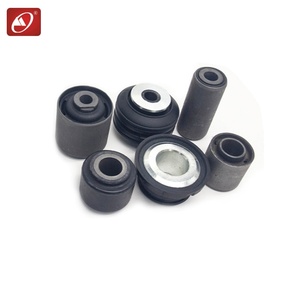
For existing catalog references, our MOQ starts at 300 to 500 units per line item, allowing Philippine distributors to consolidate mixed containers containing boots, engine mounts, radiator hoses, and torque rod bushes. For custom-molded parts, tooling requires 15 to 20 business days, followed by sample approval and standard batch production within 25 to 30 days.
Q4: How do you ensure the gear boots fit securely without slipping off under heavy shifting?
Our molds integrate reinforced mechanical clamping beads, internal anti-slip rings, and precision collar tolerances (within ±0.2mm). We supply boots engineered for steel zip-ties, hose clamps, or integral press-fit elastomeric retaining rings, preventing the boot from slipping off the shift tower during forceful gear selection.
Q5: What shipping terms and export documentation do you provide for Philippine customs?
We routinely execute FOB, CIF Manila, CIF Cebu, and CFR terms. All dispatches include verified commercial invoices, packing lists with net/gross weight declarations, non-asbestos and Certificate of Origin (COO) documentation to facilitate smooth Bureau of Customs (BOC) processing and cargo release.