
Navigating Elastomer NVH Degradation in Costa Rica's Commercial Fleet Corridors
An in-depth metallurgical, chemical, and field assessment of powertrain isolation bushes under harsh central mountain microclimates, high saline humidity, and sustained incline torque cycles.
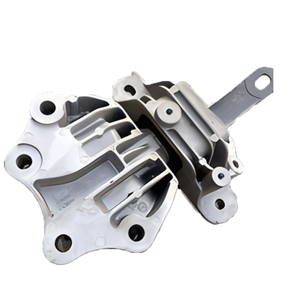
Motor mount bushings and powertrain vibration isolation dampeners play a mission-critical structural role in modern vehicular and heavy-duty chassis engineering. Serving as the primary dynamic mechanical link between the engine block, transmission bellhousing, and structural ladder frame, the bushing must isolate high-frequency harmonic vibrations generated by internal combustion cycles while resisting extreme torsional shock loads during rapid acceleration, declutching, and regenerative exhaust braking. In the demanding geographic and climatic operational landscapes of Costa Rica, powertrain mounts operate under conditions far exceeding conventional SAE baseline standards.
Engineering Core Principle: A premature motor mount failure is never an isolated part issue—it inevitably triggers angular misalignment across the drive propeller shafts, over-articulates universal joints, causes center bearing assembly rubber shearing, and induces cracking across aluminum transmission bellhousings.
The Geomechanical & Climatic Strain Profile of Costa Rica
Costa Rica presents an extraordinary set of operating parameters for commercial transport logistics and fleet operations. The country's trade artery, National Route 32 (Ruta 32), connecting the central high-altitude manufacturing and distribution hubs of San José to the critical Caribbean maritime gateways of Puerto Limón, cuts directly through the high-elevation Zurquí mountain pass. Commercial haulers routinely endure steep 6% to 9% sustained gradients combined with violent switchbacks, persistent tropical downpours, and rapid ambient temperature swings transitioning from 14°C in cloud forests to over 34°C with 95% relative humidity along coastal plains.
During these continuous high-torque mountain ascents, diesel engine blocks generate severe torsional deflection. Standard aftermarket natural rubber bushings rapidly experience thermal plastic deformation, known as mechanical compression set. Concurrently, the unsealed metal sleeve interfaces are exposed to road slurry, volcanic soils, and saline coastal air, accelerating galvanic corrosion at the vulcanization interface. When chemical delamination occurs between the elastomer and the steel outer casing, catastrophic chassis vibration and premature driveline component failure inevitably follow.
Elastomer Formulations: Natural Rubber (NR) vs. Polyurethane (PU) Matrix
To provide fleet operators and distributors with tailored NVH (Noise, Vibration, and Harshness) solutions, our engineering facilities utilize multi-tier material formulations designed for specific operating environments:
| Engineering Property | Standard Grade Natural Rubber (NR) | EPDM Hybrid Compound | Cast Polyurethane (PU) Matrix |
|---|---|---|---|
| Hardness Range (Shore A) | 55 – 65 Durometer | 65 – 75 Durometer | 75 – 90 Durometer |
| Operating Temperature | -30°C to +80°C | -40°C to +125°C | -25°C to +95°C |
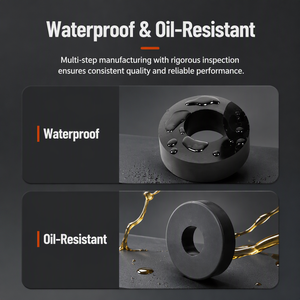
| Hydrocarbon & Oil Resistance | Moderate (Prone to swelling) | Good (Engine splash stable) | Superior (Impervious to petroleum) |
| Torsional Tear Resistance | High Initial Flexibility | High Sustained Elasticity | Extreme Dynamic Shear Strength |
| Recommended Application | Passenger Cars, Light Delivery Vans | Intercity Coaches, Radiator Lines | Heavy Haul Mining, Agro-Logistics |
For agricultural and raw harvest haulage—such as sugarcane transit in Guanacaste or pineapple and banana transport along the Atlantic lowlands—standard OEM-replacement rubber mounts frequently degrade within 12 to 18 months due to constant dirt ingress, acidic fruit residues, and diesel fuel weepage. For these extreme duty cycles, our high-density Polyurethane (PU) bushings provide an unyielding dynamic solution. Offering up to four times the tensile tear resistance of vulcanized rubber, PU mounts resist mechanical wear and remain chemically inert against corrosive agrochemicals, drastically reducing unbudgeted vehicle downtime.