Engineered Damping Blocks & Elastomeric Components
High-resilience damping units formulated from premium EPDM, silicone, and natural rubber polymers to mitigate harmonic resonance and thermal fatigue in demanding Gulf environments.
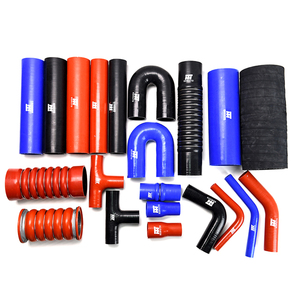
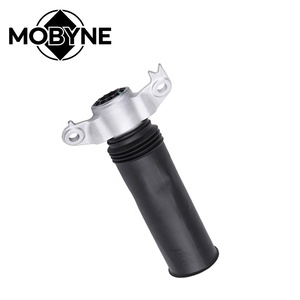
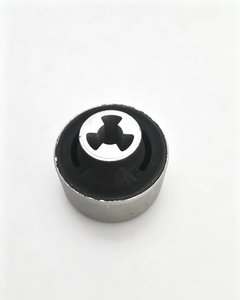
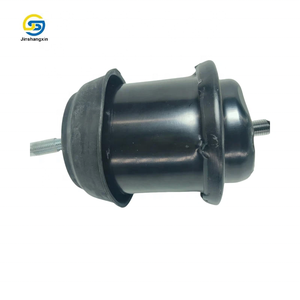
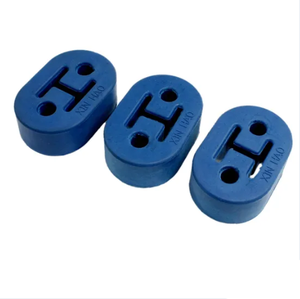
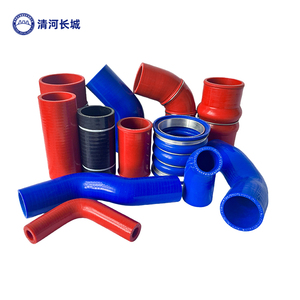
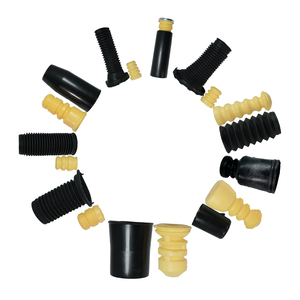
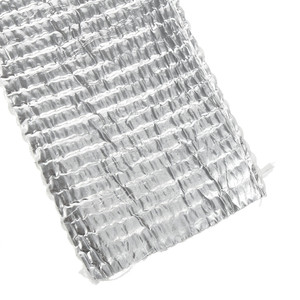
Elastomeric Damping Dynamics in Extreme Desert & Coastal Climates
A technical analysis of mechanical energy dissipation, Arrhenius thermal aging, and viscoelastic hysteresis in anti-vibration rubber mounts deployed across Doha and the broader Persian Gulf.
Thermal Aging & Kinetic Degradation
Doha experiences peak summer surface temperatures exceeding +55°C, coupled with solar UV irradiation levels reaching an ultraviolet index of 11+. Under these climatic stresses, conventional elastomers undergo accelerated cross-linking degradation. Our custom-formulated EPDM and high-grade polychloroprene compounds are treated with microcrystalline antiozonant waxes and Hindered Amine Light Stabilizers (HALS). This prevents premature durometer hardening, surface crazing, and dynamic modulus drift over sustained operational lifecycles.
Dynamic-to-Static Stiffness Ratio (Kd/Ks)
For high-frequency vibration isolation in rotating equipment and vehicle drivetrains, minimizing the dynamic hardening ratio is paramount. Standard commercial damping pads exhibit Kd/Ks ratios exceeding 2.2, which transfers acoustic noise directly into primary structures. Our bonded rubber damping blocks leverage virgin natural rubber matrices and advanced synthetic copolymers to sustain an ultra-low Kd/Ks ratio between 1.25 and 1.45 across 10 Hz to 120 Hz, guaranteeing superior acoustic attenuation and vibration transmissibility reduction.
Rubber-to-Metal Chemical Chemlok Vulcanization
Delamination at the elastomer-substrate interface represents the leading failure mode of heavy-duty industrial mounts in marine environments like Hamad Port and Ras Laffan. Our damping blocks utilize a dual-coat Chemlok adhesive bonding system integrated into vulcanization presses operating under 20 MPa clamping pressure. Steel interleaves and end brackets receive electroplated zinc-nickel (Zn-Ni) coatings rated for 1,000+ hours in ASTM B117 salt-spray tests to repel hypersaline coastal corrosion.
> 92%
Vibration Isolation Efficiency at Excitation Frequencies > 25 Hz
-40°C to +150°C
Thermal Operating Envelope for Silicone and Engineered EPDM Mounts
< 18%
Compression Set After 1,000 hrs at 70°C (ASTM D395 Method B)
46+ Years
Continuous Polymer Compounding and Industrial Manufacturing Heritage
Mission-Critical Deployment Scenarios in Qatar
From Lusail City mega-developments to Ras Laffan petrochemical complexes, our damping blocks and elastomeric solutions solve intense thermal-mechanical vibration challenges.
Centrifugal Chillers & Cooling Towers
Qatar's extensive district cooling plants require heavy-duty elastomeric inertia base mounts to isolate fluid pulsation, primary chiller motor resonance, and large axial fan vibrations from commercial foundations in West Bay and Lusail.
Heavy Commercial Fleet Suspension
Haulage operations between Hamad Port, Mesaieed, and the Doha Industrial Area expose logistics trucks to heavy axle dynamic loading. Our torque rod bushes, fifth wheel bushings, and front engine mounts eliminate frame fracture risks.
LNG Plants & Compressors
Installed across Ras Laffan and Dukhan energy sectors, custom high-temperature nitrile and fluorosilicone damping blocks isolate recriprocating compressors, pumps, and pipe racks from destructive low-frequency harmonic resonance.
Rail Viaducts & Substructure Damping
Supporting elevated transit corridors and metro acoustic trackbeds, our elastomeric bearing pads provide structural decoupling, shock energy absorption from high axle-load operations, and seismic shear mitigation.
Strategic Sourcing Trends in Doha & The GCC
Understanding regulatory evolutions, environmental benchmarks, and engineering standards transforming elastomeric product procurement in Qatar.
Stringent Ashghal & QCS Compliance
The Qatar Construction Specifications (QCS 2014 / 2024 update) enforce stringent parameters regarding structural elastomer durability, volatile organic compound (VOC) emissions, and flame propagation resistance. EPC contractors and public infrastructure authorities in Doha now demand full material traceability, batch-level rheometer cure graphs, and independent third-party mill test certificates (EN 10204 Type 3.1) for all vibration damping components.
Transition to Predictive Acoustic Isolation
Modern luxury hospitality and smart city developments in Lusail and The Pearl Qatar require noise criteria ratings below NC-30 in residential and commercial spaces. This has accelerated procurement demand away from rudimentary cork-rubber sheets toward precision-engineered 3D elastomeric isolators with calibrated natural frequencies (fn < 8 Hz), mitigating low-frequency structure-borne sound from MEP installations and basement pumps.
Supply Chain Regionalization & Direct Sourcing
Doha-based industrial distribution channels and procurement divisions are reducing reliance on European intermediaries to shorten lead times and eliminate inflated markup structures. By establishing direct technical procurement contracts with established original equipment manufacturers in Asia that offer in-house mold making, custom compounding, and rapid air/sea logistics to Hamad International Airport and Hamad Port, contractors save up to 35% on capex.
Why Engineering Procurement Teams Choose Us
Combining over four decades of polymer compounding expertise with modernized testing facilities to deliver zero-defect vibration damping components to the State of Qatar.
46+ Years Industrial Expertise
Operating continuously since 1980, we possess practical engineering mastery over polymer formulation, mold design, and dynamic vulcanization. We understand how different rubber blends react under long-term cyclic shear, compressive stress, and desert thermal oxidation.
Custom Tooling & Precision Molding
Equipped with computerized CNC tooling centers, automated compression presses, and injection vulcanization machinery, we manufacture custom anti-vibration damping blocks, center bearings, and heavy-duty bushes directly from your engineering CAD drawings or physical samples.
Export Operations to 20+ Countries
Our international logistics team specializes in Middle Eastern export documentation, Certificate of Conformity (CoC) clearance, and specialized export packaging designed to prevent vulcanized elastomer degradation during ocean container transit.
Local Procurement & Engineering Inquiries in Doha
Detailed answers addressing Ashghal requirements, material performance in Qatari soil/air, custom manufacturing, and international freight logistics.
How do your rubber damping blocks withstand Qatar's extreme +50°C summer heat?
Our damping blocks are formulated using synthetic EPDM, high-grade polychloroprene, or premium natural rubber reinforced with antioxidant and antiozonant chemical additives. Under ASTM D573 heat-aging protocols, our compounds undergo minimal durometer creep (less than ±5 Shore A variation after 70 hours at 100°C), preserving their vibration isolation frequency range despite extreme ambient radiant heat.
Can you supply rubber damping solutions that comply with Ashghal and QCS standards?
Yes. We manufacture damping pads, bridge bearings, and anti-vibration isolators in compliance with Qatar Construction Specifications (QCS) and relevant ASTM/BS EN standards. We furnish complete documentation packages, including raw material Mill Test Certificates (MTC), tensile/elongation reports (ASTM D412), compression set validation (ASTM D395), and specific gravity verifications.
What measures are taken to protect metal interleaves and brackets from Arabian Gulf salinity?
For installations in Doha coastal areas, Hamad Port, and Ras Laffan, our steel plates and inner sleeves receive electroplated Zinc-Nickel (Zn-Ni) coatings, hot-dip galvanizing, or marine-grade epoxy primer finishes. These coatings exceed 1,000 hours of continuous salt-spray exposure according to ASTM B117 standards without blistering, white rust, or bond line undermining.
Can you reverse-engineer or customize damping blocks from an existing site sample?
Yes. If you have an obsolete, discontinued, or non-standard damping mount from an existing industrial chiller, marine engine, or commercial chassis, you can supply sample dimensions or photos with critical measurements. Our engineering department verifies durometer hardness, dimensions, bolt-hole pitch, and load dynamics, machining custom molds within 7 to 14 days.
What are your standard shipping lead times and delivery logistics to Doha, Qatar?
For standard catalog parts in stock, orders dispatch within 48 to 72 hours. Transit times to Hamad Port via direct maritime container freight typically range from 14 to 21 days, while urgent project requirements can be dispatched via air freight directly into Hamad International Airport (DOH) within 3 to 5 business days, complete with chamber-legalized documentation.
How do I determine the right Shore A durometer for heavy industrial machinery damping?
Selecting the optimal durometer requires calculating the total static load per mount point, the operating speed (RPM) of the motor or rotating shaft, and the desired isolation efficiency (typically >90%). Most industrial damping blocks are supplied in 45 to 65 Shore A hardness. Our technical sales engineers calculate natural frequency (fn) versus excitation frequency (fd) to ensure zero resonance transmission.