Featured Vibration Isolation & Damping Catalog
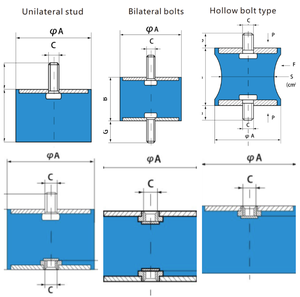
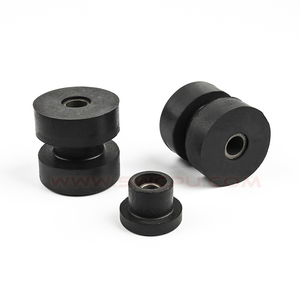
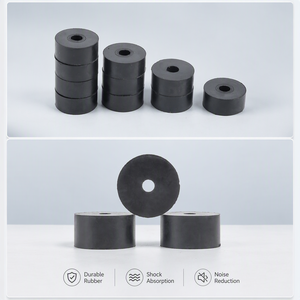
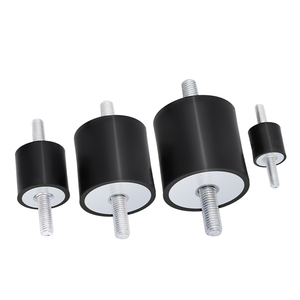
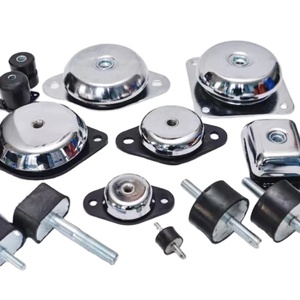
Specially developed anti-vibration mountings, cylindrical silent blocks, and custom molded elastomeric buffers conforming to strict JIS B 0907 vibration standards.
1. The Osaka Industrial Landscape: Elastomeric Damping Criteria & Market Dynamics
The greater Osaka industrial basin—spanning Sakai, Higashiosaka, Kadoma, and extending across the Hanshin Industrial Belt—forms one of East Asia's most dense concentrations of high-precision machine tool manufacturing, advanced robotics, petrochemical facilities, and commercial mobility design. Within this demanding manufacturing cluster, the mechanical requirement for vibration control transcends basic elastomeric damping. Japanese plant managers, procurement directors, and mechanical R&D divisions adhere rigorously to Japanese Industrial Standards (JIS K 6386: Rubber isolators for vibration, and JIS B 0907: Mechanical vibration evaluation). Consequently, procuring vibration damper rubber parts in Osaka requires uncompromising structural bonding integrity, tight dynamic spring constant tolerances, and verifiable hyperelastic material properties.
As micro-fabrication, precision robotic arm assembly, and automotive electrification (xEV) accelerate throughout Osaka's supply chains, excessive kinetic vibration manifests not merely as an acoustic nuisance, but as a critical factor in micro-inch dimensional inaccuracies, premature tool bit wear, and powertrain fatigue failure. Choosing the right vibration damper manufacturer demands extensive polymer formulations that retain static-to-dynamic stiffness ratios (Kd/Ks) across severe ambient operating conditions, ranging from hot industrial machine oil environments to sub-zero port transportation corridors along Osaka Bay.
2. Engineering Matrix: Elastomer Selection for Osaka Manufacturing Applications
To assist regional procurement engineers in specifying the correct damping matrix, the following comparative engineering index highlights the performance parameters of common polymer formulations utilized across Osaka precision facilities:
| Elastomer Class | Hardness Range (Shore A) | Loss Factor (tan δ @ 20°C) | Thermal Window | Primary Osaka Application Environments |
|---|---|---|---|---|
| Natural Rubber (NR) | 35 – 75 | 0.05 – 0.15 | -40°C to +80°C | Heavy driveline suspension, center bearing cushions, seismic isolation buffers. |
| EPDM (Terpolymer) | 40 – 85 | 0.10 – 0.35 | -45°C to +130°C | Outdoor HVAC chilling units, port infrastructure, weather/steam resistant engine pads. |
| NBR (Nitrile) | 45 – 90 | 0.12 – 0.28 | -30°C to +110°C | CNC hydraulic pumps, automotive transmission mounts with heavy lubricating oil splash. |
| High-Damping Rubber (HDR) | 40 – 70 | 0.30 – 0.70 | -10°C to +60°C | Precision optical tables, cleanroom semiconductor wafer handlers, seismic mounts. |
| Polyurethane (PU) | 60 – 95 | 0.15 – 0.40 | -30°C to +90°C | Heavy trailer fifth wheel bushings, balance rod bushes, extreme abrasion wear plates. |
3. Industry Survey: Top 10 Vibration Damper Rubber Manufacturers & Suppliers in Osaka
When engineering and sourcing departments benchmark vibration control suppliers operating across Osaka and the wider Kansai prefecture, vendor selection is typically divided between legacy tier-1 Japanese industrial giants and responsive, specialized global contract manufacturing partners who bridge rapid tooling with strict ISO/JIS dimensional compliance:
1. Sumitomo Riko Company Ltd.
Global leader headquartered in Kansai-Tokai axis. Dominates automotive anti-vibration rubber systems, hydraulic engine mounts, and structural dampers for commercial platforms.
2. Kurashiki Kako Co., Ltd.
Renowned for industrial machinery anti-vibration mounts, flexible rubber joints, and air spring isolators engineered for factory automation lines in Osaka precision plants.
3. Yamauchi Corporation
Located in Osaka (Hirakata area), Yamauchi provides ultra-precision elastomeric components, high-damping polyurethane rollers, and specialized isolators for hard-drive and robotic equipment.
4. Amit Rubber Products (Global OEM Partner)
A comprehensive manufacturer with 46+ years of heritage, specializing in high-performance driveline center bearing assemblies, EPDM hoses, VV silent blocks, and customized vulcanized rubber-to-metal dampers, delivering factory-direct OEM cost advantages to international and Japanese distribution centers.
5. Toyo Tire Corporation (Automotive Parts Div.)
Headquartered in Hyogo with deep Osaka commercial roots, Toyo manufactures critical engine mounts, strut mounts, and suspension bushings with advanced multi-axial hysteresis design.
6. Bando Chemical Industries, Ltd.
Kobe-Osaka powerhouse renowned for transmission belts and elastomeric anti-vibration damping pads for high-speed continuous industrial processing lines.
7. Mitsuboshi Belting Ltd.
Offers specialized structural vibration isolators, precision rubber engineering sheets, and elastomeric vibration absorption mountings for automated manufacturing plants.
8. Showa Rubber Co., Ltd.
Pioneer in technical compounding, supplying custom rubber linings, anti-vibration mounts for industrial fans, and shock isolation solutions for plant HVAC installations.
9. Nabetesco Corporation
Kobe-Osaka precision motion manufacturer integrating elastomeric damping stops and torsional dampers inside industrial cycloidal robotic gearboxes.
10. Kanto Seiki Co. / Regional Specialized Distributors
Major distribution networks across Kansai supplying turnkey cylindrical silent blocks, shear-mount damping units, and customized vibration dampening feet.
4. Localized Application Scenarios Across Osaka's Key Industries
The operational conditions under which rubber vibration dampers operate across the Osaka industrial metropolitan area fall into three dominant high-stress categories:
Advanced CNC Machine Tools (Higashiosaka)
Higashiosaka contains thousands of high-tech metal-machining workshops. Modern 5-axis CNC machining centers run at spindling rates exceeding 20,000 RPM. Without low-creep, oil-resistant NBR or Neoprene cylindrical silent blocks, high-frequency resonance reflects back into the spindle, destroying micro-inch surface finishes and shortening carbide tool longevity.
Automated Robotics & Logistics Centers (Osaka Bay)
Large automated guided vehicle (AGV) distribution centers near Nanko and Yumeshima demand durable polyurethane and rubber composite damping feet. High load-bearing shock absorption pads isolate linear conveyor drives and sorter platforms from concrete foundations, dampening cyclic acoustic rumblings that breach municipal noise limits.
Commercial Transport Fleets & Port Logistics
Heavy articulated container trailers running the Hanshin Expressway between Osaka and Kobe exert brutal shear forces on cabin leaf mountings, fifth wheel bushings, and driveline center bearing assemblies. Vulcanized rubber-to-metal bonding prevents driveline misalignment and eliminates high-speed driveline shudder under continuous haulage.
5. Emerging Technical Trends in the Kansai Damping Sector
As Osaka gears up toward next-generation environmental and smart-manufacturing frameworks, procurement specifications for vibration damping rubber are undergoing a pronounced paradigm shift:
Decarbonized Polymer Compounding: Progressive Japanese manufacturers are mandating life cycle assessment (LCA) data for polymer processing. In response, suppliers are transitioning toward bio-based EPDM polymers and silica-reinforced natural rubber compounds vulcanized via low-energy induction heating systems.
Predictive Acoustic & Resonant Simulation: Procurement teams no longer rely solely on physical samples. They demand finite element analysis (FEA) hyperelastic modeling (Mooney-Rivlin and Ogden material models) demonstrating that damping isolators will not suffer resonance coincidence under variable electric drive (VFD) harmonic frequencies.
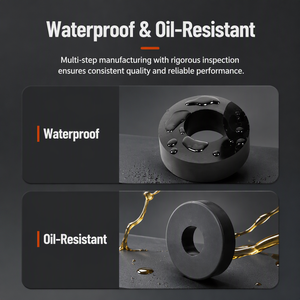
Chemical Resistance to Synthetic Esters: Machine tools in Osaka increasingly utilize biodegradable synthetic lubricants and water-soluble coolants. Damper materials must demonstrate zero volume swell (<3% volume expansion) after 1,000 hours of continuous submersion according to JIS K 6258 testing protocols.
Why Global & Japanese Procurement Engineers Choose Us
Four decades of manufacturing discipline, vertically integrated molding, and proven precision engineering provide significant advantages for heavy-duty commercial and industrial isolation.
46+ Years In-House Expertise
Founded in 1980, our production lineage spans commercial vehicle drivetrain center bearings, custom-engineered EPDM coolant circuits, and precision bonded elastomeric silent blocks.
Custom Tooling & Rapid Prototyping
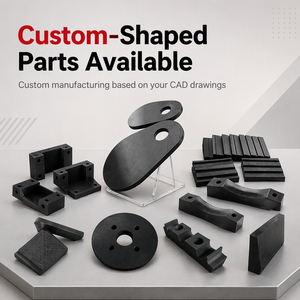
We develop mold tooling from CAD drawings or physical client samples within rapid lead-times, validating Shore A durometer, tensile elongation, and load-deflection profiles before mass production.
Rigorous Rubber-to-Metal Vulcanization
Using proprietary chemlok adhesive priming and shot-blasted surface treatment, our bonded components withstand extreme peel and shear forces, virtually eliminating delamination under peak shock.
Fast-Track Global Logistics
Strategically structured export shipping networks guarantee swift dispatch of stock and custom production batches straight to Kansai International Airport (KIX) or the Port of Osaka.
Frequently Asked Questions: Osaka Sourcing & Engineering
Answers to key technical, logistical, and material certification questions asked by local procurement teams.
Can your factory match our specific Japanese OEM part numbers or physical worn samples?
Yes. We routinely reverse-engineer and match OEM vibration damper parts, silent blocks, and engine cushions. Clients can provide part numbers, 2D technical drawings with tolerances, or send physical components. Our technical engineering division evaluates inner metal sleeve dimensions, bracket bolt pitches, rubber durometer hardness (Shore A), and chemical matrix before tooling validation.
What documentation is provided to satisfy JIS and RoHS compliance for Japanese imports?
Every dispatch includes comprehensive Material Test Reports (MTR) verifying tensile strength, elongation at break, compression set (JIS K 6262), and durometer hardness. Additionally, we provide full RoHS 3.0 and REACH SVHC conformity declarations to ensure frictionless customs clearance and supply-chain transparency across Japan.
How do you prevent rubber-to-metal delamination under heavy cyclic dynamic load?
Delamination failure is prevented through mechanical and chemical preparation. Metal sleeves and stamping plates are degreased, grit-blasted to achieve optimal Ra surface roughness, and automatedly coated with two-coat vulcanization adhesive systems. During precision compression molding, vulcanization temperature and cycle pressure are monitored to produce cohesive bonding where rubber tears before adhesive separation occurs.
What is the typical tooling and delivery lead-time for custom vibration isolators shipped to Osaka?
For custom molds, tooling production and initial first-article inspection (FAI) samples require 12 to 18 business days. Upon sample approval, mass production cycles range between 2 to 3 weeks depending on quantity. Orders are routed via air express to Kansai International Airport (KIX) within 3-5 transit days, or via container sea freight directly into the Port of Osaka.
Request Technical Data Sheets & Volume Pricing
Connect directly with our engineering sales group. Get instant access to our comprehensive commercial vehicle mountings and custom elastomeric vibration damper catalog.
Get Catalog