Featured Industrial Exhaust Isolators & Mounts
High-temperature vulcanized elastomer components designed for vibration isolation, thermal deflection control, and extreme environmental durability across global vehicle platforms.
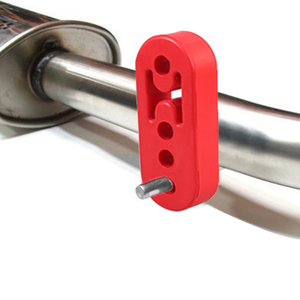
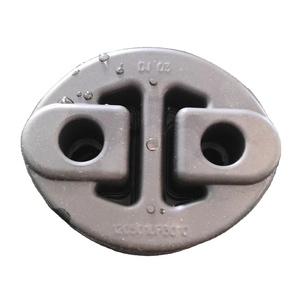
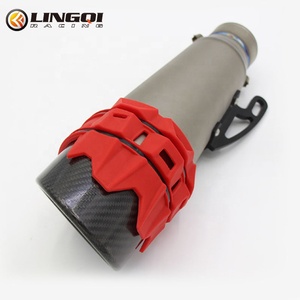
Engineering Comparative: China Mega-Cluster Efficiency vs. Japanese Precision Tooling
Strategic analysis for Tier-1 automotive procurement engineers, aftermarket parts distributors, and industrial plant directors seeking optimal balance between unit economics and micro-tolerance standards.
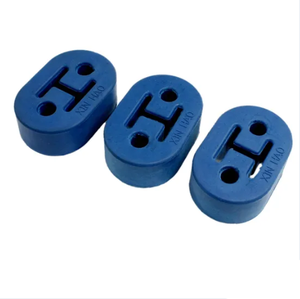
In modern powertrain engineering, exhaust silencer rubber mounts are rarely simple passive insulators. They represent critical dynamic vibration absorbers tuned to cancel engine harmonic resonance, mitigate exhaust drone, and isolate chassis frames from the cyclic thermal shocks of catalytic converters and diesel particulate filters. Industrial procurement leaders evaluating high-capacity production across China's primary industrial corridors (Hebei, Zhejiang, and Jiangsu) alongside benchmarked Japanese manufacturing lines (Aichi, Kanagawa, and Gunma) navigate distinct operational trade-offs across material science, compound vulcanization, and supply reliability.
China's High-Capacity Manufacturing Ecosystem: China's top-tier automotive rubber facilities operate at significant scale, bolstered by integrated raw polymer cracking, automated rubber compounding banburies, and multi-cavity injection molding matrices. For high-volume production spanning light commercial vehicles, passenger platforms, and off-road applications, China-based factories offer unmatched mold flexibility and rapid tooling modification cycles. Modern facilities deploy peroxide-cured EPDM (Ethylene Propylene Diene Monomer) with dynamic durometers ranging from 55 to 75 Shore A, engineered specifically to resist ozone cracking, high ambient underbody temperatures, and salt-mist corrosion along intermodal trade lanes.
Japanese Production Methodology and Micro-Tolerance Fidelity: Japanese factories adhere to lean manufacturing and tight process control (such as Kaizen and zero-defect quality systems). When sourcing from Japan-based facilities, engineering procurement teams typically prioritize ultra-precise dynamic mechanical analysis (DMA), predictable natural frequency dampening, and vulcanization formulas that keep glass transition temperatures (Tg) below -45°C. Japanese facilities excel in complex co-molding—bonding fluorosilicones, VMQ, or reinforced HNBR to stamped, zinc-nickel-electroplated steel brackets without parting-line flash or micro-void inclusions.
| Evaluation Parameter | Top China Manufacturing Ecosystem | Japanese Precision Fabricators | Amit Rubber Products Engineering Spec |
|---|---|---|---|
| Primary Polymer Formulations | Sulfur & Peroxide Cured EPDM, NBR, High-Purity Natural Rubber (NR) | Ultra-Pure EPDM, Fluorosilicone (FVMQ), Specialized Polyacrylates (ACM) | Heavy-Duty EPDM, Heat-Stabilized Silicone, Polyurethane, High-Grade NR |
| Tensile Strength & Tear Resistance | 12 – 16 MPa / Tear > 35 N/mm | 14 – 18 MPa / Tear > 42 N/mm | 14 – 17.5 MPa / Exceptional dynamic tear propagation resistance |
| Heat Aging Profile (168h @ 125°C) | Tensile shift < ±20%, Elongation retention > 70% | Tensile shift < ±12%, Elongation retention > 85% | Optimized for tropical & extreme conditions (retention > 80%) |
| Tooling & Mold Prototyping Lead Time | 10 – 18 Calendar Days (Ultra-Fast iterations) | 35 – 60 Calendar Days (Rigorous multi-stage approval) | 14 – 21 Days (Rapid tooling against 2D/3D CAD or master samples) |
| Cost-to-Volume Efficiency | Exceptional economy of scale; ideal for global aftermarket & OEM runs | High unit capital cost; optimized for mission-critical assemblies | Direct factory value; competitive pricing without material dilution |
The Convergence of Global NVH Benchmarks: With Tier-1 vehicle programs demanding unified global platforms, leading factories in China have modernized by adopting closed-loop computer-aided rheometers, nitrogen-shielded injection presses, and automated optical sorting machines that match Japanese tolerances. As a result, cross-border buyers are no longer forced to choose between Japanese dimensional accuracy and Chinese cost efficiency. By choosing validated manufacturers with extensive testing setups, fleet buyers secure long-lasting silencer suspensions that prevent premature sagging, eliminate interior cabin drone, and lower overall maintenance frequency.
Localized Application Scenarios in Industrial Fleets
Exhaust hanging isolators and damping components operate under harsh conditions across long-haul transit, mining logistics, and public transportation networks.
Heavy Haulage & Prime Movers
Engineered for platforms like Tata Prima/Signa, Ashok Leyland, and Isuzu Giga. Heavy multi-axle tractors demand robust silencer mounts that withstand severe vertical g-force shock without shear fatigue or exhaust pipe dislodgement on washboard terrain.
Urban Transit & Intercity Coaches
Used widely across high-occupancy bus platforms (Marcopolo, Hino, Fuso). High idle hours create continuous low-frequency resonance. Our elastomeric dampers eliminate low-frequency cabin drone, keeping passengers comfortable and meeting municipal noise regulations.
Light Vans, SUVs & Utility Pickups
Designed for workhorses such as Mahindra Bolero, Toyota Hilux, and light delivery fleets. Dual-lug and multi-point hanging rings offer reliable drop-in replacement, absorbing torsional chassis twist on mixed paved and unpaved routes.
Agricultural Machinery & Off-Highway
Harvesters, combine units, and tractors operate in dust-heavy, chemically aggressive settings. Resistant to fertilizer runoff, fuel splashing, and engine washdown solutions, preventing cracking and chemical degradation throughout seasonal work periods.
Localized Technological & Market Trends
How changing powertrain technologies and stricter environmental rules are reshaping exhaust suspension engineering across Asia and international supply chains.
Euro VI / BS-VI Aftertreatment Thermal Densification
With SCR (Selective Catalytic Reduction) catalysts and DPF assemblies placed closer to the engine block, exhaust lines run hotter than ever. Standard natural rubber mounts rapidly harden and fail under these conditions. Leading suppliers are switching to peroxide-vulcanized EPDM and silicone blends that withstand continuous 140°C operating environments without taking a permanent compression set.
Electrification and Hybrid Range-Extender Acoustics
As commercial vans add hybrid and range-extended powertrains, the lack of continuous engine noise makes intermittent exhaust resonance far more noticeable. Exhaust mounting components are moving toward multi-durometer designs—combining soft outer skins with rigid load-bearing inner cores to tune out noise spikes when secondary combustion engines kick on.
RoHS, REACH & Clean Circular Polymeric Chemistry
Global distributors are phasing out rubber compounds containing polycyclic aromatic hydrocarbons (PAHs), heavy metal accelerators, and hazardous vulcanizing byproducts. Factories are adopting clean, REACH-compliant plasticizers and sustainable natural rubber sources to clear customs checks easily throughout North America, Europe, and developed Asian markets.
Amit Rubber Products: World-Class Manufacturing Since 1980
Founded in 1980 in Delhi's historic Kashmere Gate automotive district, Amit Rubber Products brings more than 46 years of proven engineering experience to commercial automotive vibration control and fluid-transfer systems. Under the executive leadership of Mr. Amit Chitkara, the company has expanded from a dedicated regional maker into a dependable global supplier serving importers, Tier-1 distributors, and fleet operators in more than 20 countries.
Our practical experience spans heavy trucks, buses, tractors, and combine harvesters. Rather than simply supplying generic molded shapes, our engineers examine the working environment—considering driveline angles, chassis movement, and temperature spikes—to formulate the best elastomer compounds for real-world reliability.
- Factory-Direct Value: Efficient in-house tooling and production maintain competitive pricing for distributors while ensuring OEM-level durability.
- Broad Platform Coverage: Complete catalog compatibility for Tata (407, 709, 1613, 2515, Signa, Prima), Ashok Leyland (U-Truck), Marcopolo buses, and Mahindra Bolero models.
- Custom Mold Development: Complete engineering support to create custom rubber and polyurethane components directly from customer drawings, physical reference samples, or CAD files.
- Stringent Quality Inspections: Pre-dispatch verifications check durometer accuracy, hole pitch spacing, bonding adhesion, and surface finish before packing.
- Responsive Logistics Support: Centrally managed warehousing enables quick dispatch of high-demand items via air or sea freight, keeping fleet downtime to a minimum.
Core Product Categories
- Drive Shaft Center Support Bearings 88507 / 88509 / 4018
- EPDM Radiator & Coolant Hoses Molded & Straight Kits
- Red Turbo & Silicone Hump Hoses High Boost & Temp Resistant
- Heavy-Duty Front Engine Mountings Rubber-to-Metal Bonded
- Exhaust Silencer Mounting Rubber OEM Dynamic Replacement
- Polyurethane Suspension & Balance Rod Bushes High-Abrasion PU Formulations
- Cabin Leaf Mountings & 55mm Fifth Wheel Bushes Tata Signa & Semi-Trailers
- Dustproof Heavy-Duty Gear Cover Boots Zip-Type & 4-Hole Configurations
Frequently Asked Questions by Fleet & Wholesale Importers
Direct answers covering cross-referencing, compound selection, production limits, and international shipping logistics.
How do you match exact OEM fitment without original technical blueprints?
We regularly cross-reference components using vehicle platform codes, OEM reference numbers (e.g., 88509, 2518/6013, 4018), or high-resolution photos with key dimensions. For custom setups, clients can ship a worn physical sample directly to our engineering team. We use optical measurement systems to record hole spacing, bore inner diameters, dynamic bracket offsets, and wall thicknesses, ensuring the replacement drops right in without modification.
Why use EPDM rubber for exhaust silencer hangers rather than natural rubber?
Natural rubber provides strong mechanical resilience at mild temperatures, but modern exhaust systems run much hotter while facing ozone and road salts underneath the vehicle. Standard natural rubber tends to oxidize, harden, and crack over time. Peroxide-cured EPDM resists ozone damage and withstands continuous heat from -40°C up to +130°C, maintaining the proper elasticity to stop exhaust sag over long service intervals.
What are typical minimum order quantities (MOQs) and mold lead times for custom parts?
For parts in our standard catalog, we support low MOQs to help distributors balance their warehouse stock. For fully custom parts developed from your drawings or physical samples, mold fabrication usually takes 14 to 21 working days. Initial pilot samples are delivered for dimensional sign-off and durometer testing before we begin full production runs.
How do Amit Rubber Products components compare to Japanese and Chinese OEM parts?
Our manufacturing blends the tight dimensional consistency associated with Japanese workshops with the responsive, cost-effective production of leading Chinese plants. By sourcing high-grade polymers, running vulcanization presses with tight thermal controls, and maintaining complete in-house assembly lines, we supply durable components that handle harsh conditions at a sensible unit cost.