Featured Industrial Buffer Blocks & Elastomer Mounts
High-damping mechanical shock buffers, suspension isolation cushions, and flexible dynamic dampers tested for severe thermal cycles down to -45°C.
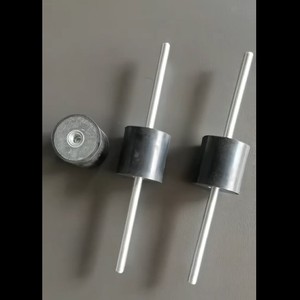
Radiator Rubber Mountings Bush 50x50mm, Bolt 100mmx10mm
View Specifications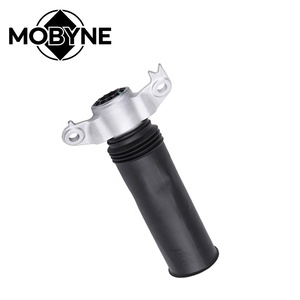
Auto Parts Rear Shock Absorber Boot for Buick Envision 13377283 84018379
View Specifications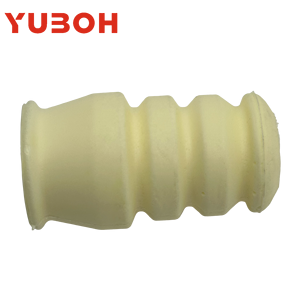
YUBOH 51722-T5A-J02 Rear Shock Absorber Boot for Honda City Fit 2015-2020 OEM 51722T5AJ02 Rear Shock Buffer Boot for Honda
View Specifications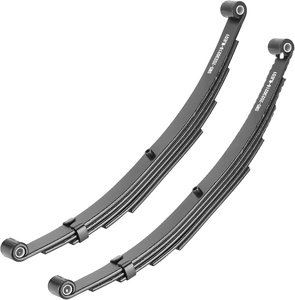
Trailer Leaf Spring Suspension Vehicle Suspension Parts
View Specifications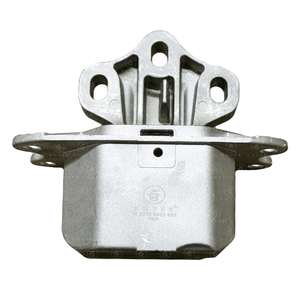
OEM Quality Rubber Transmission Mount 22316853453 for 730i 740i 523i 530i Models F45 F46 F48 F49 F52 F39 F40
View Specifications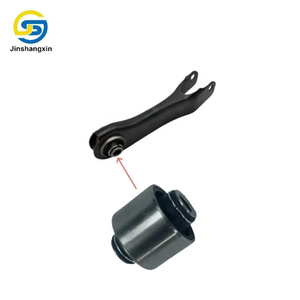
FOEO Automotive Auto Parts 5090124AA Car Control Arm CMS251175 Rubber Sleeve for Jeep CHEROKEE (KL)
View Specifications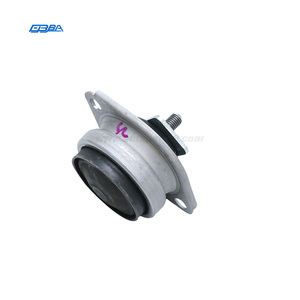
High Quality Gearbox Mount Rubber Pad Transmission Support Bushing For Ferrari California 2009-2014 270812
View Specifications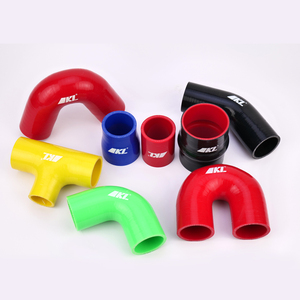
Factory Custom Heat Resistant Radiator Silicone Hose 2.5 Inch Black Blue Straight 45/ 90 Degree Elbow Flexible Silicone Hose
View SpecificationsElastomeric Rheology & Energy Dissipation in Canadian Climates
A rigorous analysis of polymer hysteretic loss, glass transition temperature thresholds, and cyclic fatigue resilience across sub-arctic industrial applications.
Sub-Zero Glass Transition ($T_g$)
In standard natural rubbers, crystalline phase transitions begin around -20°C, causing conventional buffer blocks to become brittle, lose viscoelastic recovery, and shatter under sudden impact loads. Our custom northern-grade compounding utilizes synthetic low-$T_g$ cis-polybutadiene blends combined with specialized polar plasticizers. This shifts the glass transition point down to -52°C, ensuring continuous dynamic rebound and predictable spring deflection even during prolonged winter halts in Edmonton, Calgary, and northern Quebec.
Progressive Kinetic Damping
Unlike linear coil springs that store kinetic energy and reflect shock waves directly back into mechanical linkages, our solid rubber buffer blocks deliver progressive stiffness curves. When a shock load strikes, the internal molecular chains unravel and slip through hysteretic damping, dissipating up to 65% of peak vibrational energy as harmless thermal release. This progressive deceleration prevents mechanical bottoming-out in heavy mining hoists, railway end-stops, and semi-trailer leaf suspensions.
Chemical & Salt Spray Passivation
Winter roads and industrial plants across Ontario and the Maritime provinces heavily rely on calcium chloride and rock salts. Exposed steel brackets and bonding agents frequently suffer delamination due to galvanic creep. Amit Rubber utilizes shot-blasted substrate preparation paired with Chemlok hot-vulcanized bonding agents and zinc-nickel phosphated metal inserts, delivering over 1,000 hours of continuous ASTM B117 salt spray endurance without interface separation.
| Elastomer Base | Durometer (Shore A) | Operating Temp Range | Tensile Strength (MPa) | Brine / De-Icing Salt Resistance | Recommended Canadian Application |
|---|---|---|---|---|---|
| Low-Temp NR Compound | 50 - 75 ±5 | -50°C to +85°C | 18 - 24 | Good (with surface waxes) | Heavy truck suspension bump stops, trailer leaf springs, crusher mountings |
| Engineered EPDM Polymer | 60 - 80 ±5 | -45°C to +135°C | 12 - 16 | Outstanding (Ozone inert) | Under-hood radiator bushings, engine cradle isolators, utility vehicle dampers |
| Microcellular Polyurethane (PU) | 65 - 90 ±3 | -40°C to +90°C | 28 - 42 | Excellent (Abrasion resistant) | Log-skidder suspension bushes, balance rod cut-bushes, fifth-wheel stops |
| Fluorosilicone / VMQ Blend | 45 - 70 ±5 | -55°C to +200°C | 8 - 12 | Superior (Hydrocarbon stable) | Turbocharger hump couplers, extreme sub-zero hydraulic line isolation |
Engineered For Canada’s Most Demanding Operational Theaters
Tailor-fitted elastomeric formulations serving forestry, oil extraction, trans-continental rail, and commercial logistics.
Mining & Tar Sands Haulage
In Alberta’s Athabasca oil sands and Sudbury's deep nickel mines, 400-ton haul trucks subject suspension stops to catastrophic shock cycles. Our high-mass compression buffer blocks prevent chassis stress cracking, isolating dynamic shock loads from main structural frame rails.
Cross-Border Long-Haul Logistics
Traversing the Trans-Canada Highway and the Ontario 401 corridor presents relentless frost heaves and bridge joints. Our bonded transmission mounts and center bearing cushions absorb drivetrain harmonic resonance, preventing propshaft run-out and premature bearing failure.
British Columbia Forestry Harvesters
Logging processors and timber feller-bunchers in interior BC endure abrasive sawdust, mud slurry, and extreme hydraulic pulsing. Polyurethane suspension bushings and hydraulic rubber stops withstand severe torsional twist without tearing or permanent set.
Municipal De-Icing & Snow Removal
Heavy snowplow blade trip mechanisms and municipal salter chassis demand elastomeric buffers that refuse to harden under continuous -35°C exposure. Our specialized EPDM bump cushions maintain compliance, protecting hydraulic cylinders from sudden curb impacts.
Canadian Damping Technology Trends (2025–2030)
Navigating electrification, nearshoring mandates, and the shift toward closed-loop sustainable elastomeric compounds.
Heavy Commercial Fleet Electrification
As commercial freight operators across Quebec and Ontario transition to battery electric heavy trucks (BEVs), tare weight increases by 15% to 25% due to battery packs. This added deadweight compresses traditional rubber buffers permanently, driving procurement teams toward high-density microcellular elastomers with ultra-low compression set values (<18% per ASTM D395 Method B).
Supply Chain Diversification Beyond China
Canadian tier-1 procurement managers are actively mitigating Pacific geopolitical shipping chokeholds and escalating anti-dumping tariffs by establishing direct manufacturing ties with established, fully integrated producers in India. This dual-sourcing model ensures predictable lead times, transparent material documentation, and stable container shipping rates into Vancouver and Montreal.
Transition to RoHS & REACH-Compliant Curing
Canadian industrial regulations increasingly restrict toxic plasticizers, lead activators, and polycyclic aromatic hydrocarbons (PAHs). Next-generation buffer production requires peroxide curing systems and non-staining antioxidants that meet Environment and Climate Change Canada (ECCC) standards without degrading dynamic tear strength.
Why Canadian Buyers Partner with Amit Rubber Products
Direct factory control, four decades of toolroom engineering, and uncompromising batch consistency from New Delhi's premier hub.
Four Decades of Direct Tooling (Est. 1980)
Founded under the technical guidance of Mr. Amit Chitkara, we have evolved from regional specialists into an international OEM manufacturing exporter. We operate in-house compression, transfer, and injection molding presses capable of handling multi-cavity dies for high-run production, ensuring Canadian buyers eliminate middleman markups and deal directly with the engineers designing the mold geometry.
Rapid Reverse Engineering to Print or Sample
Need to reproduce a discontinued mining damper or a specialized commercial vehicle bushing? Send us your 2D/3D CAD drawing, OE reference code (e.g., Buick 13377283, BMW 22316853453, Ferrari 270812), or a worn physical sample. Our metrology lab cross-examines hardness, polymer type, insert metallurgy, and tensile thresholds to deliver functional prototype tooling within 15–20 days.
Full Batch Traceability & Rigorous QA
Every compound batch mixed in our facility undergoes rheometer cure profiling, specific gravity verification, and tensile elongation testing. Finished rubber-to-metal parts undergo 100% destructive pull tests on random sample sets to verify bond integrity at 10 MPa+. Canadian clients receive full mill certificates and material test reports (MTR) with every dispatch.
Frequently Asked Questions for Canadian Importers & Fleet Buyers
Clear engineering and logistical answers regarding testing standards, customs compliance, and shipping to Canadian ports.
How do you certify rubber buffer blocks for Canadian sub-zero temperatures? +
Can your engineers match parts by OEM cross-reference or dimensional drawings? +
What shipping terms, transit times, and documentation are provided for Canada? +
How do you ensure rubber-to-metal bonding does not fail in high-salinity road environments? +
What are the minimum order quantities (MOQs) for custom molded buffer blocks? +
Need High-Performance Shock Isolation for Canadian Operations?
Connect directly with our engineering team to review technical drawings, request compound data sheets, or receive factory-direct wholesale pricing tailored to your annual volume.