Precision Anti-Vibration & High-Durability Elastomer Portfolio
Engineered for high mechanical shear, cyclic fatigue resistance, and rigorous thermal loads matching Stellantis, Renault, and heavy rail vibration damping protocols.
The Science of Rubber-to-Metal Vulcanization Bonding
A rigorous examination of interfacial adhesion mechanics, hysteresis dissipation, and environmental degradation mitigation under French and European operating conditions.
Micro-Surface Chemical Pretreatment & Chemlok Adhesion
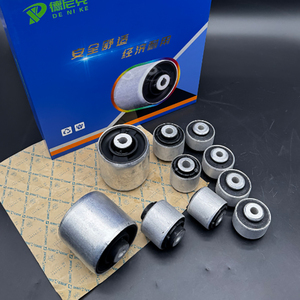
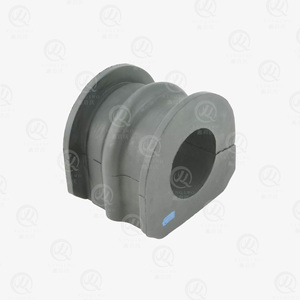
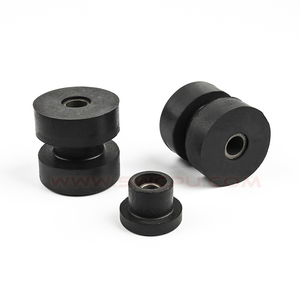
The failure of an anti-vibration bushing or silent block under severe dynamic torsion almost invariably manifests at the interface between the elastomeric core and the metal sleeve. To prevent delamination under the grueling low-frequency, high-amplitude vibrations typical of French regional road infrastructure and rail transit corridors, our manufacturing protocol enforces a multi-stage chemical pretreatment cycle.
Seamless cold-drawn steel sleeves (ST52-3 / E355 grade) or lightweight structural aluminum alloys undergo precision ultrasonic degreasing, grit-blasting (Grit 24 corundum to attain an Ra roughness profile between 3.2 and 4.8 μm), and automated zinc-phosphate coating. Following phosphating, a two-component organosilane-phenolic bonding primer and topcoat (Chemlok/Megum formulation) is robotically applied with strict dry film thickness control (15–25 μm).
- Exceeds ISO 813 and ASTM D429 90-degree peel test adhesion standards (>12 N/mm rubber tear failure, zero adhesive peel).
- Salt spray resistance certified over 720 hours according to ISO 9227 NSS for coastal deployment along Atlantic and Mediterranean corridors.
- Elimination of hexavalent chromium in compliance with European REACH Annex XVII regulations.
Polymer Formulation: Balancing Loss Factor (tan δ) and Creep
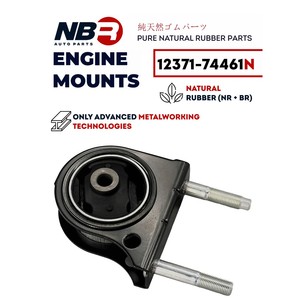
Rubber bushings in modern chassis architecture must perform two fundamentally conflicting functions: providing structural stiffness for precise wheel kinematic control while dissipating high-frequency noise and vibration (NVH). Our engineering team optimizes elastomeric blends utilizing high-cis polyisoprene (Natural Rubber / NR) compound matrices modified with targeted carbon black reinforcement structures (N330 and N550 series).
For high-heat and chemical-exposure zones, including heavy-haul engine compartments and hydraulic fluid proximities, we utilize semi-EV (Efficient Vulcanization) sulfur-donor systems and peroxide-cured EPDM or hydrogenated nitrile (HNBR) polymers. This balances dynamic stiffness ratio (Kd/Ks ≤ 1.35) with negligible static creep over 100,000 km duty cycles.
- Broad thermal endurance envelope rated between −45°C (Alpine sub-zero freeze) up to +135°C continuous engine ambient.
- High damping performance targeting structural isolation resonance between 8 Hz and 15 Hz.
- Enhanced resistance to de-icing calcium chloride and magnesium chloride road salts ubiquitous in French winter maintenance.
| Elastomer Compound | Hardness (Shore A) | Tensile Strength (MPa) | Elongation at Break (%) | Operating Temp (°C) | Chemical / Oil Resistance | Primary Industrial Sector |
|---|---|---|---|---|---|---|
| Natural Rubber (NR - High Cis) | 45 – 75 ±5 | ≥ 22.0 | ≥ 480% | −45 to +85 | Moderate (Glycol, Water) | Automotive Control Arms, Silent Blocks |
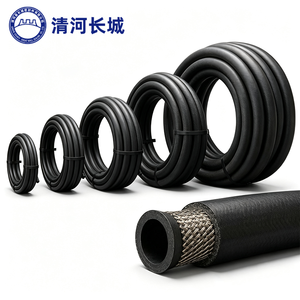
| EPDM (Peroxide Cured) | 50 – 80 ±5 | ≥ 14.5 | ≥ 350% | −40 to +140 | Excellent (Coolants, Ozone, UV) | Radiator Hoses, Isolator Pads, Engine Mounts |
| Nitrile / NBR (Acrylonitrile 33%) | 55 – 85 ±5 | ≥ 16.0 | ≥ 380% | −30 to +110 | Superior (Mineral Oils, Fuel Mist) | Powertrain Gaskets, Axle Boots, Oil Dampers |
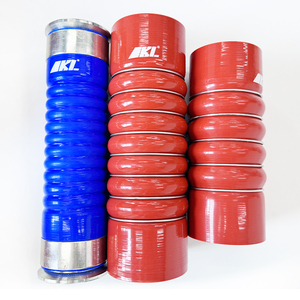
| Liquid Silicone (VMQ / LSR) | 40 – 70 ±5 | ≥ 9.5 | ≥ 400% | −60 to +220 | High Thermal / Dielectric Stability | Turbo Intercooler Hoses, High-Temp Seals |
| Cast Polyurethane (PU / Ether) | 70 – 95 ±5 | ≥ 32.0 | ≥ 520% | −35 to +90 | High Abrasion, Hydrolysis Stable | Heavy Commercial Vehicles, Fifth Wheels |
Engineered for France's Demanding Industrial Sectors
From high-speed TGV rail corridors and Île-de-France urban transit to commercial haulage fleets spanning the Lyon logistics spine, our bushings deliver proven reliability.
French Automotive OEMs
Validated suspension control arm bushings and subframe mounts engineered for Stellantis (Peugeot, Citroën, DS) and Renault platforms operating across Europe.
Heavy Commercial Fleets
Centre bearing supports, heavy-duty engine mounts, and fifth-wheel silent blocks designed for Renault Trucks, Iveco France, and major highway transport carriers.
SNCF & RATP Rail Transit
High-damping elastomeric bogie links, traction rod bushings, and pantograph vibration isolators certified under stringent EN 45545-2 fire and toxicity standards.
Agricultural Machinery
Severe-duty oscillating bushes, steering pivot mounts, and reinforced coolant pipes tailored for French agricultural equipment manufacturers and vineyard machinery.
Renewable Energy & Wind
Elastomer pads, torque arm damper blocks, and generator isolation mountings designed for French wind turbine installations across Normandy and Occitanie.
Emerging Procurement Trends in France's Rubber-Metal Sector
Understanding the tectonic shifts in European supply chain security, environmental legislation, and electric powertrain transitions shaping French industrial purchasing.
AGEC Law & Circular Economy
France's Anti-Waste for a Circular Economy (AGEC) legislation accelerates demand for high-durability, repairable components. French fleet managers prioritize modular silent blocks that allow sleeve refurbishment over discarding complete forged suspension wishbones.
EV Weight & NVH Sensitivity
With electric vehicle (EV) adoption accelerating across France, the absence of internal combustion engine masking noise makes suspension and road harshness immediately perceptible. Higher battery pack curb weights necessitate stiffer yet ultra-damped elastomeric bushes.
Dual-Sourcing & Direct Exports
Post-pandemic vulnerability assessments led French tier-1 system integrators to diversify away from single-source suppliers. Direct factory partnerships with vetted international manufacturers provide cost mitigation and agile buffer inventory models.
REACH & PFAS-Free Formulations
Stringent European Chemical Agency (ECHA) regulations require total phase-out of targeted plasticizers, nitrosamines, and persistent fluoro-additives. Our compounding laboratories offer compliant formulations without sacrificing ozone or thermal endurance.
Why Tier-1 Importers & Fleet Operators Choose Our Factory
Combining four decades of technical tooling mastery, rigorous quality control, and seamless logistics fulfillment into major French logistical hubs.
Established Manufacturing Heritage
Established in 1980, our production facility has accrued more than 46 years of continuous engineering expertise in elastomer synthesis, tooling design, and rubber-to-metal bonding. We maintain dedicated tooling archives for more than 3,500 commercial and passenger vehicle references.
Zero-Defect Quality Control (PPAP Level 3)
Every shipment bound for French destinations complies with full ISO/TS and IATF standards. Our metrology lab executes static and dynamic axial/radial stiffness testing, cyclic fatigue validation up to 1,000,000 cycles, rheometer compound verification, and CMM dimensional checks.
Seamless France & EU Logistics (DDP Terms)
We provide full export documentation, CE traceability, and flexible Incoterms including FOB, CIF Le Havre, CIF Marseille-Fos, and Delivered Duty Paid (DDP) directly to your regional distribution centers in Lyon, Lille, Paris, or Bordeaux with complete customs clearance handling.
Frequently Asked Questions: Sourcing Rubber-Metal Parts in France
Essential technical, commercial, and regulatory guidance for French purchasing directors, fleet engineers, and automotive parts distributors.
Q1: How do your products comply with French UTAC and European road standards?
Our silent blocks and suspension bushings are engineered to match original equipment (OE) geometric and mechanical stiffness profiles. Elastomer batches undergo continuous tensile, rheological, and aging tests in compliance with ISO 37, ISO 815 (compression set), and ISO 1431 (ozone degradation), fully aligning with UTAC verification protocols for aftermarket safety components.
Q2: Can you manufacture custom silent blocks from physical samples or CAD prints?
Yes. Our engineering center specializes in reverse-engineering and build-to-print tooling. French clients routinely send physical samples, STEP models, or 2D dimensioned engineering drawings. We develop custom compression or transfer molds within 20–25 business days, providing full First Article Inspection (FAI) dimensional reports and material test certificates.
Q3: What is the standard lead time for deliveries into Le Havre or Marseille-Fos?
Standard factory production runs require 25 to 35 days depending on batch volume. Ocean freight transit to Le Havre or Fos-sur-Mer typically spans 24 to 28 days. For urgent fleet-grounding maintenance requirements (AOG/VOS equivalent), we maintain air-freight express capabilities directly to Paris Charles de Gaulle (CDG) or Lyon-Saint Exupéry within 5 to 7 transit days.
Q4: How do you prevent elastomer-to-metal debonding in cold French winters?
Debonding in sub-zero alpine conditions (such as the Auvergne-Rhône-Alpes) is prevented through our triple-barrier vulcanization preparation: abrasive grit blasting, automated phosphating, and Chemlok/Megum thermal bonding agents. The vulcanization chemical crosslink creates a covalent molecular bond between the elastomer and steel substrate that maintains integrity down to −45°C.
Q5: What documentation is provided for French environmental and quality audits?
Every dispatch comes complete with a Certificate of Conformity (CoC), EN 10204 3.1 Material Test Report, REACH & RoHS non-SVHC declaration, and IMDS (International Material Data System) submission registration upon request. For automotive OEM tiers, we furnish complete PPAP Level 3 documentation including FMEA and control plans.
Q6: What Minimum Order Quantities (MOQs) apply for French aftermarket distributors?
For existing catalog references (over 3,500 active tooling sets including Renault, PSA/Stellantis, Audi, and Toyota applications), our standard MOQ starts at 100 to 200 units per reference. For newly developed custom rubber molds, MOQs start from 500 units, with initial prototype tooling costs offset against subsequent mass-production volumes.