Flagship Dampers, Isolation Bushings & Dynamic Couplings
Explore our precision-molded elastomeric dampening solutions, heavy commercial vehicle torque bushings, and reinforced fluid conduits manufactured to rigorous TS16949 tolerances.
Engineering Whitepaper: Torsional Vibration Mechanics and Crankshaft Longevity
In modern internal combustion engines, continuous combustion cycles deliver periodic, impulsive torque impulses to each cylinder crankpin. Because the crankshaft is not an infinitely rigid beam but an elastic torsional spring system possessing intrinsic mass moments of inertia, these oscillating forces induce cyclic twist and untwist movements along the shaft's rotational axis. This phenomenon is known as torsional vibration.
When the engine's excitation frequency—governed by cylinder firing orders and rotational velocity (RPM)—aligns precisely with the natural frequency of the crankshaft assembly, resonance occurs. Unchecked resonance generates massive shear stresses within crank webs and journals, culminating in catastrophic crankshaft failure, accelerated main bearing spalling, severe timing gear chatter, and excessive belt slip. A Torsional Vibration Damper (TVD), colloquially identified as a harmonic balancer or crankshaft damper, operates as an angular harmonic filter mounted to the engine snout. By pairing an inertia ring with a precisely calculated elastomeric damping layer or viscous fluid medium, the TVD dissipates critical vibration amplitudes through hysteretic thermal transformation.
Elastomeric vs. Viscous Damper Architecture: Material Performance Profiles
Procurement teams and mechanical engineers across Ho Chi Minh City's industrial belt evaluate two dominant damper designs based on operating envelope, duty cycles, and environmental heat factors:
Bonded Elastomeric Dampers
Engineered via high-pressure vulcanization linking a precision ductile iron hub to an external steel inertia ring through custom Natural Rubber (NR) or Ethylene Propylene Diene Monomer (EPDM). Highly cost-efficient, tuned precisely to narrow peak resonance orders (e.g., 3rd or 6th harmonic order).
Dual-Mass Frequency Dampers
Utilizes dual elastomer concentric bands tuned to distinct natural frequencies. Designed for high-output turbocharged commercial diesel engines that encounter secondary critical resonance speeds during high-load torque acceleration curves.
Viscous Shear Damper Assemblies
Encases an unconstrained inertia ring within a hermetically laser-welded housing filled with high-viscosity silicone fluid (200,000–300,000 cSt). Delivers wideband damping across the entire RPM spectrum; essential for heavy marine propulsion and multi-megawatt gensets.
| Damper Engineering Metric | Elastomeric Tuned Damper | Viscous Fluid Damper | Polyurethane Composite Damper |
|---|---|---|---|
| Primary Damping Principle | Elastomer Shear Hysteresis | Silicone Fluid Viscous Shear | High-Durometer Polymer Deflection |
| Resonance Frequency Band | Targeted Narrow Band (±15% RPM) | Broadband (Continuous Spectrum) | Moderate Damped Peak Range |
| Thermal Endurance Threshold | -40°C to +130°C (EPDM Compound) | -40°C to +180°C (Silicone Base) | -30°C to +95°C (High-Load PU) |
| Tropical Humidity Resistance | High (requires anti-hydrolysis EPDM) | Absolute (Hermetic Laser Seal) | Superior Hydrolytic Stability |
| Maintenance & Failure Mode | Elastomer Aging / Visible Cracking | Internal Fluid Gelation (Non-visible) | Surface Wear / Hardness Drift |
| Optimal Application Envelope | Passenger Autos, Light Trucks, Buses | Heavy Marine, Gen-Sets, 16L+ Diesels | Suspension Links & Torque Arms |
Localized Industrial Application Scenarios in Ho Chi Minh City & Southern Vietnam
Ho Chi Minh City operates as the financial and manufacturing nerve center of Vietnam, serving as the nucleus for the Southern Key Economic Zone (SKEZ) encompassing Binh Duong, Dong Nai, Long An, and Ba Ria-Vung Tau. The operational footprint of torsional vibration dampers in this tropical, hyper-dense industrial geography spans distinct mission-critical applications:
Port Logistics & Drayage
Class 8 heavy tractive units cycling heavy 40ft container chassis across Cat Lai, Hiep Phuoc, and Cai Mep deep-water terminals require dampers enduring continuous low-speed stop-start torque cycling.
Inland Riverine Barging
Tugboats and bulk cargo vessels navigating the Dong Nai and Saigon riverways demand rugged viscous dampers to insulate auxiliary marine engines against torsional fatigue from shaft misalignments.
Industrial Park Power Plants
Continuous-duty diesel and gas generator sets deployed across Tan Thuan EPZ, VSIP I & II, and Amata Industrial Park rely on harmonic balancers to eliminate electrical alternator frequency fluctuation.
Construction & Civil Heavy Plant
Hydraulic excavators, piling rigs, and concrete pump trucks supporting HCMC Metro Line infrastructure projects subject engines to abrupt shock-loads dampened by dual-mass crankshaft TVDs.
Interprovincial Coach Fleets
Long-distance passenger coaches operating out of Mien Dong and Mien Tay bus stations prioritize low interior decibel ratings, relying on finely tuned elastomer dampers to attenuate cabin NVH vibration.
Industry Trends: The Evolution of Engine Dampening in Ho Chi Minh City's Supply Chain
Vietnam's strategic position in the global supply chain has transformed Ho Chi Minh City from a simple replacement parts trading depot into a sophisticated engineering and assembly destination. Key structural trends include:
1. Enforcement of Strict Emission Standards (Euro 5 / QCVN 109:2021/BGTVT)
Vietnam's mandatory transition toward Euro 5 commercial emissions requires engine builders to implement common-rail fuel injection pressures exceeding 2,000 bar alongside aggressive turbocharger boost regimes. These high peak cylinder firing pressures dramatically amplify peak-to-peak torsional excitation along the crankshaft. Standard legacy pulleys buckle under these conditions, accelerating the transition toward high-density EPDM and composite elastomer dampers with superior thermal dissipation properties.
2. Tropical Environmental Compounding Demands
Southern Vietnam experiences sustained ambient temperatures exceeding 38°C combined with relative humidity regularly eclipsing 85% during monsoon periods. Standard natural rubber compounds in damper rings degrade rapidly under accelerated hydrolytic attack, ozone degradation, and oil contamination. Manufacturers exporting to and operating within HCMC are mandating specialized synthetic elastomers—specifically sulfur-cured and peroxide-cured EPDM, HNBR (Hydrogenated Nitrile), and fluorocarbon coatings—to guarantee a 300,000+ km service threshold without delamination.
3. Automotive Supply Chain Localization (Supporting Decree 111/2015/ND-CP)
With major automotive production centers in nearby Chu Lai, Dong Nai, and Hai Phong expanding assembly throughput, Tier-1 and Tier-2 manufacturers located around Ho Chi Minh City face strong incentives to achieve higher domestic value addition. Sourcing high-precision metal-to-rubber bonded components, center bearings, torque arm bushings, and torsional dampers from certified regional manufacturers mitigates long oceanic freight disruptions and lowers exposure to currency swings.
Manufacturing Pedigree: Amit Rubber Products Since 1980
With an unbroken manufacturing legacy originating in 1980, Amit Rubber Products has stood at the forefront of anti-vibration rubber engineering, commercial vehicle driveline supports, and powertrain isolation systems for more than four decades. Headquartered in Delhi's automotive nexus (Kashmere Gate) and led by Mr. Amit Chitkara, the enterprise combines deep metallurgy, compounding science, and precision molding to deliver solutions matching original equipment (OE) tolerances.
Bespoke Compound Engineering
In-house mixing and Banbury internal mixers formulate bespoke formulations of EPDM, natural rubber, chloroprene, and high-performance polyurethanes. Elastomer hardness is strictly controlled within ±3 Shore A durometer to ensure exact dynamic spring rates.
ChemLock Metal-to-Rubber Bonding
Utilizes multi-stage automated phosphating, grit blasting, and advanced adhesive bonding primers (Chemlok/Megum systems). Guarantees failure occurs through cohesive elastomer rupture rather than interface adhesive detachment under extreme torsional shear.
Dynamic Balancing & Metrology
Every rotating damper hub and inertia ring undergoes computerized two-plane dynamic balancing to ISO 1940-1 grade G6.3 / G2.5 specifications, preventing parasitic vibration transmission into auxiliary serpentine belts and water pumps.
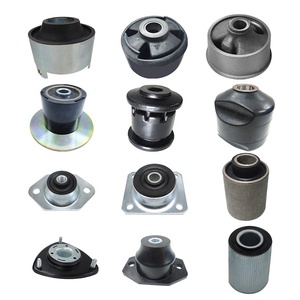
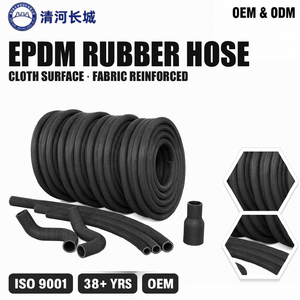
Our expansive production catalog extends across 12 core commercial vehicle product families, encompassing drive shaft center support bearings, heavy-duty EPDM radiator hoses, silicone hump pipes, cabin leaf mountings, fifth-wheel bushings, and transmission brackets. Serving distributors, municipal transit authorities, and fleet operators in over 20 countries worldwide, our logistics framework supports rapid container-load consolidated dispatches directly through Ho Chi Minh City's premier deep-sea and multimodal logistics networks.
Ho Chi Minh City Procurement FAQ: Sourcing Torsional Vibration Dampers
What are the lead times for custom-engineered TVDs delivered to Ho Chi Minh City port terminals? +
How does Amit Rubber Products address premature rubber hardening caused by Vietnam's high humidity? +
Can you cross-reference OE part numbers or reverse-engineer from sample dampers? +
What quality documentation and certificates of analysis accompany export shipments? +
What are the minimum order quantities (MOQ) for custom tooling and private labeling? +
How do torsional dampers contribute to fuel economy and emission compliance in commercial trucks? +
Optimize Your Fleet NVH & Driveline Reliability Today
Connect directly with our engineering and export desk to receive technical datasheets, full commercial price matrices, and cross-reference documentation for Ho Chi Minh City operations.