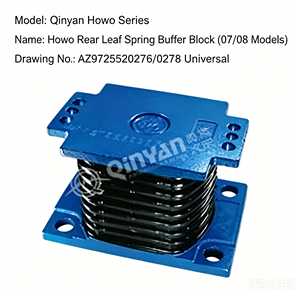
Truck Engine Mount Manufacturers & Exporters for the Hungary Market
OEM-Spec Natural Rubber & PU Anti-Vibration Solutions for Heavy Commercial Fleets, Trans-Danubian Freight Corridors, and Central European Automotive Aftermarkets
Precision Driveline Isolation
High-Torque Truck Engine Mounts & Structural Support Brackets
Engineered to absorb severe torsional resonance, minimize cabin decibel levels, and withstand high dynamic shear stress under continental line-haul operations.
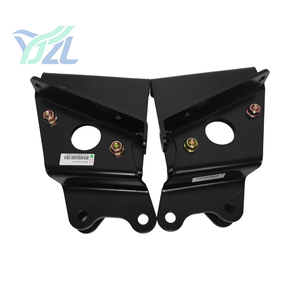
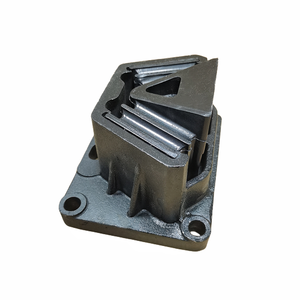
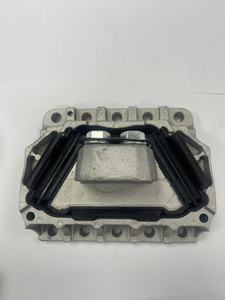
46+
Years of Rubber & Polymer Heritage
100%
Dimensional & Shore Durometer Testing
20+
Export Destined Global Markets
< 0.3%
Warranty Claim Rate across Fleets
Operational Realities
Localized Commercial Applications Across Hungary & the Pannonian Basin
From the high-density M0 Budapest orbital bypass to rural agricultural transport across the Alföld, our rubber-to-metal mounts provide resilient damping engineered specifically for Hungarian fleet profiles.
M0
Trans-European Corridor Haulage (M1 / M5 / M3)
Hungary represents the logistical heart of Central and Eastern Europe (CEE), linking Western Europe with the Balkans via TEN-T corridors. Heavy tractor units traversing the continuous asphalt gradients along Győr, Tatabánya, and Kecskemét face thermal buildup and high-frequency cyclical vibrations. Our mounts feature heat-stabilized EPDM/NR cores maintaining elasticity under sustained cruising loads.
AG
Alföld Agribusiness & Seasonal Harvest Transport
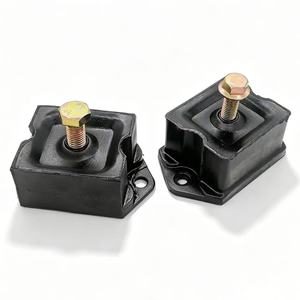
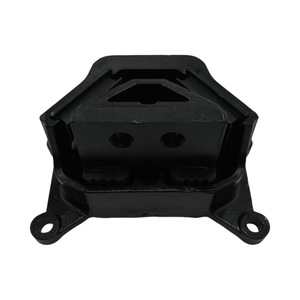
The Great Hungarian Plain requires heavy tippers and agricultural bulk transport trucks to navigate unpaved rural farm paths and uneven dirt tracks. Off-road shock loads cause conventional mounts to suffer premature delamination. Our reinforced vulcanized steel-plate rear supports absorb severe torsional displacement, preventing misalignment of the driveshaft and gearbox couplings.
BU
Budapest Intermodal Terminals & Urban Logistics
Distribution trucks cycling through stop-start suburban hubs like BILK (Budapest Intermodal Logistics Center) experience severe low-rpm idle oscillation. Our 60–65 Shore A hardness formulations attenuate low-frequency engine harmonics, shielding cabin mounting leaves and transmission mounts from harmonic fatigue while reducing in-cab noise pollution (NVH) to meet EU cabin comfort regulations.
Market Dynamics
Macro Trends Shaping Hungary's Commercial Aftermarket
Understanding environmental mandates, fleet renewal dynamics, and geopolitical trade shifts affecting Hungarian fleet procurement managers.
Fleet Life Extension Under Rising Euro 6e/Euro VII Costs
Due to the substantial capital expenditure needed for next-generation electric and Euro 7 commercial vehicles, Hungarian logistics firms (fuvarozók) are keeping Euro 5 and Euro 6 tractors on road routes longer. The demand for tier-one grade replacement parts that provide OEM performance without dealership pricing has quadrupled, making reliable direct-import supply lines essential.
Evolving Eurasian Vehicle Mix (SINOTRUK, SHACMAN Entry)
With massive infrastructure investments, battery gigafactories (CATL Debrecen, EVE Energy), and manufacturing expansions across Eastern Hungary, specialized Chinese heavy dumpers and concrete mixers have entered municipal and civil infrastructure fleets. Sourcing reliable replacement engine mounts and bracket assemblies for HOWO and Delong platforms has become an urgent pain point in regional supply chains.
Stringent EU Environmental & Chemical Directives
Hungary enforces strict European Union REACH (EC 1907/2006) regulations and RoHS standards on automotive components. Low-grade aftermarket rubber containing hazardous plasticizers, excessive PAH (polycyclic aromatic hydrocarbons), or poor zinc oxide curing formulations face customs detention. Sourcing certified non-toxic vulcanized elastomeric mounts ensures regulatory clearance and worker safety during installation.
Why Choose Amit Rubber Products
Four Decades of Direct-From-Factory Manufacturing Authority
Established in 1980, we combine metallurgical casting accuracy with specialized rubber compound science to serve global distributors, municipal workshops, and parts importers.
Factory-Direct Margin Advantage
Bypassing multi-tier European trade intermediaries gives Hungarian distributors direct access to primary manufacturing pricing, increasing competitiveness in local B2B tenders.
High-Integrity Vulcanization
Our automated chemical bonding delivers adhesive shear values exceeding 10 MPa, eliminating the risk of core rubber separation from cold-stamped or cast steel baseplates under intense engine braking.
Rapid Sample Cross-Matching
Our engineering division decodes OEM numbers, CAD blueprints, or worn physical samples, verifying center hole pitch, bracket offsets, and hardness ratings before batch production starts.
Export-Certified Packaging
Parts are packed with protective anti-rust coatings, desiccants, and heavy corrugated wooden crates tailored for multimodal sea-rail transit via Koper/Rijeka or air-freight directly into Budapest Airport (BUD Cargo City).
Expand Your Hungarian Aftermarket Inventory Today
Inquire with our technical sales division for complete cross-reference sheets (OE numbers, Scania PGRT, MAN, Sinotruk, Shacman, Tata, Ashok Leyland) and sample dispatch.
Get Catalog
Procurement Insights
Frequently Asked Questions by Hungarian Importers & Fleet Workshops
Technical and logistical answers addressing the practical considerations of sourcing commercial vehicle mountings from our factory.
What rubber compound formulations are used to handle winter road salt in Hungary? +
During Hungarian winters, municipal highway maintenance uses calcium chloride and rock salt (útszóró só) on major corridors like the M1 and M7. Our engine mountings utilize specialized virgin Natural Rubber (NR) blends with anti-ozonant and paraffinic wax additives, while the metal structural plates are treated with cathodic electro-deposition (E-coating) or zinc-chromate surface phosphating. This dual barrier prevents saline intrusion, inhibiting premature delamination at the rubber-to-metal bonding boundary.
Can you cross-reference original European and Asian OE part numbers? +
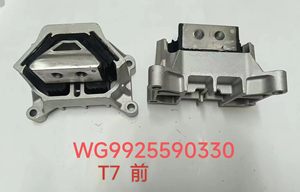
Yes. Our engineering database cross-indexes European references (including Scania PGRT OE 1372432 / 137207, Volvo, MAN) alongside Asian commercial numbers (Sinotruk HOWO WG9931931535/WG9931931530, WG9925590330, Shacman DZ95259590115, and Tata/Leyland commercial references). Buyers can share OEM codes, chassis VIN plate data, or digital vernier calliper measurements of core dimensions (height, baseplate hole pitch, bolt diameter) for immediate verification.
What are the shipping routes, customs transit times, and Incoterms for Budapest deliveries? +
For standard FCL/LCL orders, maritime shipments route through the Adriatic ports of Koper (Slovenia) or Rijeka (Croatia), followed by direct bonded rail transit into Budapest rail hubs (e.g., Mahart Container Center), offering typical transit times of 28 to 35 days. For urgent fleet-grounded (VOR - Vehicle Off Road) scenarios, expedited express air-freight lands at Budapest Ferenc Liszt International Airport (BUD Cargo City) in 4 to 6 business days. We routinely operate on FOB, CIF, or DAP delivery terms.
How does your quality control lab verify bond strength and rubber durometer? +
Every production batch undergoes incoming raw elastomeric testing using rheometers to evaluate vulcanization curves. Following demolding, finished mounts undergo 90-degree pull peel testing (ASTM D429 standard) to confirm rubber-to-metal chemical cohesion. We perform dynamic fatigue cycle testing (up to 1,000,000 cycles under simulated high torque) and durometer Shore A inspections (calibrated between 55 to 70 Shore A depending on whether the part serves as an engine front dampener or rear transmission stabilizer).
What are your minimum order quantities (MOQ) and customization parameters? +
For standard fast-moving catalog items, our typical MOQ starts at 50 pieces per reference, facilitating mixed-container orders for auto parts wholesalers. For custom tooling developments based on physical drawings or samples, tooling setup lead times are 20 to 25 days, with pilot sample approval prior to mass extrusion or compression molding. Custom laser marking for OEM part numbers and private-label packaging are available upon request.