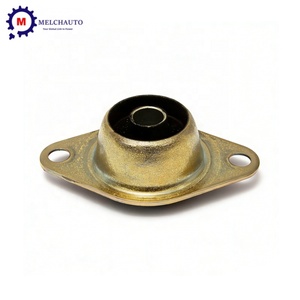
Radiator Mounting Rubber 2635A052 2635A051 for Perkins & FG Wilson
Elastomeric anti-vibration mountings isolating critical cooling packages from cyclical structural harmonics in standby power and auxiliary marine generators.
Engineered to eliminate boost leakage, withstand sustained thermo-oxidative cycling, and dampen severe driveline oscillations in commercial transport corridors.
Elastomeric anti-vibration mountings isolating critical cooling packages from cyclical structural harmonics in standby power and auxiliary marine generators.
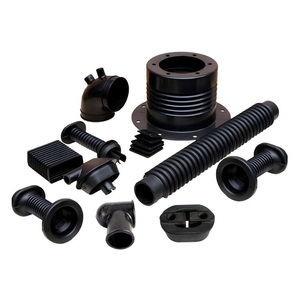
Multi-convoluted dust boots offering extreme cyclic stroke flexibility, ozone protection, and particulate ingress protection for steering and chassis shafts.
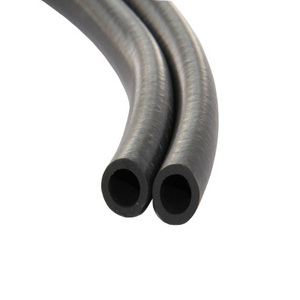
Formulated for crankcase ventilation, blow-by routing, and low-pressure glycol conveyance with elevated fluid-permeation resistance.
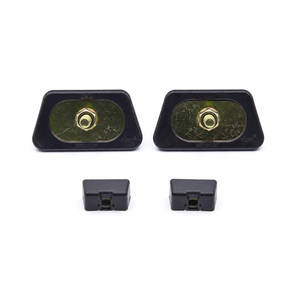
High-durometer natural rubber-to-metal vulcanized damper built to mitigate low-frequency drivetrain vibration and mechanical fatigue.
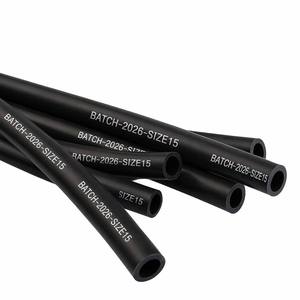
Reinforced synthetic EPDM pipe designed to resist electrochemical degradation (ECD), intense UV, and prolonged thermal fatigue in heavy haulage.
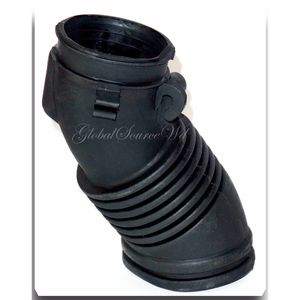
Seamless molded air intake construction designed to preserve laminar air velocity and resist negative vacuum collapse under aggressive turbo spools.
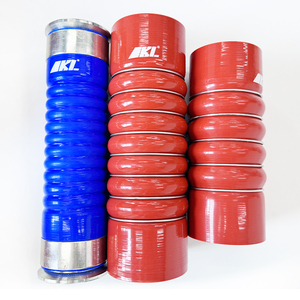
Engineered with high-tensile aramid/polyester knit plies, withstanding continuous 500°F (260°C) turbo boost without wall ballooning or delamination.
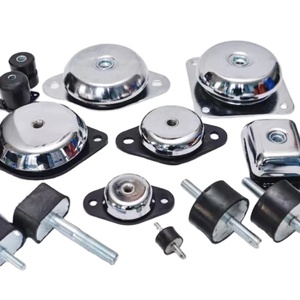
Custom-machined shear/compression vibration isolation mounts engineered for port container-handling equipment and transport auxiliary gear.
The Seattle metropolitan territory presents a complex convergence of oceanic humidity, aggressive marine salt spray, undulating gradients across the Cascade foothills, and non-stop maritime logistics.
Heavy Class 8 tractors running continuously between the Port of Seattle, Tacoma terminals, and regional cross-docks endure persistent stop-and-go heat-soak. Our 4-ply and 5-ply silicone turbo hoses and hump couplers withstand cyclic positive-pressure spikes up to 4.5 bar without delaminating or blowing off intake beads.
Tugboats, commercial fishing tenders, and passenger ferries require absolute containment of turbo boost and closed-loop engine coolant. Operating in an environment saturated with saline mist, our silicone formulations resist salt-catalyzed polymer hardening, surface pitting, and electrochemical galvanic degradation.
The Pacific Northwest hosts critical hyperscale cloud clusters requiring zero-tolerance emergency power. Paired with Perkins, Cummins, and CAT prime movers, our radiator mounting rubbers and flexible bellows isolate intense engine vibrations, preserving secondary plumbing from stress cracking.
| Engineering Parameter | Standard Commercial EPDM | Export-Grade Polysiloxane (Silicone) | Fluorosilicone (FVMQ) Inner Liner |
|---|---|---|---|
| Operating Thermal Range | -40°F to +257°F (-40°C to +125°C) | -65°F to +500°F (-54°C to +260°C) | -75°F to +445°F (Oil/Fuel Resistant) |
| Tensile Reinforcement Fabric | Single-ply Knitted Rayon/Polyester | 3-Ply to 5-Ply High-Tenacity Meta-Aramid | Multi-Ply Para-Aramid (Kevlar Equivalent) |
| Resistance to Oil/Fuel Mist | Poor (Prone to Softening & Swell) | Moderate (Dry Boost Applications) | Impervious (Meets Extreme Blow-by Specs) |
| Seattle Marine Salt-Fog Endurance | 350 Hours ASTM B117 | Exceeds 2,000 Hours Unaltered | Exceeds 3,000 Hours Unaltered |
Strategic transitions across Washington State fleet management programs dictate higher specifications, extended preventative maintenance windows, and stringent emissions compliance.
With modern EPA Tier 4 Final and Stage V diesel powertrains circulating highly concentrated hydrocarbon crankcase emissions through the charge air cooler, standard VMQ silicone suffers oil degradation. Seattle MRO procurement increasingly mandates FVMQ barriers to eradicate premature hose blister failures.
Regional green ports initiatives in Seattle and Tacoma demand advanced thermal dissipation. Hybrid powertrains operate cold-coolant cycles interspersed with instantaneous peak heat loads, accelerating joint shear fatigue. High-convoluted hump hoses absorb this multi-axis engine displacement efficiently.
With high Pacific Northwest shop technician rates exceeding $160/hr, fleet directors prioritize hose systems that match the life cycle of turbochargers (typically 500,000 miles). Sourcing silicone solutions directly from certified manufacturers ensures substantial downtime reduction over short-lived rubber alternatives.
Combining four decades of vulcanization precision with stringent export methodologies tailored for North American OEM, Tier-1, and aftermarket distributors.
By eradicating multi-tiered broker channels, we supply Seattle wholesalers and fleet workshops directly from our accredited facility, delivering measurable margin enhancements without sacrificing polymer density or fabric integrity.
Every compound undergoes rheometer cure monitoring, durometer validation, and hydrostatic burst-pressure destruction tests before export crating. Every batch includes dimensional inspection reports matching client 2D/3D blueprint specifications.
Using CAD/CAM steel mandrel fabrication, we turn bespoke geometric requirements—such as compound elbows, offset transitions, and multi-diameter hump reducers—into verified physical prototypes in under 15 business days.
Need custom ID profiles, reinforced turbo hoses, or specific OE cross-reference validation for your Seattle operations? Request instant engineering specifications and container-load FOB/CIF quotes.
Get a QuoteDetailed insights into shipping timelines, material choices, SAE standards, and custom part fabrication.
Silicone (VMQ) retains structural flexibility from -65°F to +500°F (-54°C to +260°C), whereas EPDM degrades, becomes brittle, and hardens near 250°F (121°C). In boosted turbo applications, silicone reinforced with aramid plies prevents ballooning, hose collapse, and bead blow-off under harsh cycles.
Yes. Our engineering department uses 3D optical scanning and precision CAD mandrel tooling. Clients can send us OE reference part numbers, physical benchmark samples, or digital STEP/IGES files. We verify center-line dimensions, bend radii, and wall tolerances prior to tooling sign-off.
Ocean shipments departing factory direct arrive at the Port of Seattle or the Port of Tacoma (NWSA gateway) in approximately 28 to 35 transit days. For urgent fleet inventory gaps, express air cargo via Seattle-Tacoma International Airport (SEA) is readily coordinated within 5 to 7 days.
All charge-air and high-temp turbo hoses are engineered according to SAE J20 R1 Class A specifications for heavy-duty commercial service. We also adhere to European ISO 1307 tolerances and provide material certs indicating ozone resistance according to ASTM D1149.
We advise using 300-series stainless steel constant-torque liner clamps or spring-loaded T-bolt clamps. Slotted worm-drive gear clamps should be avoided because raw slots extrude and sever the soft silicone outer cover under cyclic thermal expansion.
Hoses are packed in poly-bagged sub-units and nested inside heavy-ply corrugated master cartons reinforced with perimeter edge protectors. Cartons are loaded on heat-treated, fumigated ISPM-15 compliant pallets, plastic shrink-wrapped, and strapped to preserve geometric alignment during transit.
Whether you manage a transit fleet across King County, distribute parts in the Pacific Northwest, or assemble marine propulsion packages on Puget Sound, our engineering team ensures uncompromised quality and on-time delivery.
Get a Quote