Featured Heavy-Duty Turbocharge & Vibration Damping Assemblies
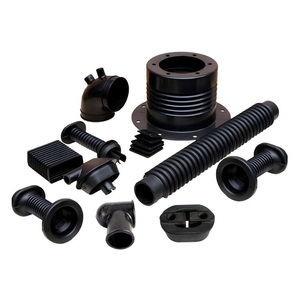
Browse our high-performance intercooler transition hoses, vulcanized transmission mountings, heavy hydraulic transfer lines, and suspension boots engineered to withstand operating temperatures from -50°C to +260°C and transient surge pressures exceeding 4.2 Bar.
Charge Air Engineering: Mitigating Delamination, Oil Vapor Attack & Thermal Fatigue in Modern Forced Induction Systems
Modern heavy commercial vehicles operating under the Euro V and Euro VI emissions frameworks rely heavily on high-boost turbocharging coupled with aggressive Exhaust Gas Recirculation (EGR) and Closed Crankcase Ventilation (CCV). In these high-efficiency powertrains, the turbocharger rubber hose pipe serves as an essential flexible conduit between the compressor outlet, the front-mounted charge-air intercooler (CAC), and the intake manifold. Unlike standard coolant lines, turbocharger hoses encounter continuous thermal cycling ranging from sub-zero winter temperatures to charge-air discharge spikes exceeding +230°C, combined with abrasive hydrocarbon mist and rapid pressure pulses.
When standard EPDM or lower-grade elastomer hoses are deployed in heavy-haul forced-induction corridors, premature failures occur predominantly via delamination of the fabric plies, oil-mist swelling of the inner liner, or radial bursting caused by cyclic pressure surges. Amit Rubber Products addresses these critical failure modes through precision multi-ply reinforcement architectures, incorporating high-tenacity meta-aramid (Nomex) woven textiles encapsulated within ultra-pure silicone polymers and specialized Fluorosilicone (FVMQ) chemical barrier liners.
| Material Configuration | Reinforcement Architecture | Continuous Operating Temp | Oil Mist & Acid Gas Resistance | Burst Pressure (51mm ID) | Target Operational Use Case |
|---|---|---|---|---|---|
| Standard Commercial EPDM | 2-Ply Polyester Mesh | -40°C to +125°C | Moderate (Degrades under synthetic oil) | 1.8 – 2.4 Bar | Naturally aspirated coolant circuits |
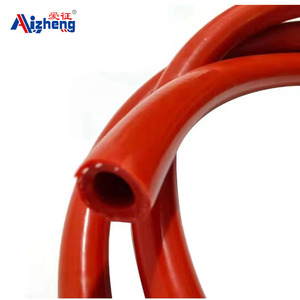
| High-Temp Red Rubber Compound | 3-Ply Knitted Polyester / Nylon | -40°C to +160°C | Good (Surface treated) | 2.8 – 3.2 Bar | Medium-duty regional transport turbo lines |
| Multi-Ply VMQ Silicone | 4-Ply / 5-Ply Woven Aramid (Kevlar/Nomex) | -50°C to +230°C | Acceptable for dry charge air | 4.0 – 4.8 Bar | Intercooler cold-side and CAC transition piping |
| FVMQ Lined Aramid Silicone | 4-Ply Aramid + 1.0mm Fluorosilicone Layer | -50°C to +260°C (Surge) | Exceptional (Immune to diesel blow-by & EGR soot) | > 5.2 Bar | Hot-side turbo outlet & Euro VI long-haul corridors |
By isolating the structural aramid plies from aggressive synthetic engine oils and acidic condensed blow-by vapors via our co-extruded fluorosilicone internal barrier, Amit Rubber Products guarantees that the elastomer maintains its tensile modulus, elongation at break, and hoop strength across tens of thousands of thermal cycles across steep mountain passes and rigorous continuous highway transit.
Localized Application Scenarios Across the Bulgarian Logistics & Industrial Landscape
Bulgaria occupies a pivotal geostrategic position at the crossroads of European and Middle Eastern commercial logistics corridors. The demanding environmental and operational realities of Bulgaria require heavy-duty components that perform without fail.
Corridor IV & IX Pan-European Long-Haul Transit
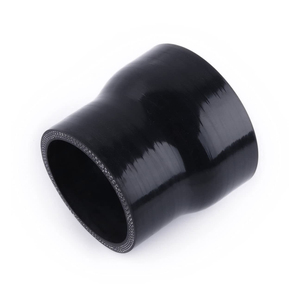
Bulgaria serves as the primary conduit for intercontinental freight crossing from Turkey (Kapitan Andreevo) toward Western Europe through Sofia and the Danube Bridge connections (Ruse and Vidin). Heavy-duty tractor units—predominantly Volvo FH, Scania R-series, Mercedes-Benz Actros, and MAN TGX—encounter long, sustained engine load cycles where charge air boost pressures remain consistently elevated for hours. Our hump hoses and straight reducers ensure thermal stability, preventing roadside boost leaks that degrade fuel efficiency and trigger costly limp-mode events.
Balkan Mountain Passes: Stara Planina & Rhodope Gradients
Traversing steep geographic bottlenecks such as the Shipka Pass, Hemus Motorway tunnels, and the Petrohan Pass subjects commercial drivetrains to rapid mechanical vibration and intense thermal shock. Winter temperatures drop below -25°C while uphill pulling creates sudden internal charge air temperatures surpassing +200°C. Amit Rubber Products’ multi-ply silicone turbo hoses absorb severe angular and axial chassis deflection, shielding expensive aluminum intercooler end-tanks from structural stress fracturing.
Dobrudzha & Thracian Valley Heavy Agricultural Machinery
Bulgaria’s agricultural powerhouse regions—stretching across Dobrudzha and the fertile plains of Plovdiv and Stara Zagora—utilize high-horsepower combine harvesters and heavy tractors (John Deere, Case IH, New Holland, Claas) running under dusty, high-ambient summer harvest conditions. Our rugged red rubber turbo lines and flexible EPDM transfer hoses protect engine air systems from heat-induced embrittlement, keeping harvest operations running during critical agricultural windows.
Bulgarian Fleet Dynamics & Spare Parts Procurement Trends
An analytical evaluation of how legislative standards, supply chain disruptions, and fleet modernization in Bulgaria are transforming procurement requirements for automotive rubber goods.
1. Ageing Fleet Lifecycle Extension
Statistics reveal that over 65% of commercial vehicles and agricultural tractors registered in Bulgaria exceed 10 years of service life. Fleet managers in Sofia, Varna, and Burgas are prioritizing preventive overhauls using OE-spec aftermarket rubber hoses and mountings to keep reliable machinery running without incurring heavy capital expenditure for new fleet units.
2. Shifting to Direct Factory Importers
Bulgarian automotive spare parts distributors are bypassing intermediaries in Central Europe. Sourcing directly from proven global manufacturers like Amit Rubber Products allows Bulgarian stockists to preserve gross margins, gain direct engineering customization, and secure stable inventory volumes.
3. Rapid Growth of Black Sea Intermodal Ports
With maritime container handling expanding at the ports of Varna and Burgas, combined with efficient rail-to-road logistics along the Plovdiv corridor, containerized shipments of specialized industrial rubber goods arrive quickly, reducing landed logistics costs for local warehouses.
4. Strict Technical Inspections (GTP) & Emissions
Bulgaria’s tightened Periodic Technical Inspection (Godishen Tehnicheski Pregled - GTP) enforces strict emissions regulations. Any charge air boost leakage leads to improper air-fuel mixture, excess black smoke, and immediate inspection failure, driving strong demand for reliable, burst-resistant turbo hoses.
Formulation Science: How Amit Rubber Products Ensures Burst Integrity & Flexibility
Achieving extended hose operational lifespans under extreme pressure and thermal stress requires strict polymer engineering and vulcanization control. At Amit Rubber Products (established in 1980), every production run strictly complies with international quality frameworks such as SAE J20 (Class A Heavy Duty) and DIN 73411.
Raw Elastomer Compounding
We source high-molecular-weight VMQ silicone and premium EPDM rubbers compounded with heat-stabilizing metal oxide additives. This prevents hardening, micro-cracking, and plasticizer leaching under extreme thermal loads.
Precision Bi-Axial Calendering
Reinforcement layers utilize heat-set, low-shrinkage woven meta-aramid or high-tensile polyester fabrics. Bi-axial calendering ensures identical wall-thickness distribution across curved geometries, eliminating localized weak points.
Autoclave & Compression Cure
Fully monitored steam autoclave curing and precision compression moulding ensure consistent vulcanization density. This process yields superior compression set resistance and reliable clamping retention over time.
Frequently Asked Questions for Bulgarian B2B Importers & Fleet Buyers
Key technical, logistics, and commercial answers for Bulgarian auto parts wholesalers, transport cooperatives, and repair networks.
1. Can you manufacture custom-moulded turbocharger reducer and hump hoses to our OEM drawings or physical samples?
Yes. Amit Rubber Products operates dedicated in-house tooling and mould development facilities. Bulgarian clients frequently send physical samples or 2D/3D CAD drawings (STEP, IGES, DXF) of hard-to-source hoses for European trucks (DAF, Iveco, Renault, Scania, Mercedes-Benz, Volvo), utility vehicles, or agricultural machinery. Our engineering team confirms inner diameter tolerances (±0.5mm), wall thickness, aramid ply counts, bend angles, and centerline radii, typically shipping pre-production prototypes within 15–20 business days.
2. What is the key performance difference between red rubber and multi-ply aramid silicone turbo hoses?
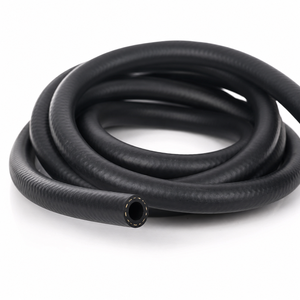
While both are engineered for forced-induction air systems, our high-temp red rubber compounds (often reinforced with textile nylon or polyester plies) offer an economical, durable replacement for standard operating temperatures up to +150°C / +160°C. In contrast, multi-ply silicone hoses (using 4 or 5 plies of woven aramid/Nomex) handle continuous temperatures up to +230°C and transient peaks of +260°C. For hot-side turbo discharge ports or Euro VI engines with high thermal and soot loads, silicone or FVMQ-lined hoses are recommended to prevent premature hardening.
3. How do your hoses resist internal oil contamination from turbo blow-by and EGR systems?
Standard silicone polymers can swell when exposed directly to hydrocarbon oil mist over long periods. For commercial vehicles with closed-crankcase blow-by, we co-extrude an internal 1.0mm fluorosilicone (FVMQ) liner. This liner forms an impermeable chemical barrier against engine oils, fuel vapor, and acidic condensation, while the outer aramid-reinforced silicone plies maintain mechanical flexibility and burst strength.
4. What shipping arrangements and incoterms are available for consignments destined for Bulgaria?
We routinely export under standard Incoterms including FOB (Indian ports such as Mundra or Nhava Sheva), CIF (Port of Varna or Port of Burgas, Black Sea), and DAP directly to your central distribution warehouse in Sofia, Plovdiv, Ruse, or Veliko Tarnovo. We handle export documentation, EUR.1 / Certificate of Origin preparation, custom palletization, and packing lists to ensure smooth customs clearance through Bulgarian customs borders.
5. What are your Minimum Order Quantities (MOQs) for wholesale importers in Bulgaria?
For standard catalogued items—including straight silicone couplers, standard hump hoses, 45°/90° elbows, and popular truck centre bearing assemblies—our MOQ typically begins at 50 to 100 units per SKU. For bespoke or custom-tooled parts requiring new steel mandrels or vulcanization moulds, MOQs are determined based on tooling scale and annual projected usage. We also support trial mixed-pallet orders for new regional distribution partners.
6. Do you supply matching heavy-duty clamps and hardware for turbocharger pipe installations?
Yes. Proper clamping is critical for forced-induction hoses. Traditional worm-gear hose clamps can bite into silicone covers and cause premature failure under pressure. We supply stainless steel 304/316 spring-loaded T-bolt clamps and constant-tension Belleville spring clamps. These maintain uniform radial clamping force during temperature changes, preventing cold leaks and hose blow-offs along transit corridors.
7. How does Amit Rubber Products verify quality control before international dispatch?
Our comprehensive QA process includes: 1) Rheometer batch testing to verify polymer cure characteristics; 2) Tensile and elongation-at-break checks; 3) Hydrostatic burst pressure testing up to 2.5× continuous working pressure; 4) Dynamic thermal cycling in environmental test chambers (-50°C to +250°C); and 5) Complete dimensional inspection of inside diameter, wall thickness, and bend geometry prior to packing.
8. How do your components perform in sub-zero winter temperatures in Bulgaria?
Winter conditions in Northern Bulgaria and the Balkan mountain passes frequently drop below -20°C to -25°C. Lower-grade rubber hoses can reach their glass transition temperature (Tg), becoming brittle and cracking under vibration. Our specialized VMQ silicone compounds remain elastomeric down to -50°C, and our EPDM grades are formulated with cold-resistant plasticizers that maintain seal integrity and flexibility in freezing conditions.
9. Can your factory provide private label branding and customized packaging for Bulgarian distributor brands?
Yes. We offer complete OEM and ODM private labelling solutions. This includes custom laser-etched or vulcanized ink-transfer logos, part numbering, barcode labeling (EAN-13), individual polybagging, and customized box packaging that meets your brand standards in the Bulgarian and wider Balkan aftermarket.
10. What other commercial vehicle components do you manufacture that can be consolidated into our container shipments?
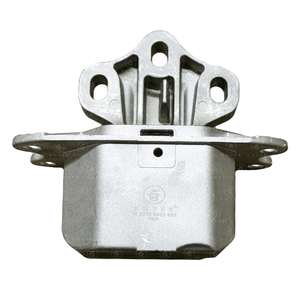
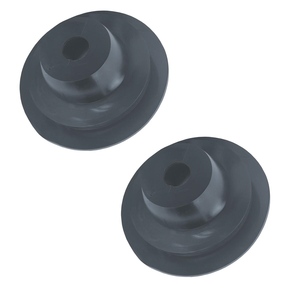
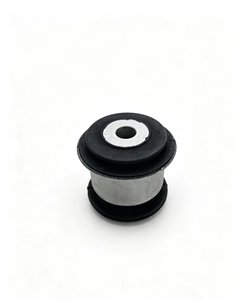
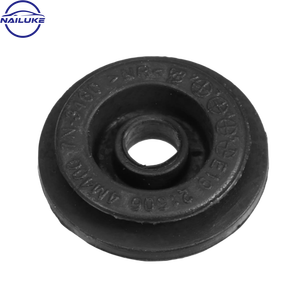
In addition to turbocharger and intercooler hoses, our 40+ year manufacturing range includes: drive shaft centre support bearing assemblies, EPDM radiator and heater hoses, rubber-to-metal bonded front and rear engine mountings, polyurethane suspension and balance rod bushes, fifth-wheel coupling pads, cabin leaf mountings, and heavy-duty dust cover boots. Consolidating multiple product lines into a single sea or air freight shipment reduces landed freight costs per item.
The Amit Rubber Products Advantage: Manufacturing Discipline Since 1980
For more than four decades, Amit Rubber Products has delivered durable, reliable rubber components for heavy commercial vehicles, buses, tractors, and utility platforms worldwide.
Factory-Direct Pricing Advantage
By managing compound formulating, fabric calendering, mandrel tooling, vulcanization, and testing in-house, we eliminate broker markups. This gives Bulgarian wholesale distributors a distinct margin advantage in local tenders and trade networks.
Batch-to-Batch Uniformity
Our strict compounding standards ensure that hardness (Shore A), tensile strength, elongation, and compression set remain uniform across all production runs. This reliability protects your fleet from premature failure and rework.
Rapid Dispatch & High Availability
Operating from our central hub with immediate access to primary multimodal transit channels, standard stock references ship promptly. We help our distribution partners maintain steady stock and minimize fleet downtime.